Brexit

Revealed: the People’s Vote’s three-point plan to trigger a second referendum

After a weekend of politicians feuding over the merits of a second referendum, Barry Gardiner, Andy Burnham and Conor Burns have become the latest politicians to criticise the People’s Vote campaign to do just this. Meanwhile the BBC reports of a leaked memo which shows that the group has its eye on changing Labour policy – encouraging MPs and activists to submit a motion at Labour conference next month. As I reveal in this week’s Spectator, the People’s Vote campaign – which argues the public should have a say on the final deal – has a three-point Parliamentary strategy when it comes to bringing about a second referendum. Although the

The case for a second Brexit referendum

Between shows at the Edinburgh fringe I find myself addressing a rally supporting a People’s Vote on the final Brexit deal. I have some sympathy for Theresa May — she keeps going to Switzerland, Dignitas keeps sending her back — but her white paper published this summer is in effect the second draft of a Brexit manifesto (the first being her Lancaster House speech in January 2017, snubbed at the subsequent election). It is therefore the first time in my experience that the manifesto has turned up more than two years after the vote. Time for another, then. People may object this is a betrayal of democracy. I believe it

Britain’s economy is not suffering as much as the doom-mongers insist

This piece first appeared as the leading article in The Spectator.  Economies run on confidence — as Franklin D. Roosevelt observed when he told Americans, in his first inaugural address during the depths of the Great Depression in 1933, that they had ‘nothing to fear except fear itself’. If that confidence is lost, if people collectively start drawing in their horns, squirrelling money away because they fear turbulent economic times ahead, then recession can all too easily become a self-fulfilling prophecy. No serious economist would dispute this theory. The puzzle is why the UK economy, riddled with Brexit anxieties, is in such good health. The Dutch prime minister said we

Simpson, Skinner and socialists

For recovering teetotallers, like me, Thinking Drinkers is the perfect Edinburgh show. On stage, two sprucely dressed actors perform sketches about booze while a team of well-trained ushers race around plying the audience with strong liquor from plastic beakers. In under an hour, I swallowed a can of ale chased by vodka, gin, rum and Irish whiskey. It’s a decent show but, for obvious reasons, forgettable. Nina’s Got News is the first fringe play written by Frank Skinner. Nina has split up with her besotted boyfriend, Chris. When he answers a summons to her flat he’s hoping for a valedictory romp. But Nina has asked her best pal Vanessa over

The government’s no-deal Brexit plans aren’t scary enough to satisfy Remainers

The government was always onto a loser whether or not it published the 24 technical notices laying out what would happen in the event of a no-deal Brexit. If it didn’t publish them it would be accused of a cover up. If it did and they were terrifying it would provide ammunition for the Remain brigade. And if it published them and they weren’t terribly frightening? Then Remainers would accuse ministers of having their heads in the sand. The latter scenario is pretty much where we are today. There are few stand-out headlines from the 24 documents for anti-Brexit commentators to get their teeth into. The Financial Times website has

Michel Barnier promises to stay put

Michel Barnier’s press conference had good news and bad news for the UK government. On the bright side, the EU’s chief negotiator promised to stay put and hold continuous – expected to be weekly – negotiations with Brexit Secretary Dominic Raab to try and bridge the differences between the two sides. However, he also promised not to budge when it comes to his negotiating position. Responding to accusations that the EU has proved inflexible, Barnier said: ‘We haven’t changed our principles over two years — but why would we? Why would we change the principles on which the EU is based? The UK is leaving the EU, not the other

The fury of the stop Brexit mob has finally been explained | 21 August 2018

At last they’ve found a name for it. A name for the meltdown that has occurred in certain political circles since June 2016. A name for the daily Twitter-rage against That Referendum. A name for the clearly potty belief that we are heading for the End of Days and that it is all the fault of dumb voters who don’t like the EU. A name for the non-stop fuming about Britain’s ‘inferior’ people and the almighty mess they have apparently landed the nation in. It’s called Brexit Anxiety Disorder. At least that is how Tom McTague at Politico sums up the findings of two psychological experts who have looked into

The Spectator Podcast: Bluffers and Royals

We often complain that our politicians are all bluffers who know very little about a lot. But is the very structure of our political institutions at fault? And speaking of bluffers, Theresa May is so far successfully fudging her way through the Brexit negotiations, but can she survive after March 2019? And last, maybe all this politics has made you long for the good old days of monarchy. With Prince Charles’s art collection on exhibit, we talk about how it reflects Charles’s One Nation Toryism. PPE – that notorious Oxford degree that ostensibly teaches its students Philosophy, Politics, and Economics – and apparently, how to govern a country. Or at

Mind your language | 16 August 2018

David Greig has written the international festival’s flagship drama, Midsummer. This farcical romance is performed as a party piece by four actors supported by a plinky-plonky band playing satirical ballads. We meet two boozy drifters, Bob and Helena, who enjoy a night of rampant sex aftera chance encounter in an Edinburgh pub. Will their affair live or die? Well, since the show starts with two older actors reminiscing about the characters’ past we knowin advance how it all ends. An odd way to kill suspense. The lovers have little in common apart from alcoholism and the madcap plot sends them hurtling through a set of mishaps and scrapes as their

Falling unemployment marks another black day for Project Fear

It is another black day for Project Fear. The latest employment figures from the Office of National Statistics (ONS) show yet another fall in unemployment, to 1.36 million or 4 per cent of the adult population. There have never been more people employed in the UK economy, and the unemployment rate is at its lowest since early 1975. It wasn’t supposed to be this way, according to George Osborne’s crystal ball. In May 2016, a month before the referendum, he warned us all that should we vote to leave the EU we could expect unemployment to rise by up to 500,000 within two years. Admittedly, George himself has bagged a

The Spectator’s Notes | 9 August 2018

President Trump has ended US participation in the Iran deal and imposed sanctions. No doubt this is annoying to the British and other Europeans who mistakenly helped devise it, but why are they — especially we — clinging to it still? Without the United States, it cannot work. Trump’s move is supported by our allies in the Middle East — Saudi Arabia, the UAE, Bahrain, Israel — who are constantly threatened by Iranian-backed terrorism. Inside Iran, once again (but little reported), people seeking freedom and work are protesting, yet we actively support a regime which has, for 40 years, been bitterly hostile to our interests and way of life. The

The History Boys of Brexit

What do Boris Johnson, Jacob Rees-Mogg and Dominic Cummings all have in common? They are Brexiteers, of course. Yet little is it known that they all studied history or classics at university. Add to this list John Redwood, Bill Cash, Daniel Hannan, Owen Paterson and Douglas Carswell — some of the most influential Eurosceptic MPs from the past 30 years. Michael Gove may have studied English literature, but as education secretary he sought to establish a ‘narrative of British progress’ in the history curriculum. Boris has written a biography of Winston Churchill and Nick Timothy has written a biography of Joseph Chamberlain. Even two of the so-called ‘Bad Boys of

Barking mad | 9 August 2018

Every so often there’s a news story in which neighbours quarrel over rampaging leylandii. The police are summoned, the case reaches the court, and whole lives are consumed by inextinguishable hatred. These nuclear tiffs are a Middle England staple. A boundary dispute is a border dispute writ small. Other European nations have watched their negotiable frontiers move around like a boundary rope on a cricket pitch. Surrounded by sea, we don’t have that in our DNA. And maybe Icelanders don’t either. Under the Tree is a social comedy from Iceland in which the eponymous tree sits in the more southerly of two abutting gardens. The shade it casts thwarts the

Juncker and Barnier have made me rethink my Remain vote

I completely agree with David Harris. Like him a Remain voter and a Londoner, I was utterly shocked by the result of the referendum, spending some hours trawling the online results in an attempt to understand what had happened. It was a salutary experience, yielding many surprises (Sevenoaks voted out!) and forced me to reappraise my initial generalised assumptions about the vote. We on the Remain side lost, and fairly. Since then I have been so angered and repelled by the behaviour of Messrs Juncker and Barnier that should we be obliged to vote again I will vote to Leave. This letter appears in this week’s Spectator

Theresa May needs a Brexit back-up plan

Since Chequers, the UK has been making a big diplomatic push to try and move the Brexit talks along. As I say in The Sun this morning, this has had some success. Inside government, the view is that the chances of a deal are inching up. There is also cautious optimism that the British message on the Irish backstop, that a customs border between Northern Ireland and the rest of the United Kingdom is unacceptable, has finally been understood. But Mrs May hasn’t had a breakthrough yet. There is no sign of the European Commission moving away from its position that the four freedoms of the single market can’t be

How to negotiate

Ever since Theresa May declared that ‘no deal is better than a bad deal’ she has seemed to be drifting towards the ‘bad deal’ option. The government has put forward numerous constructive proposals, only for them to be shot down by Michel Barnier — who goes on to warn of ticking clocks and the need for Britain to cede ever more ground. His strategy is logical and amply rewarded: every time he rejects a British plan, more concessions are offered. All along, Barnier’s approach has been to portray a post-Brexit trade deal as if it were a favour to Britain rather than an agreement of mutual interest. Britain, he has

The City’s resilience after Brexit could be bad news for the EU

The Gherkin would be re-zoned as social housing. The Walkie Talkie would be turned into a massive TK Maxx with a couple of fried chicken shacks at ground level. Canary Wharf would be paved over and turned into a giant trampoline park, while houses in the better parts of Chelsea and Notting Hill would fall in price so much that just about anyone could buy them again. When the UK voted to leave the EU, it was confidently predicted that the City of London would be wiped out, with the loss of tens of thousands of jobs and billions in tax revenues. And what happened? According a report by the

Cabinet Brexiteers want May to ready her Brexit back up plan

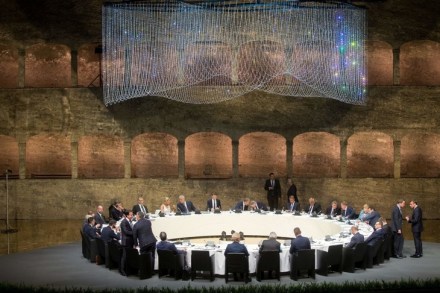
Number 10 have long been convinced that if they could talk to the member states, rather than the Commission, they’d have a better chance of getting a reasonable Brexit deal. So, the Salzburg meeting on the 20th of September, where May will get to speak to the leaders of the EU27 directly, has taken on huge importance. But, as I say in the magazine this week, while the heads of government might be more understanding of May’s political predicament, they still won’t accept her Chequers plan. Rather, they’ll—at best—push for further concessions from her. What May must decide over the summer, is what she’ll do when they ask for this.

Brexit means Boris

A few months before he died in 2007, Bill Deedes asked if I would come to see him at his home in Kent and bring Boris Johnson along with me. I was writing a biography of Bill at the time, and I knew he was miserable because he had broken his hip and could no longer come up to London. Boris jumped at the idea and I remember our lunch as the last time I saw Bill exuberantly happy. Boris knew instinctively what a 93-year-old journalist who was struggling to write his weekly column needed, and filled him in hilariously on the London political and media gossip. The only slight