Brexit

Brexit is good news for Africa

From our UK edition

Few who voted for Brexit were actually racists, much as those opposed to the project would like to have you believe. There were probably as many reasons as the 17.4 million people who voted to leave the EU. For example, I am an African-born British citizen who enthusiastically campaigned for Brexit, hoping that an independent United Kingdom would offer mother Africa a better future. Brexit should create an opportunity for Africa, not only to escape the crippling EU Common Agricultual Policy but also to trade itself out of the dehumanising poverty through equitable trade deals. Even the EU's supporters accept that the Common Agricultural Policy is a disaster for its southern neighbour.

Lucy Ellmann is angry about everything, especially men

From our UK edition

Is Lucy Ellmann serious? On the one hand, yes, very. The novel she published before this collection of essays was the Booker-shortlisted Ducks, Newburyport, which relayed the internal life of an Ohioan mother of four via a single sentence across 1,000 pages. Her publisher tells me that between the proof and final publication of Things Are Against Us, Ellman made 1,700 changes. She is, in short, an undoubted paragon of highbrow meticulousness. Then again and on the other hand, no, Ellmann is not being serious at all here. Things consists mostly of pieces written before the pandemic but is nonetheless influenced by the plague world into which it emerges, reacting against solemnity with provocation. She supplies her own epigraph: In times of pestilence, my fancy turns to shticks.

How Boris can save Northern Ireland

From our UK edition

Over the past few weeks and months, there has been plenty of focus on the Northern Ireland Brexit Protocol, and the impact it is having on the province. Less attention has been paid, however, to the equally serious problems in Northern Ireland which still need to be solved. It is an uncomfortable truth, but the problem with Northern Ireland is largely in Westminster. The institutionalised neglect over the past few decades has brought the region to where it is now. How do you know Northern Ireland has been neglected? Easy. Look up the time it takes to travel between just about any town in the province to Belfast by public transport. The results will shock you. It is quicker to get to London from Belfast than it is to Londonderry.

Boris’s Brexit deal isn’t worth sacrificing Northern Ireland for

From our UK edition

There will be chaos at the borders. Food will run out at the supermarkets. Travellers will face long queues, and companies yet another round of disruption. As the UK lays the groundwork for breaking with the Northern Ireland Protocol, we will hear plenty of scare stories about how it might mean losing the Free Trade Agreement with the European Union. There is an element of truth in that, of course. The EU may well decide that if we are not sticking to the Protocol then the free trade deal has to go as well. But there is a flaw in that argument, and it is not exactly a minor one. In truth, the FTA is not worth saving – and certainly not worth sacrificing Northern Ireland for.

Is Starmer’s Labour plotting to reopen the Brexit deal?

From our UK edition

Brexit is done and dusted, but when it comes to playing politics on the UK's departure from the EU, the Labour party is still managing to get itself in a muddle. Rachel Reeves, the shadow chancellor, is the latest Labour frontbencher to send confusing messages about Brexit to voters.  Starmer's party, we are told, wants to come to an arrangement with the European Union on recognition of professional standards, something Boris Johnson's deal lacks. Labour is also seeking a bespoke veterinary agreement with the EU to overcome problems inherent in the Northern Ireland Protocol as it stands. The party also wants to make it easier for British bands to tour on the continent. Yet all the time, Reeves is sticking to the line that Labour would not reopen the Brexit deal.

Keir Starmer’s fundamental problem

From our UK edition

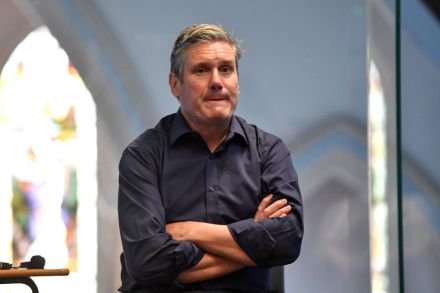
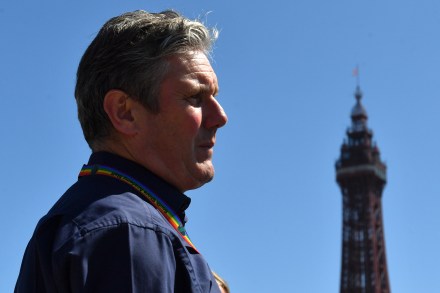
Half a century ago, Willie Whitelaw accused Harold Wilson of 'going around the country stirring up apathy'. I can think of no finer description to apply to Keir Starmer’s summer tour of Britain, during which we are told he intends to listen to the concerns of voters in a bid to win back their trust. His first such excursion, on which he was accompanied by BBC political editor Laura Kuenssberg, saw him encounter a dozen former Labour voters in Blackpool. Several of them confided that they had never heard of him, a revelation he described as 'utterly frustrating'. Ms Kuenssberg reported that the gathering gave Starmer quite a rough ride with some in attendance telling him he was 'wasting his time'.

The EU’s Brexit bill doesn’t add up

From our UK edition

A dozen hospitals. A hundred million doses of the Pfizer vaccine, and a lot more of the Oxford one. Or even a few trips in one of Jeff Bezos’s new space rockets. Even with inflation, there is still plenty you can buy with an extra three to four billion pounds.  In recent days, it has emerged there is a big gulf between what the European Union insists we owe under the terms of our departure agreement, and what the UK believes is due.  In the EU’s accounts, it put the sum at £40.5 billion. The UK now says it will be £37.3 billion, or £3.2 billion less than the EU reckons. Despite this discrepancy, the EU continues to insist the UK should pay that full sum of money.

Marxism, football and Trump’s demise: Tom Holland and Francis Fukuyama in conversation

From our UK edition

TOM HOLLAND: The title of your latest book, a book of interviews, is After the End of History. This alludes to what I guess must still rank as your most famous book and I wonder: is the fame of that book a burden? Do you feel like a famous rock star whose fans want him to play the greatest hits? FRANCIS FUKUYAMA: You know, it is really only when I meet up for interviews with journalists who want to talk about very general types of topics that the issue comes up. TH: Since it is the title, could we just nail down what you mean by ‘the end of history’? You think of it as kind of a process rather than an end.

The sausage war ceasefire is a good sign for UK-EU relations

From our UK edition

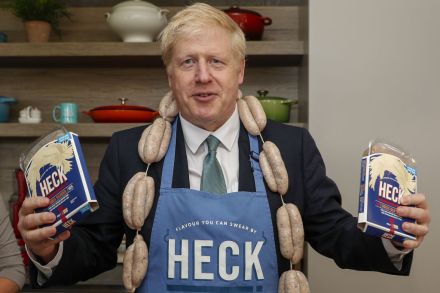
The sausage dispute between the UK and the EU may sound like something out of Yes Minister but it is the canary in the coal mine of UK-EU relations. In a sign of some progress, Maroš Šefčovič, the Commission vice-president, will announce this afternoon that the EU will agree to a UK request to extend the grace period for sausages and other chilled meats going from Great Britain to Northern Ireland for another three months. Both sides will offer their own unilateral declarations on what the extension means. RTE’s Tony Connelly provides a typically thorough run through of what we can expect. Two things are particularly worth noting. First, the UK is agreeing to a standstill on food standards during this period, not dynamic alignment with EU rules.

French democracy is in trouble – and the EU is to blame

From our UK edition

France's airwaves have been crackling with indignation this week, as politicians wring their hands at the record abstention in the first round of voting in the regional elections. Sixty six per cent of French voters found something else to do last Sunday other than vote, prompting Gabriel Attal, a government spokesman, to proclaim that the 'abysmal' turnout 'imperilled democracy'. 'French democracy is sick,' said Emmanuel Rivière of polling institute Kantar Public. It was perhaps unfortunate timing for Monsieur Attal that his remarks were made on Wednesday June 23, five years to the day since the British people voted to leave the European Union.

The British shows beloved by Europeans

From our UK edition

Forget the sausage war; could the real Brexit battle be over streaming services? After all, surely even hardened Remainers will have been appalled by the European Commission's plan to make it more difficult to stream British shows on the continent. Will it happen? Only time will tell. But here are eight shows that are a hit on the continent and that European viewers will really miss: Chernobyl Sky Atlantic/Now TV https://www.youtube.com/watch?v=s9APLXM9Ei8 Keenly watched pretty much everywhere, Sky’s superlative disaster drama is amongst the biggest British televisual exports to the EU (another accolade to add to its various Baftas, Emmys and Golden Globes). What's more, Chernobyl is one drama that really went out of its way to ensure cultural accuracy.

I’m calling my removal from office ‘the great betrayal’

From our UK edition

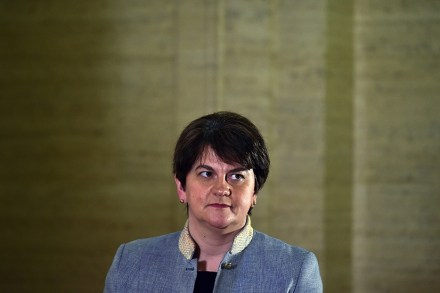
I’ve always maintained I go to Fermanagh for sanity, and after the past few months, I need a return to sanity more than ever. Fermanagh is by far the least populated of Northern Ireland’s six counties and it’s beautiful. I grew up here in the countryside, playing in fields, and now live near Brookebrough in the east of the county. From the sanctuary of Fermanagh I think about the fact that the new DUP leader and his team will now have to negotiate with Sinn Fein to get the first minister nominated again. Once I resigned, it meant that the deputy first minister was also out: for both ministers to be appointed there has to be agreement between the parties. This is not an easy process, as you might imagine.

The unfairness of London’s Remainer reputation

From our UK edition

Today marks five years since the United Kingdom voted to Leave the European Union. London, as we all know by now, voted the opposite way to the rest of England — by a margin of 60 to 40 per cent. Ever since then, the capital has been portrayed as remote and out of touch, culturally disconnected from the rest of the nation. Brexit is often explained as the victory of the long-ignored Rest of England where the ‘real people’ live. In 2019, Dominic Cummings told reporters to ‘get out of London, go and talk to people who are not rich Remainers’. But is London really so different to the rest of the nation? Let’s start with idea that those reporters would have to get out of town to meet poor Leave voters. London was home to more 2016 Leave voters (1.

Boris’s Brexit battle isn’t over yet

From our UK edition

On the eve of the five-year anniversary of the Brexit referendum, it's hard to shake the feeling that Brexit was the dog that never barked. Project Fear portended half a million job losses – a hard measure to test given a year of lockdowns and furlough, but before Covid hit (and now) the unemployment rate is lower than it was five years’ ago. We were warned of a 'punishment Budget,' as though there is ever any other kind. The hysteria, the stalling of Parliamentary machinery, the well-documented family rifts – was it all for nothing? First, a few caveats. There are many problems that still need fixing – especially in Northern Ireland and the service sectors.

Revealed: How the UK-Australia deal was struck

From our UK edition

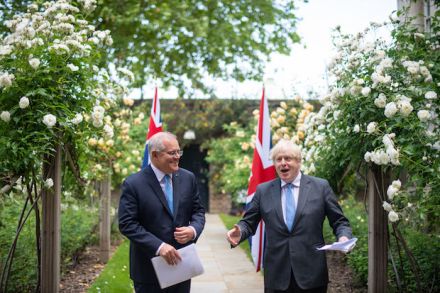
The basis of the UK’s first bespoke trade deal since leaving the EU was finalised with Australia over two dinners. One took place in the garden of the residence of the Australian High Commissioner to the UK, where guests were fed Australian lamb. The other in Downing Street where Welsh lamb was on the menu. They were menu choices that pointed both to what the deal would achieve – zero tariffs, including on agricultural goods – and the main point of contention in a negotiation that has spanned nearly a year since talks began last June. In that time, there has been a Cabinet row over protectionism on Australian meat imports and a diplomatic incident that nearly hampered the talks.

Television, not social media, is fracturing our society

From our UK edition

All it took for the Twitter mob to descend on me was a retweet from Michael Gove. Message after message called for a resignation. Often it wasn’t entirely clear who the target was: me, the leader of a medium-sized youth charity, or him, the second best known member of the Cabinet. What on earth was in this few short sentences that had unlocked the world’s bile and aggression? Gove had committed the cardinal sin of recommending a book I have written. Ironically enough, it is a book on why our societies have become so divided and how we fix them. It is blindingly obvious to most of us why our societies have become divided. Two words is all we need: not the ridiculous 300 pages I took. Social. Media.

Is the EU breaching its UK treaty by failing to protect LGBT rights?

From our UK edition

Has the EU Commission lost any sense of moral value? This week, Hungary, an EU member state, voted to impose bigoted and oppressive laws on its LGBT citizens. This amounted to a clear breach of many of our domestic laws – and it is a breach of the shared Human Rights laws. Yet the EU's response has been dismal. Is it time for Britain to show solidarity with LGBT Hungarians – and walk away from its treaty with the EU? The EU Commission said it is aware of what is unfolding in Hungary and that:  'When protecting children from harmful content it is important for member states to find the right balance of relevant fundamental rights, such as the freedom of expression and non-discrimination' But this falls far short of what it needed to say.

The EU’s debt bondage expansion

From our UK edition

In the global market for government debt, worth an estimated $92 trillion (£66 trillion), it amounts to little more than a drop in the ocean. The European Union this week issued the first €20 billion (£17 billion) of bonds to pay for its Coronavirus Rescue Fund. The money itself doesn’t amount to very much one way or another. And yet, the Commission’s President Ursula von der Leyen was surely right when she described it as a ‘truly historic day’. Why? Because, the Commission is already using it to seize control of fiscal policy, just as it used vaccine procurement to take control of health policy.

The real value of the Australia trade deal

From our UK edition

If Britain had been unable to agree a trade deal with Australia, then Brexit really would have been pointless. The country is one of our greatest allies and we have no rational reason to fear its beef, its sugar or its people. A free trade deal, aligned with visa-free travel, ought to have been the easiest deal to do. A deal is now done, phasing in these freedoms over 15 years. But even this sluggish pace is too fast for the protectionists who are popping up. Some have predicted that our beef farmers will be ruined and the countryside laid to waste as our markets are opened to competition. Many of the claims revolve around the fact that just under half of the beef produced in Australia comes from animals treated with growth hormones — a practice banned within the EU.

The UK-Australia free trade agreement is a triumph

From our UK edition

How significant is the UK-Australia trade deal announced this week during Prime Minister Scott Morrison’s visit to Britain? Well, Australia already has 17 genuine free trade agreements, including with the United States, Japan and China. But the free trade agreement with the UK is undoubtedly one of the highest quality agreements Australia has ever reached. In terms of the liberalisation of markets, it is only exceeded by the free trade agreement Australia has with New Zealand. This demonstrates something very important: that the UK, having left the European Union, is going to be a genuine champion of global trade liberalisation.