Brexit

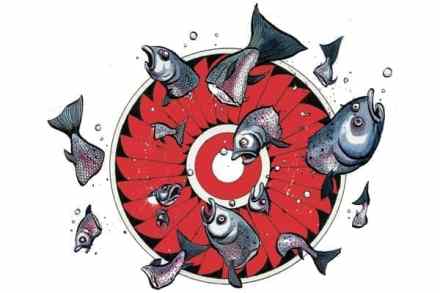
Macron’s pointless fish war

From our UK edition

During the now virtually forgotten cod wars between Iceland and the United Kingdom from 1958 to 1976, the diminutive foreign office official Sir Donald Maitland invited to King Charles Street for a dressing down the Icelandic Ambassador, a 6’7” Nordic giant. When the ambassador arrived, Sir Donald climbed on to his massive desk, drew himself up to be eye-to-eye with his visitor and declared: ‘I have been instructed to deliver this from the highest level.’ The moral of this story is, if you wish to avoid seeming ridiculous, avoid fish wars. Ultimately, little is at stake. Outcomes are frequently embarrassing. There will inevitably be terrible tabloid jokes about herrings and floundering, et cetera ad infinitum.

Who do you think you are kidding Mr Barnier?

From our UK edition

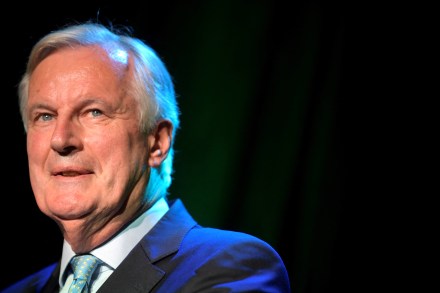
Michel Barnier is running for president of France as a Eurosceptic. He’s talking about pulling back powers to the French state and installing ‘a sovereign shield’ to allow France to impose its own immigration policy. But he’s about as credible as a vegan crocodile. Barnier was at the scene of the crime when the French voted (by a 55 per cent majority) in 2005 to reject the treaty establishing a new European constitution. In a great betrayal of democracy, voters were simply ignored and the government signed the document anyway, relabeled as the Lisbon Treaty.

Ripping up the Northern Ireland protocol is diplomacy in action

From our UK edition

Lord Frost’s Lisbon speech represents the most cogent argument yet for replacing the Northern Ireland protocol. So naturally it has been buried under a slurry of snark, solemn head-shaking and breathless indignation. It is worth stepping back from the noise. Switch off the shouty man on LBC, mute the ‘this is not normal’ people on Twitter, and avoid at all costs the catastrophist-analysis of the academic-activists. You will miss nothing. In fact, read Frost's speech for yourself. It was meant to send a message about the protocol and it does so directly. The Irish are our neighbours. It is in both our countries’ interests that we maintain and enhance the ties between us..

Cummings throws a spanner in the Brexit works

From our UK edition

Is Dominic Cummings about to derail the government's plans for a new Northern Ireland protocol? That's the concern inside government as Boris Johnson's former adviser shows that he still has the ability to change the political weather from afar. On Tuesday night, there was renewed hope that a solution could be found between the UK and EU on the Northern Ireland protocol. David Frost's speech in Lisbon was less confrontational than expected and had received cautious praise from diplomats for its more constructive passages. However, as the European Commission prepares to present its proposals for easing the current checks on businesses trading across the Irish Sea, a spanner has been thrown in the works in the form of Cummings.

David Frost’s protocol diplomacy

From our UK edition

As a general rule in post-Brexit politics, when David Frost makes a public intervention on the Northern Ireland protocol, it tends to dampen rather than soothe UK-EU relations. Frost, charged with improving the protocol, is a divisive figure in Brussels who is seen to catch flies with vinegar rather than honey. His speech was expected to be an escalation in the current war of words between the two sides. In the end, the talk itself was slightly less confrontational than expected. Frost effectively declared the Northern Ireland protocol dead and called on the EU to work with the UK Frost effectively declared the Northern Ireland protocol dead and called on the EU to work with the UK to come up with a new protocol to prevent a hard border on the island of Ireland.

The EU’s rule of law crisis lets Britain change the Brexit deal

From our UK edition

Following Germany’s example, courts in Poland have rejected the supremacy of EU law. That is the principle that, if you join the EU, you give away part of your sovereignty to it and you have to do what the European Court says. I have written before about the precedent set in Germany. Both states now say that their constitution trumps EU law and the rulings of the EU courts. Legally speaking, this declaration is simply untrue – as should be known to anybody who read and signed the Lisbon Treaty, joining the EU. The United Kingdom always upheld this legal truth. If we wanted our sovereignty back, we had to leave the EU. That was a political choice and isn’t therefore something I write about. It is fair to also highlight that the EU is far from blameless.

Is Britain’s economy being starved of talent?

From our UK edition

How is the Prime Minister’s bid to turn Britain into a high-wage economy progressing? It couldn’t be going better just at the moment, to judge by a survey by IHS Markit for KPMG and the Recruitment and Employment Confederation. In September – data was collected between the 13 and 24 September – there was a sharp rise in hiring, while starting salaries were rising at their fastest pace in the 24 years in which the survey has been undertaken. The number of permanent as well as temporary appointments was high, although the latter fell back from a record high in August. The survey suggests that the jobs market turned in February and has been strong ever since then. Is the boon in wages really such good news for the economy?

Boris’s hostage to fortune

From our UK edition

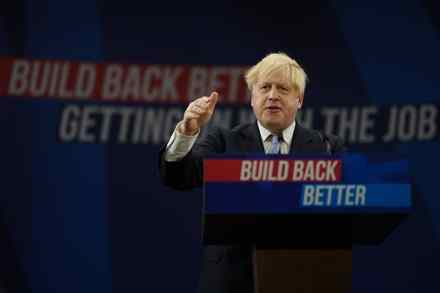
Most prime ministers would be worried about supply chain shortages. But as became increasingly clear at the Tory party conference in Manchester, Boris Johnson has instead spotted a political opportunity. He denies there is a crisis and claims that the recent ‘stresses and strains’ amount to nothing more than the economy reawakening after lockdown. As for the worker shortages, he believes they are proof of a ‘robust economy’ which will result in people being paid more. This has been the Tories’ theme in Manchester: set up a dividing line between a government that wants workers to be paid more and those who want to ‘reach for the same old lever of uncontrolled immigration to keep wages low’.

Priti Patel strikes a bullish tone

From our UK edition

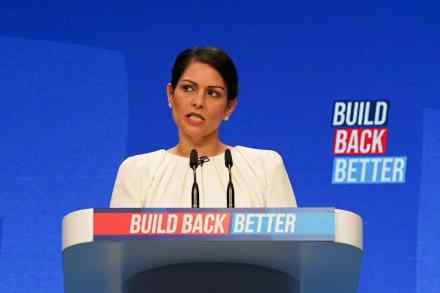
The theme of Priti Patel's party conference speech this afternoon was very much 'large and in charge'. She devoted much of her address to talking about the immigration system, as you'd expect, promising stronger crackdowns on people being smuggled across the Channel in boats. Patel focused on the Vote Leave favourite: taking back control Whereas Boris Johnson and Michael Gove have talked about Britain 'voting for change' in 2016, Patel focused on the Vote Leave favourite: taking back control. She told the conference hall this was the key theme of her reforms to immigration, saying: 'My new plan for immigration is already making its way through parliament. At the heart of this plan is a simple principle. Control. That is not unreasonable.

The fantasy world of Boris Johnson

From our UK edition

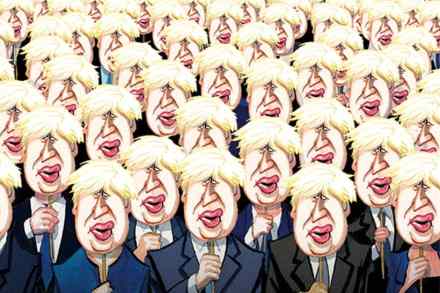
In One Thousand and One Nights, Scheherazade must begin a new story every evening. She must make sure that the sultan is so eager to hear its conclusion he postpones his plans to execute her. On they go, month after month, year after year, a different story every day. I want you to imagine Boris Johnson as Scheherazade. He is taking the stage at the Conservative party conference dressed in diaphanous silk harem pants, a velvet top with chiffon sleeves, a veil to hide his true expression, and with pearls taken from the jewellery collection of a Russian oligarch’s wife laced through his hair. Johnson, too, knows he must come up with a new story every day.

Richard Tice is a rebel without a cause

From our UK edition

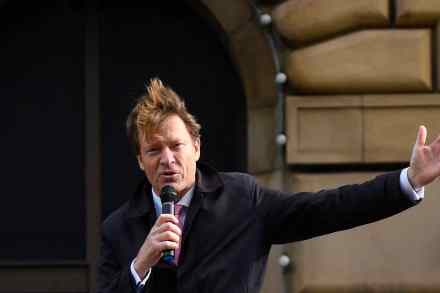
The vaccines make you magnetic, didn’t you know? And Covid is a form of biological warfare, released by the Chinese to weaken the West. New 5G technology is melting people’s brains and the Bank of England is owned by the Rothschilds. I am listening to three delegates from Reform UK’s first party conference, held in parallel to the Tories' much larger jamboree just down the road. They are outside chaining cigarettes and they’re fired up. At last, they feel they can talk about this stuff without being shut down. I nod along. I’m not a scientist, I explain, and I don’t really know how central banks work. But why, I ask, aren’t these things being discussed on the Reform conference stage?

Is this the real reason Macron dislikes Brexit?

From our UK edition

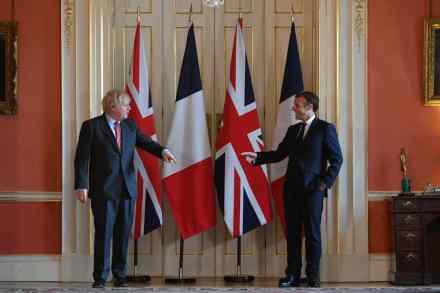
As I read The Wet Flanders Plain by Henry Williamson, a veteran of the first world war who encountered hostility from locals when he returned to the western front in 1927, a thought struck me: have I stumbled upon the source of Emmanuel Macron's Anglophobia? Let's not beat around the bush; the president of France does not like us. Politicians and diplomats may gainsay, and claim that Macron has the greatest respect for the United Kingdom. But his behaviour during the last four and a half years indicates that the current resident of the Elysée is the most Anglophobic president since Charles de Gaulle. Throughout the Brexit negotiations Macron was the most intransigent of the EU leaders, and following Britain's departure he has been the most embittered.

Is Brexit really to blame for fuel-rationing?

From our UK edition

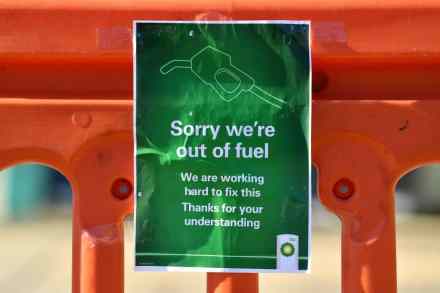
All current ills in the world, of course, can be blamed on two things: climate change and Brexit. So far, there are few people blaming the rationing of petrol and diesel on extreme weather-related to climate change (although give it time), but the usual suspects have certainly been quick out of the blocks to blame it all on Brexit. Lord Adonis, for example, has claimed:  'Brexit is now leading to fuel-rationing' BP has blamed its inability to keep petrol stations stocked on a shortage of lorry-drivers, but can that really be blamed on Brexit?  In July, the Road Haulage Association (RHA) published a survey of 615 haulage firms as to what they thought was the cause of the then already-developing driver shortage.

No, Biden didn’t just snub Brexit Britain

From our UK edition

For European Union enthusiasts, the ‘trade deal with America’ has joined ‘£350 million pledge on a bus’ as one of the great Brexit lies. A certain amount of gloating has therefore greeted the news that Joe Biden last night ‘downplayed’ the possibility of a US-U.K. Free Trade Agreement. It’s a ‘snub’, Brexiteer hopes are dashed, and so on. But did Biden actually ‘downplay’ anything? Not really, since nobody has been seriously playing up the possibility of late. Many journalists are today talking as if the Prime Minister had been hoping to announce with Biden the trade deal Donald Trump promised Britain in 2017. But Boris has been the one minimising the government’s hopes.

Will Scottish independence really be ‘Brexit times ten’?

From our UK edition

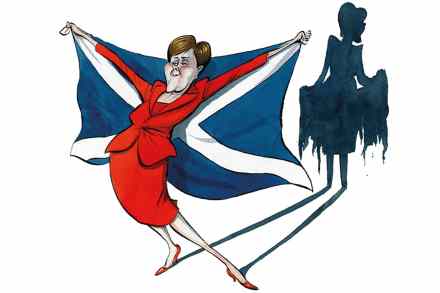
Scottish civil servants are to start work on a 'detailed prospectus' for independence so the Scottish government can hold another referendum 'when the Covid crisis has passed', Nicola Sturgeon announced earlier this month. The irony of this – coming just days before the Office for National Statistics reported that the percentage of Scots testing positive in a single week for Covid-19 equated to around one in 45 people – was lost on the First Minister. These things happen when you're busy fighting to free your people from the tyranny of liberal democracy and free society in one of the richest places on earth.

Jess Brammar isn’t the problem

From our UK edition

We need to talk about Jess Brammar. No, not the fact that Ms Brammar has landed the plum job of executive editor of the BBC’s news channels, despite cries of opposition from various Tories who insisted that Brexit-bashing Brammar is too politically partisan for such a position. My view is that it should be up to the Beeb who it employs, and politicians and their advisers should keep their beaks out of broadcasting. Rather, Jess Brammar represents a wider problem. It’s the fact that so much of the cultural elite is hostile to Brexit, which, lest we forget, is the most popular political idea in living memory in this country.

A tale of refugees from ‘Brexit Britain’

From our UK edition

In the New Year I was introduced to a couple who had fled Britain impulsively on New Year’s Eve with just a suitcase each to escape ‘Brexit Britain’. They rented a terraced house in our quartier of the village and had us round for supper, and I also went there to watch football on the laptop. They appeared to live modestly and frugally, wore the same clothes every day, and spent their days walking ceaselessly in the blazing countryside armed with shepherd’s crooks. Had they done the right thing, we privately wondered, fleeing their native land merely to prove their allegiance to the ideal of a politically and culturally united Europe?

When will the DUP realise the truth about the Tory Brexit strategy?

From our UK edition

Are the Tories serious about getting rid of the troublesome Northern Ireland Protocol? The latest extension to the so-called grace period – the third in recent months – means that plans for post-Brexit checks on some goods entering Northern Ireland have been suspended again. But this isn't the good news you might think it is for unionists in Northern Ireland. In the short term, of course, it avoids a repeat of 'sausage wars' and megaphone diplomacy around the Protocol's Article 16 (which allows Britain or the EU to take unilateral action in certain circumstances). This can only be good news. Yet for nervous unionists there is a disturbing lack of security about what might happen when this grace period does eventually come to an end.

France’s provocateur is coming to London

From our UK edition

Five years ago, London’s affluent French poured their dosh into the campaign of Emmanuel Macron. This time around, supporters of France’s rising provocateur are trying a similar tactic. Eric Zemmour is the Tucker Carlson of French media. A potential rival to Marine Le Pen, he is planning a visit to London in October. His undeclared but badly concealed French presidential campaign has the backing of 'Generation Z', a shadowy group of French political consultants and fundraisers, who are looking at the monied expatriates of South Kensington and seeing potential campaign money. If Macron’s people aren’t spooked by Zemmour, they aren’t acting like it I profiled Zemmour in the magazine in March.

Post-Brexit divorce is getting messy

From our UK edition

The City has resigned itself to being locked out of the EU. The hauliers are adjusting to all the extra paperwork. Now it looks as if the lawyers will have to get used to no deal as well — and while that won't do any serious long term damage to the profession's booming global status, it now looks as if a lot of divorcing families will be collateral damage.Over the last month, it has become clear the EU plans to block the UK from joining the Lugano Convention, which helps settle in which jurisdiction disputes should be resolved. The reason is no great mystery to anyone. Brussels wants to make it harder for London's firms to sell their services globally, and take some of that business for competitors in Paris, Amsterdam and Frankfurt.