Brexit

Five Brexit myths that will be exposed next year

From our UK edition

There will be chaos at the ports. Only the occasional root vegetable will be sold in the supermarkets. The factories and farms will run out of workers, and the planes will all be grounded on the runway. We have yet to get an official warning about how the black death will ravage the land, or how cannibalism will make a comeback. But it may just be a matter of time. As we head into the New Year, and as our departure from the European Union, quite possibly without any form of deal, draws closer, the warnings will become ever more darkly apocalyptic. As 2019 starts, we still don’t have much idea what will happen with Brexit. We may grudgingly accept Theresa’s May’s deal.

A no deal Brexit would be the EU’s fault

From our UK edition

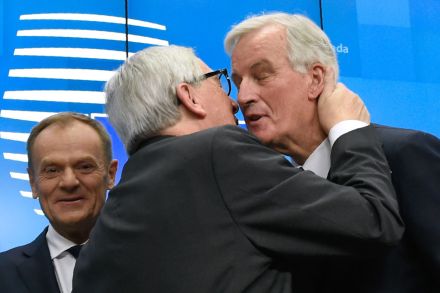
I stood next to Jean Claude-Juncker, then president of the European Council and prime minister of Luxembourg, when news flashed up on the TV screens of the astonishing rejection by French voters of the draft European Constitution in their 2005 referendum. He could have responded in so many ways, to try to understand why the voters in traditionally one of Europe’s most Europhile countries emphatically rejected further EU integration. But his immediate response, without drawing breath, was: “They will just have to vote again.” In fact, the French voters weren’t trusted to give the right answer second time around, and so the treaty was pushed through the French parliament instead.

Richard Madeley: should I ban my guests talking about Brexit at Christmas?

From our UK edition

Q. Christmas could be tricky in our home this year: roughly half our dinner guests are Remainers, the rest Brexiteers. Before I carve the turkey, should I announce that any discussion about the EU is strictly off-limits, or would it be wiser to divert differences of opinion into a harmless party game afterwards (charades would seem appropriate)? A. Traditional Christmas resentments will be heightened if Brexit differences are used to wage proxy wars — so yes, do decree the toxic topic off-limits. Distract with proxy referendums. Take votes on whether you attend Midnight Mass, bother with Brussels sprouts etc. With luck you will have landslide Yes votes for roaring log fires and roast potatoes, which will help with bonding.

Whatever happens with Brexit, it’ll be business as usual on the Irish border

From our UK edition

The Irish border question has grabbed political headlines this year, but spare a thought for those who live near it. The border takes a haphazard route along river banks, and even through farms. I recall visiting a farm in Fermanagh: I drove into the farm from Northern Ireland but the farmer showed me an exit which led straight into the Republic. For a number of years the Methodist Church in Pettigo (NI) had a minister whose house was on the other side of the border. This porousness is remarkable considering the historical conflict between our two countries. To this day, many Irish call Northern Ireland ‘the North’, as if to deny the border exists. One feels sympathy for those seeking to trade across the border who are desperate for some clarity from the Brexit negotiations.

Can Theresa May get the DUP back on board?

From our UK edition

Westminster might it be on its Christmas holidays, but the question that is still on everyone in government’s mind is can Theresa May find a way to get the DUP to back her Brexit deal. As I write in The Sun this morning, key Cabinet Ministers believe that her only chance of winning the meaningful vote comes from getting the DUP on side. One Secretary of State who has kept open lines of communication with them, tells me that ‘by grim necessity, they will need something more than cosmetic concessions to vote for the deal’. This minister explains that ‘the DUP want a bankable reassurance that the backstop won’t be permanent and that there won’t be progressive divergence between Great Britain and Northern Ireland’.

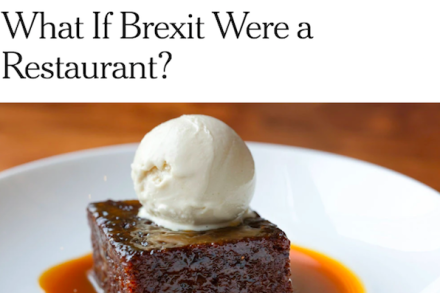
New York Times strikes again: what if Brexit were a restaurant?

From our UK edition

Here we go again. The New York Times has a habit these days of publishing pieces which take a rather dim view of Brexit Britain. The paper has published a questionable report on 'austerity Britain' complete with a slew of glaring omissions, news of Brits allegedly stockpiling food, an article on British cuisine with glaring inaccuracies and most recently asked UK citizens to get in touch with their accounts of experiencing petty crime in the capital. Now the paper has turned its ire on the UK franchise Bluebird London. The restaurant has opened shop in New York. The reviewer wasn't impressed by the dishes on offer and so has naturally compared the restaurant to...

Are ministers ignoring what a Brexit no deal would really mean?

From our UK edition

There is considerable straw-clutching in Whitehall and Westminster about the impact of a no-deal Brexit. For example, a respected and experienced minister contacted me last night to give me the good news that the European Commission had decided that, in the event of no-deal, the ports of Dover and Folkestone would be kept open “for nine months with no checks”. The minister had been given the great news in an internal departmental briefing. “Wow” I thought. And then “you what!

The EU’s no-deal preparations make it clear: they want to make Britain suffer

From our UK edition

When Boris Johnson was foreign secretary, he was admonished for accusing the EU of wanting to administer ‘punishment beatings’ to Britain for its temerity in wanting to leave the EU. In the months since it has become clear just how apt his description was. At every turn, the EU has acted with one aim in mind: to try to ensure that Britain suffers from exiting the EU, in order to deter other member states from contemplating leaving the bloc. Today’s memo from the EU, laying out the plans for what would happen in the event of a ‘no-deal’ Brexit is a case in point. It is hard, reading this document, to reconcile it with the EU’s claim to be an organisation which promotes free trade and free movement of people and goods.

Watch: Jeremy Corbyn appears to call Theresa May a stupid woman

From our UK edition

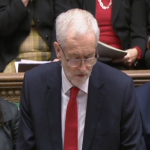
Jeremy Corbyn could be in hot water following the final PMQs of the year. The Labour leader was filmed muttering something under his breath in response to Theresa May, and there is speculation that he called the PM a 'stupid woman'. https://twitter.com/SkyNewsPolitics/status/1075366162945458176?ref_src=twsrc%5Etfw Corbyn started PMQs by saying to the Tory benches 'my Christmas good wishes do extend to everyone over there as well!' If that's really true, Mr S thinks Corbyn has a strange way of spreading the Christmas cheer... Update: Theresa May has responded to Corbyn's apparent jibe... https://www.youtube.com/watch?

Pamela Anderson: I could handle Mr Barnier better than May

From our UK edition

Theresa May is desperately trying to convince both her European counterparts and her British colleagues that her Brexit plan is a goer. However, the Prime Minister has attracted criticism from across the pond – and this time it's not from President Trump. Step forward Pamela Anderson. The former Baywatch start turned left wing activist tells Jacobin magazine about her hopes for a Lexit (left wing Brexit) – adding that her preferred rpute going forward is a Jeremy Corbyn government: 'It is vital that the European Union is thoroughly and fundamentally reformed. Europe deserves a much better form of organized cooperation. And I would really support the UK attempting to create an alternative for Europe.

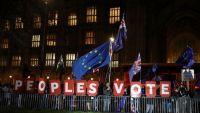
The People’s Vote campaign made a mistake, but it wasn’t deliberate

From our UK edition

A few months ago, the People’s Vote campaign was on the fringe of the national conversation. Today, we are seen by an ever-growing number of MPs as the best – perhaps only – way forward to break out of the current political impasse. As it becomes more likely that the British people will be given the right to have the final say about whether they wish to proceed with a Brexit that can never fulfil the promises made in the referendum of 2016 – or offer terms as good as the deal we’ve already got in the EU – we accept that the media will subject our every statement to increased scrutiny. And, like any campaign, we will make mistakes from time to time. Ross Clark pointed one of these out on Coffee House.

The Cabinet steps-up planning for no deal

From our UK edition

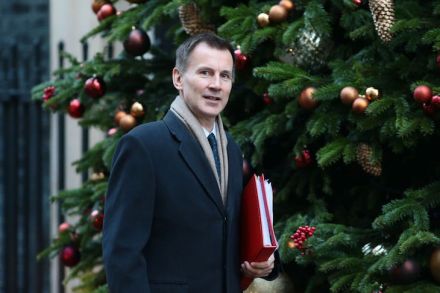
A predictably lively Cabinet meeting today as ministers discussed no-deal planning. Jeremy Hunt said that EU attitudes were hardening because they could see a second referendum coming into view, in part, because of the speculation that people around the Cabinet table were indulging in it. The Foreign Secretary warned that a failure to deliver Brexit would be as devastating for the Tories as the Lib Dems’s failure on tuition fees was to them. Chris Grayling, the Transport Secretary, railed against the Treasury approvals process. He complained that because of it, the government had missed the boat and not booked as much ferry capacity as it wanted. Michael Gove complained about the inefficiency of the borders delivery group.

For all its faults, May’s Brexit deal might be the best option Leave MPs have

From our UK edition

Several cabinet ministers have publicly backed a series of indicative votes in the Commons on the various Brexit options. I understand why, but they're wrong: this approach is both messy and misguided. The best thing for MPs is to spend their Christmas break thinking carefully. Those who have criticised Theresa May's Brexit deal should carefully think through their opposition. It's my view that reports of the death of May's deal are greatly exaggerated. It's obvious there are only now three real options when it comes to Brexit: Leave with no deal; Leave with May's deal; or, don't Leave. Every possible path falls into one of these three boxes. Managed no deal (whatever that is or isn't) is a way of dressing up no deal with a nice bow.

Theresa May’s Brexit deal isn’t dead yet

From our UK edition

One might have expected today’s Commons statement to go rather badly for Theresa May. After all, she had gone to the European Council seeking legal and political assurances and come back with very little. Her anger was shown by the way she confronted Jean-Claude Juncker over his description of her as ‘nebulous’. But it actually turned out rather well for her. May’s decision to say that the meaningful vote will take place in the week of the 14th of January meant that Jeremy Corbyn’s threat – that he’d call a no confidence vote in her personally, if she wouldn’t name a date for the meaningful vote – lost whatever force it might have had. Without that, Corbyn’s response lacked impact and direction.

Watch: Leave MP kicked out of Sky News interview

From our UK edition

As we get closer to Brexit day in March and the campaigners for a second referendum begin to gain momentum, tensions are starting to run seriously high in the Westminster village. But the most recent spat between two MPs might just be the most remarkable sign yet of how fraught relations have become between Remainers and Leavers. On Sky News, Labour MP and second referendum supporter Anna Turley locked horns with Conservative MP David TC Davies about the impact no deal Brexit would have on the country's economy. As the two sparred over which economic forecasts by the Treasury should be taken more seriously, Davies - unable to get a word in - took the unusual step of declaring that he would look at his phone while he waited for Turley to finish.

Why business and the City should speak out against a second referendum

From our UK edition

Parliament is deadlocked. The cabinet is split down the middle and Brussels won’t compromise on the deal it has already offered to the Prime Minister. As the clock ticks steadily towards March 29th, there seems little way out of the impasse surrounding our tortured exit from the European Union. No one can agree on how to leave, or how to stay either. Against that backdrop, it is probably no great surprise that a second referendum is gaining momentum. It is at least a way out of the mess, and possibly a more decisive one than any of the alternatives. Theresa May has spoken out against that today, even if many of her Cabinet ministers are staying strangely silent on the issue. As the debate intensifies over Christmas, business and the City should support her in that stance.

Leo Varadkar is being played like a fiddle by Brussels

From our UK edition

A few decades ago, Irish people would march through the streets of London to holler at the British government: ‘Hands off Ireland!’ As an Irishman, I wish Irish people would now take to the streets of Dublin to say to Leo Varadkar’s government: ‘Hands off Britain!’ For Varadkar’s meddling in British politics, his and his minions’ attempts to scupper Britain’s break from the European Union, is profoundly anti-democratic. What we have here is a foreign leader interfering in Britain’s domestic, democratic affairs. It was wrong when the British did that to Ireland, and it is wrong for the Irish now to do the same to Brexit Britain. The way Varadkar, the Taoiseach, talks about Britain is astonishing.

Six reasons why revoking Article 50 would kill Brexit, not pause it

From our UK edition

Have you noticed how many siren voices are suggesting that Britain rescinds Article 50 to buy time? The Irish Taoiseach, Leo Varadkar, tells us that it is in the UK’s gift to avoid a no deal Brexit and buy “more time to decide what it wants” We have Sir John Major saying “We need to revoke Article 50 with immediate effect. The clock must be stopped. It is clear we need the most precious commodity of all: time.” Versions of this can be heard elsewhere. But it’s legal nonsense, for reasons that are not properly understood. The ECJ did not give us carte blanche to revoke the notice and then re-issue notice as we see fit. Words matter, and each of its words has a legal definition.

Opposition to Brexit is sincere, but it has nothing to do with democracy

From our UK edition

It seems only fitting, living as we do in the Banter Timeline, that Theresa May won an indecisive vote decisively and Jacob Rees-Mogg refused to accept the will of the electorate. The Prime Minister did not secure the confidence of her party last week; she confirmed their lack of confidence that there is any alternative. Mr Rees-Mogg and 116 of his colleagues know this. I dare say a sight more do too. The net result of last week’s melodrama is that the Prime Minister is both strengthened and weakened and those who want her gone have been defeated and elevated. Those whom the gods wish to destroy they first make mad but they are taking the absolute mick now. We are not back to square one because we never left.