Brexit

Who’s at the ‘back of the queue’ now, Obama?

Wasn’t it one of the ‘Remain’ campaign’s big arguments that leaving the EU would deprive us of the ‘clout’ we enjoy in negotiating foreign trade agreements? I seem to remember someone even warning us that in the event of Brexit we would go ‘to the back of the queue’ for a trade agreement with the US. So much for being at the front of the queue. Today, the French minister for foreign trade, Matthias Fekl, demanded an end to talks with the US over the Transatlantic Trade and Investment Partnership (TTIP). It comes hot on the heels of claim yesterday by German deputy Chancellor Sigmar Gabriel that TTIP has failed.

Britain hits back over French threat to scrap Calais ‘jungle’

It’s no surprise that demands from French politicians to scrap the Le Touquet deal and shift the migrant ‘jungle’ from Calais to Dover has gone down badly in Britain. Today’s front pages are full of talk of ‘Le Stitch up’. And the Home Office has waded in to say these plans are a complete ‘non starter’. This all sets the scene for a testy meeting for Amber Rudd as she crosses the Channel to meet her French counterpart, Bernard Cazeneuve, for talks today. Their meeting will be a private one but it isn’t difficult to work out that Calais will be top of their agenda. What’s difficult about finding a

Nicolas Sarkozy threatens Britain over Calais migrant ‘jungle’

During the referendum campaign, David Cameron sparked fury by suggesting the migrant camp in Calais could be shifted to Britain following a vote for Brexit. Now, that threat is resurfacing. This time, it’s French politicians saying they’ll tear up the deal known as the ‘Treaty of Le Touquet’ – a change, they say, which will allow migrants wanting to claim asylum in the UK to do so before they cross the Channel. The president of the Calais region, Xavier Bertrand, is amongst those calling for an amendment to the current deal. The good news for Britain? He doesn’t have the power to do anything about the treaty, so his threats

Why Brexit has the X Factor

Since the British people voted for Brexit in June, there has been a sense of disbelief among luvvies. While Charlotte Church has demanded her ‘f—ing European Union back’, Mr S’s colleague Lloyd Evans reports that the comedy at this year’s Edinburgh Fringe harboured a ‘pleb-hating mood’ when it came to the referendum result. So, Mr S was pleased to learn that the same cannot be said for everyone in show-business. In an interview with the Sunday Times Magazine, Sharon Osbourne — the X Factor judge and wife of Ozzy Osbourne — outs herself as a Brexiteer. What’s more, Osbourne — who was born in Brixton — says that she decided to vote

Why negative interest rates are mad, bad – and dangerous

What should we think about negative interest rates? What kind of Alice in Wonderland world are we living in when companies and households are paid to borrow and charged if they save? Seemingly crazy, negative interest rates are spreading nonetheless. Implemented by central banks in Europe, Japan and elsewhere, they now apply in countries accounting for a quarter of the global economy. Should we be worried? Could we see negative rates in Britain? Earlier this month, the Bank of England cut interest rates for the first time in seven years, from 0.5 per cent to a new record low of 0.25 per cent. Quantitative easing was also restarted, with the

Mark Carney’s referendum ‘uncertainty spike’ exposed as bluster

In the runup to the referendum, we heard repeated warnings that, whatever the outcome of the actual vote, the damage to the UK economy had been done. The Bank of England, whose governor has been accused of becoming something of a fellow traveller for Project Fear, warned in its Monetary Policy Committee meeting in March that: ‘There appears to be increased uncertainty surrounding the forthcoming referendum on UK membership of the European Union’. In April, the BoE was at it again, downgrading second-quarter growth from 0.5 per cent to 0.3 per cent. Warnings such as these risk of being self-fulfilling: if you talk about uncertainty, it’s hardly surprising that investors feel uncertain, creating a

Letters | 25 August 2016

Golden age problems Sir: Johan Norberg’s ‘Our golden age’ (20 August) is absolutely right — we do live in a golden age; antibiotics still work, we have less starvation, the world is open for trade, with all its benefits. But there is a fly in the ointment: human overpopulation. Global warming (if you believe in it), degradation of the environment, extinction of species, all are consequences of it. It is a result, in fact, of our success. The only country to have grasped the nettle — China — is now having second thoughts. Perhaps wind and solar power can provide for our needs when we are 70 million in these islands; but what when

Today’s net migration figures show the huge task facing Theresa May

The good news for the Government is that net migration is down. The bad news? It’s down by so little (a fall of 9,000 to a total of 327,000) that you won’t hear anyone crowing about today’s figures. That the ‘tens of thousands’ target made by the Government still hasn’t been met is no surprise at all. And we can expect to see a continuation of the semantic shift from that Tory ‘promise‘ down to a ‘pledge‘. So apart from telling us that, as far as net migration is concerned, it’s business as usual, what do today’s figures show us? For one, they make it clear that solving this issue won’t

Osborne’s gone. So why’s Carney still around?

Did you see that odd photo of George Osborne looking shifty, queuing up in the Vietnamese jungle for the chance to fire an M60 machine gun? I found it interesting for a number of reasons. One, obviously, is that it’s probably the first time in five years Osborne hasn’t been pictured wearing a hard hat and goggles. Another is what it tells us about his earnings prospects on the US speaker tour circuit: those guns can fire up to 650 rounds a minute — so at the local tourist rate of £1 a bullet that’s quite an expensive cheap thrill. Mainly, though, what struck me about that snap was just

The Boris-bashers should be ashamed

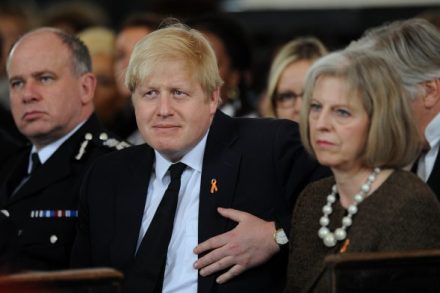
Throughout this fractious summer, one thing has united all the warring pundits and politicians. Left, right; Leave, Remain, everyone at least agrees that it was crazy to leave the country in Boris’s hands. He’s not serious, they say, looking, as they make this pronouncement, jolly pleased with their own relative gravitas. They should instead be ashamed. The endless jeering at Boris isn’t justified — he was a decent mayor of London — and it is not in good faith. What purports to be considered criticism is almost always just sour grapes. Why the bitterness? More often than not, Boris-bashers — in Parliament or press — are his contemporaries. A lot

Mr Brexit meets… Mr Brexit

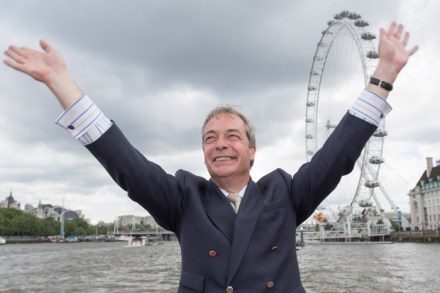
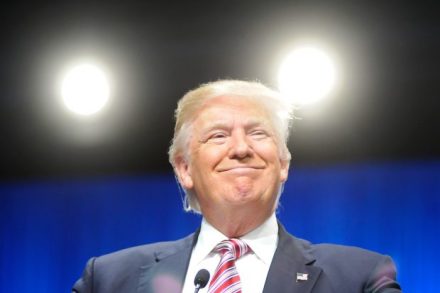
Last week Donald Trump managed to leave hacks and commentariats confused when he took to Twitter to declare that he would soon be referred to as ‘MR BREXIT!’. While many interpreted this to mean that he would win an election against the odds — just as the Leave vote did in the referendum — Mr S was curious to learn that Trump is set to share a platform with the UK’s very own Mr Brexit. Nigel Farage has told Sky News that he will be appear on stage with Donald Trump in Mississippi tonight to discuss ‘The Brexit Story’. Given that Trump has regulary praised Britain’s decision to leave the EU, no doubt Farage

Owen Smith makes a foolish pledge to block Brexit

Jeremy Corbyn’s embarrassing train row is a gilt-edged opportunity for his rival to try and make up ground in the party’s leadership contest. Instead, Owen Smith is more intent on alienating Labour voters by setting out how he wants to block Brexit. It’s a foolish move on Smith’s part. So why has he done it? It seems Smith’s only motivation is to try and snatch away a core group of Corbyn supporters who want Britain to stay in the EU (after all, Corbyn said hours after the referendum that Article 50 should be triggered straight away). But the dim possibility of attempting to gain traction amongst sulking Remainers means Smith

Brexit won’t finish the EU, insist Merkel, Hollande and Renzi

It’s no surprise that Italy’s prime minister Matteo Renzi chose to host a press conference with Angela Merkel and Francois Hollande on an aircraft carrier; this was a piece of theatre designed to show the EU is fighting back. ‘Many thought the EU was finished after Brexit,’ said Renzi. Not so, he claimed. Instead, Britain’s decision to leave the EU was the chance to ‘write a future chapter’ and ‘relaunch the powerful ideas of unity and peace, freedom and dreams’, the Italian PM insisted. All very well, you might think, but what does that mean? Defending the continent against the threat of Islamic terrorism was a key topic. Angela Merkel

Liz Truss confirms there will be a British bill of rights. But we still don’t know when

It’s been over a month since Theresa May stood on the steps of Downing Street. And yet the process of finding out what will define her government is moving slowly. We’ve had snippets of the direction in which it won’t be heading: her decision to put the brakes on Hinkley Point, at least for the time being, shows she won’t be pursuing the Osborne agenda. This has, too, been backed up by reports today that she won’t press ahead with plans for regional mayors with the same fervour as the former chancellor. Yet we’ve had only limited glimpses of what May will be aiming to implement. The catchphrase ‘Brexit means

Team GB is a near-perfect post-Brexit ideal

Throughout our holiday, reports from Rio rippled in — last thing at night, first thing in the morning — a regular golden swoosh of heartwarming news. We are only an averagely sporty family, but these Olympics made us all happier. Across the media, there’s been a mild controversy about whether the remarkable achievements of Team GB say anything bigger about Britain — ‘We always punch above our weight’ — or very little; ‘Sport is sport and only sport, and that’s why we like it.’ But of course there are wider lessons. First, there was real, big long-term investment provided by the National Lottery and the foresight of Sir John Major.

Revealed: the bureaucrat who advised Theresa May to use EU nationals as bargaining chips

The biggest puzzle of Theresa May’s premiership so far is why someone who pioneered laws against modern slavery and was so tough on stop-and-search should take such an extreme and heartless position on EU migrants. Her declaration – that she’d use them as bargaining chips in Brexit talks – struck many who would otherwise support her as bizarre and repugnant. The Times reveals today that this idea was dummed up, as you’d expect, by the Whitehall machine. Sir Ivan Rogers, Britain’s ambassador to the EU, advised all candidates for the Tory leadership to use Britain’s three million EU nationals as bargaining chips in Brexit talks because he thought it would be the

The 17.4 Million Committee must be launched, urgently

When it was reported that Liam Fox and Boris Johnson are already squabbling about who should be in charge of what in relation to Brexit, this was taken by some to be a feather in Theresa May’s cap. Isn’t she clever to have set Leavers against one another, was the thought. Downing Street sources were quoted as saying that she took a dim view of these silly games. But if it is true that Cabinet ministers are already at loggerheads about their roles, might that not suggest that the Prime Minister who invented these roles — and entire new government departments — has not properly defined them? Certainly the short-term

Out – and not proud

‘Many people are mourning,’ said Sam West on a BBC panel show discussing the response of the arts world to Brexit. According to West’s figures, ‘96 per cent of those polled were for Remain. Collaboration and connection are our bread and butter.’ The atmosphere of bitterness and anger was palpable at the Edinburgh Festival. I spent four days immersed in comedy shows and I heard only one pro-Brexit gag. The excellent Geoff Norcott said he was puzzled to meet Remainers who told him the result had been swung by ‘thick’ Leave voters. ‘Thick?’ he said. ‘The Remain campaign waited until after 23 June to stage their street protest.’ Lloyd Evans

Diary – 18 August 2016

Throughout our holiday, reports from Rio rippled in — last thing at night, first thing in the morning — a regular golden swoosh of heartwarming news. We are only an averagely sporty family, but these Olympics made us all happier. Across the media, there’s been a mild controversy about whether the remarkable achievements of Team GB say anything bigger about Britain — ‘We always punch above our weight’ — or very little; ‘Sport is sport and only sport, and that’s why we like it.’ But of course there are wider lessons. First, there was real, big long-term investment provided by the National Lottery and the foresight of Sir John Major.

Defending Brexit

One of the many incorrect predictions about this year’s referendum was that those who voted for Brexit would soon regret it. The theory was that these deluded souls only intended to lodge a protest vote, and would be overcome with buyers’ remorse as Britain fell headlong into a deep recession. Two months after the referendum, there is precious little regret. Polls suggest that just 5 per cent of those who backed Brexit wish they hadn’t; the same is true for those who voted Remain. However, the Remainers have moved quickly and effectively into post-campaign mode and have found a new vocabulary. Their new enemy is ‘hard Brexit’. They seize on