Brexit

Real life | 3 November 2016

For three months after I move to the country, I am told, I am going to be in the most almighty panic. I will ask myself repeatedly what on earth I have done. I will have sleepless nights worrying that I should never have left London. I will wake in a sweat in the early hours gripped by the idea that I cannot possibly survive now I am not ten minutes’ walk from the Northcote Road. And then, magically, one day, about three months in, I will wake up in my country cottage and look out of my bedroom window at the sea of green and say, ‘This is the

Post-Brexit

Staring at a brown envelope, my husband said: ‘I’ll deal with that post-breakfast,’ and then laughed as though he had made a joke. In his mind it was a play on words, the unspoken words being post-Brexit. It is true that no one is safe from that phrase these days. As a compound adjective, it’s not so bad: post-Brexit prosperity. As an adverb, it sounds awkward to me: prices rising post-Brexit. The word Brexit itself was established as more than a passing vogue only after the referendum, I think. It had been invented in 2012, on the pattern of the portmanteau word Grexit ‘Greek exit’, and while the prospect of

Letters | 3 November 2016

An MP’s first duty Sir: Toby Young writes (Status anxiety, 29 October) that Zac Goldsmith’s decision to campaign for Leave in the referendum was an example of his integrity, because ‘anything else would have been a betrayal of his long-standing Eurosceptism as well as his father’s memory’. Goldsmith’s loyalty should have been to his constituents, not his deceased father. Ian Payn London SW6 Standing or sitting Sir: Can I suggest that a sitting MP who resigns their seat in the middle of a Parliament is prohibited from standing in the subsequent by-election? As a taxpayer, I resent having to pay the bill for multimillionaire Zac Goldsmith’s self-indulgent posturing. Dr Louis Savage Cheltenham,

A passage to India | 3 November 2016

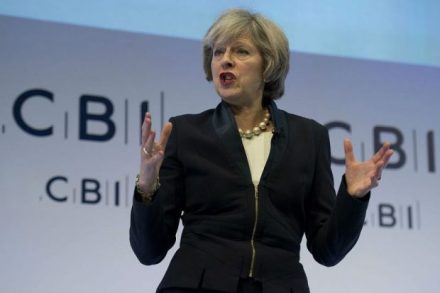
When a Prime Minister flies off abroad with a few business-leaders it is seldom worthy of comment. Such trade missions tend to achieve little, beyond generating headlines intended to flaunt politicians’ pro-business credentials. But with the impending departure of Britain from the European Union,-Theresa May’s visit to India next week, accompanied by Sir James Dyson and others, has huge significance. For the first time in four decades, a British Prime Minister can discuss doing trade deals — something which we have until now been forced to contract out to officials in Brussels. Mrs May has chosen her destination shrewdly. With its rapidly expanding economy and the gradual liberalisation of economic

Theresa May will only regret it if she doesn’t call an early election

Is there anything more absurd than hearing a bunch of Remainers claiming that they have achieved a great victory for Parliamentary democracy in today’s High Court ruling that Parliament should vote on the exercise of Article 50, beginning Britain’s exit from the EU? Parliament voted for a referendum, in which the British people voted to leave the EU. All that today’s judgement does is frustrate that process. As I wrote last week over Heathrow, the judicial review system is fast-turning Britain into a Krytocracy, in which judges wield the real power. All that said, why is the government bothering to fight the judgement? If the Remainers want more Parliamentary democracy,

The Bank of England made a mistake. It should have admitted it

The currency has been devalued by more than 30 per cent. Interest rates have been pushed all the way up to 20 per cent. The IMF is standing by with an emergency package, and capital controls and dollar rationing have been maintained. It has been a heck of a morning for the pound – although, fortunately enough for most us, the Egyptian rather than British one. Over here, it has all been rather quieter. The Bank of England, as most people expected, has stuck with its decision over the summer to take rates all the way down to the 0.25 per cent. It now looks inevitable that it will hold

Government loses Article 50 court fight

The government has lost the High Court Article 50 case. The court has ruled that Article 50, the formal two-year process for leaving the EU, can’t be invoked without parliamentary approval. The government will appeal to the supreme court. If parliament does get a vote on Article 50, I doubt that it would vote it down: the public voted for Brexit in a referendum, after all. But I suspect that parliament would demand far more detail of the government’s negotiating objectives than it is currently prepared to give. The government’s defeat in this case is an embarrassment to Theresa May and the Attorney General Jeremy Wright, who appeared in court

Boris Johnson: Brexit will be a Titanic success

This morning, many politicians will be waking up with a sore head following a well-hydrated night at the Spectator’s Parliamentarian of the Year awards. While the event proved to be a rather lively affair thanks to some choice words from both Theresa May and George Osborne, it’s Boris Johnson who may be wishing he could give his speech a second try. On accepting the award for comeback of the year — and speaking of his hope to last longer than Michael Heseltine’s Alsatian did — the Foreign secretary spoke of his vision for Brexit Britain. Unfortunately his turn of phrasing failed to inspire many in the audience as he promised to

Brexit means Brexit and we are going to make a Titanic success of it

Thank you very much. You are perfectly right, I had prepared two speeches. As some of you may know, I do like to have two versions for these occasions. Thank you very much, George, thank you very much Fraser. What an extraordinary few months it has certainly been and there have been times where I have had to admit that, like the loyal and faithful hound, Kim, to whom George has already alluded, like him, like the faithful alsatian belonging to Michael Heseltine, there have been moments since June 23rd where I have genuinely feared. In those very grim days after June 23rd, I genuinely feared that I might be

Breaking the Bank

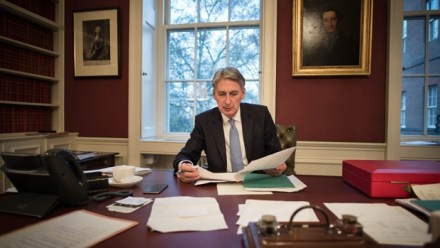
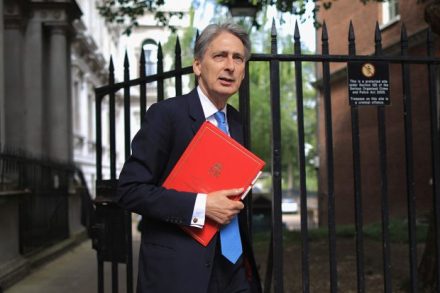
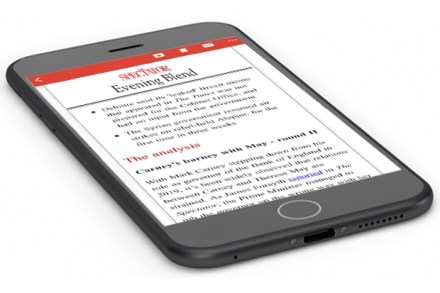
The exchange of letters this week between Mark Carney and Philip Hammond made it very clear who the supplicant was. The Governor of the Bank of England informed the Chancellor of the Exchequer that he was prepared to extend his term by one year. Carney pointed out that while the personal circumstances that had made him want to limit his term to five years had not changed, this country’s circumstances had. So he would be here a little longer. Things had seemed very different a few weeks ago, when Theresa May bemoaned the consequences of the Bank’s monetary policy in her party conference speech. ‘A change has got to come,’

Craig Oliver in the firing line at All Out War launch

To the Policy Exchange for the launch of All Out War, Tim Shipman’s tome on the EU referendum. As the Sunday Times political editor welcomed ‘Bremoaners, Brexiteers, esteemed guests and members of David Cameron’s honours list’ to the launch, he spoke of his relief that there were people present who hated each other more than they hated him. As guests including Michael Gove and Stronger In’s Will Straw sipped on Brexit themed cocktails (with Bloody Michael and Jean Claude Drunker among the drinks that didn’t make the cut), Arron Banks attempted to tout his own Brexit book — the Bad Boys of Brexit — to partygoers, including Gove. Looking back on the referendum,

Watch: Will Straw – I don’t know why I got my gong either

What did Will Straw do to deserve his gong? It’s a mystery which has baffled many – including Mr. S – ever since Straw was handed a CBE for leading the ‘Stronger In’ campaign to a resounding defeat in the referendum. Straw’s inclusion on David Cameron’s resignation honours list was labelled a ‘joke’, while others said it was a clear reward for failure. So the appearance of the head honcho of the Remain campaign at a select committee today seemed like a perfect opportunity for Straw to finally shed some light on what he did to deserve those three letters after his name. Alas, even Straw himself isn’t sure why he got the gong. When asked by Labour’s

The new nostalgia for a pre-Brexit world

Among its many treasures, Brexit has spawned a new genre of think piece, the nostalgic ‘what has happened to the Britain I love’ lament in the Guardian. From an Irishwoman here; an Egyptian here; and a German, here. It is sad to see people on the Wrong Side of History clinging to a mythologised, imagined good old days. This must have been a very different Britain to the one I used to read about in the Guardian that was a hot-bed of racism and intolerance. Still, I’m not sure what has changed exactly; apart from the issue of hate crimes, which are hard to analyse because they are not broken down by

Britain doesn’t need to bluff about Brexit

The Government’s insistence that we should not give away our hand in negotiations with the EU has backfired. It is putting us in a weak position because the primary reason for not giving away your hand is when you are bluffing. We are not bluffing. We are in a strong position and should take maximum advantage of it.  When negotiating with someone who may or may not be reasonable, there is unavoidable uncertainty. We should define the worst that can happen and prepare for it. We can’t control how our opponents behave, but we should define all the things we can control and make sure we control them. Whether or

The markets couldn’t care less whether Mark Carney stays or goes – and neither should we

A crash in the pound, with sterling trading down at $1.15, and heading to parity. A spike in gilts, and a flight by bond investors in a panic over the state of the British economy. As the headlines are dominated by reports that the Governor of the Bank of England might decide to pack his bags and return to his native Canada as early as next year, there has been lots of speculation about the havoc that might inflict on our already jittery post-Brexit economy. Right now, no one seems to know whether Mark Carney is likely to stay on as Governor beyond his initial five-year term or not. But

What the papers say: Should Carney stay?

Mark Carney’s appointment in 2013 as Governor of the Bank of England was almost universally applauded. Yet more recently Carney has become something of a divisive figure. His interventions during the referendum campaign angered many. While his economic policies have also come in for criticism, leading some to call for Carney to quit. So should the Bank of England chief listen to his critics or is it best for Britain’s economy that he stays put? The Daily Telegraph says Carney has been hit by ‘referendum shockwaves’ and suggests that the attacks levied against him during the referendum – whether true or not – have undoubtedly placed him in an uncomfortable position.

Brexit has ruined my case against Scottish independence

I can feel my views on Scottish independence changing. Not enough to write a column about it, perhaps, but enough to sneak in a mention here. Scotland voted to stay in the EU, and England didn’t, and this somehow changes everything. People who argue that Scotland also voted to stay in the UK, and so should lump it, miss that point, probably on purpose. Every aspect of Scotland’s settlement with the wider UK, from devolution to the Barnett formula, accepts that the effect of straightforward majority UK rule needs to be mitigated for the Union to survive. Brexit is a deviation from this. Independence still seems like a bad idea.

History won’t look kindly on David Cameron for more reasons than the referendum

‘Bad policy.’ ‘No discernible impact on the key outcomes it was supposed to improve.’ ‘Deliberate misrepresentation of the data… a funding model that could have been designed to waste money’. ‘A waste of £1.3 billion’. ‘Failed’. The media’s treatment of the troubled families programme, whose evaluation has recently been made public, cannot have cheered David Cameron in his last week as an MP. History does not look likely to be kind to his great social policy. We should, however, be grateful to the former prime minister for his quixotic attempt to do the right thing on a massive scale. Because in doing so he exposed the fallacy which has dominated

Morrissey is right – Brexit really is magnificent

Being an out-and-proud Brexiteer, someone who would go to the barricades for Brexit, someone who might even take a bullet for Brexit, I often get emails from people who feel the same way but feel they can’t express their Brexitphilia in public. This week, in response to my Big Issue column on, yes, the beauty of Brexit, a correspondent tells me that, like me, he voted Leave for liberal, democratic reasons, not Little Englander ones, but such has been the ‘name-calling’ and ‘toxicity’ in response to his decision that he’s had to slink off social media and keep his head down. It’s awful. Loads of Brexiteers feel like this —