Brexit

Why Brexit will never end | 13 June 2018

From our UK edition

I hate to take issue with a fellow Spectator writer, but Robert Peston’s revelation that a “no deal” Brexit is now off the table strikes me as a prime example of Westminster’s ability to ignore the bleeding obvious for months on end then talk cobblers in an authoritative voice when finally forced to confront reality. Robert is far from alone in his conclusion about last night’s Commons vote. To be honest, I’m just taking issue with his post because the spectacle of Spectator writers disagreeing seems to interest some people, probably because they struggle with the idea of one publication publishing multiple and contradictory viewpoints.

After today’s vote, there is now no chance of a ‘no-deal’ Brexit

From our UK edition

So MPs have (narrowly) rejected the Lords' amendment to the EU Withdrawal Bill, which would (if passed) have given parliament the power to force the PM back into negotiations with Brussels if MPs and Lords reject whatever Brexit deal she ultimately negotiates. (Phew: that was a mouthful). But the price Theresa May is paying for that victory - paying to Tory Remainer rebels led by Dominic Grieve - is that she has agreed to redraft the Bill when it returns to the Lords so as to account of Grieve's own amendment to the bill.

Government avoids defeat on ‘meaningful vote’ – but is this a win?

From our UK edition

Given this morning's ministerial resignation, all looked set fair for an afternoon of high drama in the Commons over the EU Withdrawal Bill. In the end, though, the drama was rather quieter, with the government managing to persuade the Remainer rebels to stand down - temporarily - on the matter of a 'meaningful vote'. Chief Whip Julian Smith spent the majority of the debate buzzing about the Chamber, consulting with ministers and backbenchers and also beckoning MPs out of the room in little groups. It is since clear that Smith was negotiating the compromise that Solicitor General Robert Buckland started offering during the debate. Initially, Buckland offered the rebels 'structured discussions' on the matter.

In defence of ‘no deal’

From our UK edition

Imagine the industrial levels of brass neck it must require for EU-supporting MPs to present themselves as defenders of parliamentary sovereignty. That’s what they’re doing today, on ‘Brexit Super Tuesday’, as they start voting on the Lords’ amendments to the government’s Brexit Bill. They say they are backing the amendment that would give MPs a ‘meaningful vote’ on the final Brexit deal because they love parliamentary sovereignty that much. Pull the other. These are people who for years happily handed over huge swathes of law-making to Brussels bureaucrats and would still like EU law to enjoy supremacy over UK law. They support parliamentary sovereignty like an electric chair supports your back.

Philip Lee’s resignation shatters Tory Brexit truce

From our UK edition

Although Theresa May managed to unite her MPs briefly on Monday night and put off a customs union confrontation on today's EU withdrawal bill votes, not everything is going to plan. Philip Lee has this morning broken that truce and resigned as justice minister to fight Brexit. Speaking at a Bright Blue event, Lee said that he was returning to the backbench so that he could speak out on the government's Brexit policy – which, he says, threatens human rights: https://twitter.com/DrPhillipLeeMP/status/1006456465886973952 'Resigning as a minister from the Government is a very difficult decision because it goes against every grain in my soul. The very word resign conveys a sense of giving up, but that is the last thing I will do. I take public service seriously and responsibly.

Tory Remain rebel goes in for the kill

From our UK edition

Oh dear. It seems that not everyone has taken Theresa May's appeal for party unity to heart. Although Amber Rudd and Iain Duncan Smith penned a Sunday Telegraph article calling for Tories to come together this week for the EU Withdrawal Bill votes, not everyone appears convinced. Over the weekend, former Remain rebel Antoinette Sandbach took to social media to tweet 'Remainers need courage to go for the kill', and share Matthew Parris's Times column on the topic. In the piece, Parris urges would-be rebels to not be put off rebelling by the whips: 'This is the moment when you must lift your eyes from the trees and see the wood.

Brexit, the view from Love Island

From our UK edition

Theresa May's cabinet is divided and her MPs increasingly worried over the government's Brexit plans – or lack thereof. Yet despite all this, the latest Times/YouGov poll puts the Tories seven points ahead of Labour. With many in Westminster left scratching their head over the apparent disconnect, could a clue be found in ITV2's Love Island? Mr S only asks after Friday's episode saw contestants on the popular reality show – in which twenty-somethings attempt to find their perfect match – discuss the issue of the day. Only, rather than talk backstop options, customs arrangements, the Irish border or post-Brexit immigration systems, the conversation centred around what Brexit was and whether the UK would still have trees come March 2019: https://twitter.

David Davis warns Tories are at risk of 1997-style defeat if Britain is under the backstop in 2022

From our UK edition

David Davis has, I write in The Sun this morning, warned the Brexit inner Cabinet that if Britain is under the backstop at the time of the next election then the Tories will suffer a 1997-style defeat. The Brexit Secretary argued that this risk meant that the UK had to keep control of the backstop: it had to be able to choose when to end it. But Davis lost this argument with the Prime Minister. However, Number 10 have assured Brexiteer Cabinet Ministers that the UK will be out from under the backstop by the time of the next election in 2022. I am told that Theresa May is hopeful that the new customs arrangement can be nailed down by the end of 2021 at the latest. But this seems distinctly over optimistic.

Barnier’s reality check adds to May’s Brexit woes

From our UK edition

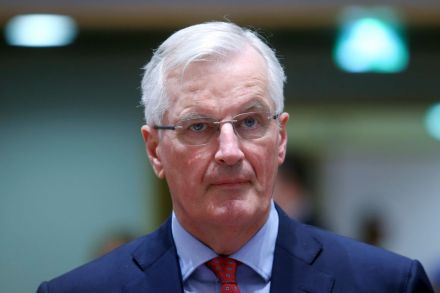
Could Brexit talks soon be heading for the ‘meltdown’ that Boris Johnson predicted? Michel Barnier’s press conference just now hardly inspires confidence that things are going to plan. The EU’s chief negotiator said that Britain was playing a ‘blame game’ in Brexit talks and that it had to accept the consequences of its decision to leave the EU. He went on to call for the British government to have something of a reality check over the way things were going. Today, that reality check came in the form of his rejection of Britain’s backstop proposal to solve the Irish border problem. Theresa May had put forward the suggestion that the whole of the UK would remain in the customs union after Britain leaves the EU next March.

Boris Johnson must learn there is more to life than Brexit

From our UK edition

I know we’re not supposed to be shocked or even surprised by anything Boris Johnson says any more – “Boris is Boris” and all that. But still I find that one of the comments revealed in Alex Spence’s excellent Buzzfeed scoop about the Foreign Secretary is gnawing at me. It’s this: “It’s so small and there are so few firms that actually use that border regularly, it’s just beyond belief that we’re allowing the tail to wag the dog in this way. We’re allowing the whole of our agenda to be dictated by this folly.” He was referring to the small matter of the border between Northern Ireland and the Republic of Ireland, to which so much attention is paid in the Brexit talks.

The Spectator’s Notes | 7 June 2018

From our UK edition

A distinguished retired EU diplomat from a small EU member state sends me a thoughtful letter. He complains that Brexit ‘has been handled in the most amateurish way by British politicians’. ‘When one removes something,’ he goes on, ‘one has to be ready with its replacement’: Mrs May ‘is far from clear in her plans, but those who criticise her are not any clearer’. All this is true, and it points to the weirdness of our current situation, which is that Brexit is not being executed by a government that wants it. In conversation, people often say ‘The Brexit supporters promised X’, and then accuse them of breaking that promise.

Boris Johnson leaked tape: best quotes

From our UK edition

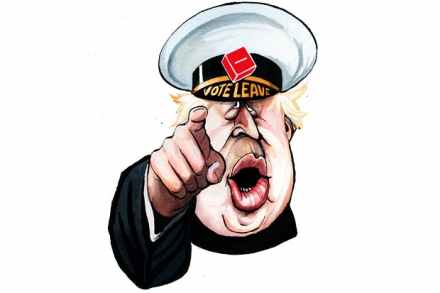
While David Davis has hogged the headlines recently, Boris Johnson has been slowly losing his cool over Brexit and lost it, just a little bit, when addressing Tory activists at the Conservative Way Forward on Wednesday. It was a candid speech but, with recording devices built into every smartphone, it was hardly surprising that it should have leaked. Perhaps BoJo, fed up with Theresa May's Brexit backsliding, wanted it to leak. The Times and BuzzFeed have the story, and here are the best quotes. On HM Treasury "What they don’t want is friction at the borders. They don’t want any disruption. So they’re sacrificing all the medium and long-term gains amid fear of short-term disruption . . .

Theresa May gives David Davis a backstop concession

From our UK edition

After a morning of high drama in Westminster, the UK government now has a backstop proposal to put to the EU. Last night, the backstop text said that it was time limited but didn’t specify an end date. In two meetings with the Prime Minister this morning, David Davis demanded changes. He has got some concessions: the text now talks about how ‘The UK expects the future arrangement to be in place by December 2021’. But there is no hard cut-off date in the text. Theresa May was acutely aware that if one had been included, the EU would have rejected it out of hand. We now wait to see what the EU says about it. Michel Barnier has already tweeted his three tests for it.

A Very English Coup d’Etat

From our UK edition

They say that the devil is in the detail – and that is certainly the case with the government's Brexit plans on defence and security. On 24 May, Gavin Williamson delivered a major speech on defence at the First Sea Lord’s Seapower Conference. It was a good speech, but then, under cover of the positive news coverage which it attracted, the Department for Exiting the EU slipped out a 'Technical Note'. They must have hoped nobody would notice. Plenty of Brexiteer ministers didn't seem to spot it, although goodness knows why not. But at Veterans for Britain, we did notice. We are on Red Alert. There are key civil servants and ministers who we do not trust and so we keep them under close observation.

Will David Davis resign tomorrow? I would not bet against it

From our UK edition

David Davis, the Brexit secretary of state and arguably the most important minister in this government other than the Prime Minister, faces a moment of truth tomorrow. He is completely clear that it would be a disastrous mistake for the Prime Minister and the UK government to offer Brussels a backstop proposal for keeping the Irish border open that does not contain a specified end date. His reason is simple. That backstop would commit the UK to staying in the customs union and single market. And once the EU were to have that commitment, Davis believes - plausibly - that his Brussels interlocutor Michel Barnier would no longer have any incentive to negotiate seriously on alternative arrangements for keeping the border open.

Watch: Labour’s Brexit strategy gets picked apart

From our UK edition

Boris Johnson's critics happily queued up to take a pop at the Foreign Secretary when he said his position on Brexit was to 'have our cake and eat it'. Yet it seems the Labour party is determined to take the same approach. Keir Starmer says Labour wants ‘full access to the internal market’ while retaining the ‘benefits of the single market’, even though the party has already ruled out free movement of people – a key EU demand. It fell to shadow transport secretary, Andy McDonald, to attempt to defend Labour's 'have-it-both-ways' attitude to Brexit this morning: Andrew Neil: Why would the EU agree to giving us full access without one of the key conditions, which is free movement of people? Andy McDonald: Well, that’s the negotiation, Andrew.

Why the Brexit backstop is causing trouble

From our UK edition

The government’s proposal for a UK-wide backstop will not contain an end date. This, as the Times' Sam Coates points out, is bound to be controversial. For if the backstop contains no end date, it could end up running indefinitely. Indeed, with the UK in a customs union and having to follow EU rules on goods and agriculture, it is hard to see what incentive the EU would have to discuss a trade deal. After all, what would be left to discuss would be services: where the UK has a £92 billion surplus. There is a meeting of the Brexit inner Cabinet tomorrow. But as Tom Newton Dunn and Harry Cole point out in this morning’s Sun, this is not meant to be discussing the backstop but tidying up other issues related to the withdrawal agreement.

Can the EU withdrawal bill survive its return to the Commons?

From our UK edition

Put June 12th in your diary, for that’s when the EU withdrawal bill will return to the House of Commons. Julian Smith, the chief whip, has written to Tory MPs telling them, ‘There will be a number of divisions that day’ as the government attempts to overturn the Lords’ amendments to the bill. Smith’s letter includes a pointed reference to the Tory manifesto, which included a commitment to leave the customs union. This is designed to remind potential Tory rebels that they’d be breaking with the manifesto on which they were elected if they vote for the customs union amendment. But it’ll take more than this to get the government through these votes. One Cabinet minister tells me that it is ‘going to get messy’.

Sadiq Khan’s Brexit stance isn’t ‘brave’ | 4 June 2018

From our UK edition

It’s always good to remind Sadiq Khan that Brexit is more popular in London than he is. Khan loves to play the role of Mayor of Remainia, the political figurehead of this oh-so-clever capital city that can see through the folly of Brexit that those strange inhabitants of Essex, the North and Wales voted for. And yet while it’s true Londoners voted Remain by 59.9 per cent to 40.1 per cent, the fact is more of us voted for Brexit than we did for Khan: 1,513,232 Londoners want to leave the EU, which is 200,000 more than the 1,310,143 who wanted Khan as mayor. So Brexit was such a massive and popular demand for political change that even in ‘the Remainer city’ of London its supporters comfortably outnumber supporters of the actual mayor.

The Brexit myth that must be busted

From our UK edition

A neat but delusional mythology appears to be gaining currency (see, for example, Lloyd Evans’s interview with Bernard-Henri Lévy) that the Brexit referendum can be understood as a conflict between metropolitan elitists voting Remain and the frustrated masses beyond the M25 longing to Leave. This analysis may chime satisfyingly with recent trends in some other democracies, but it distorts what happened in this one. In the two UK countries furthest from London, the votes went against Brexiting by bigger margins than the UK-wide Leave majority: 56-44 in Northern Ireland, and 62-38 in Scotland. London vs The Rest only works if The Rest ends at Carlisle.