Brexit

Low life | 17 May 2018

From our UK edition

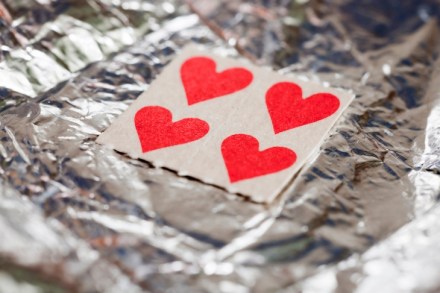
An 87-year-old friend, a former doctor, has been urging me for some while to have a look at the latest smart drug fad among affluent Americans, which is to go to work every day on a tiny dose of LSD. He’s an avid reader of the Scientific American and I think he must have read about it in there. He hoved into view at the Spectator Life party the other week and I turned aside from my conversation with the Hungarian ambassador to ask him whether he had managed to get hold of any yet. ‘I bought a ton of it,’ he said. (He is an enthusiast and always buys ‘a ton’ of everything, whether the latest smart drug or something off the street.) ‘And?’ I said. ‘It comes on tiny squares of blotting paper,’ he said.

Who can bridge the great divide?

From our UK edition

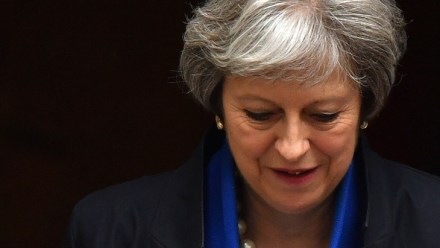
Amid all the argument in Westminster, everyone can agree on one thing: the country is bitterly divided. The 52:48 divisions of the Brexit referendum are still there, and possibly even more entrenched than during the campaign itself. The result hasn’t been followed by a period of national healing — quite the opposite. Even the cabinet appears to be split along Leave and Remain lines. You would have to go back a quarter of a century to find a time when the two main parties were so far apart. The public, however, shows no sign of deciding which path it wants to choose. The general election resulted in a hung Parliament, and the local elections earlier this month suggest that if Theresa May went to the country tomorrow, the result would be even more inconclusive.

The art of the impossible

From our UK edition

The extermination of every single one of South Georgia’s rats, for the sake of its birds, was confirmed at a press conference in London last week. A summer of searching with dogs and bait two years after the last poison was deployed turned up no sign of a rodent. This achievement is remarkable, not least because it was deemed impossible right up until it was achieved. It was a barmy idea, way out there, crazy, bound to fail. Like lots of other ideas. Maybe there’s a lesson here. The island got infested with rats from whaling ships centuries ago, and they soon exterminated endemic pintails and pipits from the main island, driving the remnant populations of prions and petrels into the rat-free mountains. Only the penguins were rat proof.

A Brexit ‘power grab’ could play into the SNP’s hands

From our UK edition

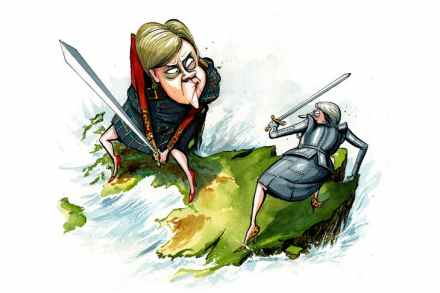
The stramash between Theresa May’s government in London and Nicola Sturgeon’s ministry in Edinburgh over the need for the devolved parliaments to consent to the UK government’s EU withdrawal bill is, as the wags say, the world’s most boring constitutional crisis. So much so, indeed, that many voters in Scotland – to say nothing of elsewhere in the realm – remain splendidly indifferent to it.  The Scottish parliament yesterday refused to give its consent to the withdrawal bill. Legally, this changes little. Politically, it has the potential to change many things. Nicola Sturgeon, with the support of Labour, the Lib Dems and the Greens, says she is “protecting devolution” and standing up for the Scottish parliament.

Benedict Cumberbatch’s big Brexit challenge

From our UK edition

Benedict Cumberbatch has a reputation as one of Britain's finest actors. The Sherlock actor has won plaudits across the world. He is also politically engaged – previously ranting on-stage about the government’s response to the refugee crisis following a performance of Hamlet at the Barbican. According to the Daily Mail, Cumberbatch let it be known that he thought the government’s pledge to take 20,000 refugees was not enough, before — eloquently — concluding: ‘f— the politicians’. The comments led Mr S to ask: is Benedict Cumberbatch the new Russell Brand? So, is his next job his greatest challenge yet?

Brexit debate: Andrew Adonis vs Robert Tombs

From our UK edition

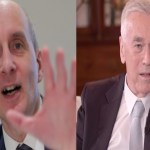
Robert Tombs, professor of European history at Cambridge University, and Labour peer Andrew Adonis took part in a discussion on the following question: Should those who know their history welcome Brexit? Here is an edited transcript of their arguments in the debate hosted by 'Our Future, Our Choice' and Clare College, Cambridge: Andrew Adonis: Robert Tombs has been very strident about Brexit in his post-2016 statements. He says joining the European Union was 'an immense historical error, borne of exaggerated fears of national decline and marginalisation, and a vain attempt to be at the heart of Europe'. However, what I find interesting reading his book, The English And Their History, you will not be able to detect that Professor Tombs is a Brexiteer.

United Nations’ British racism report gaffe

From our UK edition

Brexit Britain is a more racist country than before the referendum, according to the United Nations, whose inspector told us on Friday that anti-foreigner rhetoric has now become ‘normalised’. But how did Tendayi Achiume, the UN’s special rapporteur on racism, manage to make such a stark finding having spent just 11 days in Britain? After all, if her 'end of mission statement' is anything to go on, Mr S. thinks her conclusions might have been somewhat cobbled together. Achiume, it seems, didn’t even get a chance to run her damning report through a spellcheck before publishing it. Referring to a study by Warwick University, Achiume managed to misspell the university’s name as 'Warrick'...

May briefs MPs on customs options as timetable for decision keeps slipping

From our UK edition

Tory backbenchers have been briefed today by the Prime Minister on the different options for Britain's customs arrangements with the EU after Brexit. There was a presentation on the two different plans, and a summary which one MP who attended described as 'everything is just going terribly well'. The expression on this MP's face suggested that he didn't necessarily agree with that assessment. These briefings are taking place as the two working groups in Cabinet meet to discuss the two options set before MPs today: the 'max fac' solution or the new customs partnership.

Why Karen Bradley is, for the next few days, the most important person in the government

From our UK edition

In the Brexit inner Cabinet meeting last week, it was clear that Theresa May’s main objection to ‘max fac’, the customs arrangement favoured by Brexiteers, is that it wasn’t consistent with her aims for the Irish border. So, Karen Bradley, the Northern Ireland Secretary, has been put on the Cabinet’s max fac working group to examine if it is compatible with the government’s position on the Irish border. As I say in The Sun this morning, if, at the end of this process, Bradley says that it could work in Northern Ireland then Mrs May would be able to climbdown with dignity. Bradley is a May loyalist—she was one of her junior ministers at Home Office.

The House of Lords is out of control — it’s time for abolition

From our UK edition

The Lords have lost it. They’re out of control. They have taken a wrecking-ball to the government’s plans for Brexit 14 times in recent weeks, putting themselves on a war footing with the people we actually elect. They are behaving like they did in the first decade of the 20th century when they arrogantly vetoed the Liberal government’s People’s Budget. ‘The House of Lords regards all our liberties and political rights as enjoyed and as enjoyable only so long as they choose to let us go on having them’, fumed Winston Churchill back then. Where’s the modern Churchill to put these ermine-robed loathers of the largest democratic vote in British history, the vote for Brexit, back in their place?

The Spectator’s Notes | 10 May 2018

From our UK edition

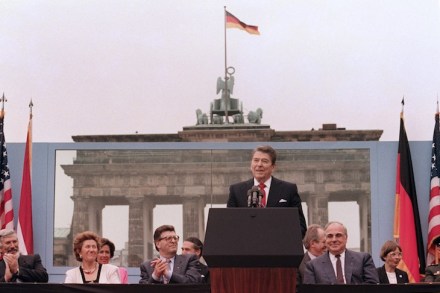
The point behind the argument about the Iran nuclear deal goes beyond precise nuclear facts. It is like the row over SALT II when Ronald Reagan succeeded Jimmy Carter as US President in 1981. SALT (the Strategic Arms Limitation Treaty) was not formally junked, but it did not operate because, after the Soviet invasion of Afghanistan at the end of 1979, the Americans felt the necessary trust was absent. Better times, including the coming of Mikhail Gorbachev, allowed Reagan to pursue negotiations which culminated (under his successor, the first George Bush) in START I (the Strategic Arms Reduction Treaty) being signed in 1991. By then, the United States and its Nato allies had backed huge changes in the Soviet bloc and won the Cold War.

Universities challenged | 10 May 2018

From our UK edition

British universities have serious problems. The recent strikes protesting against a sudden reduction in pension rights were unusually effective, and a symptom of wider discontent. Yet international comparisons invariably show our universities to be among the best in the world, and incomparably the best in the European Union. This apparent paradox is easily resolved: universities in other countries have problems too, and often worse. Our problems are serious nevertheless.

Brexit has driven me mad, but I can’t let it go

From our UK edition

Rosé wine is, I know, considered naff. Were you unaware of this you’d fast conclude as much from the incidence of lifestyle commentary informing us that rosé is newly smart. As with those columns advising that everyone is drinking sherry now, or that some prosecco is actually OK, or that men will be wearing skirts this summer, it’s usually a safe assumption that the opposite is true but an enterprising journalist aims to surprise us with an amusing unlikelihood. Anyway, I love rosé wine and we had brought a case of pretty inexpensive stuff back from Rioja, of all places. The bank holiday weather was glorious, the llamas were frolicking and blackbirds sang in the wood as I sat outside in the Derbyshire sun and sipped. But there was a shadow.

Aussie rules | 10 May 2018

From our UK edition

When friends speak, you should listen — and you would be hard pressed to find a better friend of this country in the London diplomatic corps than Alexander Downer. The 66-year-old, who has just finished a four-year stint as the Australian High Commissioner, is an Anglophile by instinct and upbringing. He spent much of his childhood here because his father was appointed to the job in 1964. When Downer’s father left in 1972, he worried about this country joining the European Economic Community and what that would mean for relations with Australia and other Commonwealth countries. So there is a neat symmetry in his son being High Commissioner when Britain decided to reverse that decision. But Downer is not particularly ideological about Brexit.

Why should we give in to EU blackmail over the EU border?

From our UK edition

In deference to public exhaustion, I’ve largely avoided Brexit in this slot. But a columnist’s output ought rightly to echo what she shouts at the television news. Big picture, the UK may have made an utter Horlicks of its putative withdrawal from the European Union because Britain should never have come to the EU with a begging bowl in the first place. Walking out first and reverting coolly to WTO rules, the UK might have negotiated from a position of strength. You don’t slap a party in the face, only to implore that same party for special favours while his face is still smarting. Big surprise, the strategy has been unavailing. Hindsight aside, the biggest mistake the UK continues to make is to naively accept the EU’s opening construct.

Tory Brexiteers and Remainers finally settle their differences

From our UK edition

Tory Brexiteers and Remainers might share the same benches in parliament but they don't always see eye to eye these days. Which makes Mr S pleased to see the likes of Crispin Blunt and Ken Clarke find common cause this afternoon. So what did they finally manage to agree on? Blunt and Clarke – as well as outspoken Brexiteer Peter Bone and the Remainer Tory MP Dominic Grieve – rebelled against the government by voting in favour of Leveson 2. It's just a pity that they were all on the losing side...

The Brexit compromise that satisfies nobody

From our UK edition

The EU referendum result was relatively narrow. 52/ 48 per cent is a very different result from 55/ 45 per cent or 60/ 40 per cent. In these circumstances, seeking some kind of compromise to try and unite the country seems sensible. But the problem is that while there is a coherent case for leaving the EU and a coherent one for staying in, it is hard to see what the coherent case is for leaving the EU only to become a permanent member of the EEA and stay in a customs union with the EU. A compromise along these lines would satisfy nobody. It wouldn’t deal with the sovereignty concerns of Brexiteers and it wouldn’t satisfy those Remainers who want to be at the European top table as the rules are made.

Theresa May is making Cabinet unrest on the customs partnership worse

From our UK edition

Boris Johnson's rather bold move on the customs partnership hasn't yet landed him in trouble, even though it has enraged some of his pro-Remain colleagues. At the Number 10 lobby briefing today, the Prime Minister's spokesman avoided giving the Foreign Secretary a slap down when asked whether Theresa May was happy that he had told the Mail that the customs partnership plan was 'crazy'. Instead, the spokesman used the sort of formula of words that declines to offer any sort of comment on anything at all: 'There are two customs models that were first put forward by the government last August, and most recently they were outlined in the Prime Minister's Mansion House speech, which the entire cabinet was signed up to.

Heidi Alexander joins the march of the moderates out of Westminster

From our UK edition

The march of the Labour moderates away from Westminster continues, with Heidi Alexander the latest to quit parliament. The Labour MP announced this morning that she will stand down from her seat and take up a job working with Sadiq Khan at City Hall. Her departure is no real surprise: speculation has been rife for a while that she would quit. It has also been obvious that Alexander wasn’t happy, to say the least, working under Jeremy Corbyn. Alexander was one of the first to quit the shadow cabinet in 2016 in the wake of the referendum. At the time, she told Corbyn that ‘a change of leadership is essential’, in the hope that Labour's moderates could oust their leader.