Brazil

The rage of the Bolsonaro voter

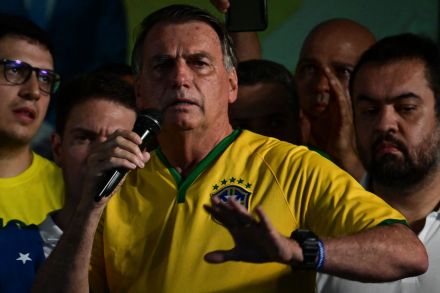
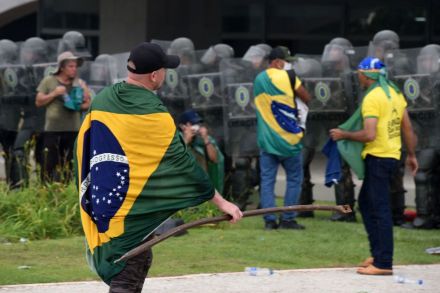
Despite being the world’s fourth largest democracy, Brazil was barely on the radar for most Americans until the meteoric rise of Jair Bolsonaro in 2018. Bolsonaro’s presidential campaign caught attention because of the perceived similarities between him and Donald Trump. Many observers, including the Brazilian-American journalist Glenn Greenwald, argued this comparison was overstated. Yet while Trump and Bolsonaro may be quite different, the recent trajectory of Brazilian politics has been strikingly similar to that of its North American ally.

Cockburn’s Christmas party chronicles

Shaker Heights, Ohio This year, Cockburn’s annual call for Christmas party invitations took him all over the country: DC, New York, even to one to “the longest-running libertarian-hosted Christmas party in Ohio.” What type of libertarians were these? he wondered, as visions of a drug-laced hors d'oeuvre platter and laissez-faire lovemaking danced in his head. “The party has spawned one marriage and three children,” Cockburn’s invitation said, confirming his suspicion (and hope) that all libertarians are also libertines. The Ohio party was advertised as “multi-generational,” and Cockburn’s would-be hosts helpfully added, “We managed to kill no one attending during Covid years.

christmas party

My part in Jair Bolsonaro’s downfall

From our UK edition

Rio de Janeiro When I first began writing about politics in 2005, my Brazilian husband, David Miranda, was not remotely interested in the subject. When politicians or journalists would visit us in Rio and invite us to dinner, he would always try to get out of it: ‘I’m not going; you’ll talk about nothing but politics the whole night and I will be desperately bored.’ In 2013, David was detained at Heathrow under the Terrorism Act 2000. I’d been working on the Edward Snowden story, uncovering the extent to which the NSA and GCHQ surveil their own citizens, and David had travelled to Berlin to help with a documentary about the investigation.

Can Boris Johnson salvage COP26?

From our UK edition

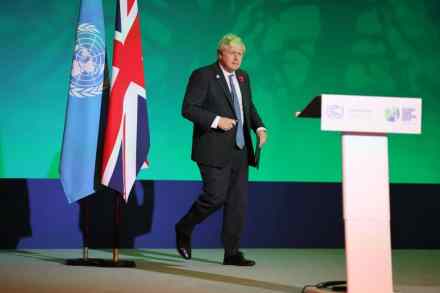
It’s day two of COP26 and so far the climate summit in Glasgow has made news for travel chaos, Greta Thunberg’s swearing and the Archbishop of Canterbury’s unfortunate ‘Nazi’ climate comparison. There was some disappointment among government officials on Monday when India only set a target of 2070 to reach net zero, but ministers are hopeful that today – which is the last full day many world leaders will spend at the two-week summit – will see better headlines. This is also the first agreement Boris Johnson can really shout about The first of which is an agreement between more than 100 world leaders to end and reverse deforestation by 2030.

Bolsonaro falls as South America tilts toward socialism

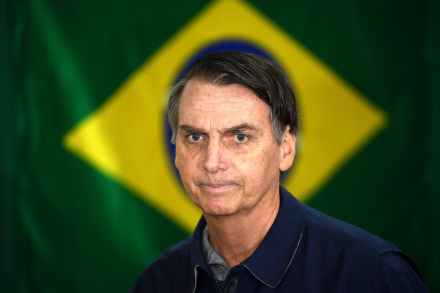
After a bruising campaign, the leftist former president of Brazil Lula Ignacio Da Silva appears to have won back control of the Palácio da Alvorada, the Brazilian presidential residence. Lula defeated conservative incumbent Jair Bolsonaro by the narrowest of margins and is now poised to bring back socialist leadership to the world’s fourth-largest democracy. However, the result was by no means a blowout for Lula and his Workers' Party, which polls had suggested could win a landslide victory. In reality, Bolsonaro outperformed expectations just by taking the vote to a second round, while his Social Liberal Party maintained control of Brazil's congress. Nevertheless, the outcome marks an incredible comeback story for the 77-year-old Lula.

Bolsonaro isn’t finished yet

From our UK edition

São Paulo The polls got it wrong again. In the first round of Brazil’s presidential election on Sunday, challenger Luiz Inácio Lula da Silva (Lula) got 48.4 per cent of the vote, 5.2 points ahead of the incumbent Jair Bolsonaro. Polls had predicted a possible first-round win for the insurgent. But – with neither candidate gaining a majority – they will now face a run-off election on 30 October. Bolsonaro hasn't just flirted with the idea of a coup, he's wined and dined it Lula has the lead and remains sanguine about victory. But the momentum is with Bolsonaro, the populist former army captain whose chaotic administration has polarised Brazil.

Bargain Brazilian wines

Some people think that wine is a serious business. I am often tempted to think that myself, but then I remember an amusing cartoon by James Thurber called “The Wine Snobs.” It shows four people sitting around the dinner table, each holding up a glass of wine. There is an air of resigned dubiousness emanating from the table as whole. But the W.S. himself sports a big smile and says enthusiastically “It’s a naive domestic Burgundy without any breeding, but I think you’ll be amused by its presumption.” Been there, done that. We’ve tasted some pretty fancy wines together in this column, and I hope there will be plenty more to come. At the end of the day, though, wine for most of us is chiefly about pleasure and camaraderie, not connoisseurship.

brazilian

Don’t be surprised if Bolsonaro wins again

From our UK edition

Brazil’s Donald Trump has a challenger. Jair Bolsonaro is preparing to take on his predecessor, Luiz Inácio Lula da Silva, in what will be the socialist’s sixth run at office. But if the flamboyant Bolsonaro is Trump, does that make Lula the Brazilian Biden? Part of the reason Trump lost was his erratic response to the Covid crisis. In Brazil, Covid policies are mostly set at the local level. But Bolsonaro has been pilloried in the press for opposing shutdowns, appearing at rallies without masks or social distancing, and promoting chloroquine and Ivermectin as treatments. He refuses to get vaccinated. He has also done himself no favours with impatient and petulant answers to journalists’ questions about the pandemic. He comes off sounding uncompassionate.

Snakes alive! Playing cricket in Latin America

From our UK edition

Cricket in Latin America sounds like an oxymoron. Yet in almost every country in the region willow was hitting leather before feet were kicking pigs’ bladders. England vs Australia, first played in 1877, may be cricket’s iconic series, but the Ashes cedes ten years of history to the contest between Argentina and Uruguay — the rivalry of the River Plate. In Evita Burned Down Our Pavilion, James Coyne and Timothy Abraham, cricket journalists with a fondness for Latin America, travel from Mexico to Argentina with bat in rucksack and dates with fusty archives. A social history with elements of travelogue, the book tells a story of new horizons and false dawns, as the most English of pastimes tried to drop anchor amid scorpions, populist regimes and general bafflement.

How worried should we be about the Brazilian variant?

From our UK edition

How worried should we be about the news that P1, one of the two Brazilian variants of Sars-CoV-2, has been found in six people who travelled from Brazil to Britain before the hotel quarantine rules came into force, and that one of these people has yet to be traced? Variant P1 is of concern not just because laboratory study has revealed changes to the spike protein, which might make it theoretically more transmissible, but because of real-world data from Manaus, the Amazonian city to which its origins have been traced. It was first detected in Japan on 6 January among a family which had travelled from the city.

Contains nothing you couldn’t get from Wikipedia or YouTube: Netflix’s Pelé reviewed

From our UK edition

Pelé is a two-hour documentary about the great Brazilian footballer — the greatest footballer ever, some would say — who played in four World Cups (a record) and was one of the first global sporting superstars. But while there is plenty of footage showing his astonishing talent, if you’re interested in what made him tick, or what his life was like off the pitch, or how adulation might ultimately mess with your head, then move on, nothing to see here. Or, to put it another way, if, like me, you’re the sort of person who goes straight to ‘Personal life’ whenever you look someone up on Wikipedia, it’s as if that section has been excised. However, if you are not that sort of person, you may come away more satisfied and less bored.

What we know about the Brazilian Covid variant

From our UK edition

The World Health Organisation’s appeal to stop naming variants of Covid-19 after geographical locations evidently cut no ice with the Prime Minister, who warned MPs yesterday about a new Brazilian mutation of the Sars-Cov2-virus. Chief scientific adviser Sir Patrick Vallance later suggested to ITV News that the changes identified in the new variant ‘might make a change to the way the immune system recognises it but we don’t know. Those experiments are underway.’ According to Pfizer last week, its vaccine still offers protection against the newly-identified Kent and South African variants of the Sars-CoV-2 virus. But should we now be worrying that the Brazilian variant will creep through our defences?

Has this Brazilian city reached herd immunity without lockdown?

From our UK edition

Throughout the Covid crisis, the international response to the disease has rested on a simple assumption: that none of us have any resistance to it, being caused by a novel virus. Therefore, if allowed to let rip through the population, the virus would exponentially spread until around 60 – 70 per cent of us had been infected and herd immunity was reached. This was the assumption behind Neil Ferguson’s paper in March, claiming that Covid-19 would kill 500,000 Britons if nothing was done and 250,000 of us if the government carried on with the limited mitigation polices it was then following. Yet real world data has challenged this assumption.

Brazilian wax

This article is in The Spectator’s November 2019 US edition. Subscribe here. When Brazilian president Jair Bolsonaro spoke at the United Nations General Assembly in late September, he depicted Brazil as a victim of colonialism. ‘The United Nations has played a fundamental role in the suppression of colonialism,’ he said, ‘and we cannot allow this mentality to return to these rooms and corridors at any pretext. We cannot forget that the world needs to be fed.’ Foreign countries, Bolsonaro alleged, have ‘an interest in keeping indigenous people living like cave men’.

brazilian

Is Brazil’s Jair Bolsonaro really the ‘Trump of the Tropics’?

From our UK edition

Jair Bolsonaro’s victory in Brazil's presidential election has stoked fears around the world that ‘fascism’ is on the rise. In Brazil, of course, that word has a particular resonance. The former army captain sees the years of military dictatorship from 1964 to 1985 as benign ones. The only mistake the generals made, he has said, was in not killing enough dissidents—another 30,000 would have done the trick. His pick for vice-president thinks that the country should be back under martial law, and repeats the line whenever he is invited to withdraw it. Bolsonaro has been dubbed the ‘Trump of the Tropics’, a moniker he seems happy to accept. Both men are disrupters. Both like to be seen dealing with a strong right arm and appeal to an angry base.

Indigenous languages are being wiped out – and social media isn’t helping

From our UK edition

We are in Imbassai in the state of Bahia. It’s lush, beautiful and green. I am escaping the London winter gloom. For Fixyá of the Fulni-ô tribe, covered in body paint, he is escaping a desertified region in Pernambuco state. He lives by a town called Aguas Bellas (Beautiful Water) which is ironic as there isn’t any. We are here for the Encontro Multietnico, organised by Juliano Basso, where representatives of several different Brazilian indigenous groups, nearly all from the Amazon, can 'get together, exchange information, bond and have fun'. You certainly bond with people in a three-hour sweat lodge session, even if I wouldn’t call it fun exactly.

Low life | 12 January 2017

From our UK edition

Still depressed, or, as Matthew Arnold put it, ‘the foot less prompt to meet the morning dew’, I got out of bed one afternoon and exchanged the soggy Devon hills for the tower blocks of Canary Wharf. I went at the invitation of Dr Ivan Mindlin, orthopaedic surgeon, Las Vegas casino house doctor during the mob-run era of ‘Lefty’ Rosenthal and Tony ‘the Ant’ Spilotro, and one of the most successful sports bettors in US history. He kindly put me up in an ‘executive’ room at a hotel round the corner from his 18th-floor apartment. The first night we went for dinner at a Chinese restaurant. We went there on foot. It was like going for a walk in a multicultural concrete-and-glass future.

Portrait of the week | 1 December 2016

From our UK edition

Home Paul Nuttall, aged 39, was elected leader of the UK Independence Party. He said: ‘I want to replace the Labour party and make Ukip the patriotic voice of working people.’ Theresa May, the Prime Minister, was rebuffed by Angela Merkel, the Chancellor of Germany, and by Donald Tusk, the President of the European Commission, when she proposed settling the status of British and EU expatriates even before Article 50 was invoked. She made another attempt in talks with Beata Szydlo, the Prime Minister of Poland. There was some interest in a note photographed on papers being carried after a meeting in Downing Street by Julia Dockerill, an aide to Mark Field, a Conservative MP, that said: ‘What’s the model? Have your cake and eat it.

Going Dutch | 27 October 2016

From our UK edition

In debates about what should and should not be taught in art school, the subject of survival skills almost never comes up. Yet the Dutch, who more or less invented the art market, were already aware of its importance in the 17th century. In his Introduction to the Academy of Painting (1678), Samuel van Hoogstraten included a chapter headed ‘How an Artist Should Conduct Himself in the Face of Fortune’s Blows’. Top of his casualty list of artists ‘murdered by poverty ...because of the one-sidedness of supposed art connoisseurs’ was the landscape painter and printmaker Hercules Segers (c.1589–1633).

Rio, Rio

From our UK edition

Stuff I have learnt after two solid weeks watching the Olympics on TV. 1. Tennis and golf shouldn’t be Olympic sports. Yes, I know we won both and Rose’s final chip on to the 18th green was great to watch. But you can see this sort of thing done with a tougher range of competitors at any number of majors all the time. Olympic medals should be there to reward the Corinthian spirit not just an opportunity for millionaires to add something a bit different to their mantelpiece. 2. I still don’t understand the judging system for the diving but had arse quality been included in the women’s events — as I believe it should — the Italian girl would have done much better. 3.