Bournemouth symphony orchestra

Recordings have stunted us

Bring me my bow of burning gold; or failing that, the opening notes of Elgar’s Second Symphony. That’s how I’ve always imagined them anyway, those three swelling B flats –  a mighty drawing back of the bow before Elgar propels his arrows of desire into the restless heart of this greatest of British symphonies. Thinking back, though, I’m not sure I’ve ever felt quite that tension in a live performance – not from Pesek in Liverpool or Barenboim at the Proms, and not from this most recent encounter, with Mark Wigglesworth and the Bournemouth Symphony Orchestra in Bristol. So where am I getting it from? Recordings, presumably, and the long-embedded

Florid flummery: ETO’s Il viaggio a Reims reviewed

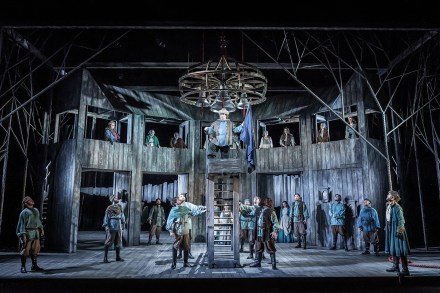
Lightning sometimes strikes twice. English Touring Opera hit topical gold last spring when, wholly by coincidence, they found themselves touring with Rimsky-Korsakov’s Russian anti-war satire The Golden Cockerel. Now the company’s general director Robin Norton-Hale insists that their current tour of Rossini’s Il viaggio a Reims – written in 1825 to celebrate the coronation of King Charles X of France – was fixed long before this month’s events at Westminster Abbey were even a glint in the Earl Marshal’s eye. Really? In truth, opera planning cycles generally operate in years rather than months. On the other hand, Il viaggio a Reims is an extravagant heap of dramatic (if not musical)

Wow, this is good: Grange Park Opera’s Ivan the Terrible reviewed

There are worse inconveniences than having to wear a face mask to the opera. But there’s one consequence that hadn’t really struck home until an hour into Rimsky-Korsakov’s Ivan the Terrible. The citizens of Pskov are massing in the streets. The Tsar’s army is approaching, and Rimsky is building one of those surging Russian crowd scenes: bass-heavy chorus blazing away while ominous bell sounds — basses, horns and rasping gong — shake the orchestra to its bones. Suddenly a bloodstained figure staggers in and collapses; a refugee from nearby Novgorod. ‘Your brother-city sends its greetings, and asks you to arrange its funeral,’ he gasps. At that point, I’d have given