Boris johnson

Johnson confirms he will prorogue parliament

From our UK edition

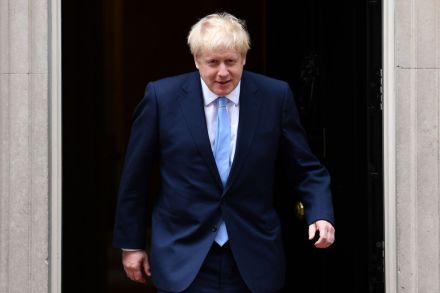
Downing Street has just confirmed that the Prime Minister will be asking the Queen to prorogue parliament ahead of a new Queen’s Speech on 14 October. In a letter sent to MPs this morning, Boris Johnson claims that this is a move designed to put a fresh domestic programme before Parliament, writing: 'I therefore intend to bring forward a new bold and ambitious domestic legislative agenda for the renewal of our country after Brexit. There will be a significant Brexit legislative programme to get through but that should be no excuse for a lack of ambition!' The focus in the letter and in briefings from No.10 is on domestic policy, with Johnson explicitly criticising the lack of action from Theresa May.
The parliamentary battle of our age begins

From our UK edition

The parliamentary battle of our age, and of many ages – over how and whether the UK Brexits – begins, with the signal from Downing Street that the Commons will rise some time between 10 and 13 September and will return for a Queen's Speech on 14 October. This will leave MPs with just a few days in early September and in late October to block the no-deal Brexit many of them fear. One source close to Boris Johnson said the decision to suspend parliament for a month was 'not [about] Brexit, you cynics'. Which shows a certain sense of humour. But another No.

For better or worse, Boris Johnson is different

From our UK edition

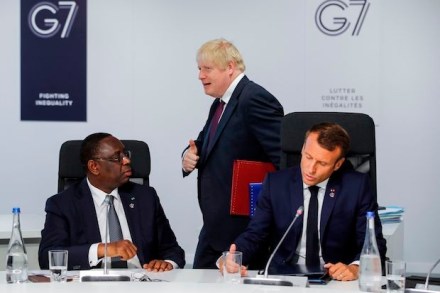
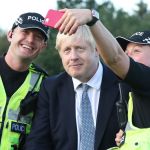
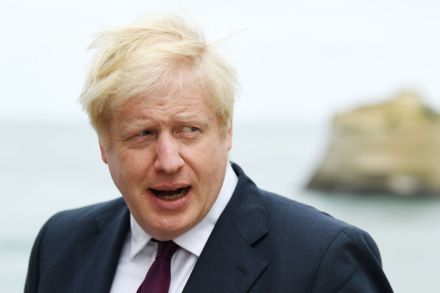
I’ve learned only one thing at the G7 summit of big rich countries here in Biarritz: Boris Johnson absolutely loves being Prime Minister. There’s little of the conspicuous sense of duty that weighed on the shoulders of Theresa May, Gordon Brown and Sir John Major. Nor is there that unnerving claim to embody the spirit of a nation that Tony Blair and Margaret Thatcher perhaps made too often and believed too much. There’s a touch of David Cameron’s Old Etonian entitlement, the idea that it would be odd if he weren’t PM. But mostly Johnson simply seems to be having fun – whether by pointing a joshing finger at the imperious president of France or telling an incredulous President of the EU that they agree on absolutely everything.

A no-confidence vote might help Boris Johnson

From our UK edition

I am up on the far north-west coast of Scotland, where the weather is changing every five minutes under vast skies and huge seascapes. Go to the beach and look left, and it’s a sparkling Mediterranean scene, bright white sand and opalescent turquoise water, what you might call Rossini weather. Swivel your gaze right, and vast dark clouds tower up, obliterating mountain ranges — Bruckner weather. Me? Like Isabel Hardman, of this parish, I just walk straight into the sea and swim. The choppy water is certainly cold but the whole experience is elating, and good for clearing the head. Which is, of course, what we need this summer. August politics is changing faster than the August skies, and this autumn looks set to be the most politically dramatic in my lifetime.

Boris’s nightmare is that the EU accepts his Brexit offer

From our UK edition

As was to be expected, the EU’s reaction to Boris Johnson’s offer of revisiting the Withdrawal Agreement if the backstop is removed has been to reject it out of hand. But there are still 68 days to go before the UK is due to leave the EU and if the EU’s resolve wavers between now and then, Boris’s high-risk strategy could come back to haunt him. Reading Martin Howe’s evisceration of the Withdrawal Agreement, one is reminded of Jerome K Jerome’s visit to the doctor in Three Men in a Boat. Rather than explaining that he was suffering from the symptoms of pretty much every disease known to mankind, J found it easier to tell his doctor the one thing that was not wrong with him: housemaid’s knee.

Macron’s no-deal Brexit gamble could backfire

From our UK edition

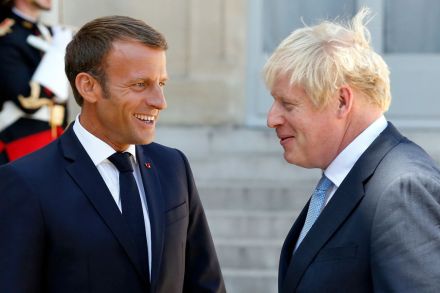
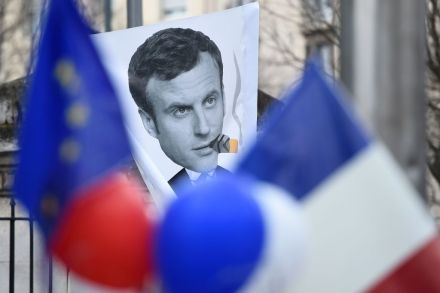
The ‘Non’ was not quite as frosty as it might have been. When Boris Johnson met up with France’s president Emmanuel Macron there were at least some pictures of the two men talking amicably. Even so, while Germany’s chancellor Angela Merkel and some of the EU’s other leaders have at least left the door a tiny bit open to renegotiating the UK’s departure from the EU, Macron made it clear it was almost completely shut. In fact, Macron is making almost as big a bet as Johnson. His calculation is that a no-deal Brexit will work to France’s advantage. Yet he may well have mis-calculated – and it could easily drive his own economy into recession.

How did Richard Braine become Dick Braine?

From our UK edition

Name calling Richard Braine was appointed leader of Ukip, leading to jokes about the party being led by a ‘Dick Braine’. How did the name Richard come to be shortened? — There was a common practice in medieval England for rhyming slang, with the first letters of many common names being interchanged, hence Robert became ‘Bob’ and Edward ‘Ted’. It is believed the practice may have come about as a result of Anglo-Saxons finding it hard to pronounce Norman names and vice versa. — Dick was established by Shakespeare’s time — the bard referred to ‘every Tom, Dick or Francis’ in Henry IV, Part 1. — For the first few centuries there was nothing rude about ‘Dick’.

To get a deal Boris needs to show (or fake) some humility

From our UK edition

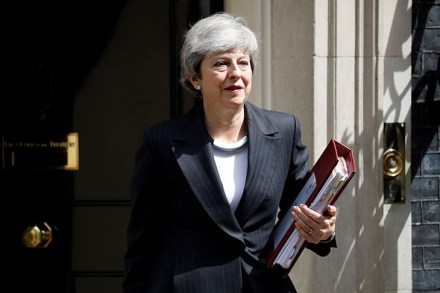
There were many Brexiteers who were urging Boris Johnson to travel to Washington before he went anywhere else, to underline that Britain’s most important relationship is with the United States. And if the EU felt nervous seeing the UK cosy up to America, so much the better. But the Prime Minister’s first visit was to Berlin, and then to Paris, to see if a Brexit deal can be negotiated and the needless disruption of a no-deal exit avoided. It seems, at present, a rather long shot. Theresa May famously said little in one-to-one meetings with European leaders. Boris Johnson can be a lot more forthright, and should speak with candour about his own lack of room for manoeuvre.

The good, bad and ugly of Boris Johnson’s Brexit letter to the EU

From our UK edition

Boris Johnson has written to European Council president Donald Tusk, setting out key aspects of his government’s approach to Brexit. The four-page letter has a number of positive points but also some worrying ones. The good bits: The letter condemns the Irish backstop as undemocratic and inconsistent with both UK sovereignty and the Good Friday Agreement. It also rightly notes that the backstop would lock the UK into a customs union with the EU indefinitely with no means of escape. The letter also states that the UK government cannot continue to endorse the commitment its predecessor made in the Joint Report of December 2017 to ‘full alignment’ with wide areas of the single market and customs union.

Could the Yellow Vests spoil Macron’s Biarritz G7 summit?

From our UK edition

Who was the bright spark who thought it would be a good idea to hold this weekend's G7 summit in Biarritz? At the height of summer? Normally in August the population of this Atlantic coastal resort in France's Basque country balloons from 25,000 to more than 110,000. But not this year. Admittedly the arrival in Biarritz in the last fortnight of 13,200 law enforcement personnel has swelled the numbers, but they're unlikely to be buying beach towels and taking surfing lessons. Biarritz is in lockdown and the airport is closed until Sunday, along with the main train station and those of four neighbouring resorts. Tourists and commuters will have to make other arrangements, although roads are also shut or re-routed to avoid the centre of Biarritz.

It’s time to talk about what no deal really means

From our UK edition

The main reason Conservative MPs prefer Boris Johnson’s government to Theresa May’s is because of its clarity of message. The government now has direction and purpose. Briefings from Tory HQ, delivered even to those MPs who have managed to get away on holiday, have gone from intermittent and inconsistent to daily and succinct. The message is simple: Brexit will be delivered by 31 October, crime is being tackled and the NHS properly funded. We can expect to hear these messages, or variants thereof, for the next few months. But there is one area where the government seems less sure of itself: what will happen in the event of no deal?

Boris Johnson and Angela Merkel’s optimistic press conference

From our UK edition

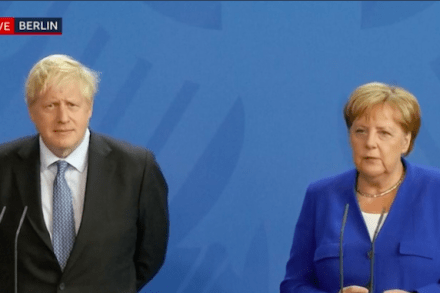
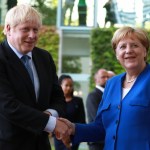
When Theresa May held press conferences with European leaders over Brexit, they were often a painful affair – with her counterpart quick to suggest little progress had been made. This afternoon Boris Johnson opted for an optimistic approach in his first outing on the world stage. The Prime Minister met with Angela Merkel this afternoon in Berlin for talks ahead of the G7 summit this weekend. In the press conference, Johnson joked that the pair had many things to discuss including the 'small matter of Brexit'. With figures in Brussels – including EU council leader Donald Tusk – rejecting the demand in Johnson's letter to ditch the backstop from the Withdrawal Agreement, an undeterred Johnson used the press conference to make the same point.

France says no deal now the most likely Brexit outcome. But why now?

From our UK edition

Why would French government officials brief that they think it most likely Britain will leave the European Union without a deal? Boris Johnson hasn't even made it as far as his meeting with French President Emmanuel Macron, and is only just being welcomed by German Chancellor Angela Merkel. So why brief that out now, before the leaders have even spoken? The comments appear to be part of the briefing war between European leaders and the British government, with neither side wanting to take the blame for any fallout from a no-deal Brexit.

Boris Johnson’s Brexit opponents are playing into his hands

From our UK edition

There is arguably the most important conflict raging in the Tory party since Churchill replaced Chamberlain as PM in 1940. Although we are living through 1940 in reverse, because Johnson is already the self-defined "war-time" PM, the wannabe Churchill, when some of his colleagues want something and perhaps someone else. Forget the battle between government and opposition, what matters most right now is the fight between Boris Johnson and his consigliere Dominic Cummings on one hand against a minority of senior Conservative MPs led by Philip Hammond, David Gauke and Greg Clark – the so-called Gaukeward Squad – over whether a no-deal Brexit is preferable to a Brexit delay.

Emmanuel Macron could be Boris Johnson’s Brexit saviour

From our UK edition

One thing on which Remainers and Brexiteers can agree is that Brexit delayed is Brexit denied. The government continues to proclaim that the UK will leave the EU on 31 October with or without a deal. But No. 10 is acutely sensitive to the possibility of a parliamentary manoeuvre designed to compel the executive, through legislation, to seek a further extension of Article 50 to delay Brexit yet again. But Boris Johnson should keep calm about this prospect, for an unlikely saviour – the president of France, Emmanuel Macron – could come to his rescue. Whatever Brexit extension legislation Parliament might push through, any further extension of Article 50 requires unanimous EU Council of Ministers’ support.

No. 10 hits back in the backstop blame game

From our UK edition

The stand-off between Downing Street and the European Union over Boris Johnson's latest proposal for the backstop boils down to a disagreement over whether the British government really cares about getting a Brexit deal at all. When Donald Tusk rejected Johnson's plan today, he all but accused him of being set on a no-deal exit, saying: 'The backstop is an insurance to avoid a hard border on the island of Ireland unless and until an alternative is found. Those against the backstop and not proposing realistic alternatives in fact support re-establishing a border. Even if they do not admit it.

No. 10’s media strategy – ‘The focus is the country rather than the Westminster bubble’

From our UK edition

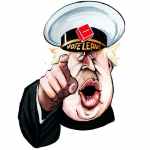
What is Boris Johnson's strategy for engaging with the media? Over the weekend reports emerged that the Johnson government's media strategy would omit Radio 4's flagship current affairs programme. No. 10 director of communications Lee Cain is said to have told aides that the Today programme is a 'total waste of time'. He’s not alone. Johnson’s most senior adviser Dominic Cummings also appears to feel little in the way of warmth towards the show – reportedly telling colleagues that he didn’t listen to it once during the EU referendum campaign when he was campaign director for Vote Leave. So is the government at war with the BBC already? It's a little more complicated than that.

Jeremy Corbyn, not Boris Johnson, is ‘Britain’s Trump’

From our UK edition

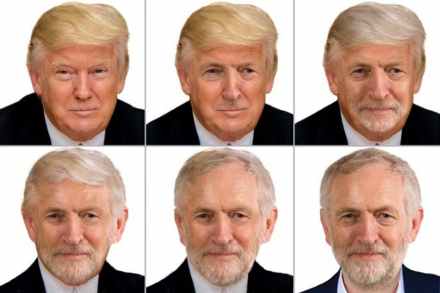
Jez he did! Jeremy Corbyn has just surprised absolutely nobody by calling Prime Minister Boris Johnson ‘Britain's Trump.’ He labelled Boris a ‘fake populist’ and a ‘phoney outsider.’ No doubt Labour speechwriters think this is a great attack line ahead of a general election.  But it might backfire – for two reasons. First, Trump is not nearly as toxic in Britain as everybody in political circles believes. Secondly, for Labour voters, the uncomfortable truth is that the British equivalent of Trump is not Boris, as everyone says. It’s Jeremy Corbyn.  Corbyn, 70, and Trump, 73, have far more in common than Boris and Trump. Jeremy and Donald are both anti-establishment insurgents who have been married three times.

Where’s Boris?

From our UK edition

Before Boris Johnson became Prime Minister there was widespread expectation that his government would be chaotic. It was thought that he would be good at articulating the broad sweep of government policy, but that his administration would quickly sink into turmoil. In the event, the opposite has happened. Three weeks on, the government appears to be running with almost military precision. Preparations for no-deal Brexit seem to be well under control, to the alarm of Philip Hammond, who had thought the task impossible. Yet the Prime Minister himself seems to have gone underground. He is not on holiday — his government is working all hours. But he has not been as big a feature of it as many expected.