Boris johnson

Democracy redux: the lessons of 2019

From our UK edition

Britain’s parliamentary democracy is easily mocked: the medievalisms, the men in tights, the ayes to the right. But it has been preserved because it tends to work. It focuses minds and makes order out of chaos. Yet again we have a general election result that almost no one predicted — and one that offers plenty of lessons for those with an eye to see them. The communities so often patronised as ‘left behind’, typically in northern and coastal towns, have now demonstrated that they are powerful enough to decide elections. During the Blair and Cameron eras they were written off as a declining demographic: older, poorer, less educated and often stuck in the past. The ‘modernising’ politicians, it was argued, needn’t worry too much about them.
Boris Johnson: Perhaps my campaign was ‘clunking’. But sometimes, clunking is what you need

From our UK edition

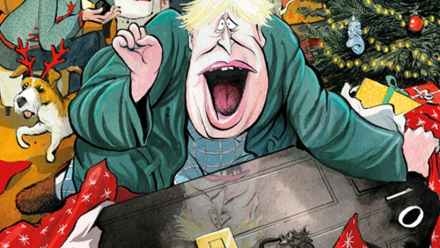
You may wonder why I am up at 4.45 a.m. writing this diary when I have a country to run, Queen’s speech to prepare, vast mandate to deliver, and so on. The answer is simple. It is a question of obligation. When I bumped into the editor (at Sajid Javid’s 50th birthday party) a couple of nights ago, he explained — with a slightly glassy expression — that he had taken a gamble. He had already printed the cover of the Christmas treble issue, he said. I know all about the Xmas cover. It is lavish, laminated, and on much thicker stock than the normal cover. It costs a bomb. Once you have printed it, you can’t change it. ‘Your name is on it,’ said Fraser. What could I say? I became editor 20 years ago. I owe this magazine.

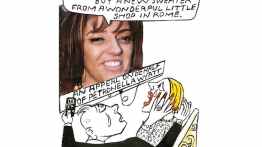
Petronella Wyatt: The time I saw Boris cry

From our UK edition

Boris Johnson is nothing like Churchill, a view with which my friend Andrew Roberts concurs. But in the 20-odd years I have known Boris, I have often been struck by his similarity to John Wilkes, 18th-century politician, journalist and catnip to women. A wit and a showman, Wilkes, who denounced European entanglements and championed the rights of the electorate over parliament, was the first politician to achieve celebrity status. One of Boris’s endearing traits is that he has never regarded himself as an enticing proposition in the looks department. Wilkes had a squint, but he said: ‘Give me half an hour to talk away my face and I can seduce any woman ahead of the handsomest man in England.

Andrew Marr: Twitter fooled everyone during this election

From our UK edition

It’s an unfashionable thought, but having spent many hours in the university sports hall where constituency votes for Boris Johnson and John McDonnell were counted, I feel freshly in love with democracy. There they all were, local councillors and party workers from across the spectrum; campaigners pursuing personal crusades, from animal rights to the way fathers are treated by the courts; eccentrics dressed as Time Lords. In the hot throng, there were extremists and a few who seemed frankly mad. But most were genial, thoughtful, balanced people giving of their free time to make this a slightly better country. Stuck in Westminster during relentless parliamentary crises, it’s easy to lose sight of just how energising real democracy is.

‘I’ve had two totally successful marriages’: Stanley Johnson interviewed

From our UK edition

If anything could make me feel sorry for Boris Johnson, it’s meeting his father, Stanley. Before we met, he sent me a great list of press cuttings about his appearances with the Extinction Rebellion campaign, and ordered me to watch his recent reality show Celebrity Hunted on Channel 4 and read his latest novel, Kompromat. (The former, where celebrities become ‘fugitives’ and go on the run, was excruciating. But the novel — soon to be retitled The Brexit Conspiracy — is good fun, containing thinly disguised portraits of Putin, Trump, Murdoch, and also an ex-London mayor ‘whose ebullient exterior concealed a razor-sharp mind and a pronounced streak of political cunning’.

What have you changed your mind about? A Spectator Christmas survey

From our UK edition

Grayson Perry In 1992 I created a graphic novel called Cycle of Violence. Reading it now, the initially striking thing is that it predicts the rise of cycling culture in the UK and a working-class boy called Bradley winning the Tour de France. But it mainly reflected the state of my mind at the time — it contained a lot of perverted sex, dysfunctional parenting and mercilessly mocked the process of psychotherapy. In 1992 our daughter Flo had just been born and my wife Philippa seemed to have read every parenting book under the sun. Our house was full of the jargon and ideas associated with psychotherapy.

The three components of Boris’s plan for government

From our UK edition

The two most significant consequences of this election are that the United Kingdom is leaving the EU and the Tories are a national party in a way that they haven’t been for decades. Boris Johnson’s critics relish saying that these two things are incompatible, that there is no way that Brexit can be made to work for the whole country. ‘Workington Man’, they say, has no desire to see Britain become Singapore-on-Thames. But, as I say in the Christmas issue, this analysis misses the point: Boris Johnson and his team have a very different vision for Brexit than that. There are three parts to Boris Johnson’s plan to deliver for those parts of the country that haven’t fully shared in the prosperity of the last thirty years.

Labour’s failure isn’t necessarily the Tories’ success

From our UK edition

A moment arrives when one does just have to admit defeat. We shall leave the European Union and there isn’t a lot of point going on about it any more. I’m still sure it’s a mistake, but there we are. In a democracy the majority is entitled to make a mistake, just as the minority is entitled to say so. I say so. I’d hoped we could change people’s minds but we haven’t, so enough from me on that. A general election is a different matter. Here too, of course, the majority is entitled to make a mistake, but resistance remains possible and legitimate because there’s always the opportunity at the next election to reverse the electorate’s previous decision. The trouble is, however, that I don’t want to.

Ghosts of Labour’s past and future gather in Commons as MPs return

From our UK edition

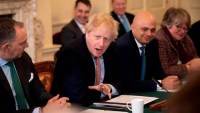
Boris Johnson and Jeremy Corbyn have just faced one another in the Commons for the first time in this new Parliament, though it is highly unlikely to be the last. The pair were responding to the election of the new Speaker, Lindsay Hoyle, and both chose to use their statements to make a few remarks about the election itself. Naturally, Johnson was greeted with a huge cheer from his MPs when he rose, and told the Speaker that 'I mean absolutely no disrespect to those who are no longer with us - but I think this Parliament is a vast improvement on its predecessor'. He then promised that 'this Parliament is not going to waste the time of the nation in deadlock and division and delay', and that on Friday MPs would vote on the Withdrawal Agreement Bill.

Never underestimate Boris Johnson

From our UK edition

Much of the political class is still in a state of shock. Many are tempted to echo Lord Melbourne: 'What all the wise men promised has not happened and what all the damned fools said would happen has come to pass.' This was an extraordinary election because underneath all the stress it was a very boring affair. From the beginning, the polls predicted a sizeable outright Tory victory. But after 2017, no-one was ready to trust the polls. Among Tories, though well concealed, there was also a widespread fear that Boris would implode. That did not happen. Instead, everyone stuck to the script. To the very end, a number of high-minded Tories were unhappy. Surely the electorate would grow restive at the lack of intellectual content? That did not happen either, at least on any significant scale.

The Tories know they must deliver for their new voters

From our UK edition

‘If Darlington high street isn’t visibly better in four years’ time, we’ll be in trouble’, one of Boris Johnson’s confidants told me the other day. Boris Johnson and his team are, as I say in The Sun this morning, acutely away that if they are going to make Thursday night’s electoral shift permanent then they are going to have to deliver for those places that swung to the Tories in this election. Part of Boris Johnson’s answer will be improving the infrastructure serving these places. In his interview with The Spectator during the campaign, he indicated that he was going to rip up the Treasury’s rules on capital spending to ensure that more gets built outside of London and the South East.

Boris Johnson promises to ‘unite and level up’ the UK. Can he really achieve that?

From our UK edition

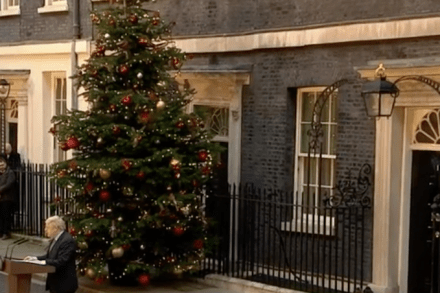
Boris Johnson's victory speech in Downing Street was aimed at the voters unsure about his government, whether they be the voters who backed his party for the first time, or Remainers who didn't vote Tory. In an acknowledgement of how difficult it will have been for many traditionally Labour voters to turn away from their party, he said: 'To all those who voted for us, for the first time, all those whose pencils may have wavered over the ballot and who heard the voices of their parents and grandparents whispering anxiously in their ears, I say thank you for the trust you have placed in us and in me and we will work round the clock to repay your trust and to deliver on your priorities.

The Brexit Party might still deny Boris his majority

From our UK edition

The last YouGov constituency-level poll showed a significant closing of the gap between Labour and the Conservatives, with the projected Tory majority falling from 68 seats two weeks ago to 28 seats now – and with a margin of error which could take us well into hung parliament territory. The interpretation being put on this is that while the Conservatives have hit a ceiling, Labour continues to draw tactical voters away from the Lib Dems. But it is worse than that for the Tories. In spite of appeals to Brexit voters to vote tactically, in some places votes are beginning to drain away in the other direction, from the Conservatives to the Brexit party. Nationally, there is no Brexit Party surge – Nigel Farage’s party is stuck at around three per cent.

Could this be the defining moment of the election campaign?

From our UK edition

An interview earlier today with my colleague Joe Pike captures the contradiction at the heart of Boris Johnson’s campaign. He wants to be seen as campaigning to lead a 'new' government, but the Tories have been in power since 2010. So he finds it impossible to take responsibility for four-year-old Jack Williment-Barr, left to lie on coats for hours in a Leeds hospital. As the video shows, he refuses to look at the picture of Jack – which comes across as him saying 'I don't want to own this'. This is certainly the political moment of the day and could be the moment of the campaign: https://twitter.com/joepike/status/1204018593656180736?

Boris is right: it’s time to scrap the BBC licence fee

From our UK edition

Has Boris decided this election is in the bag? I ask because this afternoon he's made just about the first bold policy announcement of the campaign. After a safety-first manifesto and little other announcements so as not to frighten the horses, he has stuck his neck out and suggested that the TV licence might be on borrowed time. Having said he was under pressure not to make up policy 'on the hoof' he went on, well, almost to make a policy on the hoof: 'You have to ask yourself whether that kind of approach to funding a media organisation still make sense in the long term, given the way other organisations manage to fund themselves'. How odd that it has taken a Prime Minister, or even a party leader, this long even to contemplate ending the TV licence.

Boris Johnson gives himself a hospital pass as he avoids picture of sick child

From our UK edition

Is Boris Johnson a robot? I ask this advisedly, given the connotations of that word in the political arena, but the way the Prime Minister responded to questions from a journalist this afternoon does suggest he might be turning into one. He was asked by ITV's Joe Pike for a response to the photo of a young boy with suspected pneumonia lying on the floor of Leeds General Infirmary, waiting for a bed. It's a difficult photo for anyone to look at without an emotional response, and Johnson initially refused to see it at all, taking the reporter's phone out of his hand, and shoving it in his own pocket.

The three things that would have to happen to block a Tory majority

From our UK edition

In 72 hours time, voting will be well underway. We will be talking about turnout being ‘brisk’. Right now, the polls are indicating that a Tory majority is the most likely result. But it is not certain and a combination of three things could still stop it. First, mass Remainer tactical voting. The margins in this election are fine and if Remainers starting backing whoever was most likely to defeat the Tories in their seat, that could put a Tory majority at risk very quickly. There will be lots of calls for tactical voting in the coming days. But it is worth remembering that in 1997, when there was widespread anti-Tory tactical voting, the Labour and Lib Dem leaderships were politically close and hadn’t spent the campaign attacking each other.

Tories benefit from no-show at chaotic TV debate as election enters final days

From our UK edition

Believe it or not, there was yet another televised election debate tonight, this time on Channel 4, called the 'Everything But Brexit' debate. The Tories had refused to take part, and while their decision will have been partly down to their ongoing battle with the broadcaster, which they have accused of being biased, they will also have viewed tonight's programme as an opportunity for them to make their central election pitch without even turning up. This debate worked in the Conservatives' favour because it was chaotic, with the representatives of the five parties who did turn up constantly talking and even shouting over each other and the presenter Cathy Newman. At times it sounded like a school playground at the end of term when everyone is tired, including the teacher.

Boris should threaten to back Corbyn’s ridiculous Brexit plan

From our UK edition

The decline of the Liberal Democrats continues to give Labour a boost and rattle Tory nerves. Middle class Remainers who dislike Jeremy Corbyn are nonetheless deciding that he is their last best chance to thwart Brexit. Electing an anti-Semitic government so you don’t need to show a passport at Paris Charles de Gaulle is quite the ethical choice but there you go. It’s also a pretty big gamble. We know that Corbyn is a Brexiteer who believes freedom of movement drives down workers’ wages because he has told us as much. Voting for him to stop a hard Brexit isn’t so much holding your nose as poking your own eye, but Remainers know Labour backbenchers will hold him to his promises on a second referendum. Right?