Books of the year

Spectator Books of the Year: The story that’s too funny for the Man Booker Prize

From our UK edition

I loved Deborah Levy’s Hot Milk (Hamish Hamilton, £12.99). It’s a short, characteristically oblique story of a young woman in southern Spain with her crapulous mother, there to attend a dodgy-sounding, marble-adorned medical establishment where they hope to find — at last — a cure for the mother’s inability to walk. It’s no surprise it didn’t win the Man Booker prize, because as well as being elegant and deeply strange, it’s hummingly funny throughout. As we all know, prize juries regard jokes as a distinct disadvantage.

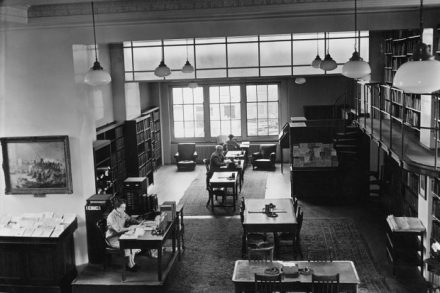
Spectator Books of the Year: A celebration of the London Library

From our UK edition

Far and Away: How Travel Can Change the World is a collection of pieces by the American essayist Andrew Solomon (Chatto, £25). From Moscow to Mongolia, Antarctica to Afghanistan, Solomon observes the world and reflects what he sees both on himself and on his own country. Resilience, hope, flux: Solomon has an outsider’s eagle eye. A dazzling volume. I also enjoyed On Reading, Writing and Living with Books (Pushkin Press, £4.99). This slim tome is among the first of a gorgeous new series culling extracts from the shelves of the London Library, an institution which celebrates its 175th birthday this year. Authors anthologised include Virginia Woolf and George Eliot. In half an hour, this book delivers the fruits of many days cruising the stacks in St James’s Square.

Spectator Books of the Year: The real impact of guns on America

From our UK edition

I’ve chosen two very different stories of young American lives. In Another Day in the Death of America (Guardian/Faber, £16.99), the journalist Gary Younge anatomises American society and its squandered potential by means of a simple conceit: he chose a random date in 2013 and investigated the lives of those children and teenagers shot and killed on that day. It’s a profoundly important piece of reportage, seemingly written with restraint but devastatingly powerful. Bonnie-Sue Hitchcock’s debut, The Smell of Other People’s Houses (Faber, £7.99), is a gorgeous young adult novel, interweaving the lives of four teenagers in small-town Alaska in the 1970s — their community, their struggles and joys.

Spectator Books of the Year: A political scandal that trumps all others

From our UK edition

The death of Jeremy Thorpe aged 85 in 2014 finally made it possible to tell his extraordinary story without fear of the libel laws. John Preston has seized the opportunity in his gripping account A Very English Scandal (Penguin/Viking, £16.99). The leader of a political party involved in a murder plot easily trumps any other political scandal of our times; but the fact that in the event it was only a dog that died gives the story an air of farce. Apart from Thorpe himself, vain and intensely ambitious, Preston handles with great skill a cast of astonishing characters.

Spectator Books of the Year: An almost perfect book to read in the bath

From our UK edition

Two of my most memorable books of the year were by two of the most brilliant writers of our day, and were both, to my simple mind, of opaque allure. Colin Thubron’s novel Night of Fire (Faber, £16.99) evokes the emotions of seven tenants, plus their landlord, when their apartment house is burnt down, and fascinatingly jumbles them all into a mystique contemplation of something or other. Geoff Dyer’s White Sands (Canongate, £16.99) is subtitled ‘Experiences from the Outside World’ and is a virtuoso display of his particular kind of travel writing, sometimes fact, sometimes fiction. I was only half convinced by it all, but quite bowled over by the title story of the collection, which seems to me a little masterpiece.

Spectator Books of the Year: Why evolution is still a theory in crisis

From our UK edition

Michael Denton’s Evolution: Still a Theory in Crisis (Discovery Institute Press, £16.80). A sequel to his 1985 book — Evolution: A Theory in Crisis — this takes us up to date with the dazzling developments of life sciences over the past 30 years. Denton is a sceptic about Darwin’s theory of evolution on purely scientific grounds. It is hard to see how anyone reading his book could not be persuaded. Palaeontology provides abundant evidence of evolution within species, but none of one species morphing into another. Denton is fascinatingly clear in his exposition of the science of genetics, and how it destroys the Darwinian position. A truly great book.

Spectator Books of the Year: The forgotten genius of Rose Hilton

From our UK edition

I choose Ian Collins’s Rose Hilton (Lund Humphries, £35), a remarkable artist elbowed aside, like so many women of her generation, by a more established, much better known and far more forceful husband. Roger Hilton reckoned there was room for only one artist in their household, and that was him. This handsome, inviting and splendidly illustrated volume follows Rose as she makes her own way, with a lot of help from Matisse and not much from Roger, to emerge after his death as an authoritative colourist of great strength and warmth in her own right.

Spectator Books of the Year: Svetlana Alexievich’s ‘Second-Hand Time’

From our UK edition

‘Memory is a creature that is alive… nobody has simple relations with memory,’ Svetlana Alexievich told the Cambridge literary festival earlier this year. She was speaking through a translator about Second-Hand Time, first published in English in 2016 (Fitzcarraldo Editions, £14.99) and her earlier books including Chernobyl Prayer and War’s Unwomanly Face. Alexievich claims that she does not conduct interviews, only conversations, and that the stories she collects — about the collapse of communism, the suffering of those with radiation poisoning, and the experiences of women during the second world war — involve giving something of herself. Her books are repositories for voices that would otherwise be lost.

Spectator Books of the Year: Stephen Bayley on the enigma of Kenneth Clark

From our UK edition

I told James Stourton that the world didn’t need to know anything more about Lord Clark of Trivialisation. And I was wrong. His meticulous and elegant book, Kenneth Clark: Life, Art and Criticism (Collins, £30) perfectly captures the contradictions of ‘K’, an Olympian snob, but a true democrat who was thrillingly honest and also hard on himself. Britain’s best writer on art since Ruskin now has the biography he deserves. Before he took his life with his own hand, the Infinite Jest author had used that same hand to play tennis at the US equivalent of county standard.

Spectator Books of the Year: Mark Cocker on trailing Siberian tigers

From our UK edition

Two nature books have really stood out this year. The Great Soul of Siberia: In Search of the Elusive Siberian Tiger (Collins, £16.99) is by the Korean filmmaker Sooyong Park, who has been on the trail of his totem animal for 20 years and singlehandedly obtained most of the cinematic footage which humankind possesses of this, the largest felid on earth. He has now produced a classic evoking the utterly bleak landscapes of Siberia as well as the grotesque abuse meted out to wildlife by poachers. Yet the book is most memorable for its soaring beauty and for Park’s Franciscan love for his fellow creatures. Jennifer Ackerman’s The Genius of Birds (Corsair £14.

Spectator Books of the Year: Paul Johnson on Citizen Clem

From our UK edition

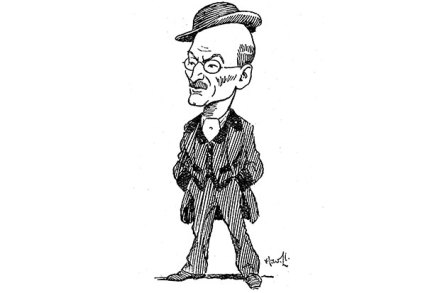
John Bew’s biography of Clement Attlee, Citizen Clem (Riverrun, £30), is a winner, though it might have been improved by cutting. Attlee was a more interesting man than people supposed. He read an average of four books a week, wrote a good deal of verse and almost made a movie. He was acerbic. The sharpest letter I received during the six years I edited the New Statesman came from him. My consolation was that he regularly received similar rebukes from his fierce wife, Violet, delivered verbally. The book I most relished was Edgar Peters Bowron’s Pompeo Batoni: A Complete Catalogue of his Paintings, two volumes in a boxed set (£195).

Spectator Books of the Year: Craig Raine on poems from the world of work

From our UK edition

Philip Hancock’s pamphlet of poems Just Help Yourself (Smiths Knoll, £5): charming, authentic, trim reports from the world of work — City and Guilds, pilfering, how to carry a ladder, sex in a van (‘From the dust-sheet, wood slivers/ and flecks of paint stick to her arse’). One poem is called ‘Knowing One’s Place’; these poems know the workplace. Nutshell by Ian McEwan (Cape, £16.99) was hilarious and compelling. The Pier Falls by Mark Haddon (Cape, £16.99) was grim and compelling. Both books are ripping, gripping yarns — narrative Velcro.

Books of the Year | 5 November 2011

From our UK edition

Our regular reviewers were asked to name the books they’d most enjoyed reading this year. More choices next week •  A.N. Wilson Rachel Campbell-Johnson’s Mysterious Wisdom: The Life and Work of Samuel Palmer (Bloomsbury, £25) is one of those rare biographies which is a work of literature: beautifully written, overwhelmingly moving. A great art critic, with an understanding of the human heart has produced this masterpiece. It is one of the best biographies I have ever read of anyone: it captures the tragedy of Palmer’s life, and brings out the shimmering glory, the iridescent secrets of his Shoreham phase.

Great among the nations

From our UK edition

The King James Bible, while uniting the English-speaking world, gave birth to centuries of radicalism and Dissent. On its 400th anniversary, Philip Hensher examines the translation’s legacy Considered as a book, the Bible is far too long. Its characterisation is not all it should be: its hero, God, seems totally inconsistent, varying from a prankster with a bizarre sense of humour (Job) to a sensible dispenser of advice. You can’t help feeling that it is really rather patchy in quality: some of it is wonderfully entertaining, such as the Acts of the Apostles and the two Books of Kings, but some of it doesn’t seem to be interested in entertaining the reader one bit. (Look at the difference between the stonking first line of Kings and the droning way Chronicles kicks off.

Books of the Year | 20 November 2010

From our UK edition

Philip Hensher The English novel I liked best this year was Martin Amis’s The Pregnant Widow (Cape, £18.99) — humane, rueful and wonderfully resourceful in its wit. Jonathan Franzen’s Freedom (Fourth Estate, £20) was simply a marvel of technique, observation and sympathy. At the other end of the artistic spectrum, Lydia Davis’s Collected Stories (Hamish Hamilton, £20) were a must for anyone seriously interested in the means of fiction. All three were, among other things, masterpieces of comedy. The memoir of suffering now has its own section in bookshops. Few of them deserve one’s attention, but Candia McWilliam’s magnificent What To Look For In Winter (Cape, £16.

Books of the Year | 13 November 2010

From our UK edition

Blair Worden J.R. Maddicott’s The Origins of the English Parliament 924–1327 (OUP, £30) is not one for the bedside, but its wide and profound scholarship has much to teach us about the roots and functions of an institution now subjected to so much unhistorical criticism. Nicholas Phillipson’s Adam Smith: An Enlightened Life (Allen Lane, £25) is an absorbing and elegant account of Smith’s mind and of the Scottish context, social and intellectual, that produced it. D. R. Thorpe’s Supermac: The Life of Harold Macmillan (Chatto, £25) gives a wonderful sense of Macmillan’s complexity and stature and of the place of personality in the fortunes of power and the making of policy.

Futile phantoms

From our UK edition

But of course this new book is by Peter Ackroyd, celebrated biographer, historian and chronicler, a bit of a polymath, a man who has written wonderfully informative and erudite books about Blake, the river Thames, Venice, and introductions to all the novels of Dickens, so naturally one expects a good deal more from The English Ghost than from any of those other popular titles on the same subject. One does not get it. Whether you believe in ghosts or not, one thing distinguishes the fictional ghost from the ‘real’ and that is Purpose. Read through the several dozen tales of English ghosts here and you will find not a single one that has any raison d’être fantome.

Prince of Paradox

From our UK edition

In the 15th century men cross-examined and tormented a man because he preached some immoral attitude; in the 19th century we feted and flattered Oscar Wilde because he preached such an attitude, and then broke his heart in penal servitude because he carried it out. It is the most sincere compliment to an author to misquote him. It means that his work has become a part of our mind and not merely of our library. Progress should mean that we are always changing the world to fit the vision; instead we are always changing the vision.

Books Of The Year | 19 November 2008

From our UK edition

A further selection of the best and worst books of 2008 , chosen by  some of our regular reviewers Ferdinand Mount I’m not sure quite what it is that captivated me about Tim Winton’s novel, Breath (Hamish Hamilton, £14.99). It’s a sort of Huck Finn goes surfing in Australia. A scrawny kid bums along the coast in search of the ultimate wave and falls under the spell of Sando, the mysterious wizard of the surfboard. Not my scene, to put it mildly, but it is queerly compelling and I can still taste the spray. Mick Imlah’s The Lost Leader (Faber, £9.99) well deserved its Forward Poetry Prize.