Book review

Behind closed doors

Katy Hays’s involving, well-tuned debut novel takes its name from a real museum in New York, the Cloisters. Built by a Rockefeller, it resembles a medieval monastery and brims with glorious treasures. Ann, our provincial heroine (from Walla Walla, where she worked a menial job in order to fund college), would have preferred the Met, but when she’s serendipitously hired for a summer role, she finds herself swiftly pulled into the institution’s inner workings and the nefarious machinations of its well-heeled staff. The cutthroat nature of the museum is placed under the spotlight.

Bret Easton Ellis’s comeback is a bloody masterpiece

Bret Easton Ellis has a secret. It’s what happened to him and his friends in the fall of 1981 in his senior year at Buckley, a private high school in Sherman Oaks, California. It’s about a hippie cult and serial killer known as “The Trawler” and the disappearance of his friends. It’s about how all this is somehow tied to the arrival of a new student that year, Robert Mallory. It’s a true story. The Shards is Ellis’s seventh novel, published nearly thirteen years after his previous book, Imperial Bedrooms. He has tried to write this novel twice before, once when he was nineteen and again when he was forty-two. That second attempt led to an anxiety attack that had Ellis rushed to the emergency room at Cedars-Sinai. At least, that’s the story.

shards

Quentin Tarantino’s iconoclastic obsessions

Quentin Tarantino’s inevitable first volume of film writing presents a challenge: how can an established artist, especially one this famous, pivot to criticism? No matter how insightful his opinions, it runs the risk of merely illuminating what he values as a filmmaker. To his credit, Cinema Speculation doesn’t pretend it’s not taking you through a highly personal journey of one man’s cinematic obsessions. The tone isn’t too far off from the hundreds of interviews he’s given for thirty years. References to his own films are common, and unlike serious critics, he can pepper his criticism with quotes from sources he can call at any time — from critics (Elvis Mitchell) to filmmakers (Walter Hill) to miscellaneous others (Robert Wuhl).

tarantino

The struggle of the female musician

In July 2022, hundreds of elegant opera-goers gathered on the lawns of Glyndebourne Manor in Sussex to picnic in the interval of a rarely performed early twentieth century work, The Wreckers, by the suffragette composer Dame Ethel Smyth. This strikingly powerful piece of music, which tells the story of Cornish villagers who lure ships onto rocks in order to plunder them, was the first opera by a female composer to be staged at the prestigious British festival and was extremely well-received. The Times of London praised its “wild waves of passion.” Yet The Wreckers has had a difficult history.

ethel smyth women musicians

Stephen Amidon’s day of the locust

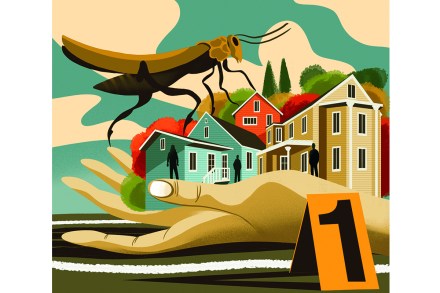
Stephen Amidon’s Locust Lane begins late at night, with a dog run over by an alcoholic fund manager. Patrick is well over the limit: “He didn’t need another item in the overladen shopping cart of guilt he was pushing around.” He vacillates, and then scarpers, setting up the novel’s themes of addiction, accident, power and privilege, and how far people will go to save themselves. Questions of nature and nurture abound: does monstrous behavior pass down the generations, or is it learned and acquired? And what lengths will communities go to in order to protect their own? Locust Lane is a street in the town of Emerson. It’s a tony neighborhood, whose vast, spotless houses contain apparently equally spotless WASP-y families, insulated by centuries of accumulated wealth.

locust
Dylan

Bob Dylan’s tower of song

“He doesn’t write on drugs, he doesn’t write on liquor, he writes on everyday occurrences.” — Beatty Zimmerman, Bob Dylan’s mother, 1999. After you admire the cover of Bob Dylan’s The Philosophy of Modern Song, and its triptych portrait of Little Richard, Alis Lesley and Eddie Cochran in their prime, open it to the title page. There, in pulp-fiction red, is a little crimson lightning bolt. On the next page, there is a photograph of the twenty-two-year-old Elvis Presley — the man who popularized the lightning bolt, with his logo “TCB” or “Taking Care of Business in a Flash” — in a Memphis record store, looking through just-released bounty like “Here’s Little Richard” and “A Tribute To James Dean.

queen mother

Was the Queen Mother ever really funny?

Was the Queen Mother ever really funny? She was clearly extremely good company: an attentive listener, full of enthusiasm and affection, right up until her death, aged 101, in 2002. She was also the ideal queen for an unconfident George VI, undermined by his stutter and caught unawares by his accession to the throne, thanks to the abdication of his appallingly selfish brother, Edward VIII. The only time I ever saw the Queen Mother — when she was eighty, at her Clarence House home — I was only eight, but I remember her clearly. A tiny figure, she beamed away, spreading goodwill among strangers when so many people that age have lost mobility, let alone the ability to cheer up other people. Grumpy George V had thought much the same of her charm nearly sixty years earlier.

The return of Cormac McCarthy

After sixteen years of silence, Cormac McCarthy has literally written a novel and a half. That’s the good news. Perhaps less-good news is that about half the longer novel depicts conversations between a mad person and an imaginary deformed imp called The Thalidomide Kid, while all of the half-novel is a dialogue between the same mad person and her psychiatrist. The unequivocal bad news is that quite a lot of both is about quantum physics, by way of ruminations on the Manhattan Project and a JFK conspiracy theory: an unholy trinity of literary red flags. I do not mean to dissuade anyone from reading a rare new work by one of America’s finest living writers. Parts of The Passenger and its “coda,” Stella Maris, are very funny. Parts are even brilliant.

cormac McCarthy

Warning: this book may make you like Bono

There is a famous (and, I fear, apocryphal) story about Bono at his most messianic at a U2 gig in the early part of this century. Pausing between songs, he clicked his fingers meaningfully. After doing this a few times, he said, with utmost gravity, “Every time I do this, a child in Africa dies of starvation.” Most of the audience nodded in sympathy, but one man in the front row had a better response. “Well stop fucking doing it then!” Bono’s response was not recorded, but the finger-clicking soon disappeared from his repertoire of stadium show gimmicks. It is reasonably easy to see why Bono — and, by extension, U2 — are so reviled.

bono

The prodigal daughter

In April 1930, the nineteen-year-old Edda Mussolini married Count Galeazzo Ciano, aged twenty-seven, after a brief courtship in which love appears to have played little part. Her father, Il Duce, wanted the magnificent occasion to be not merely the wedding of the century but a grand, almost royal, demonstration of fascist might and a celebration of fecundity. Edda, his beloved firstborn, was to stand for everything that was best about fascist womanhood, while the groom was to carve out the path of “the new Italian man.” These were the glory years, and thousands of schoolchildren sent poems and cards with angels in advance of the occasion, which the Papal Nuncio attended with a present from the Pope.

mussolini
carey

The bookish life of John Carey

One of the most revealing moments in Sunday Best — a collection of book reviews dating back to the late 1980s — comes when John Carey, invited to appraise some items about Robert Graves, remembers hobnobbing with the author of I, Claudius half a century ago in Oxford’s High Street. Instantly, two of Carey’s signature marks — his love of literature and his eye for personality — come crashing together. Graves, then in his late seventies, tall, craggy and mage-like, is still a “commanding sight.” The drawback is his conversation: from the great poet’s lips, “in disconcertingly loud, upper-class tones, issued a bizarre stream of superstition and bogus history.

wild problems

Living one’s best life

In our era of Twitter hot takes and Medium listicles promising to make you millions, I have a soft spot for life-wisdom books, meditations of the old school that you can spend quality time with even when the ideas presented in them are timeless. I’ve read with pleasure the popular life guidance books of the past decades, from The Happiness Hypothesis or Letters to a Young Contrarian to Zena Hitz’s quietly transformative Lost in Thought, and I felt a renewed connection with the ancient questions of existence in a modern retelling. It should be the habit of all widely read thinkers, whether coming from STEM, the humanities or the social sciences, to sit down and write an accessible recap for all of us of what they have found out.

acaster

A comedian explains how to quit social media

James Acaster’s Guide to Quitting Social Media presents itself as a “how-to” or “self-help” manual. But it's actually a 272-page stand-up comedy special. It’s no surprise that a stand-up comedian would write a comedy book — indeed, this is Acaster’s third trip to the literary well — but it’s nevertheless striking how fully the Kettering-born joker commits to the routine this go-round. His new Guide to Quitting Social Media reads like it was meant to be performed on stage. It’s a return to the signature style Acaster became known for following his breakout special Repertoire in 2018. The Netflix collection was filmed in one week and features four distinct, one-hour comedy routines that build upon and call back to each other.

Alan Rickman and the misery of being famous

Perhaps the defining moment of the posthumous collection of diary excerpts from the late actor and director Alan Rickman comes around two thirds of the way in. Rickman has recently played the villainous role of Judge Turpin in Tim Burton’s Sweeney Todd, an undertaking he describes with what readers will have come to recognize as his signature combination of angst and actorly obsession ("I can only sense the crumbs, dandruff, dirt under the nails.") At last, the film is finished, and is premiering in London. Rickman’s general mien of detachment ("there is a deep introspection during these days…a feeling of being marginalized by shallow minds") is temporarily interrupted by an impertinent journalist, who asks him at the premiere, "If you were a pie, which flavor would you be?

Bob Dylan, the song and dance man

In Folk Music, Greil Marcus has captured an entire world of the creative and cultural development of the artist known as Bob Dylan in a single book. Marcus not only tells a Bob Dylan biography through the study of seven songs, he also creates an autobiography of his own long career as a writer on music and America — as well as a rich history of American folk songs and the new life they engendered as Dylan sat down to write his own. How does Marcus do it? I’ve often wondered as I’ve read him in the past. This time, I have no answers at all, only admiration and respect. It is far from unusual for other biographies of Dylan — and there are a shelfful — to tell you more about the biographers than their subject.

Dylan

Exploring the decline of Britain’s birds

You can forgive those Brits who forget they live on an island. Motorways, next-day delivery and WiFi all distance residents of the United Kingdom from the physical margins of their country, but the limitations of geography are at the heart of a rhapsodic book that traces the astonishing declines of the British Isles’ native birds. In Search of One Last Song is the debut book by Patrick Galbraith, the editor of Shooting Times, the UK’s largest-circulation hunting and shooting publication. This earthy travelogue transports readers to foggy moors and wind-blasted coastlines and gentle fields across Great Britain as Galbraith pursues leads of flocks in utter trouble.

birds

The Soviets brought far from home

"It’s best not to talk politics with patients, but if a woman has an unusual mitral valve, it’s tempting to think that she herself must be interesting,” sighs the Russian doctor, essayist and short-story writer Maxim Osipov towards the end of his 2017 essay “The Children of Dzhankoy.” The temptation does not, alas, live up to expectations for Osipov. His mitral valve patient is “a thirty-six-year-old journalist and amateur pilot who misses the USSR.” “Now, that was strength” she claims. Osipov, with typical economy, comments, “nothing interesting.

Osipov

A haunting novel remembers 1990s Ukraine

"They don’t treat people nowadays, let alone penguins.” When Americans ask what went wrong after the fall of the Berlin Wall, this wry comment on the state of Ukrainian healthcare in the 1990s isn’t a bad place to start. It’s also typical of the darkly funny Death and the Penguin, an account of a young writer in Kiev and his pet penguin, Misha, formerly of the city zoo. Did I say Kiev? Of course I meant Kyiv. It has lately become unfashionable to mention the commonalities between Ukraine and Russia, lest you give aid and succor to Vladimir Putin. But Putin’s propaganda resonates because it contains a grain of truth. Despite war and ethnic conflict, Russia and Ukraine have a great deal of shared history.

penguin

No stone unturned

There are so many examples of narcissism-on-steroids that litter Rolling Stone magazine founder Jann Wenner’s memoir that it’s difficult to point out just one. But the following is typical: in 2001, Wenner was invited to a recording session for his friend Mick Jagger’s solo album Goddess in the Doorway. Wenner, long out of practice in writing for his magazine — clear prose was never his forte — submitted a review to his editor, who, knowing of the friendship, gave the album four stars. Wenner intervened, bumping it up to five stars, and reflected: “There was some snickering [in the office] about being on Mick’s leash, but so what, and what if I were?” Wenner’s torturously long memoir is a very bad book.

wenner