Book review

Looking for Nessie

From our UK edition

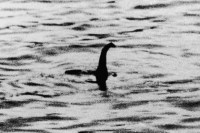
It wasn’t until I drove past Loch Ness a couple of years ago that I realised just how enormous it is. Over 20 miles long and deep enough to hide Blackpool Tower, it could hold the water from all the lakes in England and Wales combined. But it’s still not as big, I found myself thinking, as the human imagination. Gareth Williams’s excellent book isn’t about the Loch Ness monster; it’s about the people who have looked for it. There is Alexander Keiller, rich from marmalade and ‘fond of sex, sometimes on a near-industrial scale’. There’s wing commander Basil Cary and his wife Winifred, known as Freddie, who can work out which pub her husband is in by dangling a pendulum over a map (she then rings up and shouts: ‘Send him home!’).

A Horrible History of English Hymns

From our UK edition

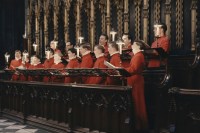
Given that for much of English history the country’s main musical tradition was that connected with the church, it is surprising that so little effort has been made to describe the evolution of, as the subtitle to Andrew Gant’s book puts it, the ‘History of English Church Music’. If we read biographical accounts of the lives of composers from Tallis to Vaughan Williams we pick up some of the story, but far from all of it. Gant is supremely well qualified to write about it. He has been organist and choirmaster of the Chapels Royal and worked at Westminster Abbey, Oxbridge colleges and the Guards’ Chapel; and he also composes.

Assorted Christmas crackers

From our UK edition

There’s a moment in a child’s life where Christmas begins to lose its magic. Once lost it cannot be regained, but as adults we can catch glimpses of that wonder through our own children, through booze, and most of all through songs, films and stories. Christmas is the one time of the year when it’s not only acceptable to cry over such sentimental things, it’s almost compulsory. The wonder ceases at around eight or nine years old. Andrew Szlachetko (who publishes this book, £5.99) addresses this in The Age of Not Believing. The hero, Thomas, on his way to Santa’s grotto, is mocked by some other boys for his belief in Father Christmas. Later, full of rage and shame, he hits one of them because ‘the magic has simply disappeared’.

Chrissie Hynde writes like an angel on angel dust

From our UK edition

‘The day I found out that Suzi Quatro wasn’t a dyke was the worst day of my life!’ a teenage Joan Jett once complained to a teenage me — and, substituting Chrissie H for Suzi Q, I knew well how she felt. Here I am popping up on page 150: Little teenagers out in the sticks like Julie Burchill lapped up my half-baked philosophical drivel and prepared their own versions of nonsensical tirades for the day when they too could make a ‘career’ out of it. I even sold the darling little Julie my typewriter for £15 when my time was over, like passing the baton of ‘how to fuck off the nation and get paid for it’. She insisted on giving me £17.

Pastoral scene of the gallant South

From our UK edition

During the first ten pages of this long work Paul Theroux, on a journey through the American South, meets two citizens of Alabama. The first, encountered in Tuscaloosa when he asked the way to the Cornerstone Full Gospel Baptist Church, was named Lucille, called him ‘Mr Paul’, said ‘Ain’t no strangers here, Baby’, took him to the church and said ‘Be Blessed’ when they parted. The second, a citizen of Gadsden, was named Wendell, called him ‘Sir’, clamped him on the shoulder, said ‘Kin Ah he’p you in inny way?’ and before they parted suggested they meet again for ‘a sandwich, peanuts or anything’.

Bored and lonely in Kathmandu

From our UK edition

It started as a ‘shoke’ — the Anglo-Indian slang word for ‘hobby’. Bored and lonely in Kathmandu, the young Assistant Resident, Brian Hodgson, began studying the flora and fauna of the hills, about the only occupation he was allowed to pursue apart from shooting woodcock and snipe under the constraints imposed by the Raja. The unicorn of the Himalayas had cantered through Chinese mythology for centuries. In no time, Hodgson found a living specimen in the King’s menagerie, a panting antelope from the Tibetan plateau which, alas, soon expired, unable to survive at lower altitudes, but not before Hodgson had established that it in fact possessed two horns.

Casual, funny, flirtatious, severe

From our UK edition

When The Waste Land first appeared, there were rumours that it was a hoax. It seemed so strange: 400 lines in many languages, and even the sections that were in English looked as if the author was only teasing. ‘Twit twit twit’ ran one line: ‘Jug jug jug jug jug jug.’ Eliot’s long poem was published first in Criterion in October 1922, and then in an American magazine the following month. Eliot had also sold the rights to publish it as a book, but his publishers feared that the poem alone was too short. To make it a little longer, Eliot added half a dozen pages of sporadic notes. The notes Eliot added are as odd as the rest of the poem. They give a handful of helpful references while denying others.

General Anders to the rescue

From our UK edition

Until Poland applied to join the EU in the 1990s, the biggest single influx of Poles into this country was in the immediate aftermath of the second world war. Around 200,000 Poles who had fought for the Allies chose to seek refuge here, rather than return to their homeland and face life under Stalin. Many of them had been members of the most curious of all the armies that took part in the conflict: the Polish Army of the Soviet Union and the Middle East, otherwise known as the Anders Army.

The real gardeners’ questions answered

From our UK edition

Why is it that gardening in the public prints is so often treated as a fluffy subject for fluffy people? Writing that a plant is ‘incredibly beautiful’ or that everyone is ‘really passionate’ about their allotment/community garden/windowbox doesn’t seem to me to be an adequate substitute for telling thoughtful gardeners something they didn’t know already. The trouble is that there is a shortage of trained gardeners and horticultural scientists who both have something interesting to say and can write engagingly, and of these only one can make me laugh out loud. His name is Ken Thompson, and he was for many years a lecturer in the Plant and Animal Sciences faculty at the University of Sheffield.

A companion for life

From our UK edition

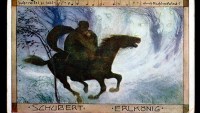
There can be no good reason why Graham Johnson’s marvellous three-volume encyclopaedia of Schubert’s songs has been so neglected by reviewers over the past year. There are two possible bad ones: the price, which at £200 may deter the faint-hearted (though at nearly 3,000 pages it would justify twice the outlay); and the fact that its publication coincided with Ian Bostridge’s Schubert’s Winter Journey. Perhaps literary editors thought one Schubert book enough. It’s time to put this right. Spectator readers don’t need to be persuaded of the appeal of Schubert’s Lieder, and this is the book on the subject — the best written, longest and most informative. The product of a lifetime’s work, it will also be a lifelong companion.

Bad news from paradise

From our UK edition

Suddenly, the Maldivians are in the news. Earlier this year, they locked up their first democratically elected president, and just recently they declared a state of emergency. It never used to be like this. The Maldives was just a place you saw in brochures, looking expensively turquoise. It has a population no bigger than Barnet (350,000), and 99 per cent of the country is covered in water. Until recently, even its neighbour, Sri Lanka, hardly seemed to notice it. During my time in Colombo, visiting Maldivians were merely a source of idle curiosity. They flew into town either to pick up a secular education or to get roaring drunk. It did make you wonder what went on at home. Well, now J.J. Robinson has some of the answers.

Shakespeare with or without the waffle

From our UK edition

30-Second Shakespeare: 50 key aspects of his works, life and legacy, each explained in half a minute sounds trivial, but it isn’t. The purpose of this short, beautifully presented and fully illustrated guide is not to feed vain show-offs with sound-bites to give them something clever to say at dinner parties but, as Ros Barber puts it in her 30-second introduction, ‘to make Shakespeare interesting and comprehensible by cutting out the waffle’.

O this white powder!

From our UK edition

Beware hedonists bearing white powder. This, in part, was the message pressed in a short book about the excesses of the Jacobean court written by a Scottish Catholic physician and occasional counterfeiter, George Eglisham. The Forerunner of Revenge, published in Antwerp in 1626 in English and Latin, quickly gained notoriety across Europe for its particular depiction of the Stuart monarchy as a dynasty under siege.

A lonely ice maiden

From our UK edition

‘Mystery comes through clarity’, is how Rupert Thomson recently described the effect he was trying to achieve in writing. It’s an apt phrase for his latest book, Katherine Carlyle. Thomson has previously published nine novels but has never achieved wide public recognition, partly because of their lack of uniformity. This, though, is what has attracted other writers, who admire his range, the visionary and haunting nature of his stories, the precision of his imagery, and his lack of agenda. For these, Jonathan Lethem has called him ‘a pure novelist’. Katherine Carlyle displays all of these qualities, and may well come to be thought of as his defining book, but it is also a work with limitations.

Richard III: a bad man — and even worse king

From our UK edition

When archaeologists unearthed the battered mortal remains of King Richard III beneath a council car park in Leicester in 2012, they not only made the historical find of the century (so far) but unleashed a veritable frenzy of media attention on a ruler already the most notorious in English history. A stream of books, articles (both scholarly and popular), documentary films and newspaper opinion pieces poured forth, and Richard’s troubled life and times became front-page news until his bones were once more laid to rest earlier this year.

Cultivating the fourth estate

From our UK edition

Lord Palmerston is remembered today not for his foreign policy nor for his octogenarian philandering, but for his management of the press. He was the first prime minister to grasp that dealing with journalists was all about pragmatic negotiation and buttering people up. The deal between Palmerston and the newspapers was: ‘I’ll tell you something no one knows if you give me your support and a favourable report.’ It still works like that today. Most historians assume that Palmerston was the only Victorian prime minister to cultivate the fourth estate. Balfour loftily boasted that he never read the newspapers. But this was an affectation. As Paul Brighton shows in this new study, 19th-century prime ministers all had contacts with the press.

Hubris made the 20th century the bloodiest in history

From our UK edition

Sir Alistair Horne, like that other great knight of military history, Sir Michael Howard, served in the Coldstream Guards during the second world war. According to Clausewitz (in Vom Kriege), his judgment will therefore be invested with insight denied to those who have never been shot over: As long as we have no personal knowledge of war, we cannot conceive where those difficulties lie of which so much is said, and what that genius and those extraordinary mental powers required in a general have really to do. . . But if we have seen war, all becomes intelligible. So it is disappointing to read the late Sir Martin Gilbert, quoted with apparent approval in the preliminaries: ‘I’m not a theoretical historian, seeking to guide the reader to a general conclusion.

A lofty, lusty Laureate

From our UK edition

These Collected Poems, published halfway through Carol Ann Duffy’s time as poet laureate, make clear that she is a true Romantic poet in the tradition of Byron, Wordsworth, Elizabeth Barrett Browning, Anne Ridler and Elizabeth Bishop. In his introduction to Lyrical Ballads, Wordsworth defined Romantic poetry as ‘the spontaneous overflow of powerful feelings’. And these pages do indeed overflow. I have known Carol Ann Duffy since the late 1970s when her father, Frank Duffy, an AUEW shop steward, was the Labour parliamentary candidate in Stafford, the neighbouring constituency to mine, in Leek. Born in Glasgow in 1955, and educated in Stafford, Duffy left home in the 1970s to read philosophy at Liverpool University.