Book review

Patricia Lockwood’s latest novel transcends genres

In the wake of her niece’s death, a writer travels with her family to Scotland, hoping the holiday will ease their pain. After tasting water from Skye’s natural Fairy Pools, the writer starts to feel not quite herself. It must be a fairy trick, she thinks, or perhaps her grief. She loses feeling in her legs and her grasp of language, but gains an odd new power: access to other creatures’ sensations. Watching her friend eat, she feels the food “slipping spoonful by spoonful inside her,” and picking a sunflower’s petals elicits a “tug in her own flesh.” Patricia Lockwood’s latest novel, Will There Ever Be Another You, charts the protagonist’s bizarre illness and recovery.

Lockwood
Buckeye

Patrick Ryan’s second novel doesn’t pretend to be perfect

Patrick Ryan’s second novel is a small-town family saga that spans three generations, four wars, 11 presidents and many a watershed moment along the way. Ryan understands that big stories are made of small moments, not the other way around, and Buckeye is a fine illustration of how drawing-room tensions can fester and become matters of historical significance. In 1945, very few young men can be seen walking the streets of Bonhomie, Ohio. Cal Jenkins, a hardware store clerk with one leg shorter than the other, is one of them. The superheroes in the comic books he reads are versions of himself, but for the limp. Cal is married to Becky, whose occasional séances with her childhood friend Janice he initially brushes off as an innocuous, if slightly odd, pastime.

Woolf

The Life of Violet catches a side of Virginia Woolf that has been obscured

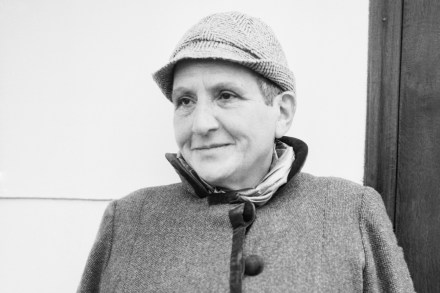
She was Adeline Virginia Stephen, then. Signing her letter “AVS”, in August 1907 the 25-year-old who became Virginia Woolf complained to her friend Lady Robert Cecil: “The effort it is to write… I feel like one rolled at the bottom of a green flood, smoothed, obliterated, how should my pockets still be full of words?” Long before the masterpieces that would make her name, she was working on a series of literary exercises. These attempted to remold the biographical form into one that could encompass and celebrate the lives, not of famous men, but of unfamous women and combine what she called the granite and rainbow of “life-writing”: stony fact and iridescent fantasy. Her letter continues: If you keep The Life, or Myth, don’t quote it – see my vanity!

Frank S. Meyer was a political paradox

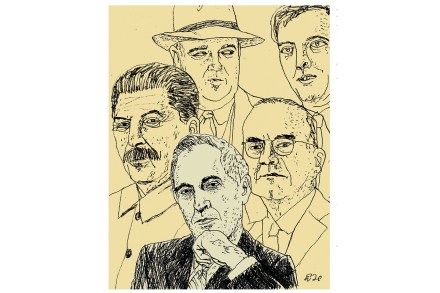
Noel Parmentel’s quote, “The right wing was fun back then,” is one of the takeaways from Daniel J. Flynn’s new book The Man Who Invented Conservatism: The Unlikely Life of Frank S. Meyer. Fun? The progenitors of post-World War Two American conservatism were, as portrayed here, a high-spirited lot. They were also intemperate, combative, self-destructive, often brilliant, not infrequently loony – and always deeply interesting. One could apply those qualities to the subject of the book, a character who looms large in the minds of intellectual conservatives and hardly anywhere else. Frank Meyer is not a household name like William F. Buckley Jr.

Meyer
ghostwriting

The thrill of ghostwriting

“I begin to see the outlines of a scene, so I open my computer and start revising, growing it into what I think he intended it to be. This is the job of a ghostwriter, and I’m going to do it with fidelity.” If Julie Clark is clear about anything in The Ghostwriter, her gripping fifth novel, it’s the magnetic power of narrative – particularly when filtered through layers of secrecy, memory, and artifice. Clark, a New York Times bestselling author, has a flair for sleek, psychological crime fiction and delivers a taut and addictive story that is both clever and compulsively readable.

Baldwin

A more rounded picture of James Baldwin

James Baldwin never wanted to be a symbol, but became one anyway: a stand-in for defiance, for beauty, for pain wrapped in elegance and for the entire weight of a country’s unresolved sin. Baldwin didn’t just write about America – he exposed it: the good, the bad and the ugly. He told the truth, even when it hurt. He didn’t soften the edges. What he never quite got, in his lifetime, was intimacy on the page about his own life. Biography existed around him, but he was rarely at the center of it. If we see him now, we see a man who smoked too much, drank too much and who sometimes ran from both his lovers and himself – rather than what he was: an intangible literary icon. Nicholas Boggs tries, in Baldwin: A Love Story, to give us a more rounded picture of the author.

Glennon Doyle’s latest offering marks a change in direction

Glennon Doyle – wife, mother, lesbian, blogger, former Instagram phenomenon, political influencer –  says “we can do hard things.” This aphorism, taken from a poster in a classroom back when she was a third-grade teacher in Virginia, might just be one of the most successful dicta to emerge in recent American history – more successful, even, than Barack Obama’s “Yes we can!” When Joe Biden won the presidency in November 2020, his campaign manager swiftly tweeted “We can do hard things... and you just did!” Months later, in January 2021, Democrat Chuck Schumer, addressing Congress after the siege of the Capitol, declared: “In America, we do hard things.

Doyle

The mechanics of cancel culture

Must we approve of an author’s private life in order to enjoy his or her books? Possibly not, to judge by the continuing popularity of writers as diverse as Charles Bukowski, Allen Ginsberg, P.L. Travers, Roald Dahl and Norman Mailer, to name but a few of those whose domestic affairs have fallen short of the temperate or monogamous ideal. And what of the sage of Cornish, J.D. Salinger, most of whose interactions during his long years of New Hampshire exile involved hanging around with local teenagers? In 1972, a fresh-faced journalism student named Joyce Maynard left college and went to live with the 53-year-old author of The Catcher in the Rye at his invitation. After eight months, she was unceremoniously dumped.

Bailey

How to make America read again

Christopher J. Scalia, in 13 Novels Conservatives Will Love (But Probably Haven’t Read) hopes not only to refresh “how conservatives talk about fiction,” but also to disabuse the left of the notion that “conservative thought is an oxymoron.” He’s set himself a difficult task, since, as he notes, nobody reads any more; whether this is truer of conservatives than of the left, I don’t know. Using the form of a book in order to attract people who don’t read might seem odd, but Scalia knows his audience and his light, avuncular style proves engaging throughout. He’s also chosen a structure that even the most TikTok-numbed zoomer might appreciate: the extended listicle.

Scalia

A walk through Geoff Dyer’s childhood

We all know we’re supposed to draw a line between the artist and the art. The veteran English essayist Geoff Dyer himself once had cause to remind me, mid-enthusiastic gabble, that his book on D.H. Lawrence was, in fact, “a conceit.” But as a reader often more interested in the lives of writers than their works, I must confess the idea of a full-blown memoir – finally! – from Dyer had me excited. I was not disappointed.

Dyer

Has Trump’s return defanged Ezra Klein?

Wonks are a useful sort to have around; no governing class should be without them. A wonk is someone who makes technical improvements to the existing order of things while remaining obedient to its premises. No social order can run entirely on its own propaganda. There does, somewhere, need to be some group of sober and dutiful people applying themselves to secular problems. For 21st-century America, this has been the “juicebox mafia,” a group of liberal bloggers who came of age in the early 2000s. Ezra Klein, Matthew Yglesias, Markos Moulitsas and Noah Smith were self-conscious wonks – the first, indeed, to treat wonkery as a personal credo. They called their articles “explainers” rather than op-eds.

Klein

Unpacking John Lennon and Paul McCartney’s complex relationship

Fifty-five years after they broke up, what is there left to say about the Beatles? There have been so many books written about the group and so many obsessively detailed websites devoted to exploring every song, every public utterance, every twist and turn in their history, that the average rational man or woman might think they know all there is to be known about them. Craig Brown’s magisterial 2020 volume 150 Glimpses of the Beatles was a pop-cultural dive into their peerless influence and standing; Ian MacDonald’s still legendary Revolution in the Head dives into the 241 songs that they recorded (although, of course, it should be 242, thanks to the emergence of “Now And Then” in 2023) and does so with grace, intelligence and slightly frightening attention to detail.

John

Joan Didion’s unedited record of therapy is morbidly fascinating

In Notes to John, Joan Didion’s ostensibly private record of three years’ therapy under psychiatrist Dr. Roger MacKinnon – one memory troubles her a great deal. When her daughter Quintana Roo Dunne was about seven, they watched the (wholly unsuitable) Night of the Living Dead, before Didion insisted Quintana accompany her to the kitchen at midnight. She pretended to be afraid for herself, but really she worried the glass doors of the living room made Quintana vulnerable to intruders. Reading this book sometimes feels like being the imagined predator lurking in the dark: we catch only a slice of the illuminated interior, and Didion behaves as if she isn’t being seen. By the end of 1999, Quintana, who was 33, had reached a new crisis point in her struggle with alcoholism.

Didion

Erik Satie was an inadvertent innovator

The music critic Ian Penman has structured his new book about the great French composer and rascally agent provocateur Erik Satie in three parts, in the manner of classic Satie compositions such as Trois Gymnopédies, Gnossiennes and Trois morceaux en forme de poire. A hundred years after his death, aged 59, in 1925, Satie remains one of the great enigmas of 20th-century composition. A frequent visitor of Parisian cabarets, immersed in the city’s chanson tradition, his work could also be bafflingly conceptual. He was connected to the world of classical composition through his friendships with Claude Debussy and Maurice Ravel, but remained determinately his own person. His music is regularly held up as a precursor to John Cage and to ambient electronica alike.

Could the French Revolution have been avoided?

In the middle of the 18th century, on the north side of the Palais Royal gardens in Paris, there stood a magnificent chestnut tree called the Tree of Cracow. In his presidential address to the American Historical Association in 2000, Robert Darnton explained that the name Cracow probably derived from the heated debates that took place in Paris during the War of the Polish Succession, but also from the French verb craquer: to tell dubious stories. News-mongers or nouvellistes de bouche, agents for foreign diplomats and curious members of the public gathered round the tree, which was at the heart of Paris’s news network, a nerve center for transmitting information, gossip and rumors.

Darnton

Who was William F. Buckley Jr., really?

What more can be said of the American conservative commentator, novelist, musician, sailor, talk-show host and tireless public intellectual William F. Buckley Jr. (1925-2008), that he or his previous biographers haven’t already said or written? After all, this is an individual who in 1983 wrote a 90,000-word book, called Overdrive, covering the events of a single week of his life. Plenty more, it turns out, as Sam Tanenhaus proves in his thousand-page biography Buckley: The Life and the Revolution That Changed America. Buckley was blessed with a voice that sounded like he let it marinate in a cask of port between appearances Buckley was 58 when he wrote Overdrive, and kept to a schedule that would have taxed the energy of a man half his age.

Buckley

A profound account of the October 7 pogrom

I first learned about anti-Semitism at the age of eight, when my father explained to me that his closest business friend could not live near us because he was Jewish. This was 1961, hardly three miles from Mount Vernon, Virginia, in a new-build neighborhood that was racially segregated, as was my elementary school. Black children descended from George Washington’s slaves lived in a nearby rural ghetto called Gum Springs and were not welcome east of Fort Hunt Road. Somehow that memory – like John F. Kennedy’s assassination two years later and the view of his funeral procession from my father’s office window – is one of my earliest and starkest recollections.

Murray

Ocean Vuong’s newest work is an affecting celebration of misfits

Ocean Vuong’s writing is heavily influenced by his own experiences. The protagonist of his first coming-of-age novel, On Earth We’re Briefly Gorgeous, is a carbon-copy of the author. Vuong was born in Vietnam in 1988. While serving with the US Navy, his American grandfather fell in love with “an illiterate girl from the rice paddies” who gave him three children. When one of them, Vuong’s mother, was identified as mixed-race by a policeman, the family was displaced to a refugee camp in the Philippines and finally made it to Hartford, Connecticut, where Vuong was raised by his mother, aunt and grandmother. His family story merits a book of its own.

Vuong

Keith McNally’s memoir is strangely unappetizing

Harvey Weinstein has a memorable walk-on role in Keith McNally’s memoir I Regret Almost Everything. Taking a break from being New York’s most celebrated restaurateur, McNally wrote and directed a film called End of the Night that was screened at Cannes in 1990. Its auteur hoped that Weinstein, who distributed the previous year’s Palme D’Or-winning picture Sex, Lies, and Videotape, would warm to it. He was blunt: “I didn’t like your film and I’m not going to buy it.” As McNally swallows the shot, there’s a chaser. “But I’d still like to come to the after-party.” McNally admires Weinstein’s honesty, if little else. So I’m going to be straight, too. I didn’t enjoy I Regret Almost Everything. This is a shame, because the ingredients are promising.

McNally

Amanda Knox’s new memoir asks what lies next

The question at the heart of Amanda Knox’s latest memoir Free: My Search For Meaning is a simple one: what are the life prospects for an exoneree? It follows 2013’s Waiting to be Heard, which detailed the Seattle student’s imprisonment in Italy before and after a wrongful murder conviction, and her fight for justice. For anyone who was asleep under a boulder at the time, Knox is the gauche American student who became the target of a media firestorm following the brutal murder of her British roommate Meredith Kercher in Perugia, Italy, in 2007. She was convicted of the crime alongside her boyfriend Raffaele Sollecito in 2009 and freed on appeal in 2011. (Kercher’s actual murderer, Rudy Guede, was convicted in a fast-track trial in 2008, and released in 2021.

amanda knox