Book review

Enchanting waters

From our UK edition

This is a book which is sometimes so private that reading it seems very nearly like an act of invasiveness. There is nothing salacious or rude in it, but its tone of voice is whispered, intimate, as though the reader were an interloper, a clumsy stumbler into the most secret thoughts of the author. Its occasion is a walk down the River Ouse in Sussex, from its source in the High Weald to the sea at Newhaven, but its substance is only marginally to do with that simple and very ordinary bit of geography. The river becomes the thinnest of wire coat-hangers on which almost anything can be hung. The result is a meditation, a drifting sequence of thoughts on time and change, on loss, love and meaning, on hell and happiness, geology and evolution, science and poetry.

Precious little warmth

From our UK edition

There’s something wrong with these diaries. There’s something wrong with these diaries. This is not to disparage the scholarly efforts of their editor, Dr Catterall, nor the skill with which he seems to have pruned the original papers (twice the length) into the greatest coherence achievable, nor his helpful contextualisation and calmly rational explanatory notes. Nor is it to question the importance for modern historians of the whole painstaking enterprise, to observe that the general reader will plough onward from summit, to cabinet, to dinner party, to pheasant shoot, to bilateral meeting, with a half-formed question growing in his mind. Who was Harold Macmillan writing all this for? For himself? For friends and family? For history? To answer questions? To settle scores?

The mark of cane

From our UK edition

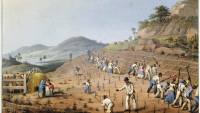
Sugar transformed our world. From its origins in New Guinea, this tall sappy grass initially made slow progress around the globe. It reached India in 500 BC, and then travelled harmlessly to Persia, arriving 1,000 years later. But, in the early 15th century, it reached Europe, and suddenly everything changed. Sugar would become the catalyst for the greatest and most rapacious expansion that humankind has ever seen. Europeans couldn’t get enough of it, and were soon rearranging the world. No longer was foreign adventure a matter of pilfering and persecution; by the early 1600s, the newly emerging seapowers were competing for land.

Imperfect working order

From our UK edition

The publication of Pakistan: A Hard Country could not be more timely. International attention has been focused on Pakistan since the Americans killed Osama bin Laden in Abbottabad. Being in the spotlight generally means trouble for this country that has been bedevilled by war and political drama for over three decades. Foreigners announce goodwill and arrive with generous aid, but Pakistanis are frequently left feeling bruised, as the outsiders become ever more bewildered by the workings of this beguiling and maddening place. Anatol Lieven originally planned to call his book ‘How Pakistan Works’. It would have been a good title, since this is exactly what he tries to explain.

Setting the world to rights

From our UK edition

Wicked Company is the collective biography of a group of men with little in common, apart from a generalised dissatisfaction with the state of the world around them. Perhaps that is true of most intellectual coteries. The kings of the Parisian Enlightenment of the 18th century were the mathematician Jean d’Alembert and the playwright and journalist Denis Diderot, joint editors of the great Encyclopédie.

Fear and loathing in the Congo

From our UK edition

Jason Stearns is a brave man. He once worked for the UN’s disarmament programme in eastern Congo, a job which required him to probe the forests around the town of Bukavu, seeking out members of the local Mai Mai militia. Jason Stearns is a brave man. He once worked for the UN’s disarmament programme in eastern Congo, a job which required him to probe the forests around the town of Bukavu, seeking out members of the local Mai Mai militia. When the UN peacekeepers made contact — and there was always a risk they would run into Rwandan rebels with very different priorities — his job was to persuade twitchy, traumatised child fighters to down their weapons. Arguably, what he attempts to do in this book is even braver.

The Russian connection

From our UK edition

It’s impossible not to warm to the author of this book, a perky Turkish-American woman with a fascination with Russian literature and an irresistible comic touch. It’s impossible not to warm to the author of this book, a perky Turkish-American woman with a fascination with Russian literature and an irresistible comic touch. I began it on the train; barely had I started before my involuntary yelps of hilarity were causing alarm amongst my fellow passengers. An elderly man moved to another seat after I came upon Batuman’s description of the time she found herself judging an adolescent boys’ leg contest in Hungary. Fortunately, perhaps, I arrived at my station before Batuman embarked on an account of an excruciatingly funny literary seminar to rival Lucky Jim.

When wailing is appropriate

From our UK edition

This is a strange exercise. It is a commonplace book of quotations from great authors, assembled by the philosopher A. C. Grayling. The extracts from the great books, how- ever, are provided without attribution. Furthermore, they are arranged in numbered ‘verses’, like the divisions of the ‘texts’ in the Bible. The Bible was thus divided for ease of reference when the Rabbis and the Christian Church — in separate exercises, obviously — decided which books should appear in the canon of Scripture. Why Grayling has numbered his collection of quotations is anyone’s guess. The title is slightly cringeworthy.

The man mountain of Fleet Street

From our UK edition

A. N. Wilson has a queasy feeling that he won’t be re-reading the works of G. K. Chesterton for a while Yet another book on Chesterton! William Oddie is only half way through his immensely detailed two-volume biographical-cum-theological study of the man mountain of Fleet Street. Last year we had Aidan Nichols on Chesterton’s theology. And now Ian Ker comes with the familiar account of how the son of a Kensington estate agent, educated at St Paul’s and infected with the spirit of the Nineties, moved from being a Bedford Park aesthete-agnostic, through socialism and liberalism to distributism, and from unbelief to a broad, generous sympathy with the Anglo-Catholicism of his wife, Frances Blogg.

In search of a character

From our UK edition

A chronicle of three young actors desperate to forge careers in the acting profession sounds like a dangerously familiar proposition. We are all now habituated to the weekly Saturday evening drama of wide- eyed dreamers drilled, mauled, culled and reculled in search of a Nancy, Dorothy or Maria. In Lucky Break, however, Esther Freud redraws the path that leads from Television Centre direct to London’s glittering West End. These young hopefuls are plunged into the maelstrom of a three-year drama school programme that stretches and befuddles them in equal measure. There is a squirm- inducing accuracy to the students’ earnest endorsement of their training, hilariously realised in the principal and the quasi-mystical movement teacher.

Looking on the bright side . . .

From our UK edition

Anyone who thinks that a stable and loving family background is the key to a happy life had better read this book; for its protagonist, now 80 years old, was rejected as a baby by his unmarried mother, looked after by a doting and doted-on grandmother until he was four, and then, inexplicably (given that he had various relations who could have cared for him), consigned to an orphanage of Dickensian grimness from which he was finally discharged at the age of 14 with nothing but a Bible, a new suit, and a ten-shilling note. Yet Peter Paterson’s fascinating memoir shows him to have led a life of almost unnatural contentment. He has spent nearly 60 years of it in journalism, having drifted into it by accident and considered himself ever since the luckiest man alive.

. . . or sensing impending doom

From our UK edition

‘What am I? A completely ordinary person from the so-called higher reaches of society. ‘What am I? A completely ordinary person from the so-called higher reaches of society. And what can I do? I can train a horse, carve a capon, and play games of chance.’ So reflects Botho von Rienäcke, the central character of Theodor Fontane’s novel of 1888, Irrungen, Wirrungen (newly translated as On Tangled Paths). His bitter self-examination is a consequence of his predicament. Like many a fellow officer, he has taken up with a working-class girl. He met her on a boating trip when he came to her rescue from an accident in the water.

Beastly behaviour

From our UK edition

If the production team of The Archers ever needs a scriptwriter at short notice, they need look no further than Miranda France. For her latest book, she’s gone back to her roots as the daughter of a farming family and created a novel that’s a cross between an omnibus edition of the radio soap and the gimlet-eyed prose of Stella Gibbons. Hill Farm is set in a nameless village somewhere on the borders of Sussex and Kent. Hayes loves the land, but not farming. His wife Isabel loves the idea of the country but not the reality of the falling-down farm to which she is shackled by duty rather than affection.

Fish and chaps

From our UK edition

This is the ultimate ‘niche’ book. This is the ultimate ‘niche’ book. It focuses on that singular decade between the years of rockers and punks, when toffs, freed from school or army uniforms, and toughs, discarding skinhead aggression, found a sartorial meeting point. This new style, the cool child of late Fifties mods, had been given a huge public oomph by the Beatles and ‘their silly little suits’ as David Bailey (who has stated that he, along with myself, was the unwitting originator of the look) succinctly puts it. It was sharper, leaner and hinted at androgeny. Its creators were no longer found in caverns down Carnaby Street, nor high in the King’s Road, but centered round that time-honoured dandy’s inferno, Savile Row.

The world according to ants

From our UK edition

The South American rain forest is the perfect environment for a dank, uncomfortable thriller. It’s brutally competitive; life is thrillingly vulnerable; you can’t safely touch or taste anything, and, beyond a few yards, you can see nothing at all. Even Amerindians are anxious in this environment, and credit it with all manner of horrors. In my own experience, it is, in every sense, a spine-tingling environment. So novelist Edward Docx has chosen well in the setting for his dark tale. It’s not a complex plot but there’s the constant feeling that you’re not seeing the whole picture, and that nothing is quite as it seems. Docx is a master of disquiet, and brilliantly captures the bewildering effect of the forest.

Go out and govern New South Wales

From our UK edition

‘In the mists and damp of the Scottish Highlands, 61-year-old Sir Bartle Frere was writing a letter. ‘In the mists and damp of the Scottish Highlands, 61-year-old Sir Bartle Frere was writing a letter. Straight-backed, grey-haired, he had the bright eye and bristled moustache of an ageing fox-terrier.’ Reading this, at the beginning of a chapter, we cannot be sure whether what follows will be Lytton Strachey or John Buchan. The tale might go either way. The letter might be either an invitation to shoot grouse or in answer to a summons to cope with a crisis threatening the British empire. The second guess would be right.

Cuckoo in the nest

From our UK edition

Caradoc King, the well-known literary agent, was adopted in 1948 as a baby into a family of three girls, shortly joined by a fourth, presided over by a difficult, unhappy mother and her feebly adoring husband. He grew up unaware of the adoption and has never discovered its motive. His adoptive mother, Jill, the moving spirit behind every family decision, may have simply longed for a boy. If so, she was singularly ill-prepared for standard boyish delinquencies. Young Carodoc liked playing with matches, embroidering the truth, and inspecting — in a spirit of scientific enquiry — the private parts of his younger sister.