Book review

A Scottish Paradise

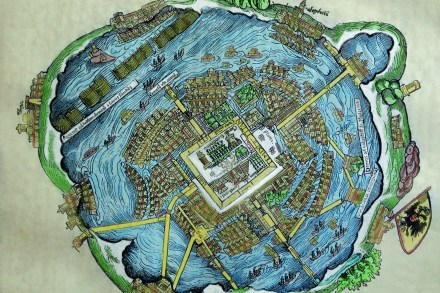
As every Italian schoolchild knows, The Divine Comedy opens in a supernatural dark wood just before sunrise on Good Friday, 1300. Dante Alighieri, a figure in his own work, has lost his way in middle age and is alone and frightened in the darkness. The ghost of the Roman poet Virgil is about to show him Hell: ‘Midway in the journey of our life I found myself in a dark wood, for the right path was lost.’ Begun in the early 14th century, Dante’s poem is, for many, the greatest single work of western literature. With its dramatic chiaroscuro of hellish fuming mists and paradisal stellar regions, the poem is ‘awful’ in the archaic sense of the word (still valid in the Italian terribile), meaning to inspire awe.

dante paradise

An unquiet life

Kikuko Tsumura is a multi-prizewinning Japanese author whose mischievously deceptive new novel takes us into what purports to be the office world of Tokyo. The routine at first seems familiar, but intriguing disparities emerge: the present is also a foreign country. There’s No Such Thing as an Easy Job gives us the minutiae of everyday working life — but not as we know it. Think Nicholson Baker’s Mezzanine, freed from lunchtime restrictions. A burnt-out young woman wants a job without responsibility — no stress, no demands. First up: a surveillance assignment observing a novelist suspected of receiving contraband goods.

tsumura

Playwright at play

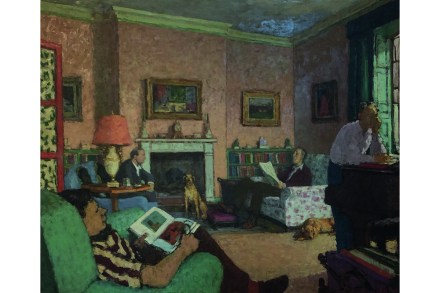
Gilbert in Oscar Wilde’s dialogue ‘The Critic as Artist’: ‘Every great man nowadays has his disciples, and it is always Judas who writes the biography.’ Not here. Hermione Lee’s immensely long Tom Stoppard: A Life is expert, engrossing, entertaining and sympathetic to its subject. At its heart is a writer steely in his determination to entertain, an inexhaustible mine of mots, a nonstop genius of jokes, capable of winning the Nobel Prize for the interview as an art form. It comprehensively replaces Ira Nadel’s Double Act (2002), a biography which Stoppard hoped would be ‘as inaccurate as possible’. (Indian Ink and Arcadia are both explicitly hostile to biography and its hubris.

stoppard

Hate in a damp climate

When Ross Clark was writing this excellent novel about climate change, he couldn’t have known that by the time we read it the world would be paralyzed by a pandemic. Now that’s happened, it adds a whole new layer to The Denial’s themes of hysteria, self-righteousness and dodgy statistics. Bryan Geavis is a retired meteorologist living in the south of England in ‘the near future’. He used to work for a large oil company, though has to keep this quiet as there are prison terms for anyone who worked in the industry. A storm blows up in the North Sea which causes flooding in London.

denial

The Spectator’s Books of the Year 2020

Our turkeys were stuffed and now we are too. Reclining helplessly in the recovery position, our thoughts turn to feasts future. What better way to show your friends and family that you love them, and also that you have impeccable taste, than sending them a book? In The Spectator’s stocking-stuffing December issue our staff, writers and friends make their seasonal suggestions for Books of the Year: stack upon stack of the most riotous reads, bibliographical beauties and pandemical page-turners. P.J. O’Rourke The Decline and Fall of the Roman Empire, Volume I, by Gibbon, because in this year of scourge and collapsing polity it seemed apposite. And only Volume I, due to reader fatigue after 582 pages and the shift in Volume II to the history of Byzantium.

books of the year 2020

The Ryan Gattis guide to Lynwood

In 2015, after a 10-year hiatus that followed his debut, the novelist Ryan Gattis published a masterpiece. All Involved is a compulsive, symphonic novel set during the Los Angeles riots of 1992, telling the stories of gang members, a firefighter, a nurse and a graffiti artist, among others, as they try to navigate six notorious, brutal days in LA. This month, Gattis returns to this milieu with The System. Much of the novel is set in troubled, entrepreneurial Lynwood, South Central Los Angeles, where Gattis has spent many hundreds of hours on painstaking research.

ryan gattis lynwood

A tinpot Caesar

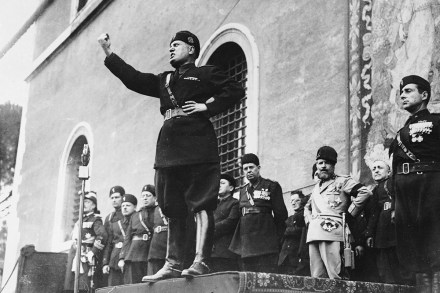
In 1919, an obscure political agitator called Benito Mussolini assembled a ragbag of Blackshirt diehards in the Lombard capital of Milan and launched the movement that was to become, two years later, the National Fascist party. The party took its name from the classical Roman symbol of authority — an ax bound in rods, or fasces. Once in power, Mussolini introduced the stiff armed Roman salute after the handshake was deemed fey and unhygienic. At times he wore a richly tasseled fez and thrust out his chin pugnaciously for the cameras. For all his posturing and demagoguery, Mussolini was widely admired in pre-war Britain, where Lord Rothermere’s Daily Mail routinely carried flattering portraits of him.

mussolini

We loved them, yeah, yeah, yeah

When the Beatles’ first authorized biographer, Hunter Davies, clinched the deal in 1967, his publisher remarked that ‘we know everything we could possibly know about the Beatles and they’ll disappear soon’. In that same year, the philosopher Bryan Magee adopted an incredulous tone in the Listener: ‘Does anyone seriously believe that Beatles music will be...part of daily life all over the world in the 2000s?’But here in the recently released statistics for the Top 10 global recording artists of 2019, among the Taylor Swifts and the Ed Sheerans, 50 years after they broke up — let me introduce you to the band you’ve known for all these years.

beatles glimpses

Jimmy Carter, Christian martyr

Former Newsweek writer Jonathan Alter’s new biography of President Jimmy Carter is less a political biography and more a hagiography. Like all lives of saints, it includes a passage describing a time of sinning before redemption. That was early in Carter’s political career when he artfully appealed to the votes of segregationist Democrats. But, in Alter’s view, as soon as Carter became Georgia governor in 1970, he transformed himself into a superhero, one who can harvest peanut crops even as he is heralding the rapture.

jimmy carter

Our lady of hope

From the kitchen of her apartment on the Quai de la Tournelle in Paris, the journalist and broadcaster Agnès Poirier could see the bright yellow plumes of smoke rising into the sky. Notre-Dame de Paris was on fire, and suddenly, in that tourist-crowded, hyper-expensive ‘cradle of France’, nothing was certain — ‘democracy, peace and fraternity’ — anymore. The following morning, children living on or near the Île de la Cité took to school little plastic bags filled with blackened bits of roof picked up from balconies and pavements (as well as probably quite a lot of lead dust) which ‘dated back to the Crusades’.

notre-dame poirier

Is your baby racist?

Babies, look at them: waddling about the place, falling over, crying, needy. Those racist bastards. Yeah that’s right, you heard me. Babies are racists too, they always have been. Unless you start doing the work, they always will be. Haven’t you noticed? Don’t you have a toddling daughter, a farting son, a drooping nephew, a drooling niece? Haven’t you noticed the obvious: these days, babies are all racist bastards. When you’re not looking, your baby is secretly cutting eye-slits in a white bed sheet. When you’re in the kitchen, making their soft, puréed dinner, your baby is skulking by the letterbox, quietly waiting for a delivery of Mein Kampf. Babies are hanging out on 8Chan.

antiracist baby children

Rock, a hard place

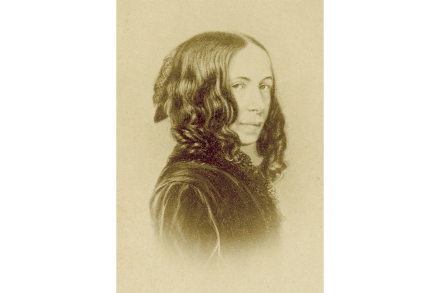
‘It’s a woman’s thing, creation,’ says Sarah, a girl accused of witchcraft in 18th-century Scotland, in one of the three storylines in Evie Wyld’s powerful new novel. Sarah is pregnant, having been raped and nearly killed. She is looking at a piece of sacking sewn by a sister and mother and continues: ‘You can see how they felt in each stitch, you can hear the words they spoke to each other and into the cloth.’ The Bass Rock is in many ways an amplification of these words spoken into the cloth, a feminine counterforce to the masculine violence that pulses viscerally throughout.

bass rock wyld

Last of the red-hot lovers

John Giorno’s breakthrough work, he explains in his richly salacious telltale memoir of the Sixties New York art scene, was ‘Pornographic Poem’. In 1964, Giorno took phrases from mimeographed erotica and reconstituted them as homosexual lyric poetry: ‘I shivered/ looking up / at these erect pricks/ all different/ lengths/ and widths/ and knowing/ that each one/ was going up/ my ass hole.’ ‘Pornographic Poem’ is a ‘readymade’ or ‘cut-up’ that follows Andy Warhol, Robert Rauschenberg, Jasper Johns and William S. Burroughs — all of them artistic appropriators, and all of them Giorno’s lovers. These revolutionary artists are Giorno’s ‘great demon kings’.

john giorno great demon kings

Mountain heir

Kapka Kassabova’s previous travel book, Border, was rightly acclaimed and won several prizes. The author traveled to the edge of Europe, between Greece, Bulgaria and Turkey, and teased out ‘where something like Europe begins and something else ends, which isn’t quite Asia’. This is a sequel of sorts. She now travels to another border, that between Macedonia, Albania and Greece, where the vast and beautiful Lake Ohrid remains one of the Balkans’ surviving religious melting pots, despite considerable nationalist pressure. It is where her mother was originally from, so her journey is partly a rediscovery of her own roots.

kassabova

Tori rebel

In her new book, the singer-songwriter Tori Amos advises aspiring artists to be wary of those who would lead them astray. ‘Most people cannot raise their hand and say, “Your expression, your piece, your song, your art, is not to my taste; in fact I have an aversion to it, but I think it’s brilliant.” And that means that... some people judge something to be good or not good by what they personally like. Beware of this, I say to all artists.’ The simple sentiment encapsulates why so much creative potential is stifled before it can flourish. An artist whose principal goal is to please an imagined audience, or to adapt his or her work to critical trends, is no kind of artist at all.

tori amos

Can we believe Ilhan Omar’s autobiography?

Political autobiographies are written to conceal, not to reveal. They come in two eminently pulpable forms. One is the twilight apologia of the retired or defeated politician, the other the resumé-polishing pitch of the rising star. Which category Ilhan Omar’s autobiography falls into depends on whether you, like her, think she’s a cruelly traduced beacon of hope in a land of benighted bigotry; or whether, as one investigative journalist concluded, she has committed the ‘worst spree of felonies by a congressperson in history’.‘I’m not here to undo or rewrite history,’ Omar tells us. But the truth slips away from her like a greased pig.

ilhan omar

Going both ways

Probably most of the world is bilingual, or more than bilingual. It is common in many countries to speak a national language alongside an international lingua franca such as Arabic, Spanish or English. On top of that, there may be a mother tongue that is not the same as a national language. A Nigerian, for instance, may be at once one of the million speakers of Berom, one of the 64 million speakers of Hausa and one of the 1.13 billion speakers of English. The same pattern is repeated across the globe.

bilingual brain

Dave Rubin’s ode to the so-called ‘independent thinker‘

Dave Rubin loves to talk about ideas. In his new book, Don't Burn This Book, he tells the reader:‘I want you to walk into a bar and order yourselves a full-bodied opinion. I want you to get absolutely wasted on facts until 3:00 a.m., and then, when you’re just about ready to pass out, I want you to get another large glass of reality and chug it.’It's telling that Rubin suggests that we order the opinion before the facts. Would it not make more sense to suggest, say, blending a cocktail of facts into an opinion? Rubin’s advice seems backwards to me.But it would be wrong to take this suggestion seriously. Don't Burn This Book is not a serious work. It is, in fact, extremely lazy, bearing all the hallmarks of a project that was knocked together over a few wet weekends.

dave rubin

Around the world in 49 days

This article is in The Spectator’s March 2020 US edition. Subscribe here. No one remembers Wendell Willkie. If you don’t believe me, mention him as a man worth looking up at your next cocktail hour. Then watch as even well-informed acquaintances wonder when, exactly, you started taking an interest in adult-entertainment performers or bothered to locate the inspiration for Arrested Development’s hit ‘Mr Wendal’. Even the learned (and let’s throw in friends who subscribe to the New Yorker to even things out), will struggle to recall that Willkie was not only referred to as ‘Private Citizen Number One’ by FDR.

wendell willkie

Birth of a nation

This article is in The Spectator’s March 2020 US edition. Subscribe here. The 20th century was a crowded century. Event piled upon world-historical event to produce a mass of history so heavy with the prospect of annihilation and so alive with the possibilities of individual emancipation that one of humanity’s most extraordinary accomplishments, the constitution of a liberal democratic republic on the Indian subcontinent, went largely unnoticed in the West. The significance of India’s birth was, however, not lost on a colonial world clamoring for freedom, or African Americans striving to unlock the full promise of America. India’s founding on August 15, 1947, W.E.B. DuBois rhapsodized, would be ‘remembered as the greatest historical date of the 19th and 20th centuries’.

india