Book review

Shostakovich, Leningrad, and the greatest story ever played

From our UK edition

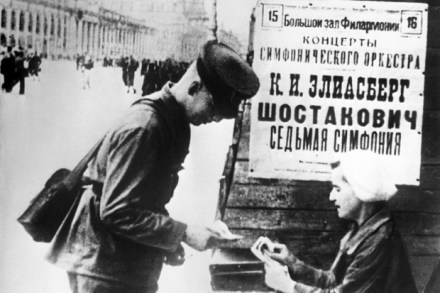
The horrors of the Leningrad siege — the 900 Days of Harrison Salisbury’s classic — have been pretty well picked over by historians; and meanwhile the story of Shostakovich’s Seventh Symphony, the improbable circumstances of its composition and first Leningrad performance in August 1942, is well known from the extensive, and still growing, literature on the composer. But Brian Moynahan’s book is the first to my knowledge — in English at least — to interweave these narratives to any significantly detailed extent. Moynahan is not a musician, and this is not really a book about music.
What was the secret of Queen Victoria’s rebel daughter?

From our UK edition

Princess Louise (1848–1939), Queen Victoria’s fourth daughter, was the prettiest and liveliest of the five princesses, and the only one who broke out of the royal bubble. Artistically talented, she trained as a sculptor, and her marble statue of Queen Victoria can still be seen in Kensington Gardens. Unlike her sisters, who all married royals, Louise became the wife of a commoner, Lord Lorne, later Duke of Argyll. The marriage was childless and unhappy, and the couple lived separate lives. Like that other rebel, Princess Margaret, Louise was clever but difficult. She could be charming and witty one moment and unexpectedly disagreeable the next. She kicked against the royal rules, but she was only too willing to pull rank when she felt like it.

This year, discover Michel Déon

From our UK edition

In Roberto Bolaño’s novel 2666, the efforts of an academic claque propel the mysterious German author Benno von Archimboldi onto bestseller lists across the Continent. But ‘in the British Isles, it must be said, Archimboldi remained a decidely marginal writer’. Bolaño’s joke came to mind when I looked at the website of the French novelist Michel Déon, who has won awards and been translated ‘into German, Spanish, Portuguese, Italian, Greek, Turkish, Russian, Chinese, Lithuanian, Indian, Japanese, Polish, and once in English’, even though he’s lived in Ireland for more than 40 years. At least it’s twice now, thanks to the excellent Julian Evans.

‘She’s the most important Jewish writer since Kafka!’

From our UK edition

The Brazilian novelist Clarice Lispector was a riddlesome and strange personality. Strikingly beautiful, with catlike green eyes, she died in Rio de Janeiro in 1977 at the age of only 57. Some said she wrote like Virginia Woolf (not necessarily a recommendation) and resembled Marlene Dietrich. She was ‘very, very sexy’, remembered a friend. Yet she needed a great many cigarettes, painkillers, anti-depressants, as well as anti-psychotics and sleeping pills to get through her final years. Lispector had great fortitude over her illness, it was said, and suffered the ravages of ovarian cancer equably and without complaint. According to her biographer Benjamin Moser, Lispector’s was a life fraught with the shadow of past failures and past sorrows.

The food of love | 3 January 2014

From our UK edition

The Albek Duo are two astonishingly beautiful and talented Venetian musicians, Fiona and Ambra, who are identical twins. Hearing the sisters perform inspired Christopher Ondaatje to create this book. He tells a story — ‘Love Duet’ — in which he imagines what would happen if the twins both fell in love with the same man. They agree that one should marry, and they should carry on as before. For the sisters, abandoning their music or each other is unthinkable. This is an anthology of stories on the theme of music and how it can govern our lives and express our emotions. You don’t need to be a concert-goer to enjoy this book — all the pieces assembled here are accessible and absorbing.

The many attempts to assassinate Trotsky

From our UK edition

Leon Trotsky’s grandson, Esteban Volkov, is a retired chemist in his early eighties. I met him not long ago in the house in Mexico City where his grandfather was murdered in 1940 with an ice-pick. Volkov had grown up in that house surrounded by 20-foot garden walls and watchtowers with slits in them for machine-guns. The protection was no defence against Trotsky’s eventual assassin, the Spanish-born Stalinist Ramón Mercader, who very ably infiltrated Trotsky’s Mexico circle and, on 20 August, struck the revolutionary on the front of his head with that gruesome weapon. Trotsky bellowed in pain but managed to fend off his assailant before collapsing. His bodyguards hurried in and beat off the intruder; Trotsky was rushed to hospital, where he died the following day.

Finally, a celebrity memoir worth reading

From our UK edition

Unlike many celebrity memoirs, Anjelica Huston’s is worth reading. In her Prologue she writes that as a child she modeled herself on Morticia Addams, and where a lesser celebrity memoirist would go on to say that she eventually played Morticia in a film of The Addams Family, Huston is generous enough not to labour the point. Instead of the usual ghosted drivel, she offers — as she does in her acting — a quirky charm and a reckless honesty. Her story is an interesting one, and is generally well written, sometimes even beautifully so. Her father was the great film director John Huston.

Do Manet’s asparagus remind you of your struggling long-term relationship?

From our UK edition

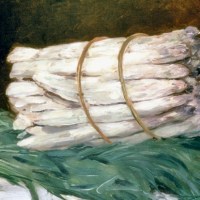
In calling their book Art as Therapy Alain de Botton and John Armstrong have taken the direct route. They’re not waiting for us to interpret their motive: their title tells us everything. Art, the theory goes, can help us improve our psychological state in a way that’s progressive and cumulative. It can assist our relationships, our careers, our money concerns. Art is a tool which ‘compensates us for certain inborn weaknesses, in this case of the mind rather than the body’. It is a ‘therapeutic medium’, and it should be treated as such. This means that galleries, instead of arranging works by period or style, should place art in emotive groups, based around how they can reform and enrich our own lives.

The Roth of tenderness and of rage

From our UK edition

In the autumn of 2012, Philip Roth told a French magazine that his latest book, Nemesis, would be his last. The storm of interest this created was surprising, given that he was 78. His creative spurt in his seventies (inexplicable, according to Roth: ‘my breakfast cereal stayed the same’) had given fans the illusion that, in the words of his fictional alter-ego Nathan Zuckerman, ‘one’s story is not a skin to be shed….You go on pumping it out till you die, the story veined with the themes of your life.’ Roth, however, has now shed the skin of fiction; he is ‘unbound’ because he is no longer ‘chained to his talent’. (In one interview, he extols the sheer joy of taking naps.

How we lost the seasons

From our UK edition

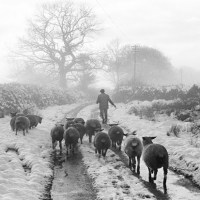
So, what are you doing with your Christmas decorations? Still up? Did the tree get put out on 2 January? Maybe you’re holding out until the Twelfth Day, on the basis that it’s bad luck to have the decorations up after that? Or are you going out on a limb and keeping your holly, bay and ivy up until 2 February, Candlemas? This last is in fact the correct answer for traditionalists; prior to Victorian times, people kept the Christmas season going, along with the greenery, right up until Candlemas. Mind you, given that Christmas trees only caught on with Prince Albert, pre-Victorians didn’t have the problem of pine needles dripping all over the carpet.

When we dropped the Bomb by mistake

From our UK edition

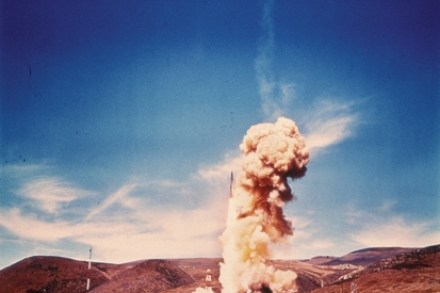
In January 1976 New York’s late-lamented National Lampoon produced a bicentennial calendar as a contribution to the general rejoicing. For every day of that year a selection of disastrous news events was commemorated. Presidents of the United States were cut down, marine life was wiped out by oil spills, native Indian women and children were butchered by the US cavalry, young girls leapt to their deaths from blazing sweat shops, thousands of sheep were felled by army nerve gas shells, 11 military incursions into Canada were ignominiously repulsed — and so on. The calendar portrayed 200 years of American history as one long disaster. Repeated nuclear accidents formed a significant part of the farcical story: 13 were logged in.

The long and winding story of the Danube

From our UK edition

For much of its history the Danube has been a disappointment. It looks so tempting on the map but, far from being a natural motorway for trade and ideas, its sheer awkwardness has thwarted generations of visionaries, engineers, soldiers and dictators. Freezing up, expanding into baffling flood-plains, racing through narrow defiles and randomly scattered with dangerous islands and hidden rocks, it has at best tended to function only for fishermen and the most local trade. Until the 19th century there was the additional problem, from a western point of view, of its lower reaches having Turkish owners who, as customers, had the disadvantage of wanting to kill or enslave everyone upriver.

The men who invented Napoleon

From our UK edition

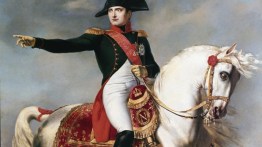
Writing about Napoleon is a risky business. It exposes the author to the brickbats of the blind worshippers for whom he is a numinous hero and the equally challenged detractors who see in him only the petty tyrant. By the same token, most historians find themselves negotiating a slippery path between approval and censure of this most controversial and somehow still very relevant figure. It is one of Philip Dwyer’s great merits that he remains so detached from his subject that he makes the reader forget his own prejudices. He approaches it with the discipline of a chemist in his laboratory: he is understanding of his protagonist but not sympathetic.

To see how good Journey’s End is, just look at who it’s offended

From our UK edition

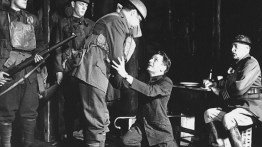
‘You have no idea,’ wrote the publisher Ralph Hodder-Williams in 1929 to one of his authors, what terrible offence Journey’s End has given — and terrible pain too, which is a great deal more important. I think you will agree that the chronic alcoholic was extraordinarily rare. He was referring to R.C. Sherriff’s controversial tragedy of the trenches, which was then, 11 years after the war, enjoying an unexpected box-office success in the West End, where it played for nearly 600 performances. Its success came as a surprise, not only because Sherriff (1896–1975) was an unknown writer, and exclusively male war plays were not particularly popular, but also because audiences were expected to sympathise with an unusual war hero.

Why is Doris Kearns Goodwin raking up old muck?

From our UK edition

Theodore Roosevelt and the Progressive Era are well-worn subjects for both professional and amateur historians, so it’s pertinent to ask why Doris Kearns Goodwin devoted so many words —and her considerable reputation — to the writing of The Bully Pulpit. Kearns’s thesis seems clear enough: at the close of the 19th century, mythically egalitarian America was in reality teetering on the brink of genuine class warfare. Something urgently needed to be done to prevent an explosion between a furious, increasingly violent labour movement and a cohort of arrogant monopoly capitalists, whose collusion with corrupt politicians had made them virtually invulnerable. Economic strife had stretched the social fabric to breaking point.

What nannies know

From our UK edition

Soon after moving to London at the age of 20, Nina Stibbe wrote to her sister Vic saying, ‘Being a nanny is great. Not like a job really, just like living in someone else’s life.’ She was working for Mary-Kay Wilmers, the editor of the London Review of Books, and her letters home to Lincolnshire give a hilarious picture of her new life. She gets on well with her charges, Sam (ten) and Will (nine), treating them as equals and often playing tricks on them: Sam was invited to supper at the Tomalins’ — his first ever (official, evening) meal. Told him that Claire had rung to ask him to bring a potato with him. Will and me thought it was hilarious when Sam set off with a potato in one hand and his football cards in the other.

Weaving Scotland’s history

From our UK edition

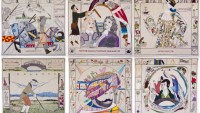
A couple of years ago, while tracking down paintings for the Public Catalogue Foundation in the far north of Scotland, I had the chance to see a rarely displayed sequence of banners, created in 1993, telling the story of Earl Rognvald’s epic voyage to Jerusalem in 1151. Suspended between the pillars of the shadowy nave of St Magnus Cathedral in Kirkwall, the 14 huge paintings, the work of four different artists with words by George Mackay Brown, had an extraordinarily powerful and moving effect. The scale of the enterprise, the narrative, and the fact that it was the product of collaboration seemed to be as much a part of the success as the quality of the work itself.