Bob dylan

Why Joni Mitchell sounded different from the start

From our UK edition

What makes Joni Mitchell’s music special? The lyrics alone put her on 20th-century music’s Mount Rushmore, alongside her cultural mirror Bob Dylan and her brief lover Leonard Cohen. But for me it’s her phrasing, her tunings and her sense of time. Decades on, her music remains endlessly surprising. Think a line is going in a certain direction? Think again, as Mitchell bends it away; or shifts key; or arcs her voice into its celestial sphere, only to suddenly plummet, like a plane in turbulence. And yet the swerves feel somehow right, inevitable.

At last, a private education that wasn’t unmitigated misery

From our UK edition

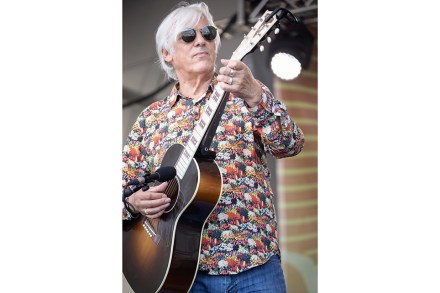
There has been a spate of books recently about private education, ranging from academic denouncements of their malign effects on society, such as Francis Green and David Kynaston’s Engines of Privilege, to Charles Spencer’s grim chronicle of neglect and abuse, A Very Private School. Though technically falling within this genre, 1967, the singer-songwriter Robyn Hitchcock’s diverting account of his formative spell at Winchester College, seems to hail from a rosier era. It is one where matron’s buttered crumpets rather than bullying were the chief topics of Billy Bunter-esque reminiscences that proclaimed schooldays the happiest of one’s life.

On the road with Danny Lyon

From our UK edition

A Google search for ‘Danny Lyon’ produces more than eight million results in 0.30 seconds, yet the celebrated American photojournalist and filmmaker is little known in the UK. This superb, quixotic, bare-all memoir ought to change that. Starting in 1962, Lyon not only photographed the heroes of the US civil rights movement as staff photographer for the Student Non-Violent Coordinating Committee (SNCC, pronounced ‘snick’), but in a way was one of the heroes himself, risking jail, beatings and abuse. He’s had prizes galore and two solo shows at the Art Institute of Chicago.

Albums should be forced by law to reveal where each song was written

From our UK edition

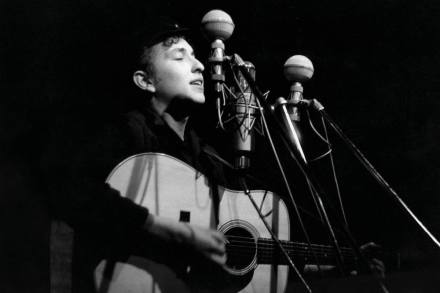
Bob Dylan is heading into the new year with a reduced property portfolio, having sold his Scottish bolthole, Aultmore House in Speyside, for a shade over four million quid. Though the spec looks grand – 16 bedrooms, 11 bathrooms, a folly (to complement his Christmas album, presumably) – only one aspect interests me: did Dylan ever write anything notable there? Is some piece of the Cairngorms National Park forever preserved in a line – perhaps the one he cribbed from Robbie Burns about his heart being in the Highlands – that came to him while gazing out enigmatically over the croquet lawn?

Of course Taylor Swift deserves to be TIME’s Person of the Year

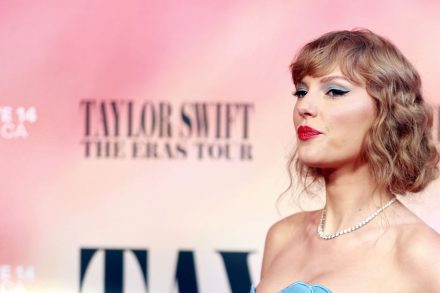
Well, it had to happen. Taylor Swift has been the most talked-about person in the world for some time now. After 2023 saw her conquer both stadiums and the world’s cinemas with her Eras Tour film — which, with a current gross of $249 million, is now the highest-earning concert movie ever made — her remarkable year has been capped off both with the enormous success of her re-recorded album 1989 (Taylor’s Version) and now, the news that TIME magazine has awarded the thirty-three-year-old musician the accolade of Person of the Year. She follows in the footsteps of everyone from Josef Stalin and Adolf Hitler to Mark Zuckerberg and Elon Musk. There are several noteworthy features of the accolade.

taylor swift

Religion provides the rhythm

From our UK edition

Music is an art of time: songs play to a rhythm, giving shape to the seconds as they pass, charging the present with a pulse we can feel. But as music takes us forward through time it also takes us back – to the moment of its composition or recording; to a particularly resonant time in our own past; and yet further, summoning the echoes of older music contained within a song. In new books by David Remnick and Michel Faber we get two different approaches to writing about something ephemeral yet emotionally adhesive. One of them made time fly, and one of them made time slow until the only beat I could hear was the sound of my own head against the desk.

Age is catching up with our much-beloved musicians

On the Who’s 1965 single “My Generation,” the band’s twenty-one-year-old lead singer Roger Daltrey half-sang, half-sneered, “Hope I die before I get old.” The song, written by the then-twenty-year-old Peter Townshend, has remained a classic for nearly sixty years, boasting both a fantastic tune and unforgettable lyrics. Yet even as the Who continue to tour the world — often in the company of that invaluable accessory for any self-regarding rock band, a full orchestra — it is now with self-aware amusement that the seventy-nine-year-old Daltrey and seventy-eight-year-old Townshend perform it.

musicians

I’m a forty-year-old male Swiftie. No, I’m not ashamed

Here’s the kind of guy I am: my musical taste is small-c catholic and runs about 30,000 albums. (All CD and digital, no vinyl. I’m not a hipster prone to dropping thirty-five bucks on a picture disc of Ghost in the Machine or a “junkyard swirl”-colored 2-LP edition of Out of State Plates.) If you make good music, no matter the genre, I’m probably going to like it. On any given day I might alternate listening to some Webb Pierce records with the Annie Get Your Gun original cast recording, and then follow those up with some Pantera, and then some Dandy Livingstone, and then some Bananarama, and then some Albert King, etc. etc.

swiftie

Bare and spectral: Bob Dylan’s Fragments – Time Out Of Mind Sessions reviewed

From our UK edition

To understand Bob Dylan’s Fragments – Time Out Of Mind Sessions (1996-1997) – due to be released on Friday – you have to go back half a century to the release of the Beatles’s Let It Be. As millions of fans around the world bought the band’s final album, Paul McCartney was horrified. This was not the disc he had conceived: some of the most cherished songs in his oeuvre had been hijacked by superstar producer Phil Spector, who stamped his trademark ‘Wall of Sound’ during the album’s post-production process, filling it with lavish embellishments. Fast-forward to the mid-1990s and another legendary songwriter was at loggerheads with a different superstar producer, then still a dominant force in the era of mega-selling records.

Bob Dylan’s tower of song

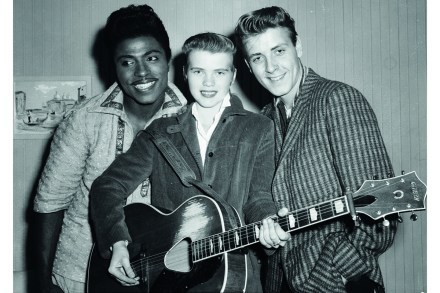
“He doesn’t write on drugs, he doesn’t write on liquor, he writes on everyday occurrences.” — Beatty Zimmerman, Bob Dylan’s mother, 1999. After you admire the cover of Bob Dylan’s The Philosophy of Modern Song, and its triptych portrait of Little Richard, Alis Lesley and Eddie Cochran in their prime, open it to the title page. There, in pulp-fiction red, is a little crimson lightning bolt. On the next page, there is a photograph of the twenty-two-year-old Elvis Presley — the man who popularized the lightning bolt, with his logo “TCB” or “Taking Care of Business in a Flash” — in a Memphis record store, looking through just-released bounty like “Here’s Little Richard” and “A Tribute To James Dean.

Dylan

Bob Dylan’s curious book signing controversy

The times, they are a-changing. For the past six decades, Bob Dylan has been one of the most enigmatic artists in American music, whose every public utterance has been pored over by his admirers and detractors alike. But one thing that Dylan has never been is a man who threw it all away: reputationally speaking, at any rate. Yet things at last have changed. In a simple twist of fate that Dylan surely never could have predicted, he has become embroiled in — of all things — a controversy over signed books. Dylan's most recent publication, The Philosophy of Modern Song, was released in a deluxe limited edition, retailing at $599 apiece.

Tenderness and menace: Bob Dylan, at the London Palladium, reviewed

From our UK edition

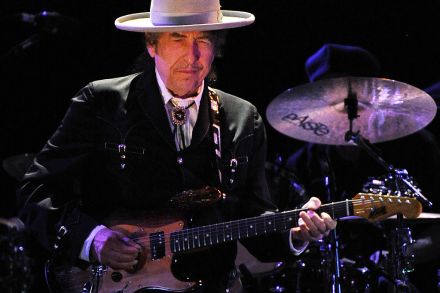
Bob Dylan has always toyed with audiences. He plays what he wants, how he wants, letting his mood dictate tempo and often key (sometimes switching songs to the minor). On Dylan’s return to London for the first time in five years, he summed it up early. ‘I ain’t no false prophet/ I just know what I know,’ he gruffly sang. Dylan spent the night at the Palladium doing what he knows best, singing songs of love, loss and immortality. Covid temporarily ended his ‘Never-Ending Tour’, which had seen Dylan play more than 3,000 shows since 1988. Now it’s billed as ‘The Rough and Rowdy Ways Tour’, with the strapline: ‘Things aren’t what they were’.

Bob Dylan, the song and dance man

In Folk Music, Greil Marcus has captured an entire world of the creative and cultural development of the artist known as Bob Dylan in a single book. Marcus not only tells a Bob Dylan biography through the study of seven songs, he also creates an autobiography of his own long career as a writer on music and America — as well as a rich history of American folk songs and the new life they engendered as Dylan sat down to write his own. How does Marcus do it? I’ve often wondered as I’ve read him in the past. This time, I have no answers at all, only admiration and respect. It is far from unusual for other biographies of Dylan — and there are a shelfful — to tell you more about the biographers than their subject.

Dylan

Is losing God making America miserable?

The number of Americans who believe in God has reached an all-time low, according to a Gallup survey that’s been tracking our nation’s “values and beliefs” since 1944. For a God fearin’ woman such as myself, it’s a disheartening statistic. But we are told never to abandon hope, and recent events — the Supreme Court rulings against abortion and in favor of prayer, a million swing voters switching their registrations to Republican, Keeping Up with the Kardashians finally airing its last season — betoken a more God-centered future. Gallup reports: The vast majority of US adults believe in God, but the 81 percent who do so is down six percentage points from 2017 and is the lowest in Gallup’s trend.

god

What do Beethoven, D.H. Lawrence and George Best have in common?

From our UK edition

This is not a book about tennis. Roger Federer appears early on, trailed by the obligatory question ‘When will he retire?’ He figures more prominently in the final 80 pages – still looking, despite the imminence of hanging up his racquet, as if he moves ‘within a different, more accommodating dimension of time’. There are cameos from some of the game’s other stars at various points on the way to the exit: the young Bjorn Borg (‘heir to some non-specific Scandinavian malaise’), the often crocked Andy Murray (‘a mumble-core Hamlet’) and the middle-aged, disgraced Boris Becker (afflicted by a ‘hitherto unseen condition called testicular elbow’). But the title is a characteristic act of wrong-footing.

A grand slam

The majority of us who aren’t touched by genius come to terms with our mediocrity in late adolescence, once our dreams of sports superstardom are dashed or that bumbling first attempt at a novel sets us straight. You won’t be the next Jordan or Hemingway, after all. Getting over the initial shock of one’s dreams being dashed without suffering some kind of crack-up is the mark of high character and perhaps the first sign a man will settle solemnly — but not joylessly — for a well-adjusted life of invisible, middling victories. The best-adjusted man will embrace the comfort of mediocrity and live vicariously through the great men he admires, which is to say that he’ll become a fan.

dyer

How I fell in love with the blues

From our UK edition

I was never into the blues that much. I listened to a bit of Roy Buchanan and Rory Gallagher but only as accidental overspill from rock. I knew the Rolling Stones’s sound came out of their love of the blues but what they added was more important (to me) than what they took. And then there was Eric Clapton. In common with a discerning portion of the British population, I loathed Clapton after his drunken endorsement of Enoch Powell’s rivers-of-blood speech. Even if I’d somehow let that slide, I could never forgive him for ‘Tears in Heaven’ which was like having a bucket of oversweetened bilge water poured over one’s head.

What happens to rockers who don’t die young?

From our UK edition

What do the following individuals have in common: a political activist from Suffolk; a chartered psychologist from Oxfordshire, who enjoys playing golf at weekends; a funeral celebrant from Liverpool; the Birmingham-based chairperson of the Ladder Association Training Committee (‘When it’s right to use a ladder, use the ladder, and get trained to use it safely’); a pop star from LA? The answer is that all of them were pop stars, with the obvious exception of the pop star from LA who still is one. But even Robbie Williams used to be bigger.

Bob Dylan’s and T.S. Eliot’s search for truth

The fact that the master songwriter Bob Dylan is a fan of a literary allusion should come as no surprise. This is the man who, in his autobiography Chronicles Vol. 1, declared that reading the French symbolist poet Arthur Rimbaud made “bells [go] off.” (Incidentally, it was Suze Rotolo, his first love whom he so cruelly lambasted in “Ballad of Plain D,” who introduced him to the poet. One feels that Dylan should have paid her a little more retrospective credit than the all-but-bitter love songs on The Freewheelin’ Bob Dylan.

‘I came, I saw, I scribbled’: Shane MacGowan on Bob Dylan, angels and his lifelong love of art

From our UK edition

We join Shane MacGowan, much like a character from one of his songs, in a world where prosaic, often harsh realities vie with feverish flights of fancy. The former Pogue conducts this interview remotely, ‘sitting on a vastly uncomfortable lime green leather chair, within reach of a grey bucket, in a small but surprisingly unspeakable room. In a corner, Jimi Hendrix is repairing some broken guitar strings, while in the kitchen behind me, Bono is loading the dishwasher and a leprechaun with a gold earring is rolling what he says is a cigarette. On the walls are a selection of my wife’s multidimensional angel paintings and one or two of my drawings. Clint Eastwood is on the telly and Maggie Barry is on the record player.