Bob dylan

The sham shaman: the fantastic lies of Carlos Castaneda

From our UK edition

On a day in the early spring of 1998 I found myself sitting in a hotel room in Hollywood waiting to hear whether or not I would be interviewing Carlos Castaneda. He was the author of The Teachings of Don Juan, published in 1968, a book which recounted his apprenticeship in the deserts of Mexico at the feet of an elderly Indian shaman and his induction through mind-altering substances into ‘the Yaqui way of knowledge’. In revealing the deeper reality behind the illusion of existence, providing a blueprint for the life of ‘a warrior’ free from the fear of death, Don Juan’s teachings were perfectly attuned to the zeitgeist of the age.

None of McCartney’s new songs will trouble his setlist for long

On 30 May 1966, the Beatles released ‘Paperback Writer’ – a fortnight after ‘Paint It Black’ by the Rolling Stones and only days before Bob Dylan released ‘I Want You’ as a single. Paul Simon wrote and recorded (with Art Garfunkel) ‘A Hazy Shade of Winter’ not long after. Yes, yes, what bliss it was in that dawn etc. But anyone predicting back then that, exactly 60 years later, all four artists would still be releasing new music and touring to large and appreciative audiences would have been laughed clean out of the Bag O’Nails. Even when glossy monthly music magazines such as Q started appearing in the 1980s, 40 was regarded as the dark side of the moon for the foundational pop stars of the 1960s.

The photographer who connects Bob Dylan and the Beatles

MAX JONES: “What do you think of the Beatles as artists and people?” BOB DYLAN: “Oh, I think they’re the best. They’re artists and they’re people.” —Melody Maker, March 1965 For more than 60 years, people have been fascinated by the connections between Bob Dylan and the Beatles. All were born during World War Two. All loved the music of Little Richard and Elvis Presley and Eddie Cochran; all were blues fans swept off their feet by rock and roll. Dylan was a Minnesota boy who early in his life became the avatar of the American folk scene, and then a protean man containing multitudes, both musically and otherwise.

bob dylan

When Dylan went folk

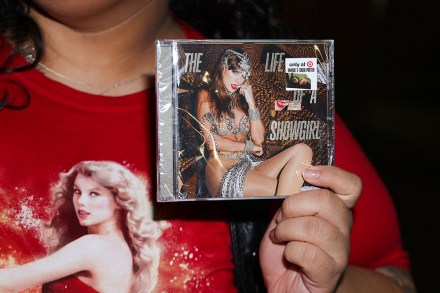
For all the billions Taylor Swift has made from guiding her career into carefully delineated “eras,” it was Bob Dylan who pioneered this career path. With practically every new album, Dylan traded one persona for another. There’s the folkie hobo of The Freewheelin’ Bob Dylan, the pill-popping beat poet of Blonde on Blonde, the cleaned-up country crooner of Nashville Skyline, the Christian revivalist of Slow Train Coming and many, many others. This year marks the 50th anniversary of Dylan’s The Basement Tapes, a tranche of previously unreleased hoedowns, goof-offs, shaggy-dog stories and barroom ballads that was never meant to be a proper album, but might be the closest we can get to seeing the man behind the mask.

bob dylan

Childhood illnesses and instability left Patti Smith yearning for ‘sacred mysteries’

From our UK edition

The punk icon Patti Smith’s latest memoir stretches from 1940s Michigan to present-day Nice, weaving around and complementing her other works of autobiography in its rendering of formative scenes. These include descriptions of periods of childhood illness, displays of sibling loyalty, powerful encounters with art and poetry, attachment to beloved clothes, marriage to Fred and the deaths of people close. Smith looks ahead to a time when she and her dwindling companions are gone: ‘Write for that future, says the pen.’ Our attention is periodically drawn to the pen’s motion as it ‘scratches across the page’, conjuring a lifetime of fluctuation.

Sam Shepard’s life was as dramatic as his theater

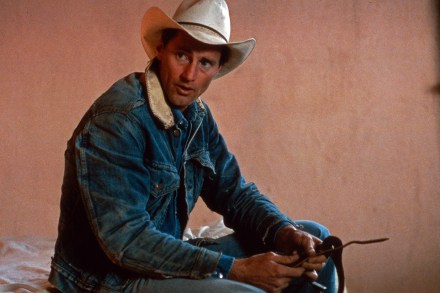
Sam Shepard and I crossed paths several times when we were both living near Charlottesville, Virginia, he with Jessica Lange and their family, and me as a student at the University of Virginia. He towered over passersby on the Downtown Mall, walking as if invisible spurs should be clinking on his bootheels, mane of dark floppy hair pushed back off his forehead and behind his ears, keen eyes above a quick grin. I last saw Shepard 20 years later, having a coffee and reading the Daily Racing Form in a Greenwich Village restaurant; he looked even better then. He was a true Renaissance man. There he was, on Bob Dylan’s Rolling Thunder Revue tour in 1975, charged with writing a screenplay for a movie somehow set in the concert tour.

sam shepard

Everything and the girl: a lit-crit dissection of the Swifty world

From our UK edition

Stephanie Burt is a Harvard professor of English, a poet and a literary critic who recently created and taught a course on ‘Taylor Swift and Her World’. This not only attracted an unusually high degree of student engagement but also international media attention, with, one suspects, greater measurable benefits for Burt and Harvard than for Swift. Now Burt has produced Taylor’s Version: The Poetic and Musical Genius of Taylor Swift. The thesis is that Swift is a hugely successful artist because her songs are both ‘relatable’ and ‘aspirational’ The title suggests the sort of literary and musicological analysis that has been devoted to singers such as Morrissey (most brilliantly by Gavin Hopps) and Bob Dylan.

Rolling Thunder falls flat

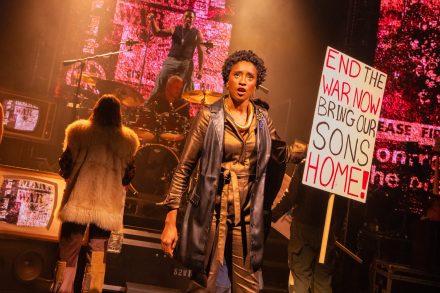
April this year marked the 50th anniversary of the end of the Vietnam War. Celebrating this milestone – or perhaps cashing in on it – is Rolling Thunder, an off-Broadway musical imported from Australia now playing at the New World Stages.  Marketed as “part rock concert, part documentary,” Rolling Thunder is all cliché – and not in a good way. The two-hour jukebox musical uses a razor-thin plot and woefully undeveloped characters to connect various popular songs of the era, from “Born to Be Wild” to “We Gotta Get Out of This Place” and "Bridge over Troubled Water," supported on stage by a five-piece band.

I think I’ve found the new Van Morrison

From our UK edition

Young male singers won the right to be sensitive in 1963, when The Freewheelin’ Bob Dylan was released. And in the 63 years since, being young and vulnerable and questing has been one of the great default settings. I’d say you can’t go far wrong singing sadly about your feelings, but of course you can, as the great mountain of discarded troubadours proves. Yet the size of that rejects mountain also tells us how alluring the prospect of baring one’s feelings to strangers can be. Zach Condon, who works as Beirut, and Dove Ellis are at different points on the sensitive young man spectrum. Condon is 39 for a start, so the young bit doesn’t even hold true.

My Bob Dylan pilgrimage

On March 25, Bob Dylan delivered his first performance of the year in Tulsa, Oklahoma, as his “Rough and Rowdy Ways” tour enters its fourth year running. At 83 years old, there was no guarantee Dylan would keep performing live. At the start of the year, there were no new dates listed on his website. Then, in early January, one performance popped up. The show was to be held at the Tulsa Theater – an important location for the performer, as the city is home to the Bob Dylan Center, located in the downtown art district. Tulsa also has a reputation as a musical destination through which almost every legendary folk, rock, country and blues artist has toured. Dylan is no exception.

Dylan

Like Bob Dylan in the movies

The Bob Dylan biopic A Complete Unknown has opened worldwide to largely positive reviews. Negative ones have focused on the silly quibble that fiction is not fact: the story told in the movie of Dylan’s rise to fame, from his January 1961 arrival in New York City as an unknown, folk-obsessed teenager from the Minnesota Iron Range, to his electrified electrifying performance at the Newport Folk Festival in July 1965, does not strictly hew to actual biography. Recently the New York Times made the unfathomable decision to take A.J. Weberman, best known for going through the Dylans’ garbage when they lived in Greenwich Village in the early 1970s (and getting thumped by Dylan for stalking), to see A Complete Unknown.

Dylan

The art of the anti-love song

From our UK edition

Tracey Thorn released an album in 2010 titled Love and Its Opposite. When it comes to songwriting, it’s the ‘opposite’ that tends to throw up the more compelling discourse. The anti-love song has been a staple in popular music since Elvis’s baby left him and he wandered off to ‘Heartbreak Hotel’. Presley is a useful weathervane: if asked to pick between the two, no sentient listener would choose the soppy slobbering of ‘(Let Me Be Your) Teddy Bear’ over the snarl and bite of ‘Hound Dog’. Pop is sunshine on the surface, but at heart it’s closer to Orwell’s Two Minutes Hate. As Tina Turner once pondered, quite loudly: ‘What’s Love Got To Do With It?’ The annual rigmarole of Valentine’s Day brings this truth into particularly sharp focus.

Why we dramatize history — and why we should stop

A few weeks ago, a friend asked if I had watched the Newsnight interview with Prince Andrew. That interview, yes — the one with all the sweating and the pizza in Woking, in which he definitely didn’t meet Virginia Roberts Giuffre but he did single-handedly crash his reputation, and Emily Maitlis, like the Medusa of journalism she has since become, just let him tie his own noose. Of course I’ve watched it. I’m a journalist. And a twenty-first-century citizen. Who hasn’t? My friend, for one, though she pointed out that she can just watch the three-part Amazon dramatization of the whole affair, A Very Royal Scandal, which is even juicier than the interview. (“I’m the son of the sovereign,” bellows the Duke of York, played by a soapy Michael Sheen.

history

As good a Dylan biopic as you’ll ever get: A Complete Unknown reviewed

From our UK edition

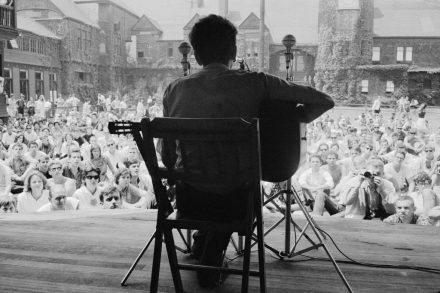
It doesn’t have anything new to say, which is right. If you could figure Dylan out, it would all be over A Complete Unknown is the Bob Dylan biopic from James Mangold, who also made Walk The Line about Johnny Cash. It stars Timothée Chalamet, who is astonishing, and does his own singing. He may even be better at singing Dylan than Dylan is at singing Dylan. (Same sound but fewer of those bum notes that make you go ‘ouch’.) It doesn’t have anything new or insightful to say, which is right and proper. If you could figure Dylan out, it would all be over. Instead, the focus is on the four years leading up to his use of electric instruments at Newport Folk Festival in 1965. This was greeted by fans with such horror and outrage it was as if, live on stage, he was kicking puppies.

The golden days of Greenwich Village

From our UK edition

This multitudinous chronicle is not the story of the folk music revival. Rather, it’s not only the story of the folk scene in Greenwich Village from the late 1950s through the early 1980s. Ambitiously, sometimes overwhelmingly, but always fascinatingly, David Browne – a senior editor at Rolling Stone – composes his book of interconnected stories stemming from jazz, blues, folk, folk-rock and all the complementing, competing musical genres that could define what’s been played in the basement nightclubs and coffee houses in this small area of New York City since the early 20th century. He takes his title from the talkin’ blues, the direct ancestor of rap, and he is, like the writers of those blues, a born storyteller.

Better Man and the dangers of ambition

The Robbie Williams biopic Better Man opened in American theaters last weekend and, as every single box office commentator predicted, it flopped, and flopped hard. A gross of just over $1 million in its opening three days — less than the Golden Globe-winning The Brutalist, which is only showing on sixty-eight screens nationwide — is utterly disastrous, all the more so because this wasn’t a $10 million indie, or even a $40 million Rocketman, but a movie that it cost $110 million to make.

better man

This month in culture: December 2024

Star Wars: Skeleton Crew Disney+, December 3 Of the making of Star Wars, there appears to be no end. This one, though, looks different. The characters are a group of children on an Amblin Entertainment-style adventure, a coming-of-age story as they try to make their way back home across the universe after something goes wrong on their home planet. The trailer gives strong Spielberg/E.T./Goonies vibes. Taking place around the same time as The Mandalorian, it rounds out its cast with Jude Law as a “new kind of Jedi,” according to the creators. — Zack Christenson Nightbitch In theaters December 6 Based on Rachel Yoder’s hit horror-comedy novel of the same title: Amy Adams stars as an artist turned stay-at-home mom who learns that domesticity contains multitudes.

culture

What a remarkably bad electric guitar player Bob Dylan is

From our UK edition

Finally, a taste of the authentic Bob Dylan live experience. On the two previous occasions that I’ve seen Dylan, in the early 2000s and again two years ago, he was disappointingly well-behaved for a man with a reputation for operating a scorched-earth policy towards his catalogue. Once upon a time, seeing Dylan live was a high-wire activity. Those days are long gone, but on the second night of two shows in Edinburgh, some little wildness crept back in. During the opening pair of songs, which were gradually revealed to be on nodding terms with ‘All Along the Watchtower’ and ‘It Ain’t Me, Babe’, it was like watching an old bar band warming up after a long break from the trenches. There were missed notes, dropped beats, rogue chords, halting rhythms.

I agree with pop’s war on iPhones – but King Canute might want a word

From our UK edition

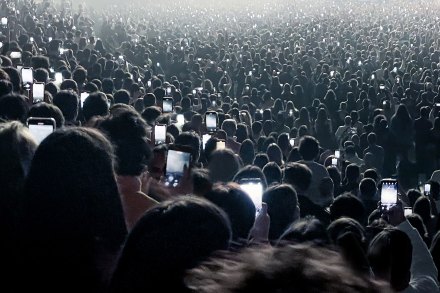
Before each show on the recent The The tour – reviewed in these pages last week – the pre-recorded voice of singer Matt Johnson politely asked the audience to refrain from using mobile phones when the band was performing. In Edinburgh, while Johnson was speaking, the chap next to me was preoccupied filming an empty stage. A sea of screens can be priceless in a genuine emergency but that’s about it As it happens, most of the crowd complied most of the time, but proscribing phone use at concerts is increasingly challenging. A few artists are up for the fight.

Back to the birth of the Greenwich Village music scene

In 1961, the folk guitarist Barry Kornfeld moved back to Manhattan after spending a year in Boston. The Greenwich Village folk musicians he called friends, who before his trip to Boston had been enduring a hand-to-mouth existence, were now making a living playing their music in clubs along MacDougal Street — not necessarily “a good living,” Kornfeld noted, but certainly enough to get by. Kornfeld spotted another difference, too. Audiences at clubs weren’t merely clapping; they were snapping their fingers in appreciation, which felt like the hippest thing ever. Rolling Stone writer David Browne’s latest book, chronicling the history of Greenwich Village music, pivots around 1961.

Greenwich