Blues

The golden days of Greenwich Village

This multitudinous chronicle is not the story of the folk music revival. Rather, it’s not only the story of the folk scene in Greenwich Village from the late 1950s through the early 1980s. Ambitiously, sometimes overwhelmingly, but always fascinatingly, David Browne – a senior editor at Rolling Stone – composes his book of interconnected stories stemming from jazz, blues, folk, folk-rock and all the complementing, competing musical genres that could define what’s been played in the basement nightclubs and coffee houses in this small area of New York City since the early 20th century. He takes his title from the talkin’ blues, the direct ancestor of rap, and he is, like the writers of those blues, a born storyteller.

Goodbye to MC5, the holiest of rock’s holy cows

Grade: D+ Ah, the original Linkin Park, except even more spavined. MC5 came outta Detroit in the mid 1960s and their shrieking blues metal ur-punk was afforded unnecessary respect because of their agitprop politics. Sucking up to the Black Panthers and running a bit foul of the law can do wonders for a slightly below-average blues band whose songs had energy and attitude – but nothing else. Here they are, back with their first studio album in 53 years: thanks for the merciful interregnum, if nothing else. When I say ‘they’, I mean the half-decent guitarist Wayne Kramer and, on one or two tracks, their original drummer, Dennis Thompson.

The irrepressible musical gift of Huddie Ledbetter

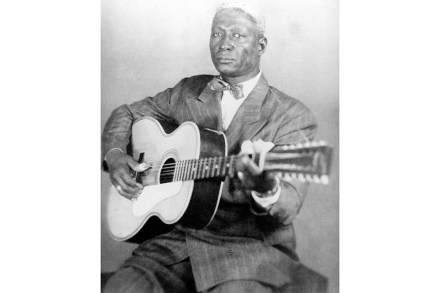
Huddie Ledbetter, better known by the prison moniker Lead Belly, was a musical genius born in the southern United States just as Jim Crow laws were starting to bite. He fell foul of an unapologetically racist legal system and ended up serving on a chain gang in 1915, later doing time in state penitentiaries in Texas (1918-25), Louisiana (1930-34) and at Rikers Island in New York (1939). Sheila Curran Bernard takes as her focus the years 1933 to 1935 when, after years of imprisonment, Ledbetter took an academic, John Lomax, to be his manager and organise his entrance into the larger musical world of northern America.

Let’s start another war to stop Antony Blinken singing

From our US edition

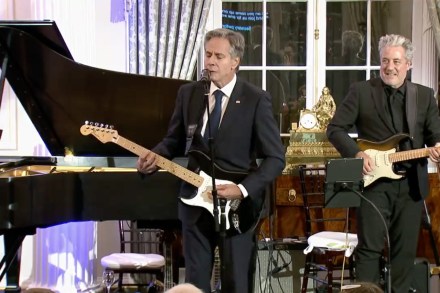
During a surprise musical performance on Wednesday night, secretary of state Antony Blinken tried to convince the State Department he’s got the soul of a blues singer. The stiff-armed, frog-throated diplomat jammed out to a less than rousing rendition of Muddy Waters’s “Hoochie Coochie Man” that left the room full of his subordinates cheering. “I couldn’t pass up tonight’s opportunity to combine music and diplomacy. Was a pleasure to launch the State Department’s new Global Music Diplomacy Initiative,” Blinken tweeted on Wednesday.  https://twitter.com/secblinken/status/1707230831528620109?s=46&t=KTzG0soGgiCKUdkuiUQOwA Blinken’s set followed performances from Dave Grohl of Nirvana and Foo Fighters and pop star Gayle.

antony blinken

Tenderness and menace: Bob Dylan, at the London Palladium, reviewed

Bob Dylan has always toyed with audiences. He plays what he wants, how he wants, letting his mood dictate tempo and often key (sometimes switching songs to the minor). On Dylan’s return to London for the first time in five years, he summed it up early. ‘I ain’t no false prophet/ I just know what I know,’ he gruffly sang. Dylan spent the night at the Palladium doing what he knows best, singing songs of love, loss and immortality. Covid temporarily ended his ‘Never-Ending Tour’, which had seen Dylan play more than 3,000 shows since 1988. Now it’s billed as ‘The Rough and Rowdy Ways Tour’, with the strapline: ‘Things aren’t what they were’.

How I fell in love with the blues

I was never into the blues that much. I listened to a bit of Roy Buchanan and Rory Gallagher but only as accidental overspill from rock. I knew the Rolling Stones’s sound came out of their love of the blues but what they added was more important (to me) than what they took. And then there was Eric Clapton. In common with a discerning portion of the British population, I loathed Clapton after his drunken endorsement of Enoch Powell’s rivers-of-blood speech. Even if I’d somehow let that slide, I could never forgive him for ‘Tears in Heaven’ which was like having a bucket of oversweetened bilge water poured over one’s head.

Banal and profound, bent and beautiful: Nick Cave & Warren Ellis at Edinburgh Playhouse reviewed

Nick Cave has always been drawn to parable and fable, but more than ever these days he is engaged in the necessary work of mining magic from the base metal of day-to-day existence. The key lines in this show came early, during ‘Bright Horses’: ‘We’re all so sick and tired of seeing things as they are,’ Cave sang in that hollow, sorrowful baritone. ‘This world is plain to see/ It don’t mean we can’t believe in something.’ Cave’s recent songs have a terrible and powerful context: the death of his teenage son, Arthur, in 2015. As an artist he has confronted this personal tragedy side on, acknowledging its profound impact without letting it overwhelm his writing.

The lost king of the blues

From our US edition

February 15, 1981, the day after Valentine’s Day. At 11 on a Sunday morning, a man’s body was found slumped in the passenger seat of a beige 1971 Mercury on a residential street in the Forest Hills section of San Francisco. All four doors were locked. A Valium bottle was in the pocket of a coat on the back seat. There was no ID: the body went to the morgue as John Doe #15. The dead man was 37-year-old Michael Bloomfield, a pioneering guitarist who brought blues to the mainstream and set Bob Dylan’s music alight. The cause of death was registered as cocaine and methamphetamine poisoning. Questions remain unanswered about how he died; why methamphetamine, which he avoided, was in his system; and why he was in a part of town where he knew no one.

bloomfield

Jason Ricci is my mentor, guru and anointed one

A second week recovering in bed in this pleasant south-facing bedroom. If I sit up, my back resting against whitewashed rock, I can look out of the window across 30 miles of oak forest to the Massif Des Maures, a coastal mountain range. As the day progresses, these indistinguishable mountains are altered by the changing light until finally and dramatically the softer evening rays reveal the folds and valleys in topographical detail. The revealing doesn’t last more than five minutes and I try to remember to look out for it. Then the mountains darken and, after a last commemorative glow, vanish. Last week there was a violent electric storm and downpour every afternoon. You could set your watch by it.

Booker prized

From our US edition

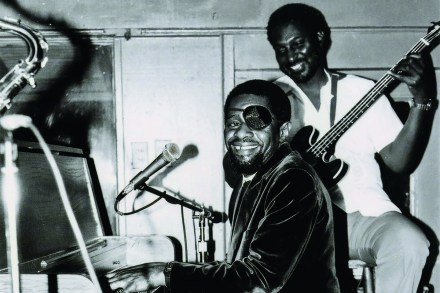
Dr John called James Booker ‘the best black, gay, one-eyed pianist New Orleans has ever produced’. Booker died in 1983, aged 43, ruined by drugs, drink and madness, and attended by legends of delinquency lurid even for a New Orleans piano ‘professor’. Though he had appeared on plenty of other people’s records and stages, Booker had recorded only three studio albums in his lifetime. Classified, recorded in October 1982 and now re-released on vinyl, was the last of them. It might not be the best of them, but it shows why Booker was one of the greats. The studio was booked for three days, but Booker had a breakdown the week before and couldn’t get a good take down in the first two days.

booker

The dazzling, devious, doomed sound of James Booker

Dr John called James Booker ‘the best black, gay, one-eyed junkie piano genius New Orleans has ever produced’. Booker died in 1983 at 43, ruined by drugs, drink and madness. Though he appeared on plenty of other people’s records and stages — Dr John, Aretha Franklin, B.B. King — Booker recorded only three studio albums in his lifetime. Classified, recorded in October 1982 and now re-released on vinyl, was the last of them. It might not be the best of them, but it shows why Booker was one of the greats. The studio was booked for three days, but Booker had a breakdown the week before and couldn’t get a good take in the first two days. He revived on the third and recorded Classified in four hours.

Ranges from the slight to the first-rate: Neil Young’s Homegrown reviewed

Grade: B+ Neil Young has been mining his own past very profitably for a long time now, disinterring a seemingly endless catalogue of stuff which, at the time it was recorded, failed to see the light of day. And people like me fork out each time. I remember looking forward to this album in 1975 — but just before the release date he shelved it in favour of Tonight’s the Night, easily the finest rock album of the 1970s (or, to my mind, since). This doesn’t come close but, as it’s from Young’s most rewarding period, it holds a certain interest. Five songs have been released elsewhere, including the lovely ‘Star of Bethlehem’ (on Young’s underrated American Stars ’n’ Bars).

Contains the loveliest new song I’ve heard in decades: Bob Dylan’s new album reviewed

Grade: A ‘Rough’ in terms of the mostly spoken vocals, but only ‘rowdy’ if you’re approaching your 80th birthday, which of course Dylan is. This is a sometimes playful and often self-deprecating Nobel Laureate at work, the lyrics (like the vocals) carrying a whiff of late Leonard Cohen, the arrangements of some of the slower, if not funereal, songs a nod to Tom Waits. In ‘I Contain Multitudes’, the grizzled old boomer has given us his best song since ‘Idiot Wind’; like many on here, the delicate melody is implied by the chord changes rather than explicitly stated.

Why won’t the Blues Grammy recognize African American artists?

From our US edition

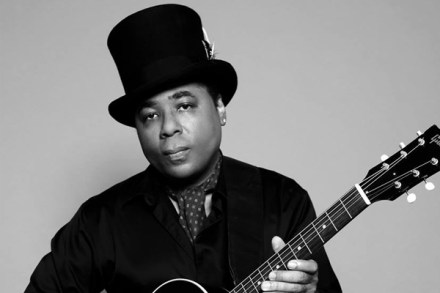
When the finalists for the 2019 Grammy Awards are announced this week, it’ll be official: the blues is no longer an African American music. I’m an African American Blues guitarist. I came of age in my father’s ramshackle juke joint, Tabby’s Blues Box and Heritage Hall in Louisiana. I was the last 20th-century ‘folk-blues’ artist to be discovered by a folklorist from the Smithsonian Institute in Washington DC. I played a blues guitarist in O Brother, Where Art Thou? and won a Grammy for its soundtrack. But when I submitted my latest album, Hotel Voodoo, for consideration under ‘Best Contemporary Blues Album 2019’, I learned that I no longer fit the Grammys’ criteria for blues. https://audioboom.

chris thomas king blues grammy