Biography

Four female writers at the court of Elizabeth I

From our UK edition

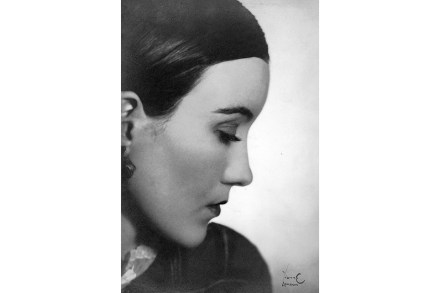
Almost a century ago, in A Room of One’s Own, Virginia Woolf claimed that if William Shakespeare had had an equally talented sister the obstacles to her sharing his vocation would have been insurmountable. Woolf’s argument that a woman needs ‘money and a room of her own’ in order to write proved persuasive. ‘Shakespeare’s sister’ has become a pop-cultural trope. So perhaps it’s unsurprising that the distinguished American scholar of the Renaissance Ramie Targoff should borrow the phrase for a study of four woman writers. Her title offers a shortcut to understanding how significant this immensely accomplished quartet is for readers and writers today. Not that Targoff’s elegantly readable, immaculately researched book needs any establishing gimmick.
Alone and defenceless: the tragic death of Captain Cook

From our UK edition

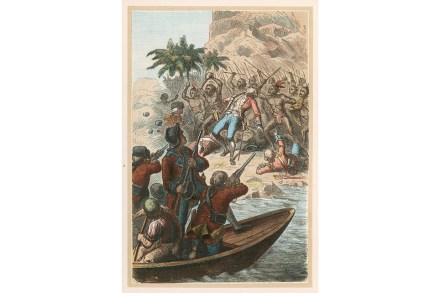
The principal purpose of Captain James Cook’s last voyage, which began in Plymouth on 12 July 1776, was to discover the elusive Northwest Passage. Attempts had been made before, in vain, from the Atlantic, but this time it would be from the west, from the Pacific.  On the way, Cook was to return an Anglicised Polynesian named Mai to Raiatea, ‘a ragged volcanic island’ about 130 miles north west of Tahiti. Mai takes up much of Hampton Sides’s narrative, offering ‘a poignant allegory of first contact’, before being deposited home with his cargo of English domestic farm animals and his suits.  Prior to that, Cook had investigated, in New Zealand, the massacre of ten crew members of the Adventure, the Resolution’s sister ship on his previous voyage.

John Deakin: the perfect anti-hero of the tawdry Soho scene

From our UK edition

During the various lockdowns I found myself wondering how Iain Sinclair was coping with the restrictions. It seemed unthinkable that this unflinching punisher of pavements could be stuck with 30 minutes round the park. But, as it turns out, sequestering, in a fashion that only the Scots word ‘thrawn’ can do justice to, has resulted in the most archetypal Sinclair book yet. John Deakin is the pariah genius of the title. During the ‘brain-dead hibernation’ of the pandemic, Sinclair got a short-term loan of ‘17 albums of John Deakin’s photographs, fresh prints made from recovered contact sheets; a substantial history of his labours, a flickbook parade of the stunned and waxy faces of his time and place’. From this Sinclair tried to create a ‘psycho-biographic fiction’.

They felt they could achieve anything together: two brave women in war-torn Serbia

From our UK edition

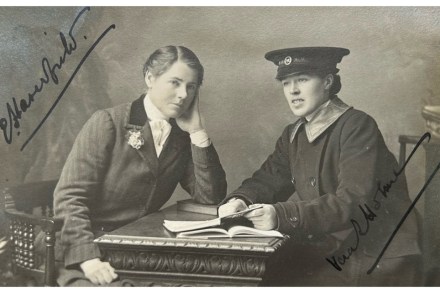
Lesbian military fiction is a popular genre, featuring titles such as Silver Wings and An Army of One, but Jack and Eve is a true story. Written by the journalist Wendy Moore, whose previous books tackled medical and social history, it tells of two suffragettes who caused havoc in the first world war and exposed the absurdity of Edwardian homophobes. Before the war, the jobbing actor Vera Holme, who liked to be known as Jack, changed careers to become Emmeline Pankhurst’s mechanic and chauffeur. In 1908 she met Evelina Haverfield, the conventionally beautiful, wealthy daughter of a Scottish baron. The two fell in love, began living together and soon became the public faces of the suffragette movement. Brave and out-spoken, they fought their corner fearlessly and went to prison.

What we owe to the self-taught genius Carl Linnaeus

From our UK edition

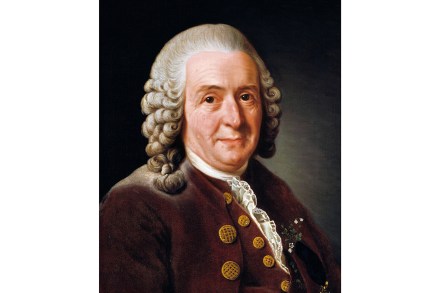
Carl Linnaeus and Georges-Louis Leclerc, Comte de Buffon were both taxonomists, born in the same year (1707), but apart from that they had little in common and never met. Buffon was French, Linnaeus Swedish. Buffon was suave, elegant, tall and handsome (Voltaire said he had ‘the body of an athlete and the soul of a sage’), whereas Linnaeus was a bumptious little man (under 5ft), who was widely regarded as uncouth. Buffon’s funeral was attended by 20,000 mourners but Linnaeus died almost forgotten, after suffering from a brain disease for 15 years. Yet the Linnaean system of taxonomy has survived much better than Buffon’s, which was hardly a system at all.

Sir Roger Casement never deserved to hang

From our UK edition

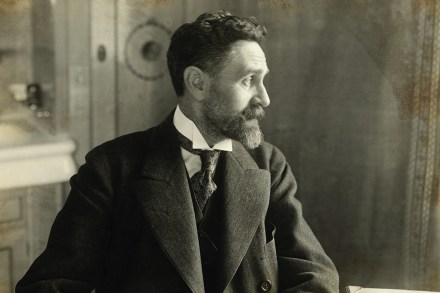
Telling the story of Sir Roger Casement’s life is a challenge for any biographer. In the land of his birth, he is remembered as a national hero. His remains lie in the Glasnevin Cemetery in Dublin beside the graves of Daniel O’Connell and Charles Stewart Parnell. He is there because he was hanged in Pentonville Prison in August 1916 as one of the leaders of the Easter Rising. The awkward fact that Casement had become opposed to the Rising and had tried to prevent it does not fit either the heroic Irish narrative of his life or the official English account of the wartime traitor who died on the gallows.

How country living changed the lives of three remarkable women writers

From our UK edition

Very fine hot day. (Bank Holiday). Sound of band in Lewes from the Downs. Guns heard at intervals. Walked up the down at the back. Got plenty of mushrooms. Butterflies in quantities. Ladies Bedstraw, Roundheaded Rampion, Thyme, Marjoram. This isn’t what we expect from Virginia Woolf, known for her caustic investigations of friends and filigree portraits of her own inner life. But in 1917, after three years of mental illness, she moved to Asheham in Sussex and began a slow but dogged recovery that took the form of these daily walks and list-filled diary entries, which rarely contain the word ‘I’.

A look into Billie Holiday’s final year

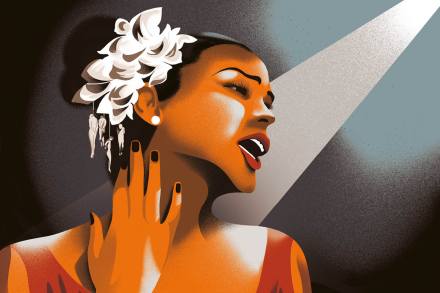
If ever a singer were difficult to pin down, it was Billie Holiday (1915-59), whose harrowing life story was first told in an unreliable memoir published just three years before her death. With Lady Sings the Blues, the jazz legend known for her emotional honesty not only allowed herself to be misrepresented (after all, she wasn’t even a blues singer), but actively participated in fabricating the fake stories which proliferated through the book. Some of these — such as a misstatement of her place of birth — are still repeated to this day. Two decades after the publication of Lady Sings the Blues a steady stream of more accurate biographies began to appear.

Holiday

The stark horror of Barbara Comyns’s fiction was all too autobiographical

From our UK edition

Barbara Comyns’s reputation rises and falls like a Mexican wave, making her one of the most rediscovered novelists of recent times. She’s credited with anticipating Angela Carter and for being in the vanguard of tackling themes of traumatic dissociation and the realities of childbirth. Yet younger, trendier writers have regularly eclipsed her. Aged 29, Barbara was broke: a single mother who’d weathered affairs, an abortion and a suicide attempt Every fan remembers their first Comyns novel: the visceral jolt of black humour, the suckerpunch of stark horror. Knowing that she drew from life, we have longed for a biography, and hooray, it’s finally here.

The lonely passions of Carson McCullers

From our UK edition

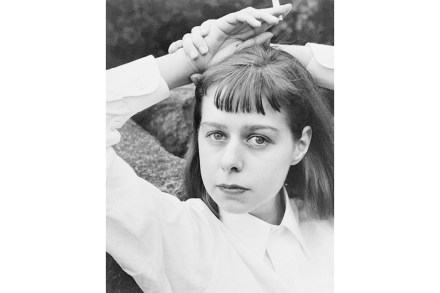
It may be true that The Heart is a Lonely Hunter (1940) – but in the case of Carson McCullers it could also be an indefatigable and exhausting one. Born Lula Carson Smith into a struggling middle-class family in Columbus, Georgia in 1917, she grew up hungering for great passions – and, like Hunter’s teenage protagonist Mick (her characters often carry gender-neutral names), she fell in love with classical piano at a young age. (Then Carson – not Mick – fell in love with her female piano teacher.) She married young a 20-year-old ex-serviceman named Reeves McCullers who, by all reports, was far more beautiful than her.

The fresh, forceful voice of Frantz Fanon

From our UK edition

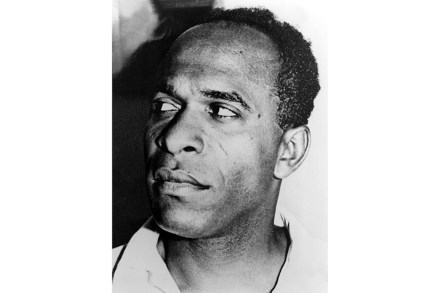
‘If I’d died in my thirties, what would be left behind?’ is the question that keeps coming to mind reading this timely new biography of Frantz Fanon, the psychiatrist and philosopher who became an icon to leftist revolutionaries across the globe. ‘Would I want history to judge me by what I wrote at 36?’ For that was the absurdly young age at which Fanon died of leukaemia in 1961, leaving two key works to his name: Black Skin, White Masks and The Wretched of the Earth. Not a huge legacy, then, in sheer numbers of words.

The remarkable Princess Gulbadan, flower of the Mughal court

From our UK edition

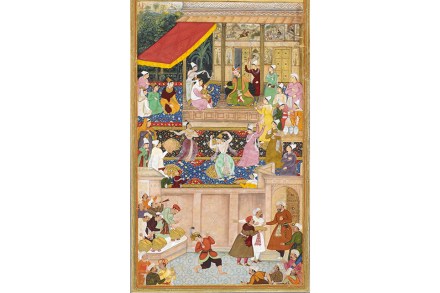
In 1587, the Mughal Emperor Akbar, himself illiterate but with grand vision and even greater ambition, commanded his courtier Abu’l-Fazl to write an official history of his reign and dynasty. An order went around Akbar’s court that anyone who was ‘gifted with the talent for writing history’ should put pen to paper and record the events that had shaped their times. Unusually for a male-dominated society, this included the emperor’s aunt. The 64-year-old Princess Gulbadan was well placed to provide a first-hand description of the creation and consolidation of the Mughal empire, for she was the beloved daughter of the Emperor Babur, who founded the dynasty, and the half-sister of Akbar’s father, Humayun.

Four months adrift in the Pacific: a couple’s extraordinary feat of endurance

From our UK edition

It is every writer’s dream to glimpse, peeping out from behind a news story or feature, the contours of a book. Brian Masters was eating his breakfast on 12 February 1983 when he read in the morning papers reports of the arrest of a mildly spoken Jobcentre employee accused of strangling a number of men with whose flesh he had blocked the drains in his flat in Muswell Hill. Masters wrote to Dennis Nilsen. Nilsen wrote back: ‘Dear Mr Masters, I pass the burden of my life on to your shoulders.’ After Nilsen had filled 50 prison notebooks, Masters embarked on Killing for Company, surely the grisliest yet most poignant biography of a serial killer ever written.

Will Keir Starmer ever learn to loosen up?

From our UK edition

Tom Baldwin declares at the outset: ‘It’s only fair to warn those hoping to find these pages spattered with blood that they will be disappointed.’ Fair enough. This is not an authorised biography, but it is a friendly one, written with Keir Starmer’s co-operation. Baldwin briefly worked as Labour’s communications director, and then was asked to help Starmer with his autobiography. They did several interviews, but Starmer always had reservations and finally pulled the plug last spring. Instead, he agreed that Baldwin could write this book, using some of the material he had already gathered, and that he would assist him with contacts.

The wit and wisdom of Margaret Cavendish

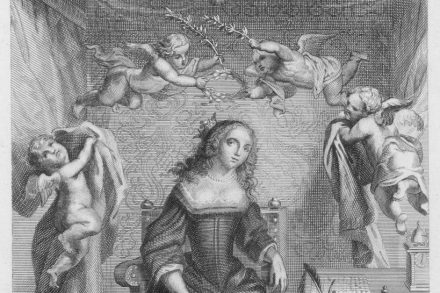
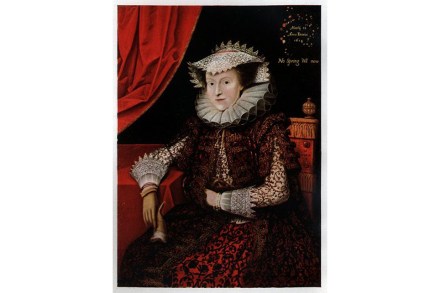
Margaret Cavendish, Duchess of Newcastle, who died aged fifty in 1673, was a divisive character whose life spanned one of the most fraught periods of English history. To some contemporaries, she was one of the wonders of the age, while others considered her one of the silliest writers ever to have taken up a pen. In her last two decades, Cavendish published over a dozen works of drama, philosophy and poetry, including what some consider her masterpiece, The Blazing World. Posterity has seen her obscured and dismissed, the fame she admitted craving granted only in 1929, when Virginia Woolf described Cavendish in A Room of One’s Own as “a giant cucumber” who “frittered her time away, scribbling nonsense and plunging ever deeper into obscurity.

Cavendish

Four dangerous visionary writers

From our UK edition

‘The production of souls is more important than the production of tanks... And therefore I raise my glass to you, writers, the engineers of the human soul.’ The quote is usually attributed to Stalin, though the phrase ‘engineers of human souls’ most likely came from someone else. Who’s to argue? Purges, executions, deportations – what’s a little light plagiarism in comparison? Whoever coined the phrase, it certainly struck a chord and indeed continues to ring various alarm bells whenever one comes across writers who deliberately set out to influence politics and ideas – and not just the big beasts, the Nobel Prize winners, say, or the shopfront-filling non-fiction authors hawking their wares, or the endless novelists with their little axes to grind.

The strangeness of Charles III

From our UK edition

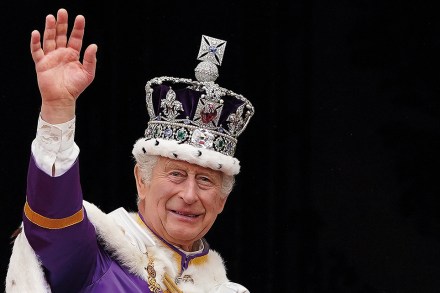
There are two narratives in Robert Hardman’s Charles III. The first is an account of the King’s first year on the throne. This is superbly researched and fascinating. We learn, for instance, that when Queen Elizabeth II died, the state trumpeters were on a plane to Canada and the bearer party was in Iraq. (Their first order on their return was to get a haircut. Their second to carry a comb.) The second is about magic, but since Hardman doesn’t admit this explicitly, the book has the flavour of an intellectual trying to cast a spell. I don’t understand why royalists can’t just say that a monarch occupies a space to prevent something worse occupying it. Monarchism is practical, is the royalist line, considering what people are. It is republicans who are dreamers.

reed

Relive Lou Reed’s wild, contradictory life

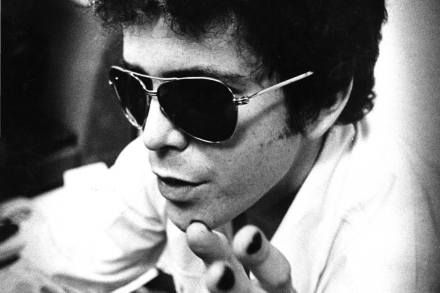
Before “Walk On The Wild Side” changed everything for Lou Reed in 1972, bringing him status and bolstering his bank account, he had been lead singer of the Velvet Underground, a group, as managed by Andy Warhol, that served up songs about drugs, gender-bending and sexual fetish, all designed to crash the boundaries of what polite America considered acceptable. The great thing about Velvet Underground songs was that musically, too, they transgressed: drone-based harmonies progressed glacially as rhythmic impetus stuttered. The big problem with the Velvets, in terms of finding any wider audience beyond self-confessed weirdos who hung out with Warhol, was that virtually nobody wanted to hear drone-based harmonies moving glacially or rhythms that fragmented. Where was the fun in that?

Hanif Kureishi – portrait of the artist as a young man

From our UK edition

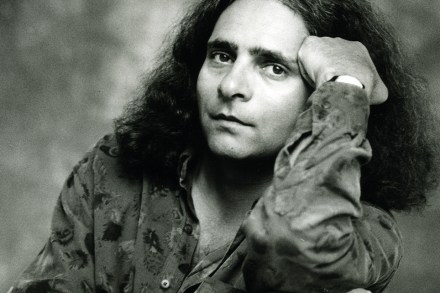
If any novelist, playwright or screenwriter of the past 40 years could be called ‘a writer of consequence’, to use the literary agent Andrew Wylie’s term, it would be Hanif Kureishi. While not shifting units on the scale of his near contemporaries Ian McEwan, Martin Amis and Salman Rushdie, Kureishi’s cultural influence – through his explorations of race, class and sexuality in novels such as The Buddha of Suburbia and films like My Beautiful Laundrette – is inestimable. In this first major biography, Ruvani Ranasinha tracks Kureishi’s progress from his birth in Bromley in 1954 to a Pakistani father and English mother, through his glittering, always provocative career, to the recent accident which rendered him unable to walk or use his hands.

Milton Friedman – economic visionary or scourge of the world?

From our UK edition

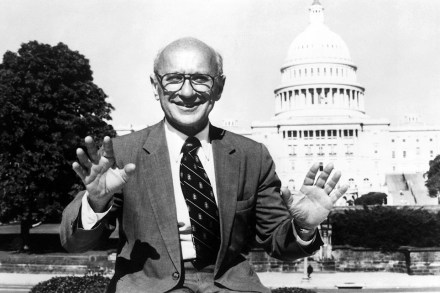
The Keynesian economist Nicholas Kaldor called Milton Friedman one of the two most evil men of the 20th century. (Friedman was in distinguished company.) The ‘scourge’ he inflicted on the world was monetarism, a product of what Kaldor called Friedman’s Big Lie – of which more later. Moral judgments aside, how does Friedman rank in the world of 20th-century economists? By common consent, he stands with Friedrich Hayek and John Maynard Keynes at the apex of his profession. All wrestled with the defining problem of their age: the radical economic and political instability of the 1920s and 1930s. Their responses reflected their national situations.