Biography

The double life of a single man

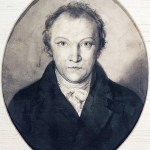
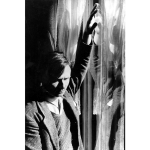
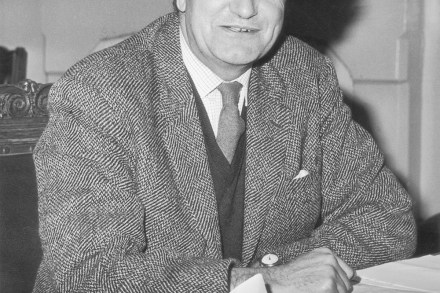
In the late 1930s, the author W. Somerset Maugham said that Christopher Isherwood “holds the future of the English novel in his hands.” But the younger writer was about to leave London for Los Angeles. He and his close friend W.H. Auden emigrated in January 1939. En route, their ship was beset by a blizzard. It arrived in New York looking like a wedding cake, in Isherwood’s evocative description. Their journey to the New World was a wholescale rejection of what Isherwood had long thought of as “the Test.” For earlier generations, this had been the Great War (Isherwood’s father, Frank, was killed at the Battle of Ypres). For them, it was to be World War Two. Auden and Isherwood would be damned as cowards, but Isherwood had already found other interests.

isherwood

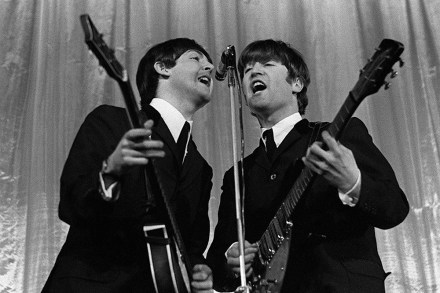
Across the universe – John and Paul are in each other’s songs forever

From our UK edition

The world’s love affair with the Beatles began, arguably, with the release in October 1962 of the group’s first single ‘Love Me Do’, full-blown Beatlemania following hard on its Cuban heels. Will we still need them, will we still feed them, when they’re 64? The answer appears to be a resounding and remunerative yes. Beatlemania is for life, not just for Christmas. Beatles books increasingly obtain to the condition of poetry, in that more people want to write them than read them. Yet still they keep appearing in bookshops. And every time a new volume about the group is published – like all those of sound mind, I have loved their music, films and minutiae since childhood – I ask myself: what is different about this one? Will it be in the style or the substance?

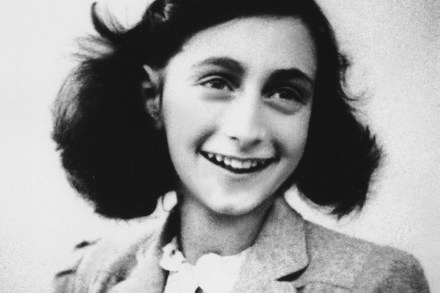
How Anne Frank’s photograph became as recognisable as the Mona Lisa

From our UK edition

Anne Frank died of typhus in Bergen-Belsen in late February 1945. Her last days were spent in the sick barracks caring for her sister Margot, who had a high fever and smiled contentedly, her mind already wandering. Anne, too, had been feverish, but ‘friendly and sweet’, according to witnesses. Her last recorded words were: ‘Margot will sleep well, and when she sleeps I won’t need to get up again.’  Ruth Franklin’s superb and subtle book pivots around this moment, which is described in a starkly titled central chapter, ‘Corpse’. Half her study tells Anne’s story up to the tragedy of her death.

A biography of Lorne Michaels that strays into hagiography

The gilt fell off Saturday Night Live’s reputational gingerbread almost from the moment of its inception. Long before the arrival of Bob Woodward’s Wired: The Short Life and Fast Times of John Belushi (1984) — its antihero dead at the age of thirty-three — whatever luster the show had possessed had been well-nigh obliterated by a tide of scuttlebutt. The girls were (apparently) all bulimics and anorexics. The guys were coke fiends and egomaniacs. Misogyny (exemplified by Belushi’s dislike of sketches written by women) and back-stabbing were endemic; drug dealers sat in on the writing sessions.

Lorne

The adventures of the indomitable Dorothy Mills

From our UK edition

When Dorothy Mills disappeared to Haiti to research a travel book, the British press led with the headline: EARL’S DAUGHTER GOES TO SEE BABIES EATEN IN BUSH. Mills was never out of the news in the interwar years. She wrote nine novels as well as six travel books, all of which sold briskly, and in 1928 she was the only woman in the starry line-up at London’s Explorer’s Week (Ernest Shackleton’s skipper, Frank Worsley, spoke alongside her). She was born Dorothy Walpole, in 1889.Her father, Robert, became the fifth Earl of Orford when she was five. Her ancestors included Britain’s first prime minister, another Robert. The young Dolly travelled widely with her parents; her mother was one of the American heiresses who enriched the aristocracy in the 1890s.

The Bloomsbury Group’s precarious paradise

From our UK edition

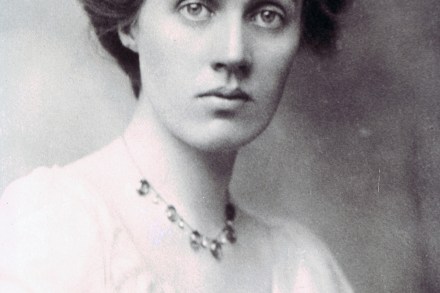
The artist Vanessa Bell, née Stephen, the wife of Clive Bell, is enjoying the limelight this year as an exhibition of her work travels the country. Hot on its coat-tails comes Wendy Hitchmough’s beautifully illustrated new study of Bell’s life and art. As the former curator of the painter’s home at Charleston, Hitchmough writes with insider knowledge, supported by an armoury of scholarship: the bibliography alone stretches to 14 pages and the notes to 45. Somewhere within this carapace is a uniquely original and talented artist struggling to get out – a true radical whose story was one long, rolling sequence of experiments in leading as creative a life as possible within or without the constraints of her time.

How can a biography of Woody Allen be so unbearably dull?

From our UK edition

How do you make the life of Woody Allen unbearably dull? Mainly by retelling the plots of every one of his movies, along with lists of cast and crew, box-office receipts and critical reactions. And there are so many movies – 50 so far, but there’ll probably be another by the time you read this. Long ago, Allen got into the habit of making a film a year, and so he goes on. He once said he was ‘like an institutionalised person who basket-weaves’ – he couldn’t stop. So we have to wade through an awful lot of filmography before the juicy stuff – the scandal – begins. Mia Farrow doesn’t even appear until page 313. In 1979, when she first met Woody, she was divorced from Frank Sinatra and André Previn and had recently adopted her seventh child.

Why were the security services so obsessed with the Marxist historian Christopher Hill?

From our UK edition

What did the great Marxist historian Christopher Hill think of orgies? Michael Braddick’s splendid and judicious biography doesn’t ponder this question. However, it strikes me as worth posing since, for a three-week period in the winter of 1978, an ensemble of actors (including the future Hollywood star Bob Hoskins) could be found naked at the National Theatre simulating group sex in Hill’s name. The actors were performing in Keith Dewhurst’s radical stage adaptation of Hill’s masterpiece of 17th-century popular history The World Turned Upside Down (1972) and were embodying what it might have been like to be enthusiastic members of one of the radical millenarian sects at the centre of Hill’s study.

The supreme conjuror Charles Dickens weaves his magic spell

From our UK edition

As Charles Dickens lay in his coffin, his will was read out to the assembled mourners. ‘I conjure my friends,’ he sternly instructed them, ‘on no account to make me the subject of any monument, memorial or testimonial whatever.’ It’s an appeal that later generations have studiously ignored, as can be seen in the piles of commemorative merchandise that are available to purchase online. These range from a fully poseable Dickens action figure (‘with quill pen and removable hat’) to a T-shirt featuring his face and the slogan ‘I put the lit in literature’. They can also be seen in the shelfloads of biographies and critical works published every year.

Masa Son: the world’s most reckless investor

For a few days in February 2000, Masayoshi Son was the richest person in the world. A risk-taker and showman, universally known as Masa, he had long been disdainful of Japan’s staid "salaryman" business culture and was riding the wave of dot-com mania. His company SoftBank, founded in 1981, had bet big on the growth of online shopping. The bullish mood didn’t last, and Masa slunk away from the limelight — but only for a while. A techno-optimist, the now sixty-seven-year-old has repeatedly reinvented himself, urging doubters to see beyond the immediate: "You’re limiting your field of vision to thirty years… Start bold and think 300 years ahead.

Masa

In search of Pico della Mirandola, the quintessential Renaissance Man

From our UK edition

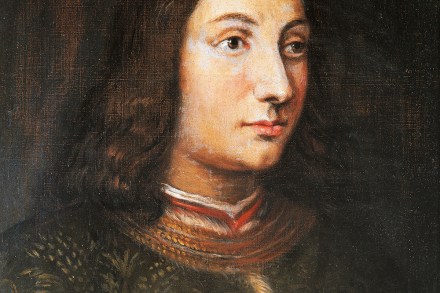
Edward Wilson-Lee writes rather chin-strokey, erudite books for the half-educated general reader with a strong taste for big ideas and the ever-so-slightly weird –which is to say people exactly like me and very possibly like you. The Catalogue of Shipwrecked Books: Young Columbus and the Quest for a Universal Library (2018); A History of Water: Being an Account of a Murder, an Epic and Two Visions of Global History (2022): autodidact catnip. He’s a gifted chronicler of the odd, the interesting and the esoteric. Think non-fiction Umberto Eco.

The plain-speaking bloke from Warrington who painted only for himself

From our UK edition

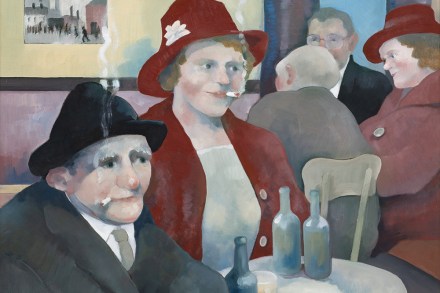
We don’t all get to achieve what we could have achieved in life. And yes, I know, so what? Tough luck. Cry me a river, build me a bridge and get over it. But, like it or not, some people really do have the odds stacked more heavily against them than others and yet somehow carry on regardless. In The Secret Painter, the scriptwriter Joe Tucker (Parents, Big Bad World) tells the true story of his Uncle Eric, born in 1932 – an ordinary man who never gave up. Let’s be honest, The Secret Painter could have been absolutely terrible.

The secret of Gary Lineker’s success

From our UK edition

In his closing pages, Chris Evans delivers his verdict on his subject: That’s what Gary Lineker is: human. As his story shows, it’s possible to accomplish seemingly impossible things while staying grounded and true to your roots. I hate to be cruel about a diligently researched book by a freelance journalist. But unthinking writing cannot capture a man who managed to think himself into two great careers, first as a footballer and then as a TV presenter. Lineker was born in Leicester in 1960. His parents were market traders who worked brutal hours, then relaxed over card games that could run all weekend, with participants (including the local crooner Engelbert Humperdinck) taking turns to retire for naps.

The splatter of green and yellow that caused uproar in the Victorian art world

From our UK edition

London, June 1877. Beneath a cloudy sky, the celebrated art critic John Ruskin strode along Bond Street towards the newly opened Grosvenor Gallery. Inside, he viewed a smash-hit show of beautiful and progressive art. At least that was the popular opinion. With a few exceptions, Ruskin dismissed the works on display as eccentric, impertinent and indulgent. Worst of all? James Abbott McNeill Whistler’s ‘Nocturne in Black and Gold – The Falling Rocket’, a deliciously wispy painting that captures sparks fizzing and flaring in a dark night sky. Ruskin fired the first shot; then Whistler sued him for libel, firing straight back At least that’s how I would describe it.

Once upon a time in Germany: the Grimms’ legacy of revenge and gory redemption

From our UK edition

It might help if we stopped calling them ‘the Brothers Grimm’, which always makes them sound like characters in one of their fairy tales. We don’t talk about ‘the Sisters Brontë’, after all. In reality, Jacob and Wilhelm Grimm have been described, very accurately, as ‘visionary drudges’. The Children’s and Household Tales, the first edition of which was published in 1812, was only a part of their grand project to establish a German cultural and linguistic identity. The brothers were primarily philologists, concerned with the meaning and history of words, and their investigation of German folk culture, narratives, myths and legends was rooted in an austere examination of language.

‘The wickedest man in Europe’ was just an intellectual provocateur

From our UK edition

In Paris in 1740 the hangman publicly burned his most famous book. In England some of the best and brightest – Alexander Pope, Henry Fielding, Bishop George Berkeley, Jonathan Swift and John Wesley – queued up to destroy his reputation. The book was The Fable of the Bees (1714) and the author was Bernard Mandeville, popularly known as the Man-Devil. After Mandeville’s death in 1733, Samuel Johnson, perhaps the wisest Englishman who ever drew breath, admitted that the book had ‘opened my views into real life very much’. And David Hume, the great British philosopher, said the Man-Devil was, in fact, one of the most important figures in the development of ‘the science of man’.

How Norman Mailer changed the face of biography

Many labels leap to mind in association with the prolific and controversial Norman Mailer, who died in 2007, but “biographer” is not typically one of them. He was not considered a serious practitioner of the genre in the same sense as Edmund Morris, Ron Chernow or his friend Doris Kearns Goodwin. And yet, as his own official biographer J. Michael Lennon asserts to me, “Mailer became a major biographer in the last half of his career.” Thirty years ago, two intriguing books by Mailer appeared just a few months apart: Oswald’s Tale: An American Mystery and Portrait of Picasso as a Young Man.

Mailer

When will Ronald Reagan get the recognition he deserves?

From our UK edition

The talented military historian Max Boot has published a well-researched life of Ronald Reagan that is fundamentally wrong. First the good parts: he has combed through lots of archives finding new information and has interviewed countless people who worked with or knew Reagan. His style also bears the reader effortlessly along. Yet his claim that Reagan was merely a lightweight pragmatist who had little effect on reviving the American economy, resuscitating the country’s self-esteem or winning the Cold War is absurdly revisionist. It says more about the author’s own rejection of the Republican party than it does about Reagan’s world-historical achievements.

Thomas Kyd wasn’t a patch on Shakespeare

From our UK edition

The biggest blockbuster hit of the Elizabethan theatre was not by William Shakespeare or Christopher Marlowe or Ben Jonson. In fact it wasn’t by anyone. The Spanish Tragedy, a sturdy play of rhetoric, blood and revenge, was published in multiple editions without any attribution at all. Its central figure, Hieronimo, was a cultural phenomenon, but the drama was widely quoted, imitated and parodied without mention of its author. Its impact was huge. We wouldn’t have Hamlet without it. BBC Radio 4’s invitation to celebrities to try experiences they have unaccountably missed is called I’ve Never Seen Star Wars. Without a doubt, the Elizabethan equivalent would have been I’ve Never Seen The Spanish Tragedy.

Wagner’s Ring is a mythic mishmash

From our UK edition

Wagner’s Ring is an ambitious cycle of four operas relating world history from Primal Swirl to End of Days. It took 26 years to write, takes 15 hours to perform, a double-size orchestra to play and a specially built opera house to stage. Michael Downes, the director of music at St Andrews University, places the fons et origo of the epic in Wagner’s frustration as a kapellmeister, when he wrote, unsolicited, to his boss the King of Saxony, proposing a total revamp of the royal music scene. No reply was forthcoming. A second proposal was also blanked. Furious, Wagner flung himself into the Dresden uprising of 1848, financing the manufacture of hand grenades and giving bloodthirsty speeches from the barricades.