Biography

Girls from the golden West

From our UK edition

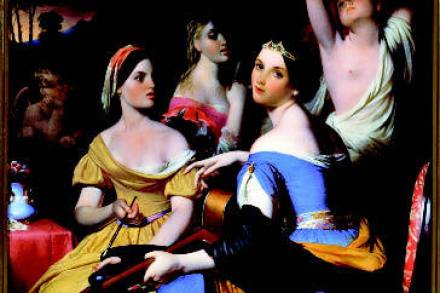
Who was the first American to marry an English duke? Most students of the peerage would say it was Consuelo Yzagna who married the eldest son of the Duke of Manchester in 1876. But the banjo-strumming Cuban American Consuelo was not the first Yankee duchess. As early as 1828 the American Louisa Caton married the eldest son of the Duke of Leeds. This was half a century before the dollar princesses, trading titles for cash, played havoc with Burke’s Peerage. Louisa and her sisters were the pioneers of the American invasion of London society. Their conquest was so successful, and they became so assimilated, that they left barely a ripple. Only now has Jehanne Wake researched and pieced together their story. The four Caton sisters were born into one of the grandest American families.

Dramatic asides

From our UK edition

‘I Scribble, therefore I am’: this Cartesian quip is typical of Simon Schama, as is the comprehensive subtitle: ‘Writings on Ice Cream, Obama, Churchill and My Mother,’ among other topics, of course. ‘I Scribble, therefore I am’: this Cartesian quip is typical of Simon Schama, as is the comprehensive subtitle: ‘Writings on Ice Cream, Obama, Churchill and My Mother,’ among other topics, of course. This gives the flavour of the delights on offer: a miscellany of observations, reviews, mini-lectures and reminiscences written between 1979 and 2010.

Doing what it says on the tin

From our UK edition

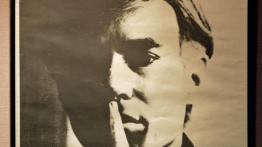
If you want to know all about Andy Warhol, just look at the surface: of my paintings and films and me, and there I am. There’s nothing behind it. Much the same thing has been said by many artists and writers, but seldom has this proposition been so tested as it is by ‘32 Campbell’s Soup Cans’. In the Factory, as he called his atelier, Warhol made paintings of photographs, casually silk-screened prints of blown-up acetates of blow-ups from contact sheets of original negatives, copies of copies, images of images. He inverted high and low culture. He expressed something, defined something, about our psychic relationship to the stuff that surrounds us, in the way that Freud or Proust did. He changed the way we see, and he changed art.

Jail birds

From our UK edition

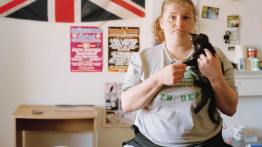
Next to his photographs of 40 women who have spent time in Low Newton prison, Adrian Clarke has juxtaposed short accounts from each of how she got there. Low Newton, near Durham, built in the 1960s and 1970s, holds 360 women, including lifers. Of the 85,000 in prison, 4,400 are women. Is there a face you can call a prison face, as some see in a single mother a pram face? Most look puffy, pale, older than their years and above all tired. Some look scared, a few defiant, none happy. Dazed and confused would cover them. Some are pictured with china figurines, cherubs embracing, or one of those dancing flowers — things that would be ‘nice’, if they weren’t in such a mess. It is not easy to guess the women’s stories from their portraits.

Raining on their parade

From our UK edition

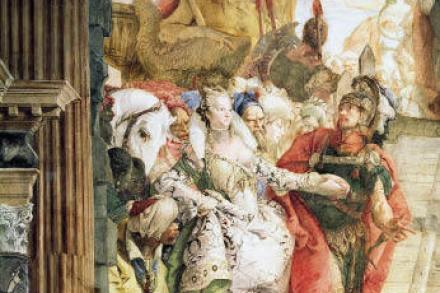
Julius Caesar’s deputy, Cleopatra’s second lover, Marcus Antonius is the perennial supporting act. Julius Caesar’s deputy, Cleopatra’s second lover, Marcus Antonius is the perennial supporting act. In books about Caesar (like Adrian Goldsworthy’s recent biography) or about Cleopatra (mine among them), he appears as a partner, in the ballet-dancing sense of a burly chap whose prime task is to lift a more glittering other into the spotlight. Now he has been allotted half a book: but Goldsworthy is not the man to give him his due of appreciation. Author and subject are absurdly mismatched. Goldsworthy begins by telling his readers that Cleopatra ‘was not really that important’, but he does allow her some intelligence and charm.

The invisible man

From our UK edition

Nicklaus Thomas-Symonds’s study of Clement Attlee is a specimen of that now relatively rare but still far from endangered species, the ‘political’ biography. Nicklaus Thomas-Symonds’s study of Clement Attlee is a specimen of that now relatively rare but still far from endangered species, the ‘political’ biography. It pays scant attention to anything except Attlee’s political career, and rigorously eschews any prying into whatever dark corners there may have been in his private life. Some may think that no politician’s career can fully be understood unless it is viewed in the context of what was going on in his domestic setting. Usually this is a point of view I would defend.

Caught in the crossfire

From our UK edition

Maqbool Sheikh dreaded hearing a knock at the door of his home. For he was the most intimate witness to one of the world’s most enduring and forgotten conflicts, the struggle over Kashmir. As the only autopsy expert at the police hospital in Srinagar, it was his job to conduct post mortems on those shot, stabbed or blown to pieces — and the bodies arrived at the rate of around 1,000 a year. Each time, as he drove back to the mortuary, he wondered whether he would be confronted with the corpse of a child, a woman or another young man. The law required him to determine how each one died, and his judgment could affect how their families were treated — were they a terrorist, a police informer or simply another innocent bystander?

Tried and tested

From our UK edition

In June 1964, when Nelson Mandela was sentenced to life imprisonment for acts of sabotage against the apartheid government of South Africa, he was, as photographs reveal, a burly, blackhaired man, with a handsome, pugnacious grin. By the time he was released in 1990, his hair was grey and his features gaunt. But his first speech as a free man described the same ideal of a democratic, multiracial South Africa that he had presented in his final address before being sentenced — ‘an ideal I hope to live for, but if needs be, an ideal for which I am prepared to die’.

No body in the library

From our UK edition

The opening paragraph of Duchess of Death’s fourth chapter, in which its subject is about to have her first whodunit published, begins thus: The opening paragraph of Duchess of Death’s fourth chapter, in which its subject is about to have her first whodunit published, begins thus: September 25, 1919. John Lane was very pleased with himself as he leaned into the mirror over the sink in his bathroom and examined his beard. Using a small pair of manicure scissors, which he was barely able to handle with his too-chubby fingers, he snipped at a few stray hairs. And, four lines later in the same faux- finicky vein, the paragraph ends: ‘Yes, he was very pleased.

The perfect stranger

From our UK edition

There are an estimated 417,000 people in the UK suffering from Alzheimer’s disease and double that number suffering from other forms of dementia. There are an estimated 417,000 people in the UK suffering from Alzheimer’s disease and double that number suffering from other forms of dementia. Potentially there are a large number of readers for John Suchet’s touchingly honest account of his wife’s slide into dementia, but — and here is the irony — it will not be the victims themselves of these diseases who will perhaps find comfort or insight from his book but the million or more carers who look after them. John Suchet is a famous television journalist and former newscaster for ITV.

A cousin across the water

From our UK edition

Though he was to live at Castle Leslie in Co. Monaghan, Sir John Randalph (later Shane) Leslie, cousin of Winston Churchill, was born at Stratford House, London, in 1885 though baptised at Glaslough with Lord Randolph Churchill as godfather. Though he was to live at Castle Leslie in Co. Monaghan, Sir John Randalph (later Shane) Leslie, cousin of Winston Churchill, was born at Stratford House, London, in 1885 though baptised at Glaslough with Lord Randolph Churchill as godfather. After Eton and King’s, Cambridge, Shane, at Churchill’s bidding, stood as a Home Ruler for Londonderry City in both the 1910 general elections.

Learning to live with the bomb

From our UK edition

The call consisted of three short blows of breath. A minute later, the phone rang again. Once more: three short blows of breath. Mr Cowell, under diplomatic cover, was the MI6 handler for Colonel Oleg Penkovsky, the West’s single most important asset in the Kremlin — and the calls he took were the prearranged code that Penkovsky was to use to tell him that a Soviet nuclear attack on the West was imminent. I’d have shat a brick. Wouldn’t you? But Cowell kept his cool. He didn’t call London and get the counterstrike underway. He didn’t put his head between his knees and wait for oblivion. The sky could have been black with Russian nukes, but he didn’t, in fact, do a damn thing.

Hunting and working

From our UK edition

Why are scholars so prone to melancholy? According to the expert, Robert Burton of Christ Church, it is because ‘they live a sedentary, solitary life... Why are scholars so prone to melancholy? According to the expert, Robert Burton of Christ Church, it is because ‘they live a sedentary, solitary life... free from bodily exercise and those ordinary disports that other men use.’ Not this one. The most remarkable characteristic of the young and maturing Trevor-Roper was his frenzied pursuit of foxes and hares on horse and foot, and his capacity for long marches through Oxfordshire, Buckinghamshire and the Borders in search of spiritual refreshment or a rendez-vous with a horse. Riding to hounds several days a week, or once a week in wartime, occupied many daylight hours.

The lure of adventure

From our UK edition

A few minutes’ walk from Paddington Station is a drinking den and restaurant called the Frontline Club, a members’ club for foreign correspondents. A few minutes’ walk from Paddington Station is a drinking den and restaurant called the Frontline Club, a members’ club for foreign correspondents. Among the characters you might find banging on the bar, wedged between Rick Beeston of the Times, Jason Burke of the Observer, and gentleman freelancers such as Aidan Hartley or Sam Kiley, is James Brabazon, an award-winning documentary filmmaker specialising in war zones. Though there are plenty of female stars, such as the redoubtable Marie Colvin, with her fantastic hair and piratical eye-patch, this is still a fairly macho world.

More than a painter of Queens

From our UK edition

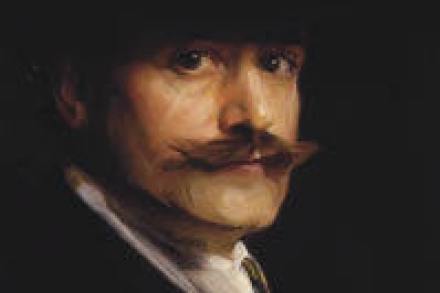
The last words of Hungarian-born portraitist Philip de László, spoken to his nurse, were apparently, ‘It is a pity, because there is so much still to do.’ As Duff Hart-Davis’s biography amply demonstrates, for de László, art — which he regarded as ‘work’ as much as an aesthetic vocation — was both the purpose and the substance of his life. The last words of Hungarian-born portraitist Philip de László, spoken to his nurse, were apparently, ‘It is a pity, because there is so much still to do.

Schlock teaser

From our UK edition

The somewhat straightlaced theatre-going audiences of 1880s America, eager for performances by European artistes like Jenny Lind and solid, home-grown, classical actors such as Otis Skinner, were hardly prepared for the on-stage vulgarity that the (usually) Russian and Polish immigrant impressarios, with their particular nous for show-biz, were to unleash into the saloons and fleapits across the young nation.

A flammable individual

From our UK edition

On the night of 18 October 1969, thieves broke into the Oratory of San Lorenzo, Palermo, and removed Caravaggio’s Nativity. On the night of 18 October 1969, thieves broke into the Oratory of San Lorenzo, Palermo, and removed Caravaggio’s Nativity. The altarpiece has not been seen since. Three decades later, in 1996, Italians were aghast when the Mafia claimed responsibility. Somewhere in the Sicilian capital of Palermo, it seemed, a gangland capo sat in awed admiration of the stolen Christmas canvas. Far from submerging rivals in wet concrete, now the Cosa Nostra were enthusiasts of 17th century religious art. Born in 1571 near Milan, Caravaggio was a flammable individual.

A tireless campaigner

From our UK edition

Why haven’t we heard of Phillis Bottome? In her 60-year career she published 33 novels, several of them bestsellers, short stories, essays, biographies and memoirs. Why haven’t we heard of Phyllis Bottome? In her 60-year career she published 33 novels, several of them bestsellers, short stories, essays, biographies and memoirs. She lectured widely in Britain and America. She was translated into nine languages. Her 1937 novel The Mortal Storm predicted the horrific consequences of Fascism. MGM made a film of it, starring James Stewart — the studio’s first openly anti-Nazi film. It premiered in America in 1940, just as Hitler’s troops entered Paris, and was arguably influential in persuading the US to abandon its isolationist stance.

High priest of bop

From our UK edition

In the Rainbow Grill in New York one evening in 1971, according to Robin D. G. Kelley, Professor of History and American Studies at the University of Southern California, Duke Ellington  halted his band in mid-flow and announced: ‘Ladies and gentlemen, the baddest left hand in the history of jazz just walked into the room, Mr Thelonious Monk.' In the Rainbow Grill in New York one evening in 1971, according to Robin D. G. Kelley, Professor of History and American Studies at the University of Southern California, Duke Ellington  halted his band in mid-flow and announced: ‘Ladies and gentlemen, the baddest left hand in the history of jazz just walked into the room, Mr Thelonious Monk.’ In the code of jive talk, ‘baddest’ meant the best.

Almost a great man

From our UK edition

Of those prime ministers whom the old grammar schools escalator propelled from the bottom to the top of British society since the second world war, Ted Heath and Margaret Thatcher were in many ways the most alike. Wilson, that classic greasy-pole climber, tactically brilliant, strategically trivial; Major, decent, straightforward, a good man lifted to power on the shoulders of his many friends as a healer who could unite: both these are types, the one less admirable than the other, but familiar to history. Heath and Thatcher are much odder, more dangerous and more remarkable. It is an extraordinary tribute to the modern Conservative Party that both chose it as the instrument through which to try to deliver their radical visions — as it is to the party that it chose them.