Biography

Stefan Zweig: the tragedy of a great bad writer

From our UK edition

Stefan Zweig wasn’t, to be honest, a very good writer. This delicious fact was hugged to themselves by most of the intellectuals of the German speaking world during the decades before 1940, in which Zweig gathered a colossal and adoring public both in German and in multiple translations. It was like a password among the sophisticated. Zweig might please the simple reader; but a true intellectual would recognise his own peers by a shared contempt for this middlebrow bestseller. The novelist Kurt Tucholsky has a devastating sketch of a German equivalent of E.F. Benson’s Lucia: Mrs Steiner was from Frankfurt, not terribly young, alone and with black hair. She wore a different dress each night and sat quietly to read cultured books. She was a devoted follower of Stefan Zweig.
Does Boris Johnson really expect us to think he’s Churchill?

From our UK edition

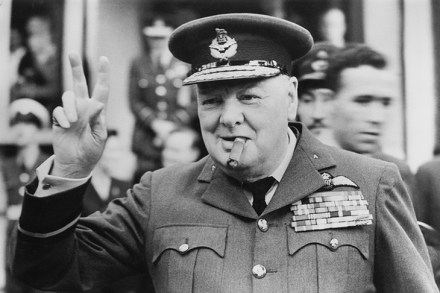
As you would expect, it’s impossible to read this book without drawing fairly direct comparisons between its author and its subject. In promotional exchanges, with the well-worn practice of self-deprecation, its author will of course insist that there is no comparison between the great man and the present humble supplicant.

Is there anything left to say about Queen Victoria? A.N. Wilson has found plenty

From our UK edition

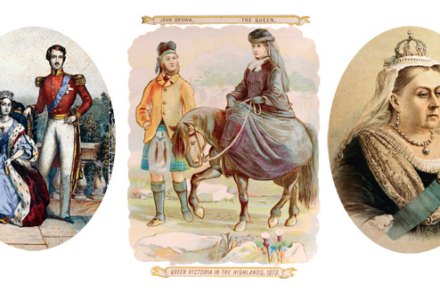
Do we really need a thumping new life of Queen Victoria? She seems to be one of our most familiar figures, the subject of countless books; but the surprising fact is that there hasn’t been a full, authoritative study since Elizabeth Longford’s life of 1974. A.N. Wilson has spent many years thinking and reading about Queen Victoria, and this superb revisionist biography is the book that he was born to write. In Wilson’s view there are two Victorias. The young Victoria was always someone’s pawn, trying to be a person that she wasn’t. She was in thrall first to Lord Melbourne and then to Baron Stockmar and Prince Albert. Only after Albert’s death was she able to become her true, strong-minded self.

Peter Levi – poet, priest and life-enhancer

From our UK edition

Hilaire Belloc was once being discussed on some television programme. One of the panellists was Peter Levi. The other critics expressed their doubts about the old boy. Levi leaned forward in his chair to say, with passionate intensity, ‘But Belloc is worth discussing... because he was... very nearly a poet.’ At the time, I thought this judgment a trifle snooty. Could the words ‘very nearly a poet’ not be applied to Levi himself? In the years since he died, however, revisitations of Levi’s work have convinced me that, uneven and florid as his poetry is, he was very definitely a poet. True, you can hear echoes of his masters in his verse – Valéry, George Seferis, Wallace Stevens.

Chris Barber should let someone meaner tell his story

From our UK edition

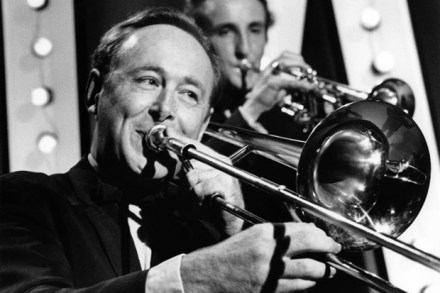
Chris Barber, still going strong with his big band, was born in 1930. He heard jazz as a schoolboy on the radio programme Music While You Work and tried to find out more about this wonderful music. He soon discovered that, in his words, ‘black music was the real thing, although some white people managed it pretty well’. By the time I became a secondary schoolboy in the 1950s, Chris Barber’s band was the sensation of the age. Chris played the trombone, sometimes switching to harmonica on blues numbers. He and his glamorous Northern Irish wife, Ottilie Patterson, seemed a golden couple. Ottilie had a superb voice for the blues, ancient or modern. She sounded like a classic blues singer of the 1920s, presenting a style that had died out in North America.

The lost Victorian who sculpted Churchill

From our UK edition

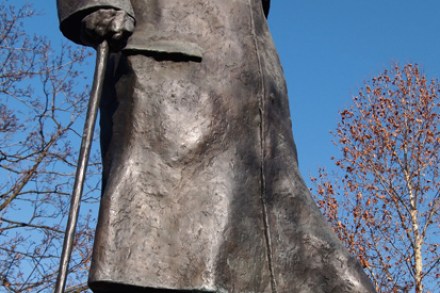
Ivor Roberts-Jones was in many ways the right artist at the wrong time. Had the sculptor been born a few decades earlier and worked in the Victorian age, when statues of the builders and defenders of empire were erected proudly and prolifically across the land, he’d surely have received no end of garlands. As it is, Roberts-Jones (1913–96) found himself constantly battling against artistic fashions and today is barely even talked about. Born in the Welsh border town of Oswestry, he moved to London to study at the Royal Academy Schools and Goldsmiths College (the latter’s fame as a breeding ground for conceptual excess still a long way into the future).

The yes-no-maybe world of Harrison Birtwistle

From our UK edition

For better or worse, we live in the age of the talking composer. Some talk well, some badly, a few — the strong, silent types — keep their mouths shut, or have to have them prised open. Harrison Birtwistle belongs, by nature, to this last category. I once, a very long time ago, interviewed him for a radio programme, mercifully pre-recorded. Each tedious enquiry would be greeted by a long silence ending with a yes or a no or an ‘I don’t understand the question.’ Nothing would persuade him to contribute to my attempts at fitting him into some preconceived image of British music in the late 1960s. Fitting them in is of course precisely what talking to composers is supposed to do. Harry quietly — very quietly — declined to cooperate.

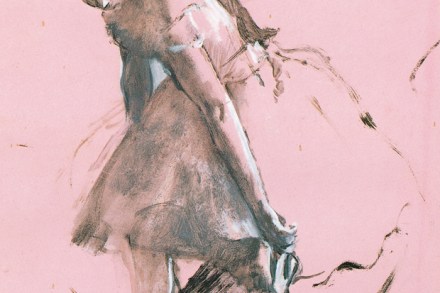
Ladies’ hats were his waterlillies – the obsessive brilliance of Edgar Degas

From our UK edition

Lucian Freud once said that ‘being able to draw well is the hardest thing — far harder than painting, as one can easily see from the fact that there are so few great draughtsmen compared to the number of great painters — Ingres, Degas, Van Gogh, Rembrandt, just a few.’ Christopher Lloyd’s new study of Degas’s drawings and pastels, with over 200 beautifully reproduced illustrations, demonstrates that Edgar Degas (1834–1917) deserves his place on that list. And more than that, it shows that for him there was no distinction between painting and drawing. In his art these categories so blur together that it is hard to say whether certain pictures — pastels with tempera paint additions, for example — are one or the other.

The Angel of Charleston, by Stewart MacKay – review

From our UK edition

Above the range in the kitchen at Charleston House is a painted inscription: ‘Grace Higgens worked here for 50 years & more, she was a good friend to all Charlestonians.’ The words are those of the art historian Quentin Bell, once one of Grace’s young charges. Grace was taken on by the Bloomsbury group painter Vanessa Bell in 1920 to be nursemaid to her three children: Julian, 12, Quentin, nine (by her husband Clive Bell) and one-year-old Angelica (by her friend and lover Duncan Grant). She was the heart and hearth of Charleston, Vanessa’s studio-cum-farmhouse in Sussex. Where Vanessa was austere and Duncan distracted, Grace was warm, smelling always of ‘moist, homemade fruitcake’.

My family’s better days

From our UK edition

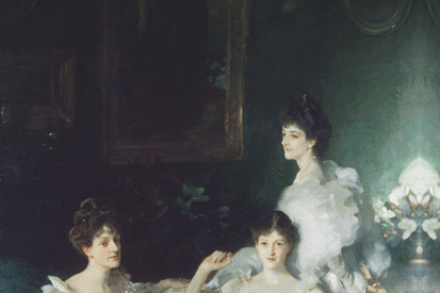
The Sargent painting reproduced opposite suggests the wealth and comfort that these three sisters, Mary, Madeline and Pamela, were born to. Their father, Percy Wyndham, was the younger son of Lord Leconfield of Petworth, Sussex. He was his father’s favourite, and was left by him as much of the immense Wyndham riches as was possible. With his inheritance Percy bought a 4,000-acre estate in Wiltshire, romantically named Clouds, where he built a vast country house, designed by Philip Webb. Pamela, the youngest sister (and my great-grandmother), is seated on the sofa, flanked by her two siblings.

What was the secret of Queen Victoria’s rebel daughter?

From our UK edition

Princess Louise (1848–1939), Queen Victoria’s fourth daughter, was the prettiest and liveliest of the five princesses, and the only one who broke out of the royal bubble. Artistically talented, she trained as a sculptor, and her marble statue of Queen Victoria can still be seen in Kensington Gardens. Unlike her sisters, who all married royals, Louise became the wife of a commoner, Lord Lorne, later Duke of Argyll. The marriage was childless and unhappy, and the couple lived separate lives. Like that other rebel, Princess Margaret, Louise was clever but difficult. She could be charming and witty one moment and unexpectedly disagreeable the next. She kicked against the royal rules, but she was only too willing to pull rank when she felt like it.

‘She’s the most important Jewish writer since Kafka!’

From our UK edition

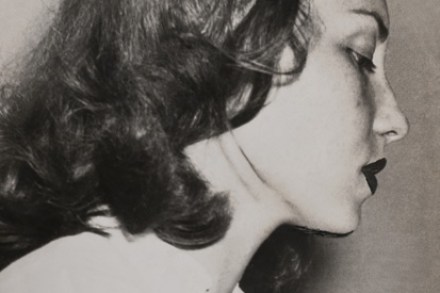
The Brazilian novelist Clarice Lispector was a riddlesome and strange personality. Strikingly beautiful, with catlike green eyes, she died in Rio de Janeiro in 1977 at the age of only 57. Some said she wrote like Virginia Woolf (not necessarily a recommendation) and resembled Marlene Dietrich. She was ‘very, very sexy’, remembered a friend. Yet she needed a great many cigarettes, painkillers, anti-depressants, as well as anti-psychotics and sleeping pills to get through her final years. Lispector had great fortitude over her illness, it was said, and suffered the ravages of ovarian cancer equably and without complaint. According to her biographer Benjamin Moser, Lispector’s was a life fraught with the shadow of past failures and past sorrows.

The Roth of tenderness and of rage

From our UK edition

In the autumn of 2012, Philip Roth told a French magazine that his latest book, Nemesis, would be his last. The storm of interest this created was surprising, given that he was 78. His creative spurt in his seventies (inexplicable, according to Roth: ‘my breakfast cereal stayed the same’) had given fans the illusion that, in the words of his fictional alter-ego Nathan Zuckerman, ‘one’s story is not a skin to be shed….You go on pumping it out till you die, the story veined with the themes of your life.’ Roth, however, has now shed the skin of fiction; he is ‘unbound’ because he is no longer ‘chained to his talent’. (In one interview, he extols the sheer joy of taking naps.

How honest was Bernard Berenson?

From our UK edition

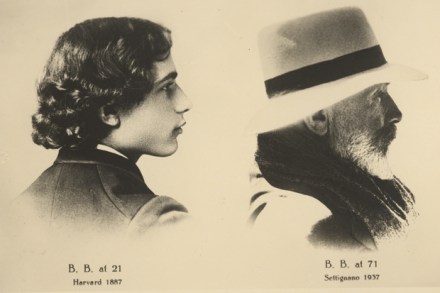
When the great Jewish-American art expert Bernard Berenson died in 1959, he had acquired the status of a sort of sage. He was the relic of a prewar culture that had vanished. He was an embodiment of the idea of connoisseurship that had at once given birth to a great boom in art collecting and yet that was, by the end of his life, being superseded. When Berenson embarked on the career that would see him widely accepted as the world’s foremost authority on Old Masters, the painters of the Italian Renaissance were barely regarded in the US. He died — at 94 — in the age of Andy Warhol. The very span of his life gives his story resonance.

The mad, mum-fixated maiden aunt of modernism

From our UK edition

Marianne Moore’s poems are notoriously ‘difficult’ but her personality and the circumstances of her life are as fascinating today as they were to the avant-garde writers and artists of 1920s New York. Much of the fascination lies in the contrast between what Linda Leavell calls Moore’s ‘maiden-aunt persona’ and her position as a ground-breaking modernist, whose highly idiosyncratic verse and technical experimentation dazzled and baffled her contemporaries.

The Last Knight, by Robert O’Byrne – review

From our UK edition

I have to declare an interest: for many years the Knight and I were the closest of friends until a sequence of his unpredictable and volcanic rages drove us apart. Robert O’Byrne explains how the Knight suffered for most of his life from the illness and strong medication of manic depression. It is a tribute to him that I never knew of this medical diagnosis until much later and that, despite it, he achieved so much in his life, drawing international acclaim to Irish pictures, architecture and furniture and producing so many learned books on their quality and beauty. In fact there is a photograph in this book of the Knight and I dancing a jig to the melodious tin-whistle music of Paddy Maloney. But in the caption I am described as someone else, albeit a cousin.

One Leg Too Few may be one biography too many

From our UK edition

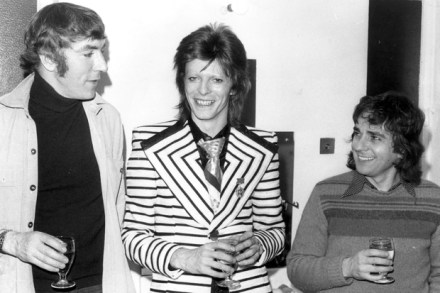
It’s no joke, writing about comedians. Their work is funny, their lives are not. Rightly honouring the former while accurately relaying the disasters of the latter is a challenge few writers can well meet. Peter Cook and Dudley Moore have been extensively studied before. Harry Thompson published his excellent biography of Cook in 1997, Barbara Paskin her authorised biography of Moore the same year; Alexander Games’s joint biography Pete & Dud followed in 1999. There have been memoirs of Peter Cook by his first and second wives, Wendy and Judy, and his third wife, Lin, has edited Something Like Fire: Peter Cook Remembered. What’s to add?

The man who shared a bed with D.H. Lawrence and Dylan Thomas (though not together)

From our UK edition

Rhys Davies was a Welsh writer in English who lived most of his life in London, that Tir na nÓg in the east, the place of eternal youth and beauty to which in the mid-20th century many Welsh writers in English, adulterers and homosexuals ran. There were few chapels in London, but many bedsits. Also publishers. And guardsmen. Here Davies followed a career unique by Welsh standards, for he did not sell milk or teach. For 50 years he just wrote.

The abstract art full of ‘breasts and bottoms’

From our UK edition

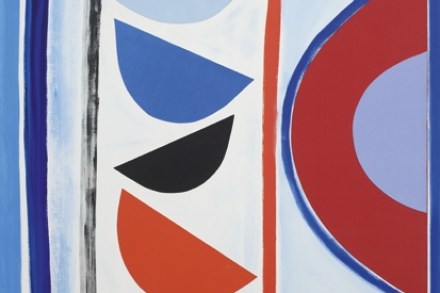
Is there any such thing as abstract art? Narratives and coherent harmonies seem to me always to emerge from the shapes and colours. Picasso’s cubist planes, as critics have noticed, usually disclose wine bottles, mandolins and bread baskets upon a table — icons of his Catholic childhood. The red and black slabs of Mark Rothko are our planet as mapped from outer space. Jackson Pollock created mad spiders’ webs. Klee is full of farmyard animals. Piet Mondrian’s grids are Holland’s dikes and polders. Our own best abstract artist was Terry Frost. Here again the semicircles and thin looping lines are as representational, as ascertainable in the real world, as any horse by Stubbs or cloud by Constable.

Why did Penelope Fitzgerald start writing so late? 

From our UK edition

‘Experiences aren’t given us to be “got over”, otherwise they would hardly be experiences.’ The opening sentence of the first draft of The Bookshop, published in 1978 when Penelope Fitzgerald was 62, didn’t survive in the finished version, but its author had found her voice, and, in a way, her subject. She had learnt how to look back. She had begun publishing only four years earlier, with a life of Edward Burne-Jones. There followed a thriller, written to amuse her husband as he lay dying, and a second biography, The Knox Brothers. This was about her father, ‘Evoe’ Knox, editor of Punch and author of light verse, and his three brothers, two of whom became priests in different denominations.