Biography

A definition of glamour

From our UK edition

‘Dark Star’ is a suitable enough title in itself, but the definition makes it a brilliant one: ‘A Dark Star’, we are told in this book, ‘is shadowed, often detectable by its gravitational effect on other bodies. It is often a component of a binary star and can cause the brightness of its visible partner to vary periodically.’ That is to say, Vivien Leigh was bipolar and married Laurence Olivier, and these things dominated her life. She was born in Darjeeling in 1913, her father, Ernest Hartley, a stockbroker. When she was six, she was sent to school in England. This was not unusual, but that does not mean that she did not feel abandoned. She was educated by Roman Catholic nuns and read a lot, including Rudyard Kipling. Vivien had a gift for prophecy.

Sins of the fathers | 13 December 2018

From our UK edition

‘To have a father is always big news,’ according to the narrator of Sebastian Barry’s early novel, The Engine of Owl-Light. Stephen Dedalus puts it differently in Ulysses: ‘A father is a necessary evil.’ But later, he qualifies this: ‘Paternity may be a legal fiction. Who is the father of any son that any son should love him or he any son?’ Colm Tóibín has repeatedly squared up to fathers as well as mothers in his own work (a dead father haunts the family in Nora Webster, and fatherhood is a central theme in The Heather Blazing). His new book takes on the theme of fatherhood in relation to three great Irish writers, supplying a scintillating new perspective on each.

Vanished without trace Zoë Apostolides

From our UK edition

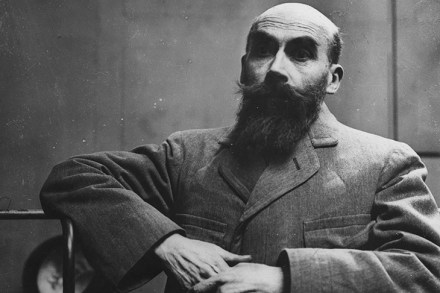
From Colette to Rudyard Kipling, celebrities flocked for front-row seats at the 1921 trial of Henri Landru, the notorious ‘lonely hearts’ killer. By the time he was apprehended, France’s answer to Jack the Ripper had swindled his way to contact with almost 300 women, using a variety of aliases, and murdered ten of them at his country pied-à-terre outside Paris. A century later, the suicide of Rey Rivera at the Belvedere Hotel in Baltimore created no such sensation except in the minds of conspiracy theorists and those who missed him, but the two stories reveal more similarities than might be expected. Trawling through 7,000 pages of archive material, Richard Tomlinson’s account spans many years, witness statements, forensic records and court documents.

A hero to worship

From our UK edition

If you don’t know who Lionel Messi is you won’t enjoy this book much. If you do, you probably will. But if you know who Messi is and you’ve got at least a 2:1 in English, comp. lit. or similar, you are going to absolutely love it. This is definitely one for the football aficionado as well as for fans of fine writing. Messi is an Argentinian footballer who’s played for Barcelona for his entire professional career. He’s short. He’s modest. And he never takes a dive. Apart from his appalling tattoos, he’s the very opposite of what you might expect of the modern footballer — an Argentinian Roy of the Rovers.

Our greatest ambassador

From our UK edition

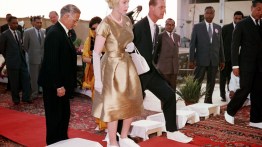
In her 66 years on the throne the Queen has represented Britain on official visits to at least 126 countries or territories, some of them many times. Robert Hardman has had the idea to write about her reign, and about Britain, through these myriad voyages. He is right to call his book Queen of the World. There is no other. He quotes Neil MacGregor, now the director of Berlin’s Humboldt Forum, pointing out that the Queen has officially entered the German language. The correct word for ‘queen’ used to be ‘die Konigin’; but now German grammar lists a new entry ‘die Queen’ and states: ‘There is no plural.

A death-haunted world

From our UK edition

‘A is for Amy who fell down the stairs/ B is for Basil, assaulted by bears...’ The Gashlycrumb Tinies, an alphabet in dactylic couplets of the surreal fates visited on a succession of blameless tots, is probably Edward Gorey’s best-known work — and that work forms a pretty coherent whole. Dozens and dozens of tiny booklets, almost all intricately hand-crosshatched in black pen, darkly spoofing established genres, set in a Victorian-Edwardian world of sighing flappers, funerary urns and decaying stately homes. They are filled with surreal menace and random violence or moral horror — much of it offstage — and always played for laughs. The dreamlike, associative drift of Gorey’s work — is that an umbrella or a bat?

Conflicted genius

From our UK edition

Boxing writers sometimes try to make comparisons across weight groups. They used to say, for example, that Floyd Mayweather was the best pound-for-pound fighter in the world. Saul Bellow for many years has had the reputation of the best page-for-page writer. Every paragraph has something that arrests you: an image, an insight, a line of dialogue, or a moral dilemma. This is the kind of thing: ‘My brother picked me up by the trustful affections as one would lift up a rabbit by the ears.’ The sentences flow, both natural and vivid. Bellow can capture the moment’s peace of a commercial traveller, sitting in the garden of his lover’s rented apartment: He breathed in the sugar of the pure morning. He heard the long phrases of the birds. No enemy wanted his life.

‘I don’t want to explain myself’

From our UK edition

There is an African bird called the ox-pecker with which Germaine Greer, conversant as she is with the natural world, will doubtless be familiar. Oxpeckers ride on the backs of large mammals — giraffes, buffalo, wildebeest and the like — feeding off their lice. Once thought an example of mutualism, the relationship between diner and host is now understood to be more complex than this. On the one hand oxpeckers reduce the larvae, and on the other they jab their beaks into any open wounds on the hide in order to keep the blood fresh. Elizabeth Kleinhenz is Germaine Greer’s ox- (or rather Oz-) pecker.

The scourge of the Raj

From our UK edition

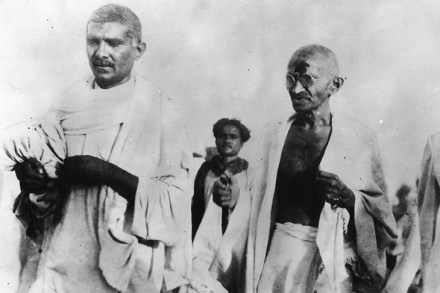
‘It’s a beautiful world if it wasn’t for Gandhi who is really a perfect nuisance,’ Lord Willingdon, Viceroy of India, wrote in 1933. Gandhi would have been 150 years old in 2019, had he taken better care of himself. He remains the most irritating and admired politician of the 20th century: a perfect subverter of power and political logic, but a nuisance to everyone, allies included. Only Hitler, the other anti-capitalist spiritual politician who broke the British Empire, fascinates to the same degree. The first volume of Ramachandra Guha’s biography, Gandhi Before India (2013), carried the young Gandhi across the British Empire from Kathiawar to London to Cape Town.

A mind going to waste

From our UK edition

The revival of interest in mid-20th century novelists is one of the most positive and valuable developments of our time. This has particularly brought about a reconsideration of the work of women. Beginning, perhaps, with the creation of the Virago classics, female authors have been brought back into print and given the sort of serious treatment they rarely received in their lifetimes. The Virago list of classics is not what it was, but the excellent Persephone Press has carried on the task of rediscovering out-of-print authors. Occasionally, other mainstream presses have wondered whether a new readership might be found for names from the past, and Hodder is now trying its luck with five novels by Pamela Hansford Johnson.

The old man and his muse: Hemingway’s toe-curling infatuation with Adriana Ivancich

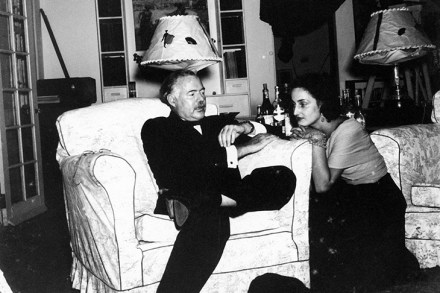
One rainy evening in December 1948, a blue Buick emerged from the darkness of the Venetian lagoon near the village of Latisana and picked up an Italian girl — 18, jet black wet hair, slender legs — who had been waiting for hours at the crossroads. In the car, on his way to a duck shoot, was Ernest Hemingway — round puffy face, protruding stomach and, at 49, without having published a novel in a decade, somewhat past his sell-by. He apologised for being late, and offered the rain-sodden girl a shot of whisky which, being teetotal, she refused.

ernest hemingway adriana ivancich

The old man and the siren

One rainy evening in December 1948, a blue Buick emerged from the darkness of the Venetian lagoon near the village of Latisana and picked up an Italian girl — 18, jet black wet hair, slender legs — who had been waiting for hours at the crossroads. In the car, on his way to a duck shoot, was Ernest Hemingway — round puffy face, protruding stomach and, at 49, without having published a novel in a decade, somewhat past his sell-by. He apologised for being late, and offered the rain-sodden girl a shot of whisky which, being teetotal, she refused.

Two men on a mountain

From our UK edition

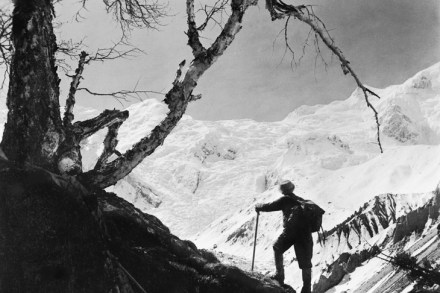
A book that opens in a Lahore refugee camp, shifts to Cat Bells Fell, rising above the shores of Derwentwater, and then swoops between the Ranigunj coalfields in Bengal, Belsize Park, a handicrafts exhibition at Kharagpur, Kensington Gore, military intelligence headquarters in Calcutta, an aircraft factory in Wembley and the Himalayas is bound to keep its readers jumping. In The Last Englishmen, Deborah Baker has written an exuberant, scene-changing, shapeshifting group biography, with John Auden and Michael Spender as its chief human protagonists. But she makes the Himalayas, and Mount Everest, palpable and vivid characters in her story too. John Auden was the geologist elder brother of W.H. Auden and became a global expert on the Himalayas.

The electrifying genius of Nikola Tesla

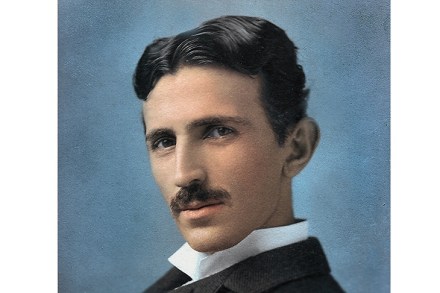
Nikola Tesla, the man who made alternating current work, wrote to J. Pierpont Morgan, the industrialist and banker. It was 1902 and Tesla was broke. ‘Am I backed by the greatest financier of all time? And shall I lose great triumphs and an immense fortune because I need a sum of money? Are you going to leave me in a hole?!! Financially, I am in a dreadful fix.’ This was not perhaps the best way of approaching a millionaire who had made his fortune in the very industry Tesla was setting out to transform. It was a time of scientific entrepreneurs and robber barons. Morgan was a man of many concerns. He did not reply. Begging letters continued to be sent, and duly ignored.

An electrifying genius

Nikola Tesla, the man who made alternating current work, wrote to J. Pierpont Morgan, the industrialist and banker. It was 1902 and Tesla was broke. ‘Am I backed by the greatest financier of all time? And shall I lose great triumphs and an immense fortune because I need a sum of money? Are you going to leave me in a hole?!! Financially, I am in a dreadful fix.’ This was not perhaps the best way of approaching a millionaire who had made his fortune in the very industry Tesla was setting out to transform. It was a time of scientific entrepreneurs and robber barons. Morgan was a man of many concerns. He did not reply. Begging letters continued to be sent, and duly ignored.

A labour of loathing

From our UK edition

The titans of the podium, a late 19th- and 20th-century phenomenon, a species now extinct, have on the whole been well served by their biographers, with Peter Heyworth’s Otto Klemperer: His Life and Times as the ideal. Wilhelm Furtwängler, by far the greatest of them all in my and many other people’s opinion, has not been nearly so fortunate. Partly that may be due to the nature of his genius, in that in most of his performances, as can still be heard on innumerable recordings, he seems to have a larger part in the creative process than almost any other performer (only Callas and Sviatoslav Richter, both passionate admirers of his, share that feature), and that is considered at least a dubious quality in this time of textual fidelity.

The Wallis Simpson I knew – by Nicky Haslam

One would have thought this particular can of worms might, after nearly 80 years, be well past its sell-by date. But books about Mrs Simpson and her infatuated king appear with thudding frequency, each with some ever more far-fetched theory about this curious union. Now comes the leaden hand and leaden prose of Andrew Morton, with yet another: that Wallis was, all her life, in love with another man long before, during and after her experience of vitriolic abuse, first as the besotted prince’s obsession, then scapegoat for his abdication, and object of vilification during her years as his wife. This love (to borrow words from her step-great nephew, ‘whatever love is’) may well have been real. The man in question was Herman Rogers.

Unpretentious, and enormous fun

One would have thought this particular can of worms might, after nearly 80 years, be well past its sell-by date. But books about Mrs Simpson and her infatuated king appear with thudding frequency, each with some ever more far-fetched theory about this curious union. Now comes the leaden hand and leaden prose of Andrew Morton, with yet another: that Wallis was, all her life, in love with another man long before, during and after her experience of vitriolic abuse, first as the besotted prince’s obsession, then scapegoat for his abdication, and object of vilification during her years as his wife. This love (to borrow words from her step-great nephew, ‘whatever love is’) may well have been real. The man in question was Herman Rogers.

The man who disappeared | 22 March 2018

From our UK edition

On a night in Paris in 1914, Gertrude Stein was walking with Picasso when the first camouflaged trucks passed by. ‘We had heard of camouflage,’ Stein recalled, ‘but we had not seen it, and Picasso, amazed, looked at it and then cried out, yes it is we who made it, that is Cubism.’ The art of blending into the background was indeed discovered by painters, but the roots of camouflage, Mary Horlock argues, lay in Impressionism. French camouflage manuals cited Corot rather than Picasso: ‘It is by variations of light and shadow, often very delicate, that one recognises how an object is solid and detached from its background.’ For Solomon J.

Biografiends

From our UK edition

I saw a biopic about Morecambe and Wise recently. The actors impersonating the comedians were not a patch on the originals — how could they be? You need a genius to play a genius. I often wonder if my own HBO Peter Sellers movie would have been improved if someone fiery, of the calibre of Gary Oldman or Sacha Baron Cohen, had been cast instead of Geoffrey Rush, who was muffled under prosthetic make-up. But my point is, biopics seldom come off, and nor do biographies. Indeed, it is a reprehensible and misguided genre. Privacy is violated, creative achievements are explained away, and great men and women are unmasked as sneaky, predatory, cruel and ordinary. Humphrey Carpenter wrote all his biographies — of Auden, Britten and Ezra Pound — in this way.