Biography

Why is George Orwell so difficult to pin down?

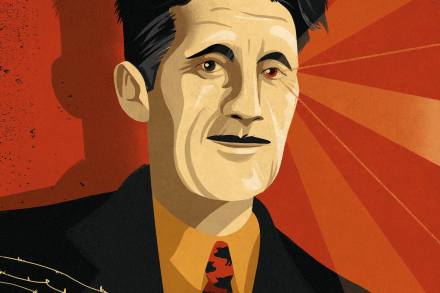
Outside Broadcasting House, the BBC’s main center in London, is an imposing, eight-foot-high statue of a man. He leans over slightly, as if to accost passersby, and holds a cigarette. A sign behind him declares, “If liberty means anything at all, it means the right to tell people what they do not want to hear.” The man is the author and critic George Orwell and the statue was intended as a permanent commemoration of his writings and values, as well as his short-lived stint at the BBC during World War Two.

orwell

The philosophical puzzles of the British Socrates

From our UK edition

Imagine your donkey and mine graze in the same field. One day I conceive a dislike for my donkey and shoot it: on examining the victim, though, I realise with horror I’ve shot your donkey. Or imagine a slightly different scenario. As before, I draw a bead, but just as I pull the trigger, my donkey – perhaps more invested in this vale of tears than yours – steps out of the firing line and I shoot your donkey. Now here’s the question. When, in either case, I turn up on your doorstep with the remains of your donkey, how should I frame my apology to you? In his 1956 presidential address to the Aristotelian Society, J.L. Austin (1911-1960), White’s Professor of Philosophy at the University of Oxford, a man who, M.W.

Roger Deakin – at ease in the countryside as a poacher with deep pockets

From our UK edition

Few authors have left such an immediate legacy as Roger Deakin. When he died of a sudden illness in 2007, aged 63, he had written just two books: Waterlog, which set off the wild swimming craze, and the even more influential Wildwood, which helped kickstart the publishing phenomenon of nature writing. Yet both books only really became well known after his death. During his lifetime he was, at best, a cult taste. When I approached the BBC 20 years ago with the idea that he should present a televisual version of Waterlog in which he swam ‘across’ England, through its ponds, lakes and rivers, I was told no one was interested in wild swimming – and who was Roger Deakin anyway? Patrick Barkham has set out to answer that question.

The problems of being a Bee Gee

From our UK edition

For quite some time, the prospect of death has held a fresh terror. The British Heart Foundation’s step-by-step guide to cardiopulmonary resuscitation advises performing chest compressions ‘to the beat of “Stayin’ Alive” by the Bee Gees’. This means that the last sound some of us will ever hear is ‘Stayin’ Alive’, with our chests as the drums: Feel the city breakin’ and everybody shakin’And we’re stayin’ alive, stayin’ alive!Ah! ah! ah! ah!Stayin’ alive! Stayin’ alive! Despite their success, the Bee Gees have always been regarded as naff. They are to pop music what Fanny Cradock was to cookery or Julian Fellowes is to the world of letters. Bob Stanley is on a mission to rescue their reputation.

Tucker Carlson is the new Voldemort

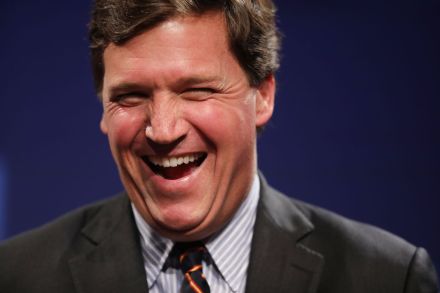
Murdoch gets what Murdoch wants — and this time, it’s to erase any evidence that Tucker Carlson ever existed. The media mogul is so insistent that the “T”-word remain unspoken that he has purportedly banned any mention of the ex-host across the Fox networks.  This is bad news for Chadwick Moore, author and contributing editor at The Spectator after he announced his new book, Tucker, that comes out next month. Moore tweeted that he’d been blacklisted from the network after announcing the book, saying: “I’m not allowed on Fox anymore, because I wrote a book about @TuckerCarlson. I’ve been banned from the network.

vice president tucker carlson

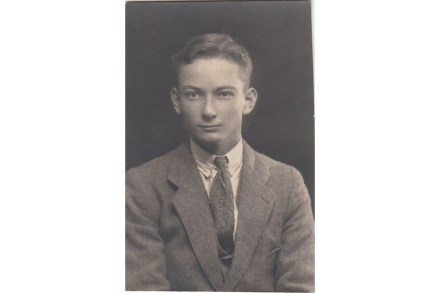
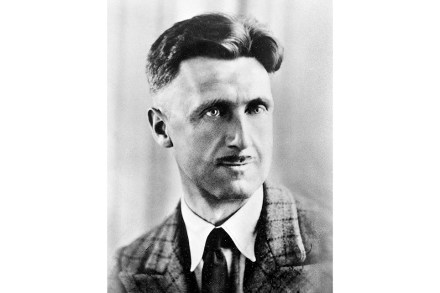
Will we ever know the real George Orwell?

From our UK edition

While George Orwell was staying with his family in Southwold during the 1930s, figuring out how to become a writer, the town pharmacist was busy shooting ciné footage. On the edge of a crowd watching a circus parade, he captured a tall man smoking at a street corner. It’s impossible to identify this brief glimpse as Orwell, but D.J. Taylor sees the self-conscious figure holding himself apart as a possible sighting. It doesn’t seem all that revealing, so why does it matter? It feels somehow symbolic of a wider effort to grasp something tangible and candid of a writer who can too readily be obscured by his own myth. This might be a chance to get a look at the man himself rather than a stage-managed persona.

Haunted by Old Russia: Rachmaninoff’s lonely final years

From our UK edition

Ask a roomful of concert pianists to pick their graveyard moment in Rachmaninoff’s Piano Concerto No. 3 (1909) and they’ll almost certainly point to five or so pages halfway through the last movement where an ant nest of piano notes infests a sparse orchestral threnody. When an elderly Vladimir Horowitz performed this passage – lank, dyed pageboy hair framing his Bela Lugosi face, hands darting over and under each other like butterflies – he looked more like a weaver at his loom than a virtuoso at his instrument. There are flickers of concentration, but the overall impression is one of extreme insouciance. ‘I am a Russian composer, and the land of my birth has influenced my temperament and outlook’ The originator of this style of playing was Sergei Rachmaninoff himself.

Michael Cimino’s gift to cinema

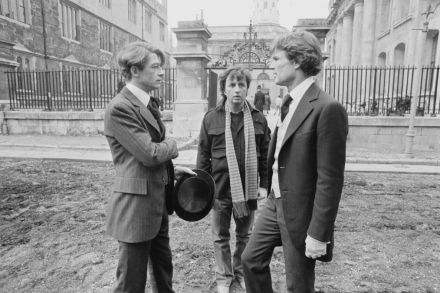
In the spring of 1981, I committed what the entertainment press of that day regarded as an act of self-abuse: I bought a ticket and sat through Michael Cimino’s epic flop Heaven’s Gate, and then I went back for another viewing before the universally reviled film ended its one-week run at the local cinema. In the four decades since, I have abused myself in similar fashion four or five more times. Heaven’s Gate is a 200-minute-plus mess of beautiful incoherences and stupefying contradictions, its pattern set by a gorgeously preposterous prologue in which forty-something actors Kris Kristofferson and John Hurt waltz across the greensward as newly minted Harvard graduates, class of 1870.

cimino

From she-devil to heroine – Winnie Mandela’s surprising metamorphosis

From our UK edition

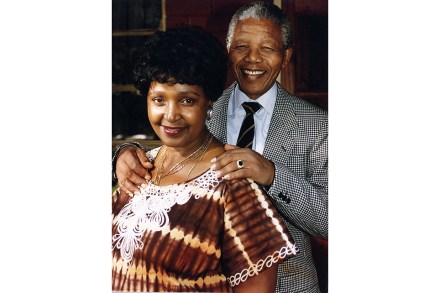
Apartheid South Africa created many heroes and villains, and in the heat of battle for the soul of that country it was sometimes difficult to tell which was which. For decades, Nelson Mandela represented righteous liberation for a society enchained by the grim political philosophy of apartheid. Throughout most of this time, his wife Winnie embodied fearless defiance and radical resistance to the system, a charismatic beauty who howled with rage: according to Lord Hain, ‘a quasi-revolutionary to Mandela’s reformism’. A complex Shakespearian tale unfolds of two charismatic figures thrown together by apartheid Today, as South Africa lurches from one crisis to the next, the legacy of the Mandelas is up for grabs.

A born rebel: Lady Caroline Lamb scandalises society

From our UK edition

At the beginning of her biography of the novelist, ‘fairy sprite’ and proto-feminist Lady Caroline Lamb, Lady Antonia Fraser hints that this may be her final book. Not for her a dramatic, Prospero-breaking-his-staff exit; instead, she writes mildly in the prologue that ‘this book... can also be regarded as the culmination of an exciting and fulfilling life spent studying history’. We must hope that Fraser continues to research and publish. Yet if this is to be her swansong, it is characteristically readable, accomplished and in places positively revolutionary.

Jim Ede and the glories of Kettle’s Yard

From our UK edition

Jim Ede started early. At the age of 12 he used £8 of his hard-won savings to buy a Queen Anne desk. No bicycle, air pistol or football for him: this solid piece of old furniture was the thing, the first step in a long life of acquiring objects that lived, breathed and spoke to him. To call him a compulsive collector is to understate the passion that over the years saw the desk followed by an avalanche of stuff, from porcelain and glasses to pebbles and feathers, textiles and above all paintings, drawings and sculpture. Each acquisition admired, loved, cherished and shared for its uniqueness – what Gerard Manley Hopkins would have called its ‘instress’.

Who was the real Martin Luther King, Jr.?

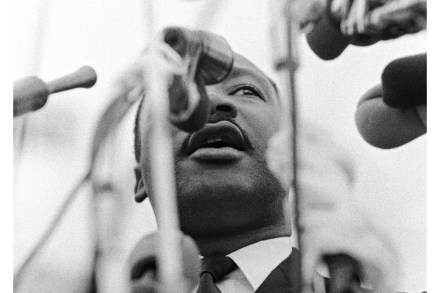
Jonathan Eig’s new King: A Life (KAL) is the first comprehensive biography of the black civil rights hero to appear in more than thirty years, and it will succeed my own Bearing the Cross (BTC), published in 1986, as the standard account. One normally does not review a book one’s blurbed — I’ve called it “a great leap forward in our biographical understanding” — nor where one’s actively aided the author’s research and read his manuscript multiple times. But comparisons between KAL and BTC will be legion, so highlighting the three most significant ways in which the two biographies differ will be a service both to the thousands of readers whom Eig’s volume should attract and to students of King’s life more generally.

king

Why does a new Tolkien biography remain elusive?

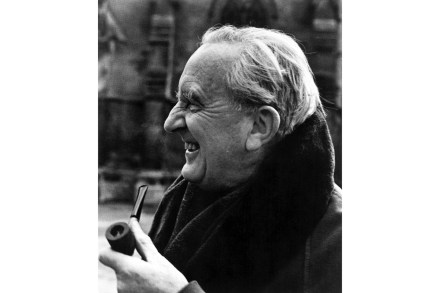
Last year’s big-budget, much talked-about television series, Amazon’s The Lord of the Rings: The Rings of Power, had a somewhat unlikely figure as its presiding genius. For one thing, he has been dead half a century this year, and for another, he was a mild-mannered Oxford don with a particular scholarly interest in Anglo-Saxon and Old Norse literature. His reputation rests on four novels published during his lifetime, which have not only been bestsellers since their publications in 1937, 1954 and 1955, but continue to attract millions of readers, who are unusually ardent in their appreciation.

tolkien
ringmaster

Vince McMahon: the modern-day P.T. Barnum who changed America

Book reviews should be like Car & Driver: flip over the page to a concrete, plainly written piece — no writerly words or literary drivel — by someone who’s test-driven the book and punched up a nuts-and-bolts guide. The reader should get a look under the hood: polished steel and chrome cylinders. Does it hum? Vroom, we’re off the races. I say this because I’m reporting on a prototype I’m afraid of driving: an advance reader’s edition, uncorrected, not for sale or quotation. I can’t rev this baby for you, or even kick the tires, but here goes.

What Zelensky has taken from his former TV career

From our UK edition

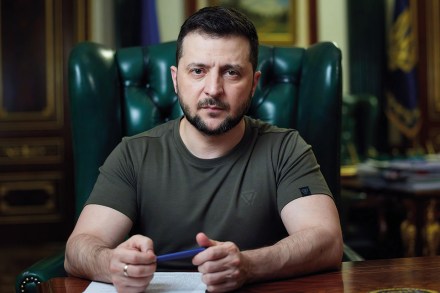
Volodymyr Zelensky is one of the few leaders of modern times whose charisma, determination and sheer cojones can be said, without exaggeration, to have changed the course of history. In the first hours of the Russian invasion the US famously offered to evacuate him from Kyiv to a safer location, to which his response was (in spirit, if not in actual words): ‘I need ammo, not a ride.’ His determination to remain in the heart of his besieged capital seriously confounded Putin’s invasion plans, which were predicated on quickly toppling or murdering him.

We love you, Uncle Xi!

From our UK edition

In 2015, I had lunch with an old chum of Xi Jinping. He described how China’s most powerful leader since Chairman Mao was born into the Communist party’s ‘red aristocracy’ but had to toughen up fast when his father was jailed in the Cultural Revolution. The young Xi briefly became a street hoodlum who swore like a trooper, smoked like a chimney and drank like a fish. He survived by turning ‘redder than red’, climbing the party ladder from a branch secretary in a lowly village all the way up to the top job in Beijing. ‘I am fond of Xi, but he is isolated from his old friends and there is a danger of emperor syndrome,’ the friend warned me. ‘I think Xi will want to rule for 20 years.

Bob Dylan, the song and dance man

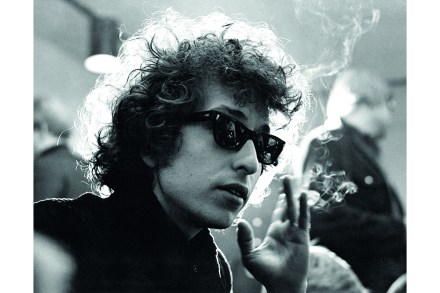
In Folk Music, Greil Marcus has captured an entire world of the creative and cultural development of the artist known as Bob Dylan in a single book. Marcus not only tells a Bob Dylan biography through the study of seven songs, he also creates an autobiography of his own long career as a writer on music and America — as well as a rich history of American folk songs and the new life they engendered as Dylan sat down to write his own. How does Marcus do it? I’ve often wondered as I’ve read him in the past. This time, I have no answers at all, only admiration and respect. It is far from unusual for other biographies of Dylan — and there are a shelfful — to tell you more about the biographers than their subject.

Dylan

Jan Morris’s ‘national treasure’ status is misleading

From our UK edition

Almost two years after the death of Jan Morris, the jaunty travel writer and pioneer of modern gender transition, her first post-humous biography has arrived. (I follow Paul Clements in using the feminine pronoun throughout.) It is lively and well written, but it’s not the finished product. It lacks access to the private papers of its subject and her wife Elizabeth. That extra layer of insight into a fascinating but elusive personality must doubtless await the authorised life by Sara Wheeler. In the meantime, Clements deserves plaudits. He has worked his personal knowledge and existing sources well.

The mad, bad and dangerous theories of Thomas Henry Huxley

From our UK edition

Racism lies at the heart of the Victorian rewrite of the creation myth. What happened in prehistory, according to Thomas Henry Huxley, Darwin’s representative on Earth, was that while Homo sapiens emerged from its primitive state among the other apes and lemurs, some – Europeans – developed at a faster rate. Humankind had evolved from a ‘hairy, tailed quadruped’, which was itself ‘probably derived from an ancient marsupial animal’ (Darwin). But once the human species emerged, ‘men differ more widely from one another than they do from the apes’.

The lonely passions of Emily Hale and Mary Trevelyan

From our UK edition

This year marks the centenary of the publication of The Waste Land, the poem that made T.S. Eliot famous. His story is familiar and yet still surprising. What is well known: Ezra Pound whipped The Waste Land into shape, it was published in The Dial and then The Criterion, and it was quickly recognised as a poem of great importance. Eliot emerged as the poet of his age and his views on the ‘impersonality’ of poetry would dominate the next several decades of poetry and criticism. What is less well known is how Eliot’s work was shaped and influenced by a few key women. This dynamic is what Lyndall Gordon’s The Hyacinth Girl and Mary Trevelyan and Erica Wagner’s Mary & Mr Eliot set out to explore. Gordon has written about Eliot before.