Big tech

How anti-data center activists are taking on Big Tech – and winning

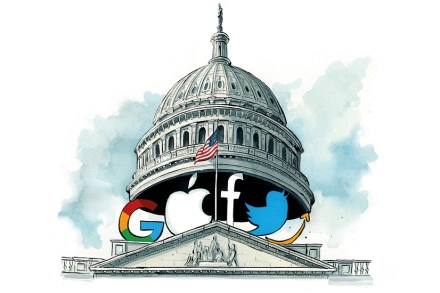
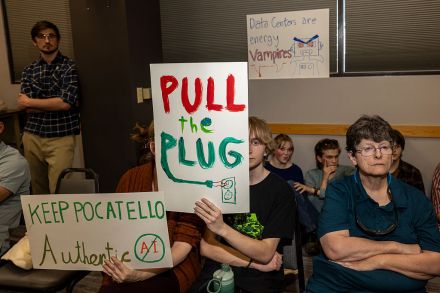
Last December, in a piece called “The Data Center Backlash Is Global,” I reported that residents around the world were rising up against Big Tech just as they have risen up against Big Wind and Big Solar, rejecting applications to use land. Sure, AI may be a world-changing technology, but the rush to build massive new data centers has resulted in dozens of rejections or restrictions on projects from Indianapolis to Dublin, Ireland. People are worried about property values, water usage, electricity costs and what it means for the neighborhood: “quality-of-life impacts,” as a member of the Indianapolis council, who led the opposition to Google’s billion-dollar project, explained.
Data Centers

Eddington, a Greek tragedy in the Wild West

Like many Westerns, Eddington, Ari Aster’s latest feature, unfolds with the inevitability of a Greek tragedy. It’s late May 2020 – the height of Covid. The ominous opening shot shows the construction site of an artificial-intelligence data center, which threatens the scarce water resources of the titular New Mexico town. A bird drops dead from the sky; a sick homeless man, coughing and rambling incoherently like a mad prophet, slouches toward the town, the dead bird clutched like an omen in his fist. From the outset, we already know the town is doomed. It’s not a question of if, but how. The Western genre and Greek-tragedy framing shape the exploration of this era’s still-disputed history, transforming the recent past into something mythic.

Eddington, the newest Western

Inside the parents versus social media conflict at the FTC

Washington, DC The battle between social-media companies and parents found itself center stage at the Federal Trade Commission, Wednesday. A panel of four speakers discussed the state of play in America's fight to protect children online – and where it should go. On the stage at the FTC were Senator Marsha Blackburn of Tennessee; Dawn Hawkins, the National Center on Sexual Exploitation's senior advisor; Michael Toscano, director of the Family First Technology Institute for the Institute of Family Studies, and Maurine Molak, the founder of David's Legacy Foundation. Every day in 2021, 100,000 minors received sexually abusive content from adults on Facebook and Instagram, Blackburn said on the stand, referencing internal documents released by the Department of Justice.

FTC Are Kids in Danger Online? panel parents

Mountainhead gets nowhere near the polished vitriol of Succession

There are few American shows more acclaimed and successful in the past decade than Succession, Jesse Armstrong’s peerless study of the corrupting influence of money and power, as illustrated through a Murdoch-esque media dynasty led by Brian Cox’s bull-like Logan Roy. The series was magnificent because it blended hysterical, unexpected black humor (step forward the excellent Matthew Macfadyen as Tom Wambsgans, who is hilarious virtually every moment he’s onscreen) with the serious thespian pyrotechnics of a starry cast including Cox, Kieran Culkin and the great Jeremy Strong, who, rumor has it, did not believe that he was making a comedy but a serious study of moral decay.

mountainhead

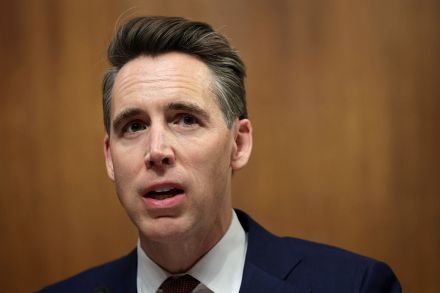
Josh Hawley talks Trump’s first 100 days: pro-life ‘needs to be a priority’

Senator Josh Hawley of Missouri has been one of Donald Trump’s fiercest allies on Capitol Hill. But since his easy re-election last November, he’s also been someone within the Republican party who demanded public commitments from Trump’s nominees on several issues of importance to him – areas of concern that include the influence of big tech, the encroaching role of China and a promise on the part of nominees with little or no record on the abortion issue to support pro-life policies. Senator Hawley spoke to me on the 100th day of Trump’s second presidency about what he’s seeing on tariffs, foreign policy and China.

hawley

Black Mirror season seven offers a welcome return to form

Charlie Brooker’s cautionary technological tales have now been running for well over a decade, and they are almost in danger of seeming old-fashioned. When Black Mirror began in 2011, Instagram was only a few months old, the iPhone was a new novelty just coming into the mainstream, and Elon Musk was best known for being CEO of Tesla. Now, virtually everything in the world has changed, and Big Tech plays roles in our lives that the ever-cynical Brooker could barely have imagined. There is, naturally, a residual irony that in order to afford the budgets – and starry casts – that the show continues to demand, it long since left its original home on Britain’s Channel 4 for the deeper-pocketed Netflix, which still funds it into its seventh series.

black mirror

Melania Trump takes on revenge porn and deepfakes

First Lady Melania Trump held a roundtable on Capitol Hill Monday with victims of revenge porn, deepfakes and sextortion in support of the "Take It Down Act." The “Take It Down Act” is a bipartisan bill cosponsored by Senators Ted Cruz and Amy Klobuchar that would require social-media platforms to remove any nonconsensual intimate images within forty-eight hours of a victim’s request. While the act passed the Senate with a unanimous vote, FLOTUS hopes it will be passed with the same enthusiasm in the House before being signed into law by her husband. She called for the prioritization of “robust security measures and to uphold strict ethical standards to protect individual privacy.

melania

Inside Biden’s plan to regulate the open internet

The sun sets slowly over rural Indiana. In a quaint, sunlit kitchen, a concerned family gathers around a laptop. The pixelated face of a doctor fills the screen, her voice crackling with urgency. She’s discussing critical, life-saving interventions for the family’s patriarch, the victim of a recent, unexpected stroke. As she tries to explain the diagnosis, the video starts buffering, the voice breaks up and the screen freezes. Why was the internet struggling? Dissuaded by an onerous regulatory environment, investors wouldn’t take a risk on rural infrastructure projects. Lacking incentives to develop new technologies, the local providers fell behind the curve.

biden plan regulate open internet

Is the Musk-Zuckerberg cage match off?

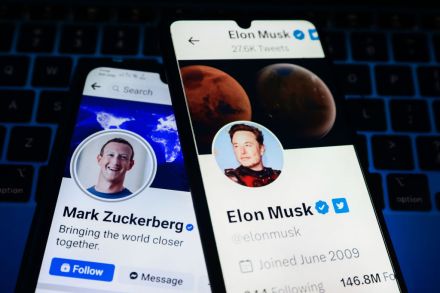
It may not come as a great surprise to readers that Elon Musk and Mark Zuckerberg will not, in fact, be having a cage fight with one another. Ever since Musk had posted on Twitter (now known as X) in June that he was interested in battling the Meta tycoon, only for Zuckerberg to reply “send me locations,” the saga has turned from a typically absurd piece of Muskian humor to a story that has oscillated between what has seemed like a serious piece of corporate warfare and utter silliness. There was never any serious doubt that Musk would have come off a poor second to Zuckerberg had the fight taken place.

musk zuckerberg

YouTube’s inconsistent conspiracy policy

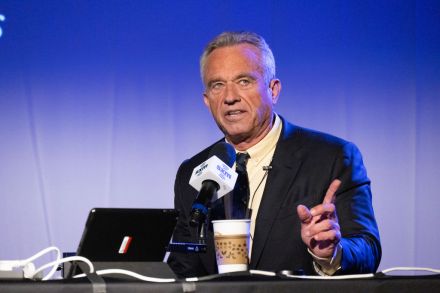
YouTube is back up to its pandemic-era tricks with a sketchy and unexplained censorship policy — this time as it pertains to the 2024 election. By all appearances, it once again looks as though Big Tech is going to attempt to play information arbiter as it relates to our national elections. Robert F. Kennedy Jr., a long-time radical environmentalist and conspiracy theorist, just also happens to be challenging President Joe Biden in the Democratic primary — and RFK is making enough noise that people are at least paying some attention to him. Kennedy’s profile has risen in the media lately as he’s espoused skepticism in the Covid-19 vaccine. It’s nothing new for him, as he was welcomed on media platforms such as The Daily Show, MSNBC and CNN in the mid-2000s.

youtube robert f. kennedy jr.

Make tech great again

Mark Zuckerberg has dubbed 2023 Meta’s “year of efficiency.” The slogan is a corporate euphemism for layoffs, of course — and not an especially subtle one. Zuckerberg’s company has parted ways with tens of thousands of employees this year. Other tech firms are following suit. Crunchbase estimates that US tech firms fired more than 118,000 employees in the first quarter of 2023. These are lean times in Silicon Valley — and, as Joel Kotkin explains in this month’s cover story, there is more to this tale than Big Tech belt-tightening after a pandemic-era hiring spree. The Valley, Kotkin explains, is in trouble. A place that America, and the world, once looked to for an ambitious and optimistic vision of the future, has grown sclerotic.

tech
metaverse

Good riddance to the metaverse

So pack it all in then. Away with the wisecracking butterfly that sits on your shoulder during work meetings. Out with the Gamorrean Guards who play Texas Hold’em with you around a floating table. The metaverse, Mark Zuckerberg’s fever dream of a virtual-reality infused world, is dead. That’s assuming it was ever alive and kicking in the first place. To assess just how “real” the metaverse ever was, we need to go back to its inception in the fall of 2021. That was when Zuckerberg released a video of himself in suspiciously Steve Jobs-esque garb — black shirt and pants, sneakers — tooling around what he called a “home space” that brimmed with holographic bric-a-brac.

Is YouTube TV about to fumble NFL Sunday Ticket?

Over the past few years, the NFL, a professional sports behemoth built largely on the backs of broadcasting deals with the major TV networks, has thrown its lot in with Big Tech to grow its game. In 2022, it was Amazon securing the broadcasting rights to Thursday Night Football. Now, in 2023, it's YouTube TV — and parent company Google — getting in on the pigskin profits. YouTube TV has just landed one of the juiciest plums of all: NFL Sunday Ticket.  From its debut in 1994 until this past year, Sunday Ticket was the domain of satellite cable provider DirecTV. The service was a way for NFL fans to watch every game on the Sunday slate, as opposed to just the two or three offered by the networks in local markets.

nfl sunday ticket

Biden will never let Silicon Valley fail

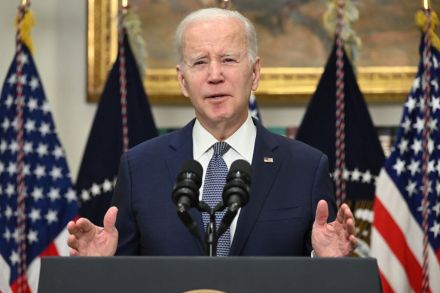
After a bank run on Silicon Valley Bank left the institution in ruins, the Federal Reserve announced it would make whole the bank’s customers, including those with uninsured deposits in excess of $250,000, which should have made them ineligible for the Deposit Insurance Fund. President Biden promised the American people that this was not a bailout because no losses would be borne by taxpayers — a claim the Wall Street Journal assessed as a “whopper.” But the debate we should be having is not over the definition of the authorities' actions, but how to judge them morally — especially given how the Fed has been trying to tame inflation for the past two years.

What Jordan Peterson gets wrong about anonymous Twitter accounts

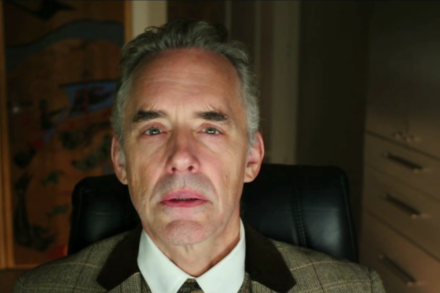
“The best we can hope for concerning the people at large is that they be properly armed.” So sayeth not Grendel69 on Twitter, but Alexander Hamilton, writing under the name Publius, the handle he adopted along with James Madison and John Jay when they were writing The Federalist Papers. But if Twitter had existed, well, Hamilton may well have been a shitposter, one who made Grendel69 look like a lightweight. Anonymity, pseudonymity, whatever you want to call it, is oft maligned, particularly in the digital square. The debate about it will likely always be with us, unless, somehow, the internet magically ceases to exist, forcing mankind up out of its sitting position. (As that wouldn’t be good for my income streams, I’m going to have to hope it keeps on keeping on.

jordan peterson

It’s the parallel economy, stupid!

There’s a lot of rumbling about American polarization these days. Sometimes it takes the form of people advocating for a national divorce or dire warnings of a forthcoming civil war. A national divorce seems impractical and America is too fat for a civil war. Better evidence that the country is already fracturing is the talk of the “parallel economy.” We’ve come a long way from the 2016 moment of self-awareness about needing to get out of our echo chambers. By 2020 it seemed everyone wanted their own. Now we’re redecorating the walls of the echo chambers. Adding some throw pillows.

parallel

What the Figma acquisition means for Adobe’s future

After three decades of watching Silicon Valley, I have concluded that a company’s slogan is the opposite of its intent. For example, Google used to say, "Don’t Be Evil." Or Facebook’s mission statements — well, they keep changing. Facebook wanted to “make the world more open and connected.” What they really meant was a “closed walled garden.” Adobe wants you to believe they’re a cloud company that sells software on demand. They say it in their every earnings release. Adobe sells desktop software grafted on the “cloud” to turn the old desktop software model that allows you to get paid once into a subscription business. It has turned them into a very profitable company — worth almost $175 billion in market capitalization. It is not a cloud-native company.

Say no to Democrats’ latest attack on Big Tech

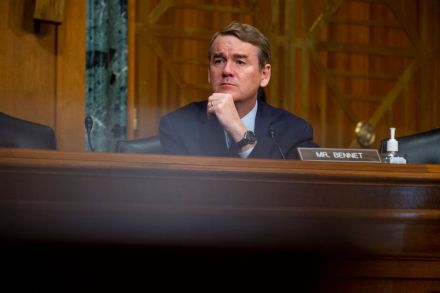
A new proposal from Senator Michael Bennet would effectively put unelected bureaucrats in charge of Big Tech. Bennet, a Colorado Democrat, sees a suggested five-member panel, called the Federal Digital Platform Commission, as a needed brake on the growth and reach of technology companies. “Although the Federal Trade Commission and the Department of Justice have done admirable work to enforce existing antitrust and consumer protection laws, they lack the expert staff, resources, and tech-oriented culture necessary for robust and sustained oversight,” Bennet remarked. “Both bodies to date have acted reactively to challenges raised by Big Tech, when proactive, long-term rules are needed.

Beware the risks of tyrannical tech

“Just think about it. Our whole world is sitting there on a computer. It’s in the computer, everything: your, your DMV records, your, your social security, your credit cards, your medical records. It’s all right there. Everyone is stored in there. It’s like this little electronic shadow on each and every one of us, just, just begging for someone to screw with, and you know what? They’ve done it to me, and you know what? They’re gonna do it to you.” — Sandra Bullock as Angela Bennett, The Net, 1995 A few weeks ago, I called the local Domino’s. The man who answered asked whether my address is an apartment or a private residence. I live in a fairly remote Michigan community of about 8,000 people.

Maria Bartiromo vs social media

Fox Nation, the online streaming counterpart to Fox News, recently dropped a new investigative series by Maria Bartiromo called Killer Apps. The program digs into the rise of dangerous social media trends, internet addiction, and the facilitation of trafficking via social media. The Spectator World caught up with Bartiromo about her new show. Amber Athey: What was the inspiration behind your deep dive into the dangers of social media? What do you hope to achieve with this investigation?     Maria Bartiromo: One trigger was what appeared to be dangerous "challenges" going viral on social media, such as 'who can swallow the most laundry detergent?' or 'who can tie a belt around your neck and see how long you can stop breathing?

FOX Business Network Anchor Maria Bartiromo (Photo by Monica Schipper/Getty Images)