Big tech

Big tech wants us to empathize with robots

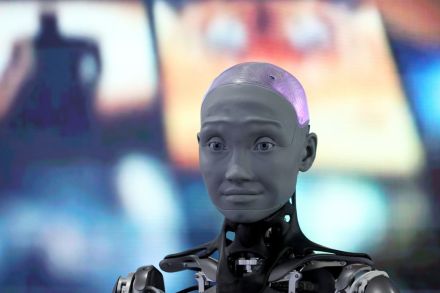
It seems like we can’t help getting attached to robots. It also seems like the people making the robots are counting on that. In the 2015 video game Fallout 4, one of the factions with which the player can align him- or herself is “the Railroad,” an organization that helps seemingly sentient androids escape from the lab in which they’re created. A friend of mine mocked me mercilessly for aligning myself with the “SJWs” of the Railroad and insisted that the androids — who spoke eloquently of their emotions, friendships, and aspirations — actually had the same moral worth as a toaster. I laughed, but secretly still felt I’d made the right choice. Surely it was always better to err on the side of greater empathy.

Congress’s half-baked assault on Big Tech

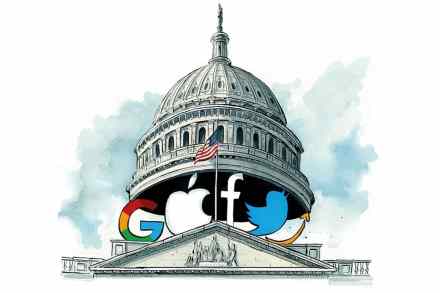
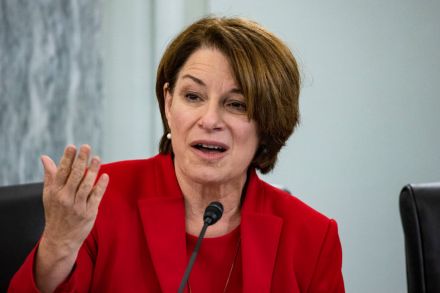
A major anti-Big Tech bill is heading to the floor of the Senate after a frustrating markup session in the Judiciary Committee. The American Innovation and Choice Online Act, as it's called, majorly changes how online retailers can sell and promote their own branded wares and apps. It even bans Amazon and Google from suggesting their own products over those of a third party. Supporters from both sides of the aisle are portraying the bill as a great leveler of sorts. They believe it helps consumers and the so-called “little guy” against the Big Tech companies.

antitrust hipsters

Reality is enough without Zuckerberg’s metaverse

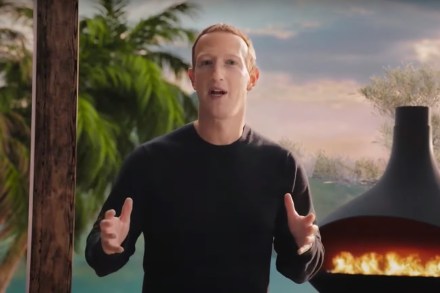
Take my hand, darling, and off we go into the metaverse. It's a whole new world...or at least it's a new world...maybe a brave new world? Enter Mark Zuckerberg, that Titanic captain of industry, who last week released a video introducing his latest plan to leave his Nike shoeprint upon reality. It's called the metaverse, and while even the savviest tech writers are grasping to explain what it is, it appears to be the fusion of our world with the virtual. Big Zuck wants what's on our screens to spill over into real life. We lived on farms, then we lived in cities, now we will live in "home spaces" with digitally rendered pterodactyls flying just outside the windows.

metaverse

Big Tech is censoring the climate change debate

'The limits of my language mean the limits of my world.’ — Ludwig Wittgenstein, Tractatus Logico-Philosophicus, 1922 Wittgenstein wrote that as an ontological and epistemological foundation for his larger belief in freedom of speech. He who controls the language also controls reality, something that today's left understands brilliantly, even devilishly. America historically has not limited freedom of thought and speech, and the resulting clash of ideas has improved our national discourse. The language police makes us weaker intellectually by limiting the world in which we live. The language around climate change and the green movement is one more area the left wants to control, especially given that trillions of dollars in spending are on the line.

big tech

Ron DeSantis’s Big Tech crusade

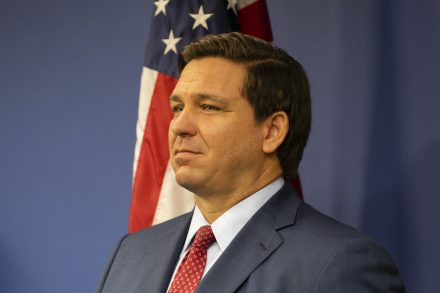
Miami  Florida governor Ron DeSantis signed legislation on Monday to penalize Big Tech for de-platforming private citizens and political candidates. The bill, which was passed last month by the Florida legislature, would allow Floridians who are banned from platforms to sue for damages and imposes hefty fines — up to $250,000 each day — on tech companies that boot political candidates. DeSantis signed the bill during an event at Florida International University that featured remarks from local citizens, political activists and elected officials, most of whom were of Latin American descent. Cubans and Venezuelans warned that Big Tech's crackdown on free speech was reminiscent of their home countries' slide into socialism and thanked DeSantis for pushing back on online censorship.

Florida Governor Ron DeSantis (Getty Images)

Last chance to end the tech tyranny

What would Adam Smith think of cancel culture? Many advocates of banning books now hide behind a veil of free-market purity: If Amazon bans a book, it’s not really banned because the online megalomart is, a private company. But it controls an outright majority of book sales in the United States, and even that remarkable measure may underestimate the power Jeff Bezos’s company wields over individual titles. Bestsellers can be found elsewhere perhaps, but most books have few other outlets. So Amazon doesn’t ban books. It just makes them much harder to buy and read. If a private company chooses to do that, who are you to complain?

oligarchy tech capitalist pigs

What’s the point of trying to break up Big Tech?

The ‘antitrust’ law suit launched by US authorities against Google has been reported as a potential turning point in the dominance of Big Tech — and an echo of the courtroom dramas that diminished the excessive power of America’s late 19th-century oil, steel and railroad barons. But I wonder how much impact it will really have.The allegation, in brief, is that Google has created an illegal near-monopoly by paying large sums to Apple and other smartphone makers to secure its position as the default search engine for billions of consumers, its grip reinforced by ownership of Android, the phone operating system, and Chrome, the popular browser — all of which also gives it a stranglehold on the digital advertising market.

big tech

House Republicans accuse Democrats of ignoring censorship in Big Tech report

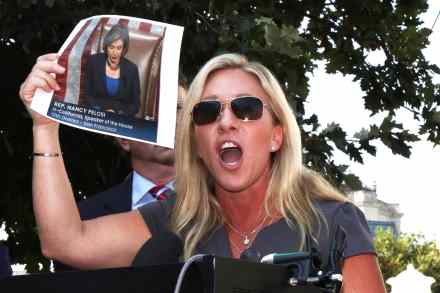
Republicans on the House Judiciary Committee are releasing their own report on Big Tech on Tuesday, countering a Democratic report that they accuse of being too radical in its antitrust proposals. The Democrats' draft report, which leaked on Twitter earlier in the day, accused Big Tech companies of engaging in anti-competitive behavior and called for a massive antitrust shakeup of the industry, including preventing Google from owning YouTube and prohibiting Amazon from selling its own products on its marketplace platform. Rep. Ken Buck called these proposals 'non-starters for conservatives'. The Republicans' report, which is signed by Ranking Member Jim Jordan and Reps.

big tech