Benefits

Osborne’s benefit risk

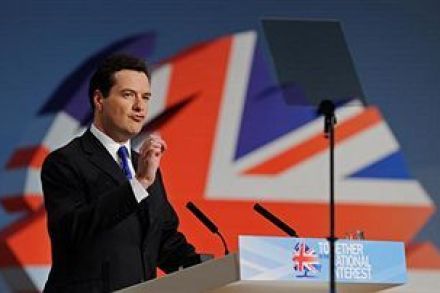
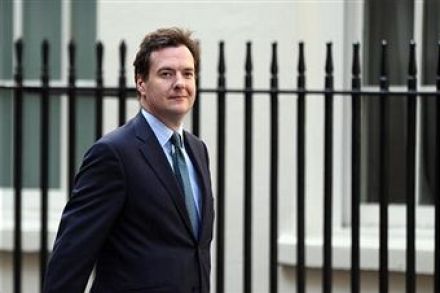
George Osborne’s announcement that child benefit will be taken away from any family with a higher rate taxpayer in it to help fund welfare reform shows how far Cameron and Osborne were prepared to go to keep Iain Duncan-Smith on board. During the campaign and in the Budget, Cameron and Osborne had strongly implied that child benefit would remain universal. The move carries it with considerable political risks. The measure takes effect from 2013, so before the country will have seen the benefits of welfare reform. Also families with one earner on £44,000 a year don’t consider themselves to be rich; there is already considerable irritation at how Gordon Brown’s

Osborne can go even further on middle-class benefits

George Osborne had been expected to subject child benefits to tax. Instead he is to abolish them entirely for higher-rate taxpayers. I’ve spent this morning talking to friends, whose judgment I respect, who are furious about Cameron hitting the squeezed middle. I cannot agree, and here’s why. We are not talking about the “squeezed middle” here – of the 30.5 million income tax payers in Britain, just 3 million pay the top rate of tax (figures here). They’re the best-paid 10 percent – and I have never worked out why the tax of the average worker (who’s on £22k) should be higher to afford the payment to those on twice

Osborne takes to the stage, armed with cuts

Rewind the tape to last year’s Tory conference, and David Cameron was assuring us that, “It will be a steep climb. But the view from the summit will be worth it.” Today, it falls to George Osborne to tell us more about both the arduousness off the ascent and the beauty of that view – although I expect that there will be a heavy empasis on the former. Already, the main passages are spilling into the papers and, as you’d expect, it’s mostly cuts and debt. On that front, the main argument seems to be similar to that made by Nick Clegg in Liverpool: that the longer it takes us

How Osborne and IDS reached agreement

I have found out a little more about the Universal Credit – and how the arguments over the summer were resolved. First, the backdrop. Money was always going to be a problem. This policy is about saving lives, not money. Right now, we pave the road to welfare dependency, creating a vacuum in the labour market that sucks in workers from overseas. Under Brown, the Treasury accepted this: cheap workers pay tax too, and as do companies who profit from them. Result: tax receipts up, but never fewer than 5 million on out-of-work benefits throught the boom years. The IDS plan was not sprung on Osborne. As I blogged a

Society 3, The State 0

Cameron and Osborne may just be about to pull off something incredible. This time last year, The Spectator ran a cover story about a new proposal which we could revolutionise welfare: the Universal Credit. It was an IDS idea: he’d sweep away all 50-odd benefits, and replace it with a system that ran on a simple principle – if someone did extra work, they’d get to keep most of the money they earned. It meant a bureaucratic overhaul, of a system that controls the lives of 5.9 million people. The resistance from HM Treasury, the architect of the tax credit system, was as fierce as it was predictable. But Clegg

Ed Miliband tries to detoxify his brand

The scrubbing job starts in earnest this morning, as Ed Miliband tries to erase that “Red” epithet from before his name. Exhibit A was his appearance on the Andrew Marr show, in which he took every opportunity to cast the manner of his victory in a favourable light. “If you look at this as one vote-one member, then I got more votes than anyone else,” he assured us, before going on to say that he won the union vote because, “I spoke about things that matter to working people in this country.” When asked whether he would sway under pressure from the union leadership, he averred, “I’m nobody’s man, I’m

Clegg gets forceful over welfare

Enter Nick Clegg with another self-assured article for a national newspaper. A few weeks ago, it was his defence of the coalition’s Budget for the FT that caught the eye. Today, it’s his case for welfare reform in the Times (£). These may be arguments, about dependency and disincentives, that you’ve heard before – but here they’re packaged in a particularly clear and persuasive way. Just what’s needed as the welfare wars, between Labour and the coalition, spill back into newsprint.   Writing about the article, the Times frames it as “Nick Clegg [putting] himself on a collision course with his party” – and you can see why they might

Another difference of opinion on welfare?

For the briefest of moments, the welfare war seemed to have quietened down. But, this morning, a new front may have flared open. Answering questions from the work and pensions committee, Iain Duncan Smith has struck out against the figures for benefit cuts that emerged at the weekend. The Guardian’s Haroon Siddique reports: “During questioning by the work and pensions committee, Duncan Smith was at pains to play down newspaper reports that he and Osborne were at loggerheads with each other. But when asked by committee chair Anne Begg about a variety of figures that had been ‘bandied about’ including the £11bn savings set out in the June budget and

Osborne and Cooper’s knockabout

Far more heat than light generated by this afternoon’s urgent question on welfare spending – but a telling spectacle nonetheless. The question had been put forward by a dissenting Lib Dem voice, Bob Russell, and it was up to George Osborne to answer it. He did so with sweeping observations, and attacks on Labour, rather than specifics. And so we never really got into the small print of those £4 billion extra benefit cuts, but Osborne did wonder why Labour have never apologised for “leaving the country with the worst public finances in its history.” It was knockabout stuff.   This is not to say that Osborne was ineffective. In

The coalition faces its most important battle of the next five years

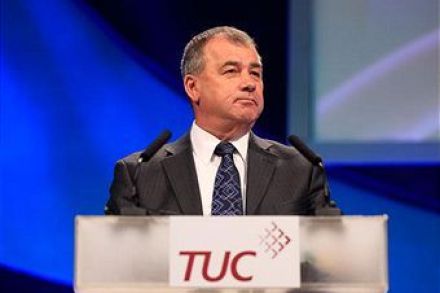
Strolling through central Birmingham yesterday, I came across one of those brewery advertisements from the early part of the last century. “Unspoilt by progress,” it boasted – a slogan that popped into my head when I heard the unions’ various interventions this morning. As Iain Dale suggests, there is something very 1970s about what Crow, Barber, Serwotka & Co. are saying today. The coalition will need to meet much of the unions’ belligerence with some fire of its own. David outlined some ways it can do that earlier. But, to my mind, there is one charge that demands a particularly ferocious counterattack. It’s the one made by Brendan Barber in

Benefit reform – one theatre in Cameron’s war

The Observer has received letters revealing that George Osborne plans to deliver net savings of ‘at least £2.5bn’ from the Employment Support Allowance by limiting the amount of time people can spend claiming it. Here is Osborne’s letter to IDS, Cameron and Clegg: ‘Given the pressure on overall public spending in the coming period, we will need to continue developing further options to reform the benefits as part of the spending review process in order to deliver further savings, greater simplicity and stronger work incentives. Reform to the employment support allowance is a particular priority and I am pleased that you, the prime minister and I have agreed to press ahead

The family is the best agent of welfare

Conservatives have long been strong on family. They believe that families are the glue that sticks us together, and that traditional nuclear families therefore plays an important role in sticking the whole nation together. As a libertarian, I believe that people should live as they choose. Too many young people of my parents’ and grandparents’ generations were forced into marriages that were or became deeply unhappy – but divorce was thought scandalous. So people – particularly women, who rarely had independent means or income enough to escape – endured that misery. Many, too, were humiliated, or prosecuted, for conducting relationships that we would happily accept today. But even as a

Seconds out…IDS versus Osborne

Infamously, George Canning and Viscount Castlereagh fought a duel over a policy disagreement; Iain Duncan Smith and George Osborne will follow suit at this rate. I had thought they’d resolved their differences over the upfront costs of IDS’ welfare reform; but the Mail on Sunday reports otherwise, glorying in the glares, savage bon mots and expletives. This is the conundrum: if IDS doesn’t find £10bn in savings, he will not get the £3bn needed to enact his reforms to make work pay. There is something quite heart-warming about IDS’ fight against the institutionally overbearing Treasury, but George Osborne is right: it is unacceptable to give one department, however well intentioned,

This Parliament’s key dividing line?

They may have faded from the front pages, but middle class benefits are still one of the most important stories in town. What we are witnessing here could be the birth of this Parliament’s defining dividing line – a cuts vs investment for the new decade. In truth, the birthing process began before the election, with this Ed Miliband interview in the Guardian. In it, he made a distinction between a “residual welfare state that is just for the poor, which is the Tory position,” and a “more inclusive welfare state” that encompasses the middle classes. His point was that the former goes against “all the evidence of maintaining public

Fuel Poverty and the Winter Fuel Allowance

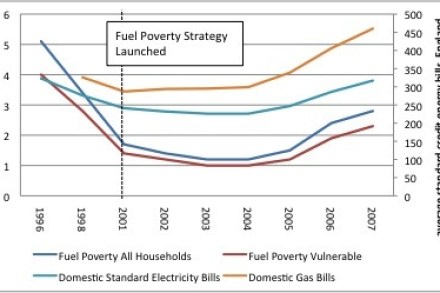
The Winter Fuel Allowance was an emotive part of the election campaign, with Labour accusing the Tories of planning to scrap it and David Cameron promising not to. At no point during that debate was it asked whether the WFA was a good way to spend money. Our report earlier this year, Cold Comfort, examined in some detail the demographics of fuel poverty, as well as questioning the logic behind the government’s target. If you take the fuel poverty measure (those spending more than 10% of income on energy) as read, the last government failed utterly to achieve anything on it – as the graph below shows. They introduced the

Trouble on the horizon | 18 August 2010

100 days in, a danger emerging for the coalition: the idea that it is balancing the budget on the backs of the middle class. The Daily Mail front page today warns in apocalyptic font of a ‘Bonfire of the middle class benefits’ while the Times says ‘Families to lose out in bonfire of the benefits.’   The problem for the coalition is that because it is committed to protecting the poorest and the most vulnerable, the cuts will have to be concentrated further up the income scale. This means that a lot of will what go in the cuts are the middle class bits of the welfare state. To compound

Taking stock of the coalition’s first 100 days

While the milestone of 100 days is not new – US presidents are still measured against the progress made in 100 days by Franklin Delano Roosevelt in 1933 –  it is important. A poor start can create the impression of a government of novices. A good one can provide a new government with critical momentum. So how has the coalition done so far? And, in particular, how well have they done in beginning to rescue the UK’s public finances? Today Reform has released a report discussing the coalition government’s performance over its first 100 days. This report draws on four cross-party conferences held over June and July on welfare, education,

The coalition’s choice over Winter Fuel Allowance

The Winter Fuel Allowance has tapdanced back onto the political landscape today, and it’s all thanks to some insightful work by the FT’s Alex Barker. He had an article in this morning’s pink ‘un which suggested that IDS is lobbying to have it, and and some other “middle-class benefits”, trimmed to help pay for his benefit reforms. And he’s followed that up with a blog-post explaining how even an apparent “cut” in the allowance may not result in savings for the Treasury or the DWP. Strange but true, as they say. This could be a delicate situation for the coalition. In the background to it all is David Cameron’s pre-election

The government’s transparent approach to worklessness

Sometimes hope lies in the details. Take this morning’s press release from the DWP, for instance. On the surface, it is a response to today’s encouraging employment figures. But what it really is is a new way of approaching the problem of worklessness in this country. And all because of its headline: “Figures reveal five million on out of work benefits as Grayling pledges to make work pay.” This is, as far as I can remember, the first time that the total out-of-work claimant count has reached the summit of an official release. The last government always knew what the figure was, of course, but never drew much attention to

Season’s greetings | 10 August 2010

David Cameron’s just launched his benefit cheat crackdown (Con Home has a little footage). There were two notable occurrences. First, Cameron agreed that tax evasion was as serious as benefit fraud and vowed to tackle it – this defused the slightly absurd criticism from the left about not challenging tax avoidance whilst hitting benefit cheats – tax avoidance is legal, benefit fraud and tax evasion are not. Tom Harris attacks his party’s attempt to draw any equivalence between tax evasion and benefit fraud, saying it misses the point: tackling fraud is to the benefit of all. Second, a Mancunian woman called Sharon Reynolds has a crush on our Dave, a