Bbc

How to fix the BBC

From our UK edition

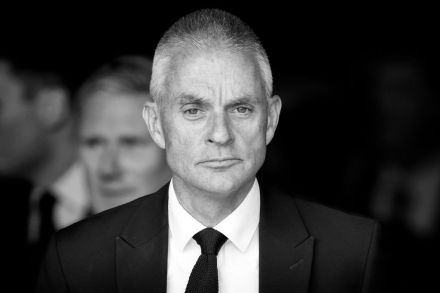
Assuming the BBC is still in existence by the time you read this, the scale of the task facing the next director-general would have been evident by listening to the output on Monday, the day after Tim Davie and Deborah Turness resigned. This was an organisation in utter denial. It began with Nick Robinson, puffed up with even more pompous self-regard than normal, treating Today listeners to a psychedelic monologue in which he disappeared down several capacious rabbit holes, jabbering about a sort of palace coup at the BBC, an assault by sinister right-wing forces.

Revealed: the bias of the BBC News app

From our UK edition

The most influential person in British media is not Rupert Murdoch or Lord Rothermere – it’s the editor who pushes out the BBC News app alerts. While many people gave up watching BBC News years ago, the corporation still dominates how millions receive their news, thanks to the app. Last year, it overtook Apple News to become Britain’s most-visited news app. Whoever controls those push notifications has the power to make the phones of the app’s 14.2 million users buzz with notifications several times a day, providing a constant stream of news updates and reaching a far larger audience than that of any television news bulletin, newspaper or magazine. Stories that flatter progressive orthodoxies are amplified; those that challenge them are sidelined So how is this power used?

BBC bias & Bridget ‘Philistine’s’ war on education

From our UK edition

50 min listen

This week: a crisis at the BBC – and a crisis of standards in our schools. Following the shock resignations of Tim Davie and Deborah Turness, Michael and Maddie ask whether the corporation has finally been undone by its own bias, and discuss how it can correct the leftward lurch in its editorial line. Then: Labour’s new education reforms come under the microscope. As Ofsted scraps single-word judgements in favour of ‘report cards’, could this ‘definitive backward step’ result in a ‘dumbing down’ that will rob the next generation of rigour and ambition? And will ‘Bridget Philistine’s’ war on education undo the positive legacy of the Conservatives on education?

What now for the BBC?

From our UK edition

12 min listen

It seems that the BBC is once again setting the news agenda – via tales of its own incompetence. The Corporation has spent days battling accusations that it aired a doctored clip of a speech by President Trump in a Panorama documentary back in January 2021. The White House Press Secretary has called the Beeb ‘100 per cent fake news’ while Kemi Badenoch has demanded that ‘heads must roll’ ... and now they have. For Tim Davie, the Director-General of the BBC, announced his resignation, alongside Deborah Turness, his senior colleague and CEO of News. But will two scalps be enough? James Heale speaks to Tim Shipman and Sonia Sodha. Produced by Oscar Edmondson.

trump uk free speech

Trump takes on the British disinformation complex

President Trump is waging war on the great British disinformation complex. The White House is gearing up to revoke the visa of British citizen and chief executive of the Centre for Countering Digital Hate (CCDH), Imran Ahmed, amid the Trump administration's greater battle against the BBC. By “countering digital hate,” the CCDH means censoring speech it disagrees with. The British campaign group, which has an office in Washington, has pushed for the deplatforming of Trump officials from social media and for greater restrictions on speech online generally. The CCDH advocated that Twitter/X remove Robert F. Kennedy Jr.

The rudeness of Reform

From our UK edition

Critics see Rachel Reeves as betraying her election manifesto tax promises; but she may well be trying ‘The Lady’s Not for Turning’ gambit. Her speech from Downing Street delivered before the markets opened on Tuesday, resembled – in content, if not in style – Margaret Thatcher’s 1980 party conference speech. In both cases, the incoming government had failed to get public spending and borrowing under control. (Indeed, government borrowing costs then were 6 per cent of GDP, compared with a mere 5.1 per cent today.) Also in both cases, the government sought simultaneously to go against earlier promises not to raise taxes, yet to do so in the name of long-term consistency. Both faced what was then called ‘a funding crisis’ in the bond market.

You can’t trust the BBC

From our UK edition

You may remember that in February the BBC found itself in a spot of bother regarding a film about the conflict in Gaza which, it transpired, had been narrated by the son of a Hamas minister. Some people, not least Jewish people, wondered if such an account perhaps might accidentally stray into the realms of partisanship, and the BBC was forced to withdraw the documentary forthwith. It then commissioned an internal report into why this young lad had been chosen to front the film, rather than, say, Rylan Clark or Clare Balding. As a consequence of the investigation, the BBC’s head of news, Deborah Turness, sent a round robin email to all BBC staff. Only now, nearly nine months later, can I reveal the disturbing truth about what Ms Turness told her colleagues.

Revealed: BBC doctored Trump January 6 speech

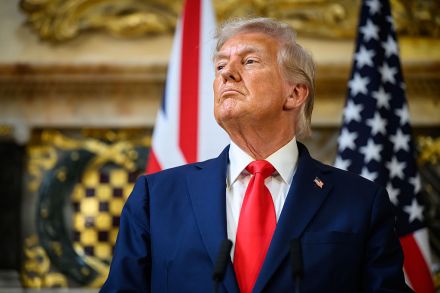
Fake news indeed! The British Daily Telegraph has reported that the BBC deceptively edited a speech by Donald Trump to make it look like the President had ordered his supporters to storm the Capitol on January 6, 2021.  The footage was aired as part of the BBC documentary Trump: A Second Chance? in October 2024. The ruse involved splicing together two statements made by Trump over an hour apart. This made it seem like Trump had said that "We’re gonna walk down to the Capitol and I’ll be with you and we fight. We fight like hell and if you don’t fight like hell, you're not gonna have a country anymore.” In fact, “walk down to the Capitol had actually been followed by “to peacefully and patriotically make your voices heard.

BBC Trump

Is Reform racist?

From our UK edition

Sarah Pochin’s gonna take a lot of coachin’. You can’t just turn up on the telly and say you’re sick of all the blacks everywhere. And the Asians. Un-accountably, perhaps, you will be accused of racism, the definition of the term having been extended rather further than my interpretation: to discriminate against an individual on the grounds of his or her race. There will be outrage among the deluded; there will be faux outrage among the opportunistic. Your own party leader will slap you down by saying, in effect: ‘Well, she’s right, obvs, but you can’t say stuff like that.’ And her own leader is not wrong. The Overton window may have shifted but it hasn’t yet been smashed.

The death of cinéma vérité

From our UK edition

Oh, how we lived. Or, how we thought we lived. Despite the numerous criticisms levelled at the BBC on a daily basis, the BBC Archive YouTube channel is one aspect of its work that cannot be faulted. It is a fascinating collection of broadcast material going back many decades, a portal into Britain’s past presented in film grain-soaked HD. A sobering reminder of what the BBC once was – and what it no longer dares to be. Much of it is made up of documentaries, many aspects of which will be peculiar to millennials and Gen Z. The form is strange: long, single-camera shots of people talking in living environments. Bathrooms, kitchens, workplaces, streets. Living spaces are as they would be on any day of the week. Workplace neon, living-room lamps. Light and shade.

Does it matter that the BBC lost the Boat Race?

From our UK edition

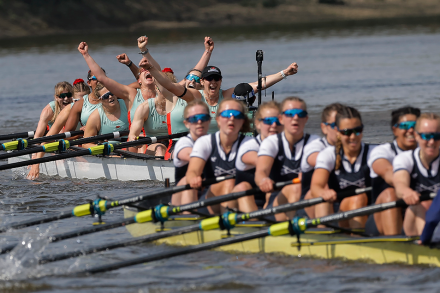
So we won’t be watching the Boat Race next year on the BBC, but on Channel 4. Never again will we hear the likes of John Snagge commentating on the fogbound 1949 race: ‘I can’t see who’s in the lead but it’s either Oxford or Cambridge.’ It’s a funny thing the Boat Race: an eccentric contest between the country’s two most distinguished academic institutions, rowed against the flow of the Thames along a tidal stretch with winds as ungovernable as a nursery school class, taking place at a time of year when the water can be in ferment. It’s a cranky British institution whose natural home should be the Beeb, another cranky British institution.

The misplaced sympathy for Angela Rayner

From our UK edition

One evening last week I came home, flipped on the TV and saw on the news what must surely be a eulogy for some sainted figure who had been taken from us prematurely, such was the wailing and the gnashing of teeth. Mother Teresa, I wondered? Isn’t she dead already? Only as I sat down with my cup of tea and saw a photograph of a woman with what looked like a dead fox on her head did I realise that the lamenting was on behalf of Our Blessed Lady of the Ginger Growler and the Vapes who had, apparently, resigned. It would not have surprised me, from the tone of the coverage, if the BBC had organised a shrine to our former deputy prime minister, where desolate members of the public could leave commemorative mementos, garlands of flowers, detailed advice on property taxation, etc.

Why YouTube Premium beats the BBC

From our UK edition

YouTube has now overtaken ITV to become Britain’s second most watched media service, beaten only narrowly by the BBC. Hardly surprising. For many of us, YouTube has become the answer to more and more of life’s questions. True, you may never want to watch a film which explains how to unstick the filler cap on a Volvo XC60. Until, that is, you rent a Volvo XC60 and find yourself stranded at a Portuguese petrol station in 100˚F heat. At that moment, the 30-second explanation by Olivia from York, Pennsylvania, is better than Martin Scorsese. If I were destitute, the last expense I’d forgo would be my YouTube Premium subscription. At £13 a month, it is cheaper than the BBC licence fee.

Why the row about the England flag matters

From our UK edition

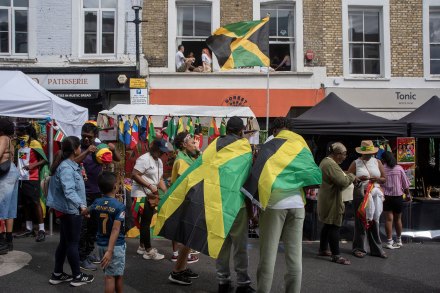
At the end of Sky News’s coverage of last year’s Notting Hill Carnival, its correspondent recited the usual list of arrests, stabbings and so on before concluding her piece to camera by saying: ‘But overall it’s been a really peaceful and enjoyable day.’ This year the honour of summing up the beauty of the event was left to Sky’s arts and entertainment correspondent, Katie Spencer. The reason it is important for two million people to gather in the tight streets of Notting Hill over the August bank holiday, she said, is because of ‘resistance to racism’. ‘This is a place where community comes together,’ she went on, ignoring all the shops in the area that had been boarded up. ‘You don’t walk around constantly looking over your shoulder.

Let’s scrap football’s post-match interviews

From our UK edition

‘The view was stunning.’ ‘The hotel room was well appointed.’ ‘It’s a city of contrasts.’ Such numbing clichés in travel commentary are considered, by anyone remotely au fait with Eric Newby or Patrick Leigh Fermor, to be unacceptable. But if you watch Match of the Day, you’ll know the footballing equivalents of these kinds of asinine blandishments have long been deemed worthy of the kind of critical scrutiny usually reserved for Jonathan Franzen novels. After following the game for 40 years, I’ve finally reached breaking point with the abysmal drivel that comes out of the mouths of players, pundits and managers alike. Of course, they aren’t being paid to be articulate and witty to the cameras – they’re paid to win games of football.

The BBC’s mistreatment of the Proms

From our UK edition

The Proms – the BBC Proms, to stick a handle on its jug – remains a good deed in a naughty world. Eight weeks of orchestral music, mainly, performed nightly at the Royal Albert Hall by artists from every continent, for as little as £8 if you are prepared to stand. One of those artists, the Georgian fiddler Lisa Batiashvili, supplied the highlight of this year’s ‘first night’ with a mighty performance of the Sibelius concerto. The concert ended with Sancta Civitas, a rarely heard choral work by Ralph Vaughan Williams, performed with love by the BBC Symphony Orchestra under its principal conductor, Sakari Oramo. Musically, it was a good start, despite the tiresome clapping between movements of the Sibelius. So why did the occasion, carried live on BBC2, fall flat?

What Aristotle would have made of Gregg Wallace

From our UK edition

The BBC chef Gregg Wallace has been sacked for his objectionable behaviour over many years, but has blamed the BBC for not taking the action which, he claims, would have saved him from himself. Aristotle (d. 322 bc) would have doubted that. Let us assume, says Aristotle, that it is possible for any human to wish to do what is good. But a mere wish counts for nothing. Goodness will find its expression only in the way a man deals with the means he adopts to bring about the wished-for result. But what if he is just not the sort of man to take the trouble? That is surely a consequence of the style of life which he has adopted: after all, one acquires particular attributes only by constantly behaving in particular ways.

Down with the middle class

From our UK edition

I suppose this magazine is probably not the best forum to launch a movement to sweep away the British middle class, much along the lines of Pol Pot’s adventure in Kampuchea in the late 1970s, but one can only play with the cards one has been dealt. The more one reads the newspapers, the more inescapable becomes the conclusion that these are the people who are responsible for almost all that is bad, verging on wicked, in our society. Not the lower-middle class, incidentally (the petit bourgeoisie so despised by Marx they were denied even agency), but the comfortable tranche above them. The middle-middle. The professions, by and large. And, dare I say it, the people at Glasto (frankly, on stage and off).

The Washington Post can’t cancel John McEnroe

From his lofty BBC and ESPN perches at Wimbledon, John McEnroe is agitating people… again.In particular, he has irked Sally Jenkins from the Washington Post who has accused him of “belching up words” in a diatribe column dedicated to removing him from TV.This, however, only goes to prove that McEnroe can still move the needle. As he should. It is the McEnroe way. Dare I say, it’s the American way – brash, loud, and a bit erroneously confident.Sure, McEnroe mispronounced names this tournament, notably calling Hungarian Marton Fucsovics, “Fuskovitz,” or “Fuksovitz,” in a third round loss to American Ben Shelton. He didn’t fare much better with 26th ranked Stefanos Tsitsipas in this year’s Australian Open.

John McEnroe

The unspoken truth about 7/7

From our UK edition

Did you take part in any of the mysterious commemorations last weekend? The newspapers were full of it – something called 7/7, apparently. I read a long report on the BBC’s website about this tragedy but remained entirely unclear as to who killed the people on those trains and bus. The report said ‘bombs were detonated’ on the Tube, as if the bombs – anxious to fulfil their purpose in life – had blown themselves up, without the aid of any external agency. Nowhere in the report did it mention who brought the bombs down from Yorkshire and then set them off. Nowhere in the entire article were the words ‘Islam’ or ‘Islamist’ or even ‘Muslim’ mentioned, nor even the names of the murderers.