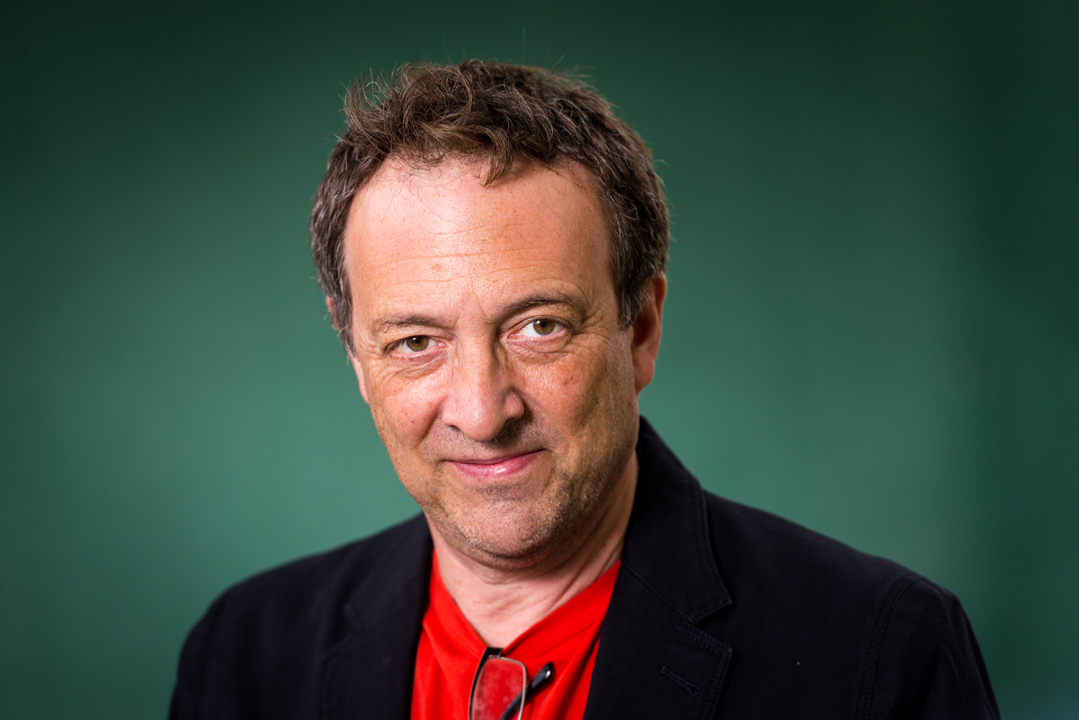


Melvyn Bragg’s first ever intro to In Our Time in 1998 clocked in at 21 seconds. Misha Glenny, meanwhile, took one minute and four seconds to get through his. The initial public reaction to Glenny taking over from Bragg was positive. The prevailing sentiment was ‘thank Christ it isn’t Stephen Fry’. But now you felt as though you could hear two million people shouting ‘Get on with it!!’ at the radio as he stressed and elongated virtually every syllable. John Stuart Mill and his wife had been labouring over ‘On Liberty together for soooome yeeaarrss’. Then we were away. And he’s all right, thank God.
With In Our Time, there is no upper bound on how haughty and arrogant a presenter should be
I emphasise ‘all right’, though, because there were definitely problems. But, as Melvyn would have said, we’ll get to those in a minute. First, let’s work out why replacing Bragg is so hard. The analogy often used is with Alex Ferguson. His replacement as Manchester United manager was David Moyes, who ended up patronising his new club. Moyes said that Manchester City were ‘at the level we aspire to’. He said that Liverpool were the ‘favourites’ ahead of a match. All indicative of a mid-sized mentality. Moyes needed to be more arrogant, and that’s what Misha Glenny (such a satisfying name to say) needs to keep in mind. With In Our Time, there is no upper bound on how haughty and arrogant a presenter should be.
That rudeness was the most misinterpreted part of Bragg’s style. He seems a nice man; I assume he didn’t actually want the academics to shut up. He just had respect for the listeners’ time, and understood the importance of getting the right stuff into their heads. Glenny’s intro to the first episode, then, was an inauspicious start. We were in comfortable territory with the topic, however. Mill’s On Liberty was a good choice for Glenny’s first episode. His journalistic background is in eastern Europe, and like so many Russia experts his scholarly identity was forged by the heady effects of 1989 and the triumph of liberalism.
Some nitpicking. There was briefly a worrying diversion into talk of ‘today’s scholarship. The word ‘today’ should never be heard on In Our Time. Glenny also has an annoying habit of spasming out asides for the audience. He explains the meaning of ‘utilitarianism’, which ‘argued that it is the greatest happiness of the greatest number that is the measure of right and wrong’. This seems like information you would expect an In Our Time listener to already know – or at least you can flatter them by not feeling the need to explain it. A mention of Auguste Comte triggers a biographical intervention from Glenny, which feels more like a flex that he knows who he is than an aid for the listener.
After just four minutes and 25 seconds, however, we got the first ‘we’ll come on to that in a minute’. A subtle tribute to his predecessor, albeit delivered more gently than in Bragg’s Northern huff. You sensed a slight exhale afterwards as Glenny pulled off a less sexy version of the first time a new James Bond actor says ‘shaken, not stirred’.
Even if there could never be a perfect replacement for Bragg, the scope of this show is bigger than one man
The second episode was a bit more obtuse, focusing on the Mariana Trench. This is a good test for an In Our Time presenter. The challenge is how to present the somewhat esoteric with both sincerity and academic integrity. We already have hours of sing-song YouTube ‘explainer’ videos about ‘the deepest place ahhhn Earth’. Glenny avoided a too eager tone and cultivated a necessary amount of academic distance. It wasn’t all perfect, however. His third question of the programme was asking a guest who had been down the Trench what the ‘experience’ ‘was like’. At which point my phone buzzed. ‘I don’t want SUBJECTIVE OPINION I want FACTS,’ a colleague messaged. The episode was, thankfully, helped along by some good guests, particularly the marine biologist Alan Jamieson, who brought with him the fact that the US once discarded a broken SR-71 Blackbird somewhere down the Trench.
Glenny undoubtedly avoided what would have been the worst pitfall, which would have been to copy Bragg’s brusqueness. My biggest fear was that some insecure ninny would be appointed and do a parody version, and end up making an archaeologist cry live on the radio. Glenny has his own style of serene detachment, which works. Even if there could never be a perfect replacement for Bragg, the scope of this show is bigger than one man.
It must continue. And the most important thing is that Glenny will ensure it will.




Comments