Bbc

W1A: Michael Gove gets trapped in a lift

From our UK edition

It seems the government reset isn't going exactly to plan. Michael Gove, Boris Johnson's trouble-shooter, was due to appear on Radio 4's Today programme in the coveted 8:10 a.m slot this morning to explain how he has finally solved the long-running cladding crisis as part of his housing brief.  But what should have been a moment of triumph turned into an episode of farce. For, in scenes straight out of W1A, the Minister for Levelling Up appears to be unable to, er, go up a level, as he spent more than half an hour trapped in one of the Corporation's lifts. An embarrassed BBC presenter Nick Robinson was forced to explain the unfolding drama live on air as Gove's interview was pushed back. https://www.youtube.com/watch?

The debt I owe to cannabis

From our UK edition

Boris Johnson, Dominic Raab and Jeremy Hunt have all admitted that they tried cannabis as young adults. Neither the admission nor the THC psychoactive component of the drug, which makes you high, seem to have done them much harm in their pathways to successful careers in parliament. But a new governmental war on drugs is afoot which some fear may lead to unexpected consequences, and not just for those who ply their trade on street corners or draw up on Deliveroo-type scooters to supply cannabis as if it were a takeaway curry. I wouldn’t bet on everyone getting caught up in judicial dragnets, though; I imagine that middle-class consumers will still largely avoid censure and that the police and the Crown Prosecution Services will continue to target working-class suppliers.

Everything in me wanted to dislike it – but it’s lovely: BBC Radio 3’s Sound Walk reviewed

From our UK edition

It’s a sweet, green, glowing dawn in north-west Scotland. All around us are empty hillsides of rock and heather. The cold air smells of moss. To the south, far mountain peaks resolve into high banks of mist and cloud, while up ahead stands the crumpled rock face of Ben Nevis, its broad shoulders beginning to fill the patchy, blueing sky as we walk towards it. It’s very beautiful. Look. A heron. Why are we here? To take the long view, because two million years of intermittent glaciers have frozen, thawed and hewn the mountain into its present-day shape. More immediately, because of the Norwegian public service broadcaster. In the 2000s, it decided to televise, in real time, the railway journey from Bergen to Oslo.

Watch: BBC’s cringe New Year monologue

From our UK edition

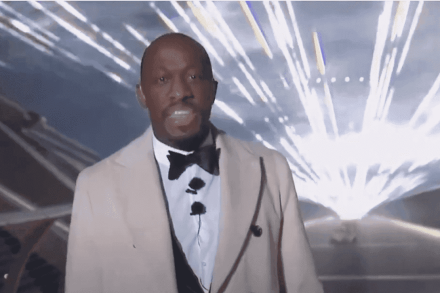
Some accuse Britain of being a mawkishly sentimental nation. So what better rejoinder could be offered to that than the BBC's New Year's Eve fireworks display, when an army of drones spelled out the letters 'NHS' in the sky. As Big Ben struck midnight yesterday, actor Giles Terera recited a poem more twee than a tea commercial, eulogising the country's supposed 'achievements' in 2021. For nothing screams progress like a Hamilton actor performing a YouTube star's piece about COP26 on the Millennium Bridge.  Emphasising every word as if it were crafted by Shakespeare himself, Terera did his best with a structure that managed to rhyme 'vaccination' with 'nation' and Tom Daley's 'cardie' with 'camaraderie.

When did Frankie Boyle become so boring?

From our UK edition

In the never-ending debate about left-wing bias in BBC comedy, a more crucial issue tends to be overlooked. Namely, that the deeper problem with much of the material is that it is predictable, boring and geared towards applause rather than laughs. That most of it is also marinated in what passes for left-wing politics today, replete with all the usual talking points and lame anti-Toryism, is almost a second-order issue. Expressing a high-status opinion now takes precedence over actually landing a punchline. So much so that I’m not convinced your average anti-Tory genuinely finds this stuff funny either. Frankie Boyle's New World Order on BBC Two is an interesting case in point.

Around the World In Eighty Days is the worst TV this Christmas

From our UK edition

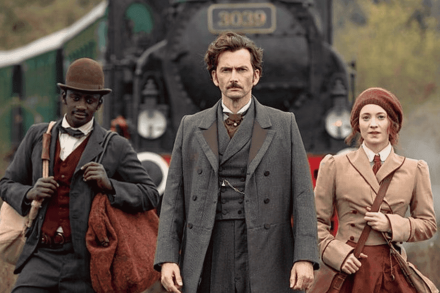
'In many ways, Phileas Fogg represents everything that's alarming and peculiar about that old sense of British Empire. Potentially, it's a story about an England that should elicit very little sympathy,' says David Tennant, explaining, better than any review ever could, exactly why every fraction of a second's time spent watching him in Around the World In 80 Days (BBC1) is life spent utterly squandered. Truly if David Tennant had been offered the role of a giant, steaming dog turd, he could hardly have approached it with less enthusiasm than he gives to his sour, bloodless, joyless impersonation of Jules Verne's upper class English adventurer.

The BBC’s mysterious missing Xinjiang evidence

From our UK edition

Parliament has packed up for the holidays, with MPs and peers spending their final days in SW1 desperately dodging the omnipresent Omicron variant. But Mr S was intrigued to see an interesting intervention in the Lords on the day that recess was declared. Crossbench peer Baroness Finlay popped up to grill Foreign Office minister Lord Ahmad about China's treatment of Uighurs in Xinjiang, an unusual topic for the professor of palliative medicine to raise.  She told Ahmad that she understood the BBC 'has film evidence of the atrocities' that have been addressed in the Uyghur Tribunal, but that the Corporation has been 'reluctant to show the programmes to date, having set the evidential test so unrealistically high that it cannot be met.

How the BBC lost its way on Covid

From our UK edition

I have been a BBC journalist for many years, and in that time I have been committed to impartiality and the corporation’s Reithian values to inform and educate. My despair about the BBC’s one-sided coverage of the pandemic though has been steadily growing for some time. And in early December, as I listened to a BBC radio broadcast, I felt the corporation reach a new low. During a morning phone-in show on 5Live the topic of discussion was Covid jabs and whether they should be mandated, or if punitive action should be taken against those who refuse them, such as imposing lockdowns on the unvaccinated. Setting aside the fact that these authoritarian measures are now considered a matter for breezy debate, I at least expected a balanced discussion.

John Cleese’s cancel culture hypocrisy

From our UK edition

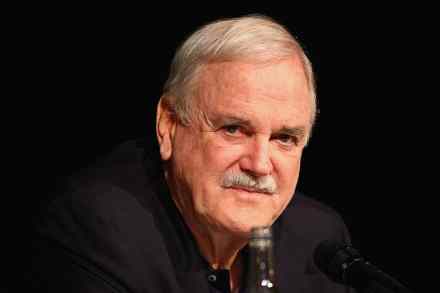
‘Always look on the bright side of life’ sang Monty Python. But it seems that for at least one of the legendary sextet, such sentiments are now a thing of the past. For the octogenarian John Cleese has today announced he will complain to the BBC over an interview conducted with one of their reporters. What heinous crime did the journalist in question commit? Which unfortunate anchor is to blame? How much trouble is the Corporation in this time? Well, judging from the footage in question, the answer to Mr S seems, er, not a lot. Cleese was riled earlier by an interview with BBC World News presenter Karishma Vaswani who chose to ask him about his views on 'cancel culture' – a subject on which he has spoken out numerous times before.

Best of the Blob: who would be picked for its 1st XV?

From our UK edition

Selectors for the Blob have chosen their 1st XV. Fans of The Game sometimes ask, as they do about Barbarians RFC: ‘Who are these people, do they have any supporters and who exactly pays them?’ Well, now we have the answer to at least that first question. Full back: Sir Philip Barton, head of the diplomatic service. Recovering from injuries after a sticky select committee hearing on Afghanistan. Sometimes drops the ball but popular with professionals for telling civil servants not to work weekends or more than eight hours a day owing to dangers of ‘burn-out’. Was holidaying at a family château in the Dordogne while Afghanistan was crumbling. Good to see a man lead by example. Left wing: Former Guardian editor Dame Alan Rusbridger.

Gender is contentious. The BBC is pretending it isn’t

From our UK edition

The BBC has produced its annual 100 Women list, a showcase for women who have done interesting, important things. There’s a lot to like about this year’s list: half the women on it come from Afghanistan; some of them, tellingly, can’t be pictured for their own safety. Perhaps if fewer British resources had been deployed getting Pen Farthing's dogs out of Kabul in the summer, some of those women wouldn’t live in fear for their lives. But that’s another debate. There’s something else interesting about the BBC’s 100 Women, which says something about the Corporation’s ongoing struggle for impartiality. At least two of the people on the 100 Women list were born male and now identify as transwomen.

Priti Patel and the progressive language police

From our UK edition

There was an exchange in the House of Commons on Thursday afternoon that ought to be a scandal but won’t. It ought to be a scandal because it involves a Cabinet minister undertaking to do something that, in any other context, would bring waves of condemnation from across the House. It won’t because the scandalous thing the minister pledged to do is endorsed by Good People with Good Intentions and could only be decried by Bad People with Bad Intentions. The minister was Priti Patel and she was being questioned about the deaths of 27 migrants who attempted to enter Britain via the English Channel.

The BBC will regret cancelling Michael Vaughan

From our UK edition

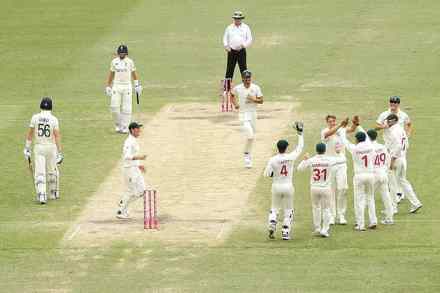
How cowardly of the BBC to axe Michael Vaughan from Test Match Special for the winter Ashes series on the basis of two words – 'you lot' – he might or might not have said more than twelve years ago.  Is this really how the BBC wants to play this? Anyone can make accusations of any type against someone famous that can’t be proved either way and then sit back and watch their life implode? If so then what’s to stop me, for example, from using this space to recall that in 2003 BBC Director General Tim Davie told me something deeply transgressive about, say, the trans community?

It’s Harry, not Meghan, who’s the real problem

From our UK edition

Who or what drove Harry and Meghan to leave the royal bosom for the land of slebs on the other side of the Atlantic? That’s one of the central questions of a new two-part documentary, The Princes and the Press, that aired on the BBC last night. The obvious suspect is the dreaded British media — barging, intrusive, xenophobic — riddled with prejudice, we’re told, against a mixed-race American in the monarchy. But the jostling between royal households seems equally responsible. After the early days of Hazza and Megz, a clear jealousy from some of William and Kate’s people began to seep into the media. The younger brother and his American wife were suddenly the darlings of the British press.

In praise of Stonewall

From our UK edition

This morning saw a profound breakthrough in the trans debate. I say that on the basis of an interview Nancy Kelley, Stonewall's CEO, did with the BBC’s Emma Barnett on Woman’s Hour.  What’s important is not really anything that Kelley said, though some of that was indeed interesting and I’ll come to it in a second. What matters is that the interview took place at all, since that constitutes a significant shift in the way Stonewall does its work. Stonewall's instinct has been to largely avoid mainstream media and other political debates about its work on trans issues that is now its primary focus.

Nadine battles the BBC

From our UK edition

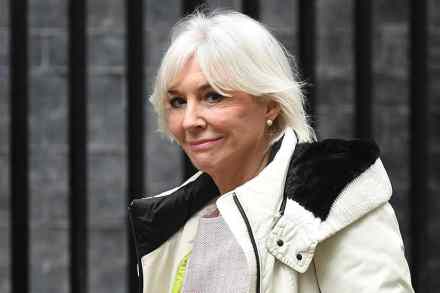
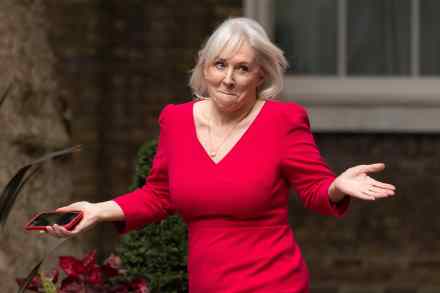
It seems that the fruits of high office haven't changed Nadine Dorries. The Culture Secretary, who took up her brief eight weeks ago, last night hit out at Laura Kuenssberg on Twitter after the BBC's political editor reported receiving a text from a Tory MP at the 1922 committee which said Boris Johnson 'looked weak and sounded weak' and that his 'authority is evaporating.' Dorries responded angrily, declaring: Laura, I very much like and respect you, but we both know, that text is ridiculous, although nowhere near as ridiculous as the person – obviously totally desperate for your attention – who sent it. Shortly thereafter the tweet was deleted but not before numerous screenshots went viral.

Is Laura Kuenssberg leaving Westminster?

From our UK edition

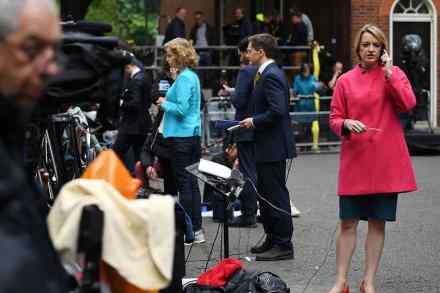
Is Laura Kuenssberg’s time as BBC political editor coming to an end? That’s the suggestion tonight after the Guardian reported she is in talks to step down from the role and move to a plum gig hosting the Today programme.  Rumours of Kuenssberg’s impending departure have been circulating around Westminster for some time now to little avail. But this time it is being talked up as part of a wider shake up of the Beeb’s lead presenters, with Jon Sopel recently announcing he is ending his US beat and returning to the UK. Rumours of Kuenssberg’s impending departure have been circulating around Westminster for some time now Kuenssberg’s time in the role has not exactly been smooth sailing.

The Sunday Feature is one of the most consistently interesting things on Radio 3

From our UK edition

The story is likely apocryphal — and so disgraceful I almost hesitate to tell it — but it goes like this. On the night of 14 November 1940, as more than 500 Luftwaffe rained bombs on the people of Coventry, the newly appointed city architect Donald Gibson was watching the fires. Gibson had been appointed to the newly created position of ‘city architect’ three years earlier by the radical Labour council that had come to power in a local election. His job was to modernise what was then Britain’s best-preserved medieval city, and build the ideals of social justice and equality into the city’s brick and mortar.

The true enemy of political interviews

From our UK edition

The rhythm of the big party conference leader interviews is a strange one. First come days of slow, repetitive, detailed preparation, much of which we know will be junked on the day. My brilliant team play Keir Starmer or Boris Johnson, being as cheerily obstructive, long-winded and deflecting as possible, until all of us could repeat the key facts and graphs and quotes in our sleep. Next, a frantic early Sunday morning (up well before five) to fillet the latest news, discarding what had been favourite questions and lines of attack, and boil everything down to a manageable size. By now my heart rate is rising and I’m eating more pastry then anyone really needs. Finally I am in the chair, wired up and facing the guest.

In blockbuster Britain, the BBC is being left behind

From our UK edition

There’s a great revival under way in the British TV and film industry, but it’s not the BBC that’s behind it. Netflix is normally secretive about its figures but this week published a list of its most popular shows and top of the pile is Bridgerton, which imagines Regency London as a racially mixed society. Although funded with US money, it is shot in Yorkshire with a British cast, using British technical know-how, and, thanks to Netflix’s global audience of more than 200 million, this British show has now become the most-watched series in the history of television. Not so long ago, it was argued that subscription television would never work in Britain because we had all the broadcasting we could wish for.