Bbc

Modern soap operas have lost the plot

From our UK edition

I have Asperger’s syndrome and since childhood have been watching TV soaps: mainly EastEnders and Neighbours. I found classic EastEnders from the 1980s and 1990s highly reassuring during a dark time in my life three years ago, and in lockdown. I would say, though, that in recent years these two soaps have gone downhill. They are more staged, the storylines less intriguing and the themes exaggerated. They don’t seem to be about everyday life any more. In the EastEnders of the 1980s and early 1990s you could relate wholeheartedly to the characters and reflect on their behaviour. You would feel they were real, and also that they were part of the real life of the East End.

In defence of the BBC’s Olympic coverage

From our UK edition

For viewers of the BBC Olympics coverage, it’s back to the old days. Not since Sydney in 2000 has all the Games content been squeezed into the main terrestrial channels, with the red button and its one extra stream making its debut in Athens 2004. ‘The Olympics are perfect for interactive television,’ said a BBC executive celebrating the innovation, ‘because there are so many events happening at the same time.’ In the run up to London 2012 we made the promise that UK viewers would be able to watch any event they chose, from beginning to end – and the corporation delivered 24 HD television channels and an equivalent number of online streams to achieve that.

Why wasn’t Gyles Brandreth chosen to host ‘Just a Minute’?

From our UK edition

Turn aside if BBC Radio 4 isn’t your thing, still less its panel games. But for those of us who grew up with ‘Just a minute’ there was one obvious and outstanding candidate to replace the late Nicholas Parsons, who gave every indication that he was immortal until he was actually cut off at the age of 96. And it wasn’t the person who actually got the job. The obvious candidate was Gyles Brandreth – though if you’d put in a case for Andy Hamilton, the other genuinely funny man on radio, I’d give it serious thought. But Gyles didn’t get it, nor did Andy. Sue Perkins did. Brandreth is measurably better and more mellifluous than Perkins Perkins is, of course, a decent performer. She's also articulate and bossy.

Why Dominic Cummings’s attacks on Boris Johnson backfire

From our UK edition

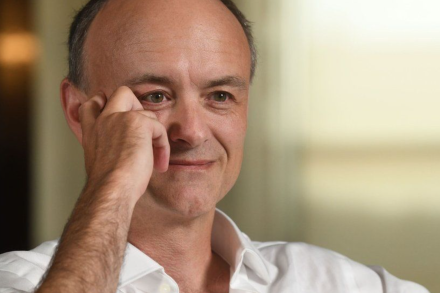
Anyone who thinks Boris Johnson lacks statecraft should pay attention to Dominic Cummings’s attacks on him. They often to seem to show the opposite of what Dom intends. Cummings now reveals that, in January 2020, he and his allies were saying: ‘By the summer, either we’ll all have gone from here or we’ll be in the process of trying to get rid of [Johnson] and get someone else in as prime minister.’ In fact, neither happened. By November, however, Cummings was (to use Mr Pooter’s joke) going; Boris stayed. The winner of the then still recent landslide election victory presumably discovered his adviser’s seditious conversations and, reasonably, did not like them.

A breath of fresh airwaves

From our UK edition

A couple of decades back the Radio Society asked me to moderate a debate for its summer festival. ‘Between who?’ I asked them and was delighted when they replied: ‘It’s entirely up to you.’ I chose the charismatic hook-handed Muslim cleric Sheikh Abu Hamza al-Masri and the then leader of the British National party, Nick Griffin. They were quite big news at the time — but were not really allowed on the airwaves, still less television. Hamza wasn’t allowed on because ‘mainstream’ Muslim organisations objected and we always did what we were told by them. Griffin wasn’t allowed on because he was a ‘fascist’.

Why the BBC believed Martin Bashir

From our UK edition

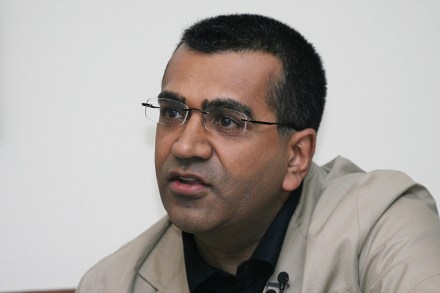
If it is true, as Lords Hall and Birt told a Commons committee this week, that Martin Bashir succeeded in duping all the five top BBC executives involved about the forged invoices by which he convinced Diana, Princess of Wales of the establishment’s conspiracy against her, then those executives must be very, very unworldly people. I am reluctant to believe that of them. There must be a different explanation, one with which, as an ex-editor, I have some sneaking sympathy. The interview got the BBC a wonderful story, so when trouble started shortly afterwards, that trouble had to be smoothed away. The problem was not only the BBC’s reputation, but also the careers of the five executives.

Can GB News live up to the hype?

From our UK edition

British TV viewers have never had so many channels to watch, yet they've also never had so little choice. The Brexit referendum exposed this lack of political diversity all too clearly. As a panellist on Radio 4’s The Moral Maze for 20 years, I suppose I was something of a BBC luvvie. No doubt I was still seen as a bit of a maverick by some, but I was accepted on the media scene. However, when I casually mentioned back in 2016 that I was going to vote Leave, things changed.  'But you’re an intelligent, well-educated person, Claire', said one senior producer. From that moment on, in studios and green rooms, I was greeted with a familiar sneer. From my position of privilege, it was hardly a problem.

‘Hitler was right’ journalist leaves BBC

From our UK edition

Tala Halawa, the BBC journalist who was found to have tweeted ‘Hitler was right’, is out at the Corporation. Almost three weeks ago, Steerpike highlighted how media watchdog organisation Honest Reporting and others had uncovered a string of tweets posted on Halawa’s Twitter account from 2014. These included pronouncing that ‘Israel is more Nazi than Hitler’ and ‘Hitler was right’. Halawa had also declared ‘ur media is controlled by ur zionist government’ and tweeted a graphic of a child being burned on a menorah, the Jewish ritual candelabrum.

More northern accents won’t save the BBC

From our UK edition

It seems that the BBC has finally acknowledged the truth of George Bernard Shaw’s aphorism. Demonstrating his inherent anti-Englishness, the old Fabian snob declared:  ‘It is impossible for an Englishman to open his mouth without making some other Englishman hate or despise him.’  And the barb hurts because to an extent we must accept that it is partly true.  Sticking a few more regional accents in front of a microphone doesn’t begin to address the real problems the BBC faces In our defence, it is also true of people other than the English. Every European country, and probably every country in the world (including Shaw’s Ireland) has its own bumpkin regional twang which the boss class looks down on.

The BBC cannot survive many more scandals

From our UK edition

The BBC is still investigating one of its journalists almost one week after it emerged she had tweeted ‘Hitler was right’. Tala Halawa, who is based in the West Bank city of Ramallah, is the ‘Palestine specialist’ for BBC Monitoring and was part of the reporting team which covered the recent fighting between Israel and Hamas and the reactions to the conflict. As The Spectator reported last Sunday, watchdog group Honest Reporting and a number of British Jews who campaign against antisemitism uncovered a series of tweets and Facebook posts from Halawa. These included assertions such as ‘Israel is more Nazi than Hitler’ and ‘Hitler was right’, as well as the pronouncement that ‘ur media is controlled by ur zionist government’.

Watch: Tory MP savages ‘rotten’ BBC

From our UK edition

It has been a bruising afternoon for the BBC in the House of Commons. An urgent question was granted on the findings of the Dyson report into the Martin Bashir affair and the subsequent cover up of how Panorama obtained its Princess Diana interview in 1995. Tory MP after Tory MP has queued up to lambast the Beeb for its failings. Memorable moments included John Redwood asking, 'How can someone who supports Brexit, believes in the Union and loves England be persuaded that the BBC’s views of public service broadcasting in future be fair to their views?' and Iain Duncan Smith calling for BBC bosses and Bashir to be referred to the police for a fraud investigation.

How the BBC can save itself

From our UK edition

All those esteemed generals of hindsight screeching ‘more governance’ as the cure to BBC’s cover-up of the Martin Bashir’s dishonesty 25 years ago share with Lord Dyson a misunderstanding about the essential cause of the Panorama catastrophe and all the ensuing BBC scandals including those involving Jimmy Savile, Cliff Richard and Alistair McAlpine. Namely, ‘Birtism’. Under John Birt, the BBC’s director general from 1992 to 1999, an ever-increasing number of new structures, controls and governance were imposed upon the BBC’s creative talents to suppress and remove risk.

Sunday shows round-up: herd immunity was ‘not at all’ government policy

From our UK edition

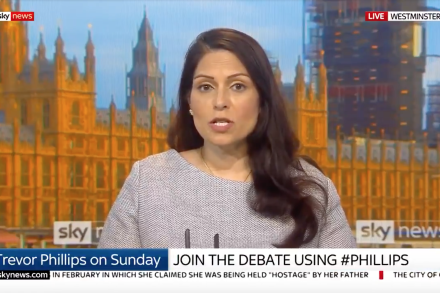
Priti Patel: The BBC’s reputation ‘has been compromised’ Today’s political shows were dominated by the fallout from the Dyson inquiry into the BBC and its relationship with the journalist Martin Bashir. The findings of Lord Dyson’s report have already seen Tony Hall, the BBC’s former director-general, resign his post as chair of the National Gallery. The Home Secretary, Priti Patel, spoke to Trevor Philips – who will be replacing Sophy Ridge while she is on maternity leave – about the issue: https://twitter.com/RidgeOnSunday/status/1396371925941772288?

How private should Prince Harry’s life be?

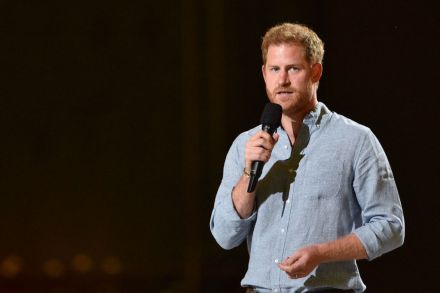
‘Never complain, never explain,’ the Cockburns say. Our family friend Prince Harry has a different motto: carry on moaning and show me the money. Perhaps this time the Prince of Wails has good reason to be crying on the couch. A formal report has found the BBC guilty of deceitful and dishonest behavior in securing its infamous 1995 interview with Princess Diana. There were stinging reactions from Princes William and Harry yesterday, and questions in the UK about whether the BBC, a state-funded broadcaster deserves public funding. Cockburn is an old polo chum of Prince Charles and wonders whether this could finally be the spur for the estranged princes to reunite?  After all, the mood in Buckingham Palace is one of vindication.

prince harry nazi

Insane and fascinating: BBC World Service’s Lazarus Heist reviewed

From our UK edition

The narrative podcast remains a form in search of a genre. The template set by the hit show Serial — enterprising American journalists with janky piano theme tune shed new light on tantalising murder — still predominates seven years on. To this we can add the format pioneered by S-Town (initial murder investigation subsides into rich human detail) and, more recently, the excellent Wind of Change (intriguing what-if maps cultural and macropolitical shifts, with bonus CIA window-dressing). I remain sceptical about the form’s usefulness as a way of breaking hard news. Caliphate, the New York Times jaw-dropper on the Islamic State, is less gripping now its key source has been revealed as a fraud.

Honest, faithful and fantastically enjoyable: BBC1’s The Pursuit of Love reviewed

From our UK edition

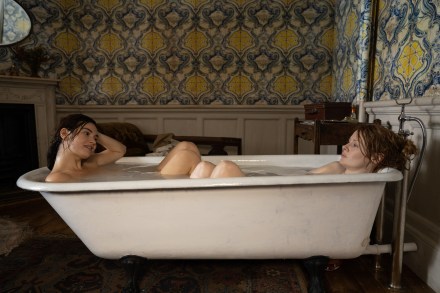
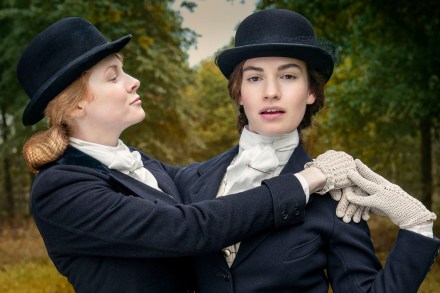
I had been expecting the BBC to make a dreadful hash of The Pursuit of Love, especially when I read that they’d spiced it up with hints of lesbianism and punk rock. But actually, I think what writer/director Emily Mortimer has done here is play a very clever trick — the equivalent of releasing a cloud of aluminium chaff from your fighter aircraft to distract the enemy’s missiles. So while everyone is cooing about how refreshing it is that lesbianism has finally got a look-in (see also: every other drama and comedy series on TV from Killing Eve to Call My Agent), Mortimer can get on with the deeply subversive business of slipping under the BBC radar an honest, old-fashioned, faithful and fantastically enjoyable Nancy Mitford adaptation.

Six literary adaptations that outdo The Pursuit of Love

From our UK edition

The actress Winona Ryder once declared that if anyone attempted to film The Catcher in the Rye, she’d have to burn the studio down, such was her love for the book. There’s many a Mitfordian wishing they could enact this retrospective action on the new BBC production of The Pursuit of Love. RAGE-messaging amongst my friends began even before Emily Mortimer’s directorial debut dropped on the iPlayer. ‘There’s not a single line from the book in the trailer!’ ‘Has she actually read the book?’ ‘Let’s go and crack stock whips under her window’.

Who is more upset about Labour’s results: Starmer or the BBC?

From our UK edition

It’s not just the Labour party which is institutionally incapable of understanding why the Conservative party kicked the hell out of them in these elections. It is also, of course, the BBC. The prime offender was — hold your breath in surprise — Emily Maitlis on Newsnight. Furlough and vaccines were the sole reason the Tories did well, according to this very affluent, metropolitan, liberal woman, who has a child in boarding school, natch. Dimbo voters again then, too dense to grasp the ‘realities'. But then there was Huw. There always is Mr Edwards. Conducting an interview with Labour’s Lucy Powell, he exuded sympathy and gratitude. No hard questions. Just ameliatory bilge.

We Lumas have the weight of the world on our shoulders

From our UK edition

In the introduction to an anthology of his jazz record reviews, the poet Philip Larkin imagines his readers. They’re not exactly full of the joys of spring. He describes them as ‘sullen fleshy inarticulate men… whose first coronary is coming like Christmas’. Loaded down with ‘commitments and obligations and necessary observances’ they’re drifting helplessly towards ‘the darkening avenues of age and incapacity’. Everything that once made life sweet has deserted them and their only solace is the memory of the music they once loved. I first read that passage 35 years ago and didn’t think it would apply to me one day. Admittedly, the men Larkin conjures up are more miserable than I’ll ever be.

Seldom less than gripping: Banged Up podcast reviewed

From our UK edition

Prison-based podcast Banged Up, now in its second series, is far more uplifting — and less soapy — than its name suggests. It begins with the tacit assumption that, if you haven’t personally been incarcerated, you probably have at least a dozen questions you’d want to ask someone who had. Is the food really awful? How likely are you to be beaten up? Is there a lending library? (I’d start with the last.) Banged Up has the answers to plenty more besides. The podcast is hosted by a prison lawyer named Claire Salama and two ex-inmates, a former footballer, Mike Boateng, known as ‘Boats’, and university-educated Rob Morrison, who describes himself as ‘probably not their [prisons’] target market’.