Bbc

The BBC is being left behind in blockbuster Britain

From our UK edition

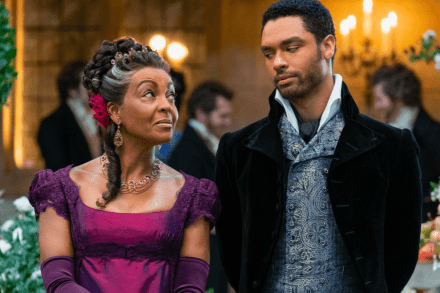
There’s a great revival under way in the British TV and film industry, but it’s not the BBC that’s behind it. Netflix is normally secretive about its figures but this week published a list of its most popular shows and top of the pile is Bridgerton, which imagines Regency London as a racially mixed society. Although funded with US money, it is shot in Yorkshire with a British cast, using British technical know-how, and, thanks to Netflix’s global audience of more than 200 million, this British show has now become the most-watched series in the history of television. Not so long ago, it was argued that subscription television would never work in Britain because we had all the broadcasting we could wish for.

Jess Brammar isn’t the problem

From our UK edition

We need to talk about Jess Brammar. No, not the fact that Ms Brammar has landed the plum job of executive editor of the BBC’s news channels, despite cries of opposition from various Tories who insisted that Brexit-bashing Brammar is too politically partisan for such a position. My view is that it should be up to the Beeb who it employs, and politicians and their advisers should keep their beaks out of broadcasting. Rather, Jess Brammar represents a wider problem. It’s the fact that so much of the cultural elite is hostile to Brexit, which, lest we forget, is the most popular political idea in living memory in this country.

A defence of Jess Brammar

From our UK edition

I noticed with interest that Gigalum island — off the Kintyre peninsula in Argyll — was up for sale for half a million quid or so. Nineteen rather barren acres, slightly warmed by the Gulf Stream. These little parcels of desolation quite often become available for purchase and I do wonder if Gigalum should be purchased by the state for the dumping of toxic waste. Gruinard island, further north, was used by the government during the second world war as a site for testing militarised anthrax, for example. My proposal for Gigalum is that it should be a repository for everyone in the country with the word ‘diversity’ anywhere in their job title.

BBC promote convicted arsonist

From our UK edition

The BBC has been plunged into a fair few impartiality controversies recently. But while such rows can often be a matter of subjectivity and taste, you would hope that Corporation staff would draw the line at promoting a convicted arsonist accused of orchestrating a 'terrorist campaign' against Oxford University. Yikes. This latest BBC East drama hails from Cambridgeshire and was caused by Auntie's coverage a fortnight ago of an animal rights protest outside a facility that breeds dogs for laboratory research. Activists have been protesting outside Marshall BioResources against such breeding for the past two months, with 15 arrests made at the time the Beeb published its original article. Among those protestors interviewed for online and broadcast was one Mel Brown.

Is the life of Jimmy Savile a suitable subject for drama?

From our UK edition

One day in 1975 the Israeli cabinet found themselves being lectured on the most intractable political problem of our age — how to bring peace to the Middle East — by a peculiar white-haired British entertainer wearing a pink suit with short sleeves. His name? Jimmy Savile. That’s how he told it anyway. Remarkably, witnesses back up the generality if not the specifics of the anecdote. Savile indeed visited the Holy Land in 1975. And he did talk to the Israeli president Ephraim Katzir, saying (so he claimed): ‘I’m very disappointed because you’ve all forgotten how to be Jewish and that’s why everyone is taking you to the cleaners.

The BBC’s strange obsession with remakes

From our UK edition

BBC Director General Tim Davie, in his proclaimed push to create 'landmark' TV shows appears to be steering the Corporation in an increasingly conservative (small 'c') direction, intent on trading off past glories. Former soft drink marketer Davie’s lack of programming and editorial experience is often painfully apparent; he is increasingly given to sweeping crowd-pleasing statements, such as the remarks he made to the public about BBC's staff's attendance of Pride marches, telling staff to stop virtue-signalling on social media. Despite having spent 16 years in various senior roles at the Corporation, Davie doesn’t appear to have the antennae to pick up on the mood of his workforce.

The central performances are tremendous: Glyndebourne’s Luisa Miller, reviewed

From our UK edition

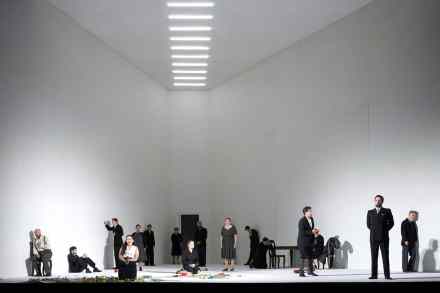
Opera buffs enjoy their jargon. We all do it, scattering words like ‘spinto’ and ‘Fach’ like an enthusiastic pizza waiter with an outsize peppermill. It’s principally a means of signalling that you’re part of the club. But occasionally it’s genuinely useful, and Glyndebourne’s new production of Verdi’s Luisa Miller had me thinking about the concept of ‘tinta musicale’, a term used to describe Verdi’s sense that each of his operas should have its own distinctive sonic colour. The late-summer warmth that suffuses Falstaff, for example, or the maritime translucence of Simon Boccanegra. Or take La traviata: the enervated violins of the prelude, the hectic brilliance once the curtain rises.

Contains moments of spellbinding banality: Radio 4’s The Poet Laureate has Gone to his Shed reviewed

From our UK edition

The interview podcast is a genre immoderately drawn to gimmicks, as the logical space of possible formats is gradually exhausted. The interviewee, quite often themselves a podcaster, might be, for example, invited to noisily eat lunch while nominating their top-five deceased childhood pets. The theory is that fanciful formats encourage the interviewee to open up. Under such conditions, the interview itself can come to seem incidental to the main event, the atmosphere chummy, comfortable, back-scratching, but fundamentally uninterested: you do my interview, I’ll do yours, no real questions asked.

Why did the BBC bury this detail about a homophobic attack?

From our UK edition

In the last decade or so, a sinister group of individuals from a range of organisations have spent their energies trying to rein in the free press. Specifically they try to stop the reporting of stories that might portray any follower of Islam in a negative light. So, for instance, when someone goes full 'Allahu Akbar' during an attack, the press is likely to report the fact and conclude that the attacker might have been inspired by a certain religion. At which point the army of anti-media mujahideen get to work to complain to Ofcom, Ipso and whatever other regulators they can find. In time, their work has an effect. If every story about Islam causes editors to receive a blizzard of complaints then soon they start to wonder whether it wouldn't be easier to cover some other story.

Revealed: the BBC guide for covering climate change

From our UK edition

Climate change is once again dominating the news agenda. A report from the Intergovernmental Panel on Climate Change warned that even if emissions are cut rapidly, the effects of global warming will be felt across the world. The report – which Boris Johnson has declared sobering reading – leads the news today, with the BBC dedicating seven stories on its homepage today to climate change. So just as well then that BBC staffers were recently treated to an internal audience research briefing telling them how best to convey messages about climate change to different audiences.

Switch over to Eurosport: BBC’s Olympic coverage reviewed

From our UK edition

I’ve not been allowed anywhere near the TV remote control this week because of some kind of infernal sporting event taking place in Japan. You may gather that I have mixed feelings about the Olympics: on the one hand, I like most of the competitors, who are so much more affable and modest (those delightful Gadirova twins!) than the overpaid, overindulged prima donnas who recently took part in the Euros. Also, it’s impossible not to get sucked into the drama of individual stories such as that of Beth Schriever, the humble, underfunded former teaching assistant who took gold in the women’s BMX.

Chris Packham’s suggestions to save the world

From our UK edition

On Monday 2 August, the BBC Today programme offered its ‘Countdown to COP26’. For the rest of the month, Amol Rajan announced, Chris Packham would give us ‘a different suggestion’ about climate change EVERY DAY. I make that 26 Packham slots — Sunday being Today-free — on the main national news magazine programme. Chris’s Day One suggestion to address the ‘colossal, planet-threatening mess that we find ourselves in’ was that everyone should buy an alarm clock (second-hand if possible to save on emissions), set it to wake up 15 minutes earlier and devote that quarter of an hour to doing something helpful, rather as we did, he said, when we abolished slavery.

Modern soap operas have lost the plot

From our UK edition

I have Asperger’s syndrome and since childhood have been watching TV soaps: mainly EastEnders and Neighbours. I found classic EastEnders from the 1980s and 1990s highly reassuring during a dark time in my life three years ago, and in lockdown. I would say, though, that in recent years these two soaps have gone downhill. They are more staged, the storylines less intriguing and the themes exaggerated. They don’t seem to be about everyday life any more. In the EastEnders of the 1980s and early 1990s you could relate wholeheartedly to the characters and reflect on their behaviour. You would feel they were real, and also that they were part of the real life of the East End.

In defence of the BBC’s Olympic coverage

From our UK edition

For viewers of the BBC Olympics coverage, it’s back to the old days. Not since Sydney in 2000 has all the Games content been squeezed into the main terrestrial channels, with the red button and its one extra stream making its debut in Athens 2004. ‘The Olympics are perfect for interactive television,’ said a BBC executive celebrating the innovation, ‘because there are so many events happening at the same time.’ In the run up to London 2012 we made the promise that UK viewers would be able to watch any event they chose, from beginning to end – and the corporation delivered 24 HD television channels and an equivalent number of online streams to achieve that.

Why wasn’t Gyles Brandreth chosen to host ‘Just a Minute’?

From our UK edition

Turn aside if BBC Radio 4 isn’t your thing, still less its panel games. But for those of us who grew up with ‘Just a minute’ there was one obvious and outstanding candidate to replace the late Nicholas Parsons, who gave every indication that he was immortal until he was actually cut off at the age of 96. And it wasn’t the person who actually got the job. The obvious candidate was Gyles Brandreth – though if you’d put in a case for Andy Hamilton, the other genuinely funny man on radio, I’d give it serious thought. But Gyles didn’t get it, nor did Andy. Sue Perkins did. Brandreth is measurably better and more mellifluous than Perkins Perkins is, of course, a decent performer. She's also articulate and bossy.

Why Dominic Cummings’s attacks on Boris Johnson backfire

From our UK edition

Anyone who thinks Boris Johnson lacks statecraft should pay attention to Dominic Cummings’s attacks on him. They often to seem to show the opposite of what Dom intends. Cummings now reveals that, in January 2020, he and his allies were saying: ‘By the summer, either we’ll all have gone from here or we’ll be in the process of trying to get rid of [Johnson] and get someone else in as prime minister.’ In fact, neither happened. By November, however, Cummings was (to use Mr Pooter’s joke) going; Boris stayed. The winner of the then still recent landslide election victory presumably discovered his adviser’s seditious conversations and, reasonably, did not like them.

A breath of fresh airwaves

From our UK edition

A couple of decades back the Radio Society asked me to moderate a debate for its summer festival. ‘Between who?’ I asked them and was delighted when they replied: ‘It’s entirely up to you.’ I chose the charismatic hook-handed Muslim cleric Sheikh Abu Hamza al-Masri and the then leader of the British National party, Nick Griffin. They were quite big news at the time — but were not really allowed on the airwaves, still less television. Hamza wasn’t allowed on because ‘mainstream’ Muslim organisations objected and we always did what we were told by them. Griffin wasn’t allowed on because he was a ‘fascist’.

Why the BBC believed Martin Bashir

From our UK edition

If it is true, as Lords Hall and Birt told a Commons committee this week, that Martin Bashir succeeded in duping all the five top BBC executives involved about the forged invoices by which he convinced Diana, Princess of Wales of the establishment’s conspiracy against her, then those executives must be very, very unworldly people. I am reluctant to believe that of them. There must be a different explanation, one with which, as an ex-editor, I have some sneaking sympathy. The interview got the BBC a wonderful story, so when trouble started shortly afterwards, that trouble had to be smoothed away. The problem was not only the BBC’s reputation, but also the careers of the five executives.

Can GB News live up to the hype?

From our UK edition

British TV viewers have never had so many channels to watch, yet they've also never had so little choice. The Brexit referendum exposed this lack of political diversity all too clearly. As a panellist on Radio 4’s The Moral Maze for 20 years, I suppose I was something of a BBC luvvie. No doubt I was still seen as a bit of a maverick by some, but I was accepted on the media scene. However, when I casually mentioned back in 2016 that I was going to vote Leave, things changed.  'But you’re an intelligent, well-educated person, Claire', said one senior producer. From that moment on, in studios and green rooms, I was greeted with a familiar sneer. From my position of privilege, it was hardly a problem.

‘Hitler was right’ journalist leaves BBC

From our UK edition

Tala Halawa, the BBC journalist who was found to have tweeted ‘Hitler was right’, is out at the Corporation. Almost three weeks ago, Steerpike highlighted how media watchdog organisation Honest Reporting and others had uncovered a string of tweets posted on Halawa’s Twitter account from 2014. These included pronouncing that ‘Israel is more Nazi than Hitler’ and ‘Hitler was right’. Halawa had also declared ‘ur media is controlled by ur zionist government’ and tweeted a graphic of a child being burned on a menorah, the Jewish ritual candelabrum.