Baking

If the choux fits: the secrets of perfect profiteroles

From our UK edition

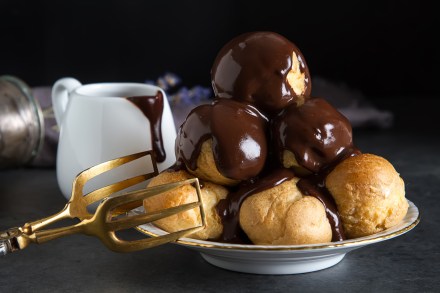
Choux pastry can inspire fear in even the most confident of cooks. There's a good reason for it: it’s difficult to give a very precise recipe for choux pastry, as the amount of egg needed to create the correct texture depends on the flour you’ve used, how long the choux has rested, and how fast and how thoroughly you have cooked the choux mixture out. It’s the water content in the egg that primarily causes the choux to rise and puff in the oven into those distinctive domes or elegant eclairs: not enough and they will fall flat, but too much and the pastry will be too sloppy to pipe properly. It’s the Goldilocks of pastry recipes. I am not unfamiliar with choux-dread.

Alison Roman: ‘My desserts are consistently imperfect’

From our UK edition

Alison Roman’s cooking is a counsel of imperfection. She serves dinner late (fine, as long as you have snacks), gets her guests to pitch in on the washing up and won’t make her own ice cream – ‘it simply will never be better than what you can buy, sorry’. ’Her ‘pies leak, cheesecakes crack and pound cakes are pulled from the oven before they’re fully baked. Lopsided and wonky, occasionally almost burned, unevenly frosted, my desserts are consistently imperfect’. In her new book, Sweet Enough, Roman wants to free the home cook from the dessert ties that bind them. ‘My hope for you,’ she tells her reader, ‘is that you strive for the animalistically irresistible, not aesthetically pristine’. The two, she finds, are ‘rarely the same’. ‘Baking is annoying.

Cake for a world turned upside down

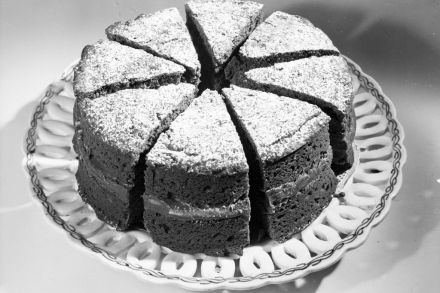
My mother, although an excellent cook, never baked. She left that to her Swedish mother, Anna, who lived with my grandfather in an apartment my father built for them over our garage in Weston, Connecticut. Anna, as I’ve written before, was a gifted baker, especially when it came to Swedish breads. I can’t remember when my mother suggested I might make my father’s birthday cake. Or why the task had been handed down to me. I was only nine or ten, but my mother was well aware that I loved to watch Anna bake, and that my curiosity needed constant nourishment. Rural Weston had no bakery in its small-town center, nor did neighboring, cosmopolitan Westport. In the 1950s, powdered cake mixes came to Westport’s Gristedes supermarket.

cake

The art of postal baking

From our UK edition

When life moved to Zoom in March 2020, I quickly found myself with a lot of time on my hands. With events and weddings off the cards indefinitely, I needed to pivot my baking business and realised that if people couldn’t go out to eat cake, I needed to get the cake to them. Overnight, boxes and packing tape were ordered, recipes chosen, and my postal bakes business was formed. Thanks to the power of Instagram, demand was overwhelming. People ordered boxes for their households – their arrival a mini event to look forward to amid the monotony of lockdown – but most ordered for others. Boxes were being sent to say everything that I was feeling, too – I love you, I miss you, I’m here for you, we will be together again.

Labour of love: producing the perfect loaf

From our UK edition

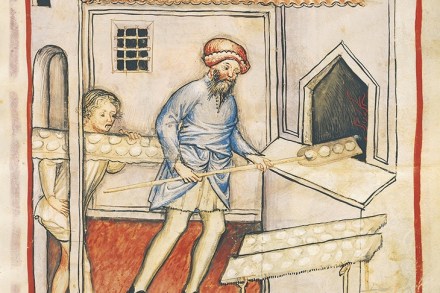
Wheat flour, and the bread made from it, has been a recurring cause of concern for the British for centuries, with parliament passing laws to control the size of loaves and quantity of additives. The 1758 Act required bread to contain ‘genuine meal or flour, common salt, pure water, eggs, and yeast or barm, or such leaven as magistrates shall occasionally allow of’. Flour might be adulterated, mostly to whiten the bread; but rather than this being the work of a mad baker-poisoner it was more likely a response to a public that wanted not just the whitest bread but the cheapest, whitest bread.

We should never take our daily bread for granted

From our UK edition

In the seventh and final chapter of this small but lingeringly powerful book, the author reveals his motivation for writing it. His father, he explains, a Russian-born Yugoslav soldier, had been a prisoner of war of the Germans, part of a group consigned to do forced labour felling trees during the bitterly cold winter of 1942-43. One evening, freezing, starving and looking barely human, the group was stopped on the road back to camp by a stranger, a Protestant pastor who invited them into his house and, risking reprisals, nonetheless gave them a chance to warm up and eat some bread with a glass of wine.

I want to support cinema but I have my work cut out with Love Sarah

From our UK edition

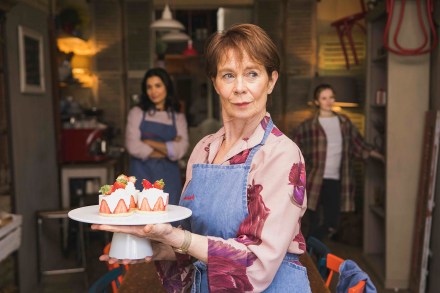
Some cinemas have reopened, with the rest to follow by the end of the month, thankfully. But the big, hotly anticipated films — Christopher Nolan’s Tenet, for example, or A Quiet Place II — won’t be out for a while yet, as opening schedules are adjusted. However, there is a new film that is cinema-only: it’s British, and it’s called Love Sarah. It stars Celia Imrie and is about three generations of women who seek to overcome grief by founding a bakery in London’s Notting Hill rather than running away to join Isis, say. (Is it always a bakery in Notting Hill or does it just feel like that?) I want to be kind as I want to support cinema. But I have my work cut out here.

Arise, the cupcake

Do you know the milquetoast muffin man? His name is Charlie Brooker, he’s the co-creator of the hit television series Black Mirror and he thinks cupcakes are ‘bullshit’. ‘A cupcake is just a muffin with clown puke topping,’ Brooker wrote in 2012. ’Once you’ve got through the clown puke there’s nothing but a fistful of quotidian sponge nestling in a depressing, soggy “cup” that feels like a pair of paper knickers a fat man has been sitting in throughout a long, hot coach journey between two disappointing market towns.’ I’m usually quite skeptical of gastronomic fads — the rainbow bagel and matcha ice creams can go pound sand — but I’m here to defend the cupcake.

cupcake

Upper crust: a sweeter approach to sourdough

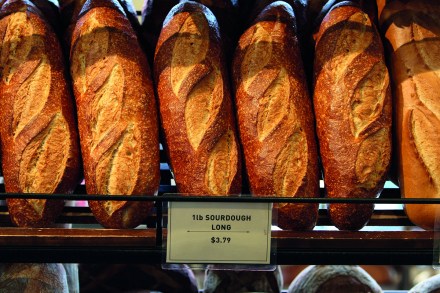
Hoping to win an election in 2020? If you’re not above buying votes, take a tip from the poet Juvenal, who described — disapprovingly, it is true — how Roman politicians in the second century used to bribe the lower classes with free sourdough bread and cutting-edge entertainment. (Yes, the Romans knew how to make sourdough — there are a few burnt loaves still around in the ruins of Pompeii). Nowadays it’s the millions of workers in the tech industry that you’ll have at your feet if you mention sourdough, but they want to bake it themselves, so you’ll do better handing out free workshops, countertop flour mills and Emile Henry bakeware.

sourdough

In quarantine, we’re all tradwives

Tie up your apron strings— it's time to get to work, ladies. The coronavirus threat has forced all of us into our homes as the CDC and the White House encourage strict measures of social distancing. The disruption to American life and the economy is no joke, and it's going to take some serious resilience and creativity to make it out the other side. The good news? Now is the perfect time to adopt the much-derided tradwife lifestyle, and it seems many women are already on board. I left my self-imposed quarantine briefly on Tuesday to pick up a few essentials at the grocery store: eggs, milk, flour, butter, sugar, and yeast.

Cupcakes tradwives

Blancmange is either ignored or despised: here’s how to make one that’s neither slimy nor bland

From our UK edition

Blancmange. Poor, maligned blancmange. The slimy, over-set staple of children’s birthday parties and school dinners, destined to be pushed around a plate and loathed for life. Blancmange has become shorthand for an age of blandness: the dessert equivalent of Chris de Burgh. Even its name sounds heavy on the English tongue. But we do the blancmange a grave disservice. It is, after all, essentially a panna cotta. Shouldn’t a milk jelly by any other name taste as sweet? It is slightly lighter than its Italian counterpart, yes, but that’s all to its credit. So why the bad reputation? The culprit, I think, is packet blancmange. No amount of careful preparation can mask the cornflour. In theory, English blancmange is set with cornflour and French with gelatine.