Azerbaijan

A Trump-branded peace deal

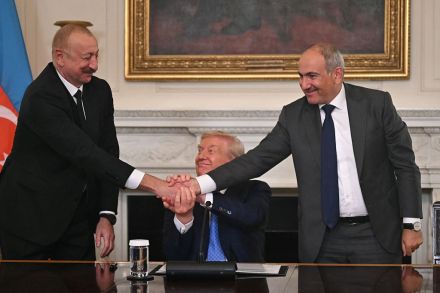
Mount Ararat rises over Armenia’s capital, Yerevan, its peak often lost in clouds. It is the country’s national symbol, yet it stands across the border in Turkey. That border has been closed since the early 1990s, when Turkey sided with Azerbaijan against Armenia – cutting Armenia off from its largest western neighbor and leaving it dependent on narrow trade corridors through Georgia and Iran. For three decades, the conflict shaped the politics of the South Caucasus, drawing in Russia, Turkey and Iran. The peace agreement between Armenia and Azerbaijan, signed today in Washington, represents more than the end of a long-standing territorial dispute.
Trump peace

Will Iran’s foreign policy change after Raisi’s death?

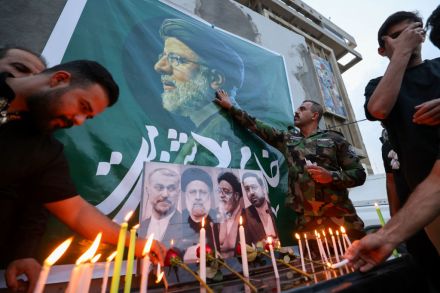
Ebrahim Raisi, the hardliner jurist-turned-president of the Islamic Republic of Iran, died in a plane crash over the weekend after coming back from a ceremony marking a new joint dam project with Azerbaijan. Iranian foreign minister Hossein Amir-Abdollahian, who was also on board, perished in the crash as well.  Few Iranians outside the political system will mourn their deaths. Raisi, for instance, was a notorious, unapologetic defender of the Iranian regime and first got involved in its machinations in his mid-twenties. In 1988, he served on a panel that handed down death sentences for thousands of dissidents.

iran ebrahim raisi

Will the Caucasus ever be tamed? 

From our UK edition

How to get your head around that searingly beautiful but complicated land that lies between the Caspian and Black Seas? The early Arab historian Al Masudi called the Caucasus jabal al-alsun, the mountain of tongues, and through the centuries the place has certainly seen its fair share of peoples, many of them troublesome, many of them troubled. Indeed, for somewhere you might think would be a transcontinental backwater, its outcrops, secluded valleys and expansive plains usefully separating its formidable neighbours – Russia to the north, Turkey and Iran to the south – it’s proved remarkably busy over the centuries; also persistently relevant. The turbulence of the region is rarely far from the news.

Russia’s military disaster could lead to famine in the Caucasus

From our UK edition

Two years ago, 13-year-old singer Maléna was rehearsing for Eurovision Junior when war broke out. While her rivals battled in Warsaw on stage, she stayed home in Armenia. Young men picked up AK-47s to fight against their Azerbaijani neighbours in the disputed region of Nagorno-Karabakh. More than 4,000 never returned. A year later, Maléna re-entered Eurovision Junior and won, giving her country the right to host Eurovision Junior in December 2022. Armenian authorities staged celebrations in the capital, Yerevan. Crowds huddled around outdoor televisions in the central square to watch the show. A group of young musicians from Nagorno-Karabakh joined the party in Yerevan, coming into the capital on the only road that links the capital to the breakaway region.

Russia isn’t just losing influence in Ukraine

If Vladimir Putin’s goal is to reestablish Russian influence, his ambitions are on track for another major setback. Far less high-profile than the war in Ukraine, a slow and quiet revolution has been brewing south of Russia’s borders in Central Asia and the Caucasus. These nations, members of the former Soviet Union, have traditionally been in Russia’s sphere of influence. That, however, is now changing. At the start of the year, it looked like Russia was ascendant. Putin had over 150,000 troops waiting to invade Ukraine, and was receiving a steady stream of Western visitors pleading with him to step back. When Kazakhstan was engulfed in popular protests, Putin stepped in and deployed about 2,500 Russian troops after an appeal by the Kazakh president to help quell the unrest.

On the front lines of Europe’s newest war

From our UK edition

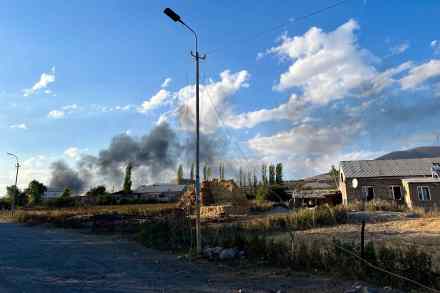
Sotk, Armenia A group of Armenian soldiers stand guard on the road towards the village. ‘It’s not safe to go ahead,’ one says, slinging his Kalashnikov across his shoulder and motioning for our van to pull over. ‘They were shelling the highway just 15 minutes ago.’ In the distance, there’s the unmistakable thunder of artillery and smoke rising from the side of the mountains. Beyond them is the border with Azerbaijan from where, in the early hours of Tuesday morning, a massive barrage was unleashed on towns and cities across Armenia. The offensive is the most dramatic escalation since the two former Soviet republics fought a brutal and bloody war two years ago, leaving more than 5,000 dead on both sides.

Is Putin’s war spreading?

From our UK edition

Yerevan, Armenia ‘This is our land,’ Anna says, looking out over her roadside flower shop. ‘Lenin promised it to us.’ Her father was born across the mountains in Russia, one of around 100,000 displaced Armenians only able to return home after world war two. ‘But thanks to Lenin, we have our own country. A free country – at least for now.’ As the fighting in Ukraine stretches into its first month, another conflict between two former Soviet states might not be far away. Last year, a brief but bloody war broke out between Armenia and Azerbaijan over the breakaway region of Nagorno-Karabakh, which had been autonomously governed by ethnic Armenians over the past three decades.

Will Armen Sarkissian save Armenia?

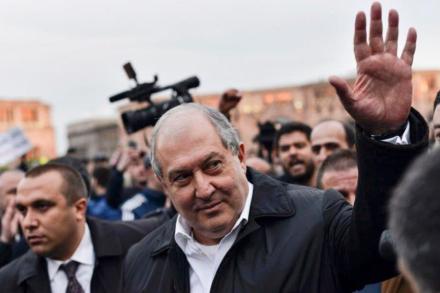
Yerevan, Armenia Armen Sarkissian, the president of Armenia, is incandescent with rage. “Five thousand brave and selfless Armenian soldiers were killed in this war,” he tells me at his office, referring to last year’s conflict with Azerbaijan and Turkey. “There must be accountability for their deaths.” Sarkissian strikes me as the only Armenian politician whose anger comes with a constructive program of national revival. The man once described by Zbigniew Brzezinski as the “Vaclav Havel of the Caucasus” radiates no grievances against foreign powers.

A defeated Armenia descends into turmoil

From our UK edition

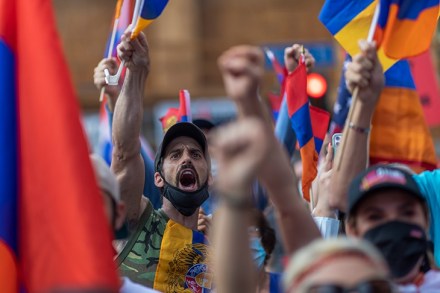
Ever since its disastrous military defeat at the hands of Azerbaijan last year, Armenia has suffered from a wave of political unrest, with rallies and protests continuing sporadically. The principal demand of the protestors has been the resignation of the incumbent Prime Minister, Nikol Pashinyan, whose agreement to a ceasefire favourable to Azerbaijan following his country’s defeat in Nagorno-Karabakh was viewed as a national betrayal. However, the most serious declaration of opposition to the Prime Minister came on Thursday, when the general staff of the armed forces, Onik Gasparyan, joined in the calls for Pashinyan to resign.

The West has left Armenia to fend for itself

From our UK edition

Bomb shelters have come a long way since the Blitz. As missiles from Azerbaijan rained down on Nagorno-Karabakh a few weeks ago, Hayk Harutyunyan and his family took refuge in a basement with wifi, an ensuite toilet and a makeshift mini-bar. There were 12 people crammed in there every night, he told me, ‘but we Armenians are very close as family, so we get on well’. Indeed, sipping brandy with them in their shelter, I was reminded of that other Armenian clan, the Kardashians, who spend their time sitting around and chatting. Keeping up with the Harutyunyans, however, makes for more challenging viewing. Armenia, a Christian democracy in a neighbourhood dominated by Islamists and strongmen, has been left to fend for itself by the West.