Automation

AI is cosmic justice for the professional classes

From our US edition

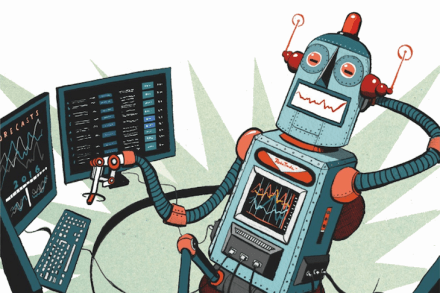
For decades the road to success in the developed world has been straightforward. A university education, increasingly treated as a sort of white-collar trade school, offered people the chance to acquire specialist knowledge which could be used to secure a position lingering at a desk for 40 years. For those of us who grew up watching machines replace men on the assembly line, acquiring a degree was the way to escape this fate. In the digital age, however, the automation of cognitive labor has forced many professionals to confront a threat that once seemed confined to workers on the factory floor.

AI robots

Machines are replacing the Chinese working class

From our US edition

Daqing, China You may have seen clips of the recent Chinese robot Olympics, where a bipedal, humanoid robot beat Usain Bolt’s 100-meter sprint record by almost a second. Last month, Beijing hosted competitions in soccer, weightlifting, tennis and gymnastics, too. There have also been boxing matches between robots, which occasionally punched each other’s heads off. So far, robots can only really excel at one task at a time, so the prospect of a very fast, very effective fistfighter is some way off. Still, the Chinese government is deeply concerned about employment and has been far stricter at regulating AI than the US. That’s partly because of the differing economies of the two countries. The USA’s comparative advantage is capital.

Finding happiness in simple tactile pleasures

When I confess that this is the first self-help book I’ve read, I’m also confessing to a minor but pointed snobbism. Sadly, I’m self-satisfied (as many snobs are), which perhaps explains my conviction that self-help books don’t help. Worse, I believe Ian Bogost’s The Small Stuff is well-meaning, reasonable and fundamentally right about how to live one’s life. The author is laudably passionate about gratification – or ‘itty-bitty fulfilment’, to borrow his phrase. Unknowingly, I was already following his self-help prescriptions – so to me they’re of no use.

Let’s ban the metaverse and colonize space

From our US edition

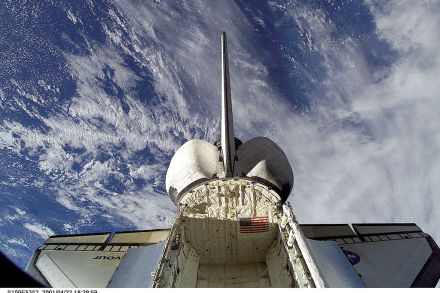
The way I see it, there are two options for the future: a transplanetary society or a transhuman one. What got me thinking about this was right-wing billionaire Peter Thiel’s recent interview with Mary Harrington, which she wrote up in UnHerd. As Harrington puts it, Thiel’s diagnosis of modern social ills is not that “progress is inevitably self-destructive,” but that we’ve been making the wrong kind of progress. "We’ve had continued progress in the world of computers, bits, internet, mobile internet, but it’s a narrow zone of progress. And it’s been more interior, atomizing and inward-focused,” Thiel said. Meanwhile, “there’s been limited progress in the world of atoms.” So far, so good. But then the interview took a strange turn.