Autism

Alice in Nightmareland: The Matchbox Girl, by Alice Jolly, reviewed

From our UK edition

Vienna, 25 July 1934 is a significant date in Austria’s history. But in The Matchbox Girl, the big events happen offstage, the world seen entirely through the eyes of its youthful narrator. We focus not on the assassination of Chancellor Dollfuss and a failed Nazi coup, but the children’s hospital, where 12-year-old Adelheid Brunner is waiting to be assessed for admission because she’s mute – designated ‘special’. Or, as her grandmother puts it, hopeless, ‘an idiot’. In the tall, shabby hospital, the young inmates are a protected community, closely observed by a team of specialist doctors, among them young Hans Asperger, later to find fame with his syndrome. Sister Victorine, a patient, saintly nun, oversees the gaggle of unruly, sometimes frenzied children.

By order of the non-doctor

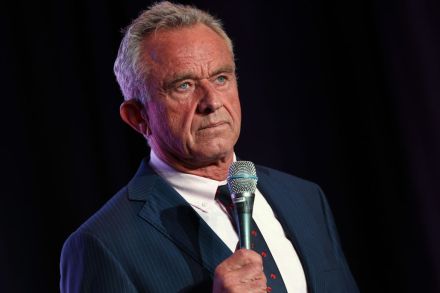
Health and Human Services Secretary Robert F. Kennedy Jr. did not say, in yesterday’s cabinet meeting, that circumcision causes autism. But the fact that we’d even consider that a real statement shows just how far down the rabbit hole into the MAHA Wonderland of his mind RFK has dragged us. In fact, RFK said that after doctors circumcise boys, they give them too much Tylenol, and that causes autism. President “Don’t Take Tylenol” responded, “there's a tremendous amount of proof or evidence. I would say as a non-doctor, but I've studied this a long time.”  A non-doctor is right, and I say this as someone who’s not a fan of male circumcision, a practice based on dated religious superstition.

RFK

The reality of raising an autistic child

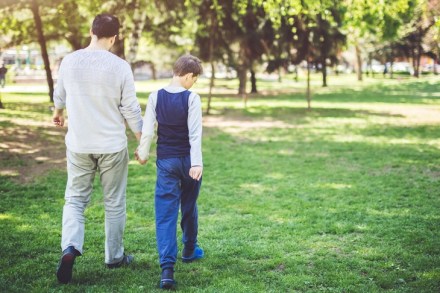
Although I disagree with Donald Trump’s and Robert F. Kennedy Jr.’s suggestion that mothers who took Tylenol during pregnancy may have caused the huge rise of children born with autism in the US, I also can’t agree with the spate of articles and interviews that have followed – several by high-functioning autistic adults, others by parents of autistic children – basically saying it is great to be autistic. I understand that they are fearful that Trump’s idea of a “cure” could result in anyone with special needs being regarded as subnormal and a second-class citizen, but it’s not helpful, either, to pretend that autism is without its many frightful drawbacks. My son, 42, was diagnosed with Asperger syndrome on his 13th birthday in 1996.

autistic

Autism isn’t a ‘superpower’

From our UK edition

A very warm welcome for Margaret Thatcher inside autism’s ever-growing tent – if she can find space to wield her handbag. I could even lead the welcoming party myself as I am in there – according to some of my friends – on account of my unusually good ability to recall dates and a liking for solitude. As for Thatcher, she has gained entry on the strength of her biographer Tina Gaudoin’s diagnosis, which is based around the former PM’s absence of a sense of humour (or at least an inability to share the jokes of her male, public school-educated colleagues), a lack of embarrassment, her ‘special or restricted interests’ and a tendency to see the world in black and white. Is there going to be anyone left outside the autism tent in future?

Labour’s deputy drama, Macron’s mess & was Thatcher autistic?

From our UK edition

46 min listen

Michael Gove and Madeline Grant return with another episode of Quite right!, The Spectator’s new podcast promising sanity and common sense in an increasingly unhinged world. This week, they dissect Keir Starmer’s brutal reshuffle – from the ‘volcanic ejection’ of Angela Rayner to the rise of Shabana Mahmood, the ‘uncompromising toughie’ now in charge of the Home Office. What do these moves reveal about the Labour party’s deepest fears on crime and migration? Across the Channel, Emmanuel Macron faces yet another political crisis, as France lurches towards its fifth prime minister in two years. Is Britain now drifting into its own pre-revolutionary mood – and becoming ‘France 2.0’?

Misfits unite: The Emperor of Gladness, by Ocean Vuong, reviewed

From our UK edition

As a poet, Ocean Vuong has won every prize going. Now here’s The Emperor of Gladness, his second novel. His first, On Earth We’re Briefly Gorgeous, a coming-of-age story, is currently being filmed. This latest oneis wild, unwieldy and too long. It is fiction/autofiction mixed with 19th- and 20th-century warfare, plus contemporary angst and craziness. It has one preposterous scene that you wish were true, and never has a title been so misleading. It’s a book of moral, imaginative ideas with gripping stories, wonderful characters and writing that’s poetic and witty. I loved it. It opens with an introduction to the rural town of East Gladness, Connecticut, its citizens ‘not ambivalent to hope’.

How come the only Palestinians Louis Theroux met were non-violent sweeties?

From our UK edition

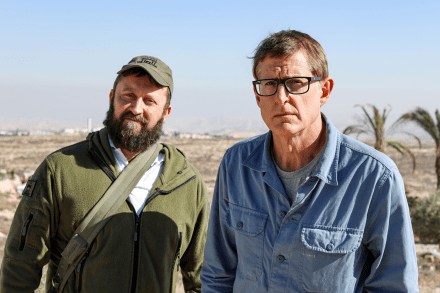
Louis Theroux: The Settlers was never likely to be a programme with much of a narrative arc – and so it proved. In the first 30 seconds, Louis put it to a Jewish householder on the West Bank that his house was ‘quite deep in what are called the Palestinian Territories’. ‘You call it the Palestinian Territories,’ the man replied. ‘I call it the heart of Judea.’ And that, on the whole, was that. Louis travelled from one Jewish settlement to another, doing his best to challenge the inhabitants with his faux-naif questions and impressive range of quizzical expressions. And yet, of course, none of them budged an inch.

Who will care for the carers themselves?

From our UK edition

When her brother Lionel was born in 1949, ‘the concept of neurodiversity didn’t exist’, writes Caroline Elton. The subtitle of her profoundly moving memoir, ‘A Portrait of My Autistic Brother’, is misleading. The book is really about the experience of being the sibling of a person who is not like you. Lionel was nine years Elton’s senior, so she draws on their mother’s testimony to relate his infancy and childhood, turning to her own recollections for the later years. He learnt to read before he could speak, played the piano faultlessly by ear (his mother taught him), and could tell you what day of the week a date would fall on in any year.

The nerdy obsessive who became the world’s richest man

From our UK edition

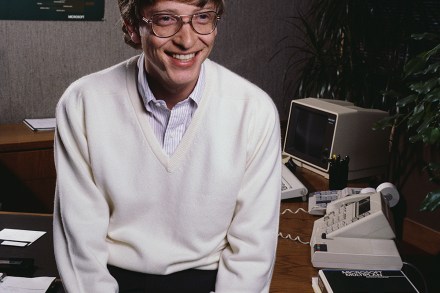
Shortly before Bill Gates’s seventh birthday in 1962, his parents stuffed their son into a button-down shirt and blazer for a visit to Century 21, a bold showcase of scientific prowess in their home town of Seattle. This futuristic fair was intended as the nation’s rebuff to Soviet Russia following the Sputnik satellite launch, which sparked the space race. The family enjoyed the new 600ft Space Needle. They also saw the Mercury capsule that carried the first American into space; Ford’s concept of a six-wheeled nuclear-powered car; and IBM’s idea of a cheap computer, costing $100,000. Best of all in the boy’s view was rattling around on the Wild Mouse Ride, which felt risky and thrilling, stoking a lifelong love of rollercoasters.

Why Britain riots

From our UK edition

33 min listen

This week: The Spectator’s Gus Carter was in Rotherham and Birmingham in the days after the riots. Locals tell Gus that ‘violent disorder isn’t acceptable but people from down south don’t know what it’s like up here’. A retired policeman in Birmingham adds that ‘it’s just yobs looking for an excuse – and yobbos come in all sorts of colours’. You can hear Gus’ report on the podcast. (02:25)  Next: Gus and Lara take us through some of their favourite pieces in the magazine, including Flora Watkins’ notes on ragwort and Isabel Hardman’s review of Swimming Pretty: The Untold Story of Women in Water.

How I learned to embrace my autism

From our UK edition

I’m autistic, I teach autistic children and I care for autistic adults, but I never kid myself that we are better than other people. When I asked a fellow autistic man if he could name any famous autistic people, he replied: ‘Hitler and Einstein.’ I love his answer because it punctures the romanticism around autism. There are evil autistic people, as well as geniuses. Was Hitler autistic? We’ll never know for sure, but he showed several symptoms. People who met him found that once he started talking, he would not stop. He was also nocturnal, had an addictive personality and developed lifelong obsessions (in his case, racial purity). Around half of all the people referred to the anti-radicalisation programme Prevent are autistic males.

‘Chris Chan’ and the grotesque online attention sideshow

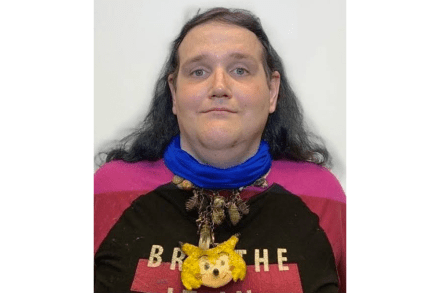
Summarizing the tale of Christian Weston Chandler in a paragraph is like trying to squeeze an octopus into a bottle. You can’t. Chris is known for being the ‘most documented person on the internet’. A biographical documentary on YouTube has 59 episodes, all 40 minutes long, which add up to over 40 hours footage. Imagine that there was a remake of The Truman Show, except that instead of being a fairly functional married insurance broker, Truman Burbank was a mentally ill aspiring cartoonist who lived with his aged mom. Do you get the picture? Well, not any more. Chandler, who claims to be transgender and now goes by Christine, has been arrested after appearing to admit in online conversations to raping said aged mom, and faces up to 10 years in prison.

chris chan

Ireland through the eyes of a brilliant teenage naturalist

From our UK edition

Dara McAnulty is a teenage naturalist from Northern Ireland. He has autism; so do his brother, sister and mother — his father, a conservation scientist, is the odd one out. This book records a year in the life of a gifted boy in an unusual family. Minutely detailed observations of birds, insects, trees and weather are woven into an ecstatic description of the unrolling of the seasons. It is also an impassioned and original plea for protection for ‘our delicate and changing biosphere’. The diary is valuable in several ways. The writing of it is necessary to Dara himself, his means of processing his experiences. When he’s outside, absorbed in nature, he’s mentally storing his observations.

Lockdown can be overwhelming for those with autism

From our UK edition

National Autism Month in April coincided with our strictest phase of lockdown. My son, 36, who has Asperger’s, has consequently been unable to stick to all his routines — one being the Sunday car boot sale on Brighton Racecourse — and I was worried about how he’d cope. He suggested we watch classic EastEnders together from our separate homes and text each other about the personalities and plot. It worked. The episodes from the early 1990s are fast-moving and the characters very real. One scriptwriter then, Susan Boyd, born in Glasgow, hung out with the Jamaican community in Ladbroke Grove in the 1970s. She died at only 55. I looked up her obituary. ‘The woman comes across as unassuming and unmaterialistic and also very talented. Son.

For Tom Cutler, being diagnosed autistic was the happiest day of his life

From our UK edition

It’s easy to forget that until the late 1980s the notion of an autistic person being able to write a compelling autobiography was dismissed by the psychiatric establishment as highly unlikely. Though the term ‘autism’ was originally derived from the Greek word for self, autos, people with ‘self-ism’ — who were routinely described by non-autistic experts as being ‘trapped in their own world’ — were ironically thought to be incapable of the kind of introspection and self-reflection necessary to produce trustworthy documentation of their own experience.

Great and small

From our UK edition

‘I’m not going to your place, it looks like a crack den.’ It’s not exactly a vote of confidence when your mother describes your home that way. Admittedly, the bedsit I have lived in for ten years is tiny. There is no central heating. The white blinds have faded to yellow. It’s not much good for house parties: I could fit four people, five if I sat between the sink and the microwave. However, I would like to defend living in bedsits. Whenever I hear people complaining about housing in London, I wonder whether they have considered a bedsit. I’m autistic and work as a part-time carer, but even on my salary I was able to go on holiday abroad four times last year, thanks to my living arrangements. In London, rent is my biggest expense by a huge margin.

Dispelling the myth of the vaccine-autism controversy

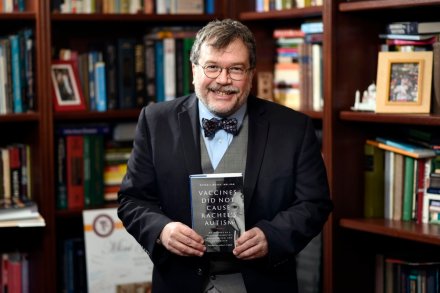
Vaccines didn't cause Rachel’s autism. Or Sam’s, or Daniel’s, or anybody else’s for that matter. The reason is simple. Vaccines don’t and can’t cause autism. Peter Hotez ought to know. A certified pediatrician, he's one of the world’s leading vaccine scientists, developing vaccines against ‘neglected tropical diseases.’ He’s also the father of Rachel, an autistic and intellectually challenged young woman. There is no vaccine controversy, just as there is no shape-of-the-earth controversy. Anybody who understands the scientific method knows that there is no link whatsoever between vaccines and autism, just as they know that they can walk as far as they’d like around the world without falling off the edge.

vaccines autism

Letters | 24 January 2019

From our UK edition

Autistic freedom Sir: Jonathan Mitchell, an autistic writer, argues that autism is an affliction and that a cure should be found (‘The dangers of “neurodiversity”’, 19 January). When my son was diagnosed I would have agreed with him, but I disagree strongly now. My son’s autism comes with real challenges, but I value the ways it’s helped him become a thoroughly decent person: he doesn’t lie, it wouldn’t occur to him to be nasty and he’s totally logical. Surely, the world needs more people like him, not fewer. As Mr Mitchell says, the autism spectrum is huge, encompassing people who can’t communicate, who are locked in a sensory hell and need a high level of care, often for conditions that are not part of their autism.

The danger of ‘neurodiversity’

From our UK edition

I’m an American man affected by the disability autism. As a child, I went to special education schools for eight years and I do a self-stimulatory behaviour during the day which prevents me from getting much done. I’ve never had a girlfriend. I have bad motor coordination problems which greatly impair my ability to handwrite and do other tasks. I also have social skills problems, and I sometimes say and do inappropriate things that cause offence. I was fired from more than 20 jobs for making excessive mistakes and for behavioural problems before I retired at the age of 51. Others with autism spectrum disorder have it worse than I do. People on the more severe end sometimes can’t speak. They soil themselves, wreak havoc and break things.

Pay back time

From our UK edition

‘We lived in a country that rewarded its worst people. We lived in a society where the villains were favoured to win.’ So says Seema, the 29-year-old wife of hedge-fund manager Barry Cohen in Gary Shteyngart’s fourth novel, Lake Success. The relationship between fiction and the world of high finance has a complicated history. Having largely ignored Wall Street — Tom Wolfe, Bret Easton Ellis and F. Scott Fitzgerald aside — novelists found in the crash of 2008 a galvanic moment. Suddenly bankers were everywhere, from Sebastian Faulks to John Lanchester to Anne Enright, while younger writers such as Adam Haslett and Zia Haider Rahman wrote memorable novels that made (flawed) heroes of the money-men.