Australia

From the Odyssey to The Wizard of Oz: Praiseworthy, by Alexis Wright, reviewed

From our UK edition

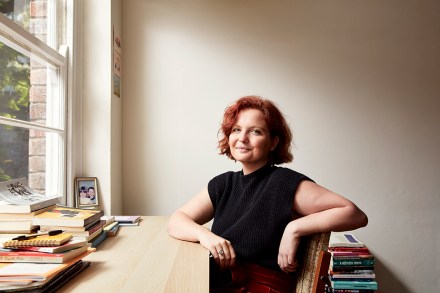
Among many other prizes for her stunningly original work, Alexis Wright has won Australia’s greatest literary honour, the Miles Franklin Award, for a novel of the highest literary merit representing Australian life. It is ironic, but sadly apt, that her epic Praiseworthy should be published in the year that Australians, offered a chance to give greater political rights to their indigenous peoples, have voted not to. Everything blends together: dream and reality, donkeys and butterflies, the Odyssey and The Wizard of Oz Wright is an Aboriginal activist as well as a writer. Praiseworthy, which has already won the Queensland Literary Award for Fiction, is an impassioned environmental Ulysses of the Northern Territory, and not an easy read. It does not care to be.

Has Bazball rescued — or ruined — cricket?

From our UK edition

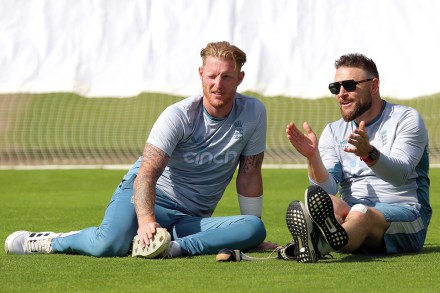
The date 6 June 2021 was a grim day for cricket. As the world was adjusting to life after the pandemic, a Lord’s Test with a full house felt like ‘the promised kiss of springtime’. And so it was, until the final afternoon, when New Zealand challenged England to make 273 in 75 overs. The gesture was recognised as generous by all except the faint souls in the England dressing room, rendered frit by the possibility of defeat. Thousands of spectators, bewildered by five hours of fearful prodding, withdrew their consent. Cricket has witnessed more profound changes in the past decade than in the previous 100 years With ‘the Hundred’ looming like a pirate’s galleon, caution was inexplicable.

The crushing defeat of Australia’s divisive Voice referendum

From our UK edition

Australia’s Prime Minister, Anthony Albanese, urged his fellow Australians to take ‘the opportunity to make history’ today. And they did, but not in the way that Albanese had so fervently hoped. His government’s referendum, which aimed to change the country’s constitution to entrench an Aboriginal and Torres Strait Islander advisory voice to Australia’s parliament and executive government, was defeated by a majority of voters in all Australian states. The final margin, 59 per cent to 41 per cent between Yes and No, was not just decisive. It was a landslide of resounding proportions, almost a mirror reversal of the polled support for the Voice as recently as April.

Why did Australia vote No in the Voice referendum?

From our UK edition

I’m in Sydney for the Voice referendum result – and it’s already over. No has won, by what looks to be a 60/40 margin. So an ‘Aboriginal and Torres Strait Islander Voice’ will not be added to Australia’s democratic apparatus after an Aboriginal-led campaign asking Australians to reject identity politics. The results had heavy overtones of Brexit: affluent cities voting Yes and the left-behind areas voting No. The Northern Territory, which has the highest concentration of aboriginal Australians, looks to have rejected the proposal by 65/35. Aussies have voted to protect the principle of everyone being equal before the law and in parliament. It’s hard to describe what the campaign has been like here.

Removing PMs hardly ever ends well

From our UK edition

As Tory MPs appear to descend into a panic of buyers' remorse over the election of Liz Truss, they would be well advised to take a deep breath and reflect upon the absurdity of removing a leader after six weeks. As they do so, they might find it instructive to look across the sea to Australia to see the folly of constant leadership turmoil and the ever more lethal poison it injects into the bloodstream of political parties.    Over the past decade and a half, Canberra – whose politics are famously robust – earned the unenviable taunt of having become the ‘coup capital of the South Pacific,’ as both sides of politics butchered their leaders in a fratricidal game of conspiracy, political assassination and payback.

Robyn Davidson explores yet another foreign country – the past

From our UK edition

Robyn Davidson never set out to become a writer. ‘It did not form my identity,’ she tells us early on in her memoir Unfinished Woman. ‘In my own mind I had simply pulled another rabbit out of a hat. As I had done all my life with everything.’ The rabbit, in this case, is the ability to capture an exciting and complex life with insight and humour. When she decided to leave the underworld, she was sexually assaulted at knifepoint Born in 1950 on a cattle station in Queensland, Australia, Davidson was the second daughter of a handsome war hero from a privileged background. Home was a place full of ‘dust and wide verandas, comfortable old chairs and good horses, though never adequate cash’.

Letters: Bully XL owners are deluding themselves

From our UK edition

Bed and breakfast Sir: Cindy Yu asks, in her ‘Leaving Hong Kong’ piece (23 September): ‘Where are they?’ I can help with that one. I live near Epsom, Surrey, and there has been a huge influx of people from Hong Kong here over the past 18 months. The area is attractive because housing is affordable in south-east terms compared, price-wise, with where they have come from. There are half a dozen very good schools in Epsom, Sutton and Cheam – and the area has very low crime rates. If anybody wants to seek positives from controlled immigration then it is here. The influx of the Hong Kongers (as Yu described them) has undoubtedly stimulated the local economy in terms of house and car sales and given the hospitality industry a big boost.

Matthew Parris, Dan Hitchens and Leah McLaren

From our UK edition

23 min listen

Matthew Parris, just back from Australia, shares his thoughts on the upcoming referendum on the Aboriginal and Torres Strait Islander Voice (01:08). Dan Hitchens looks at church congregations and wonders why some are on the up, while others are in a spiral of decline (08:32), and Leah McLaren describes the delights of audio and tells us why young children should be heard, but not seen (17:57).

Australia’s disastrous indigenous voice referendum

From our UK edition

My partner and I have just returned from the most magical trip. As guests of Western Australia’s tourist board we’ve driven almost 1,500 miles across the top left-hand corner of the Australian continent. This is the north-west: a landscape like nowhere else on the planet. Three times the size of England, they call it the Kimberley. I had expected to find Aboriginal people living in these landscapes. They used to, for 60,000 years Starting from a town called Broome (easy to fly there) we made it overland to Darwin in the Northern Territory. We took about ten days in an all-singing, all-dancing Toyota camper van, sometimes sleeping under the stars, more often staying in comfortable chalets at a string of cattle stations turned campsites dotted along our route.

Why I’m addicted to Australian MasterChef

From our UK edition

Why is Australian MasterChef so much better than the English version? You’d think, with a population less than a third of ours, the smaller talent pool would make the Antipodean edition look like thin gruel. But a bit like with the cricket and the rugby, size clearly isn’t everything. UK MasterChef now resembles one of those joyless austerity dishes you cobble together from crusty leftovers you found languishing in the fridge. But the Aussie one has had my entire family addicted and yearning for more for the past fortnight. I suppose it’s partly down to the way Australia sees itself.

Blighted island: Strangers at the Port, by Lauren Aimee Curtis, reviewed

From our UK edition

Lauren Aimee Curtis, born in Sydney and recently named one of Granta’s Best of Young British Novelists, sets her intriguing second book on the Aeolian island of Salina in the late 19th century, when the arrival of phylloxera destroyed the island’s vines and economy, prompting mass emigration. These facts are easy to deduce, especially with the clarification provided in the author’s note, but in the novel itself Curtis names the island ‘S’ and the time becomes ‘that spring, when the men arrived’. She entices us into the mythical realm of not-quite history. Part One is narrated by Giulia, looking back to when she was ten years old and telling her story to a ‘professor’ who has written a book.

Will Orthodox Judaism accept female rabbis?

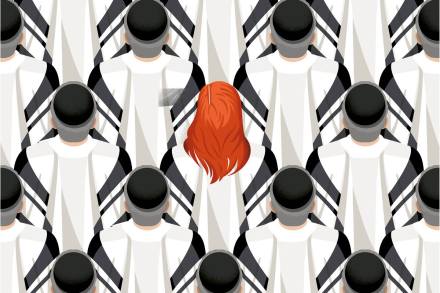
Bracha Jaffe, an American-Israeli, spent decades working in tech, focusing on software development and raising her family in Israel. But following a midlife career shift and a move to New York, she now also works as an assistant rabbi at the Hebrew Institute of Riverdale, a large Orthodox synagogue in the Bronx. Every day, she plays a key role guiding congregants during life cycle events, such as births and deaths. She teaches classes and visits the sick. “I think it’s still true that when someone says ‘Rabbi,’ what comes to mind is an older male, perhaps with a white beard,” she says. With her blonde bob, ever-present smile and warm demeanor, Jaffe is a far cry from this stereotype.

orthodox judaism

The problems of being a Bee Gee

From our UK edition

For quite some time, the prospect of death has held a fresh terror. The British Heart Foundation’s step-by-step guide to cardiopulmonary resuscitation advises performing chest compressions ‘to the beat of “Stayin’ Alive” by the Bee Gees’. This means that the last sound some of us will ever hear is ‘Stayin’ Alive’, with our chests as the drums: Feel the city breakin’ and everybody shakin’And we’re stayin’ alive, stayin’ alive!Ah! ah! ah! ah!Stayin’ alive! Stayin’ alive! Despite their success, the Bee Gees have always been regarded as naff. They are to pop music what Fanny Cradock was to cookery or Julian Fellowes is to the world of letters. Bob Stanley is on a mission to rescue their reputation.

Watching Queen Cleopatra felt like witnessing the death of scholarship

From our UK edition

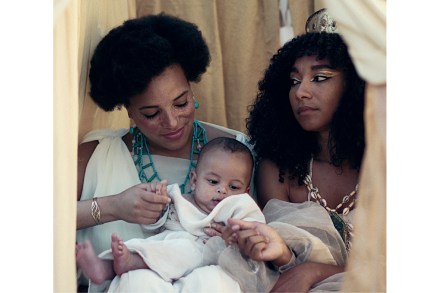
The most controversial aspect of Netflix’s new drama-documentary Queen Cleopatra – not least in Egypt – was the casting of a black actress, Adele James, in the title role. After all, one of the few things that seems certain about Cleopatra’s early life is that she was a Macedonian Greek. Luckily, though, the show had a powerful counterargument to this awkward and Eurocentric fact. As the African-American professor Shelley P. Haley put it with a QED-style flourish, back when she was girl, her beloved (if uneducated) grandmother once said to her: ‘I don’t care what they tell you in school, Cleopatra was black.

Get in loser, we’re canceling Bluey

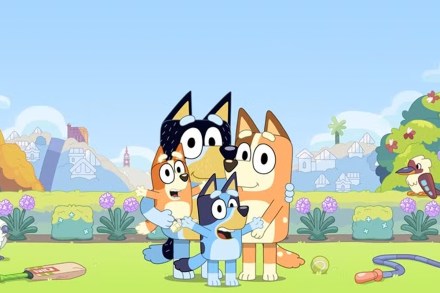
When I saw on Twitter that Bluey was the latest victim of cancel culture, naturally my first thought was "who did she say the N-word in front of?" For those not in the know, Bluey is an Australian cartoon dog who stars in an eponymous kids' TV show that airs on the Australian Broadcasting Corporation, the BBC and, in the US, Disney+. She and her family go on a series of adventures that guide viewers through a healthy mix of toilet humor and confronting difficult emotions, in a tenor suitable for the under-tens.

bluey

Why does the ‘c’-word upset Americans so much?

Recently I dined with an old American friend at my home in Sydney. He brought up the sacking of the Fox News host Tucker Carlson, reportedly for, among other things, using a terrible curse word, which my friend referred to coyly as "C U Next Tuesday." I was baffled for a minute.  “Do you mean ‘c—’?” I asked. “Oh, don’t say that!” “C—, c—, c—!” I cried. He cringed as if being assaulted physically.  Fresh from the news about Carlson, the New York Post reported that ESPN fired journalist Marly Rivera for using the word against a female colleague trying to muscle in on her interview with Yankee player Aaron Judge.  Why does it upset Americans so much?

‘c’-word

The quiet rise of Outback Noir

No Australian woman has ever won the Booker Prize — and yet in the stylish genre called Outback Noir, women reign supreme. Of these, the queen is Jane Harper. Her 2016 debut, The Dry (successfully filmed with Eric Bana), marked the start of a new kind of detective fiction that has gained an international following. Some of this may be due to the way we love this version of Down Under. Forget about Sydney, Melbourne or Perth. Portraits of small societies where embattled individuals get swallowed up by the big bad bush, parched or flooded, give an apocalyptic, Mad Max edge to a distinctly Australian setting. Arthur W.

harper outback noir

Who’s killing Australia Day?

From our UK edition

Australia Day was once a big deal Down Under, but in recent years the annual celebration has been somewhat muted. Take the Australian Open, currently running in Melbourne. The organisers have dedicated days throughout the tournament for a range of causes: there has been a Pride day and a day celebrating indigenous art and culture. But although the semi-finals are being played today, on Australia Day itself, there will be no recognition of the country’s national day. ‘We are mindful there are differing views, and at the Australian Open we are inclusive and respectful of all,’ Tennis Australia said in a statement. Tennis fans aren’t the only ones missing out: Victoria’s state government has quietly axed Melbourne’s Australia Day parade.

How did climate doomsters get the Great Barrier Reef so wrong?

From our UK edition

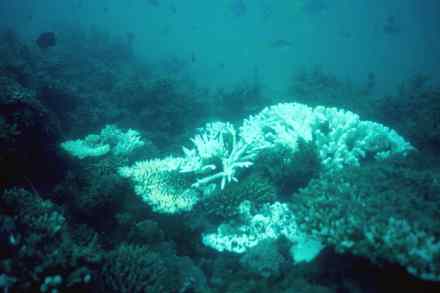
We are, of course, in the midst of a ‘climate emergency’ and the ‘sixth mass extinction’ of life on Earth. It is just that one of the iconic victims doesn’t seem to be playing ball just at the moment. As recently as May, environmentalists were warning that the Great Barrier Reef, the 1,500-mile coral structure off the coast of Queensland, was being doomed by warming seas. It was reported to be suffering a ‘mass bleaching’ – where the plants which live on the reef and provide food for it die off. The blame was put on warmer seas. Worse, this was the first mass bleaching event to occur in a ‘La Niña’ year, when the seas off Australia are supposed to be going through a cyclical cooling phase.

Must we now despise colonial architecture too?

From our UK edition

Here’s a thing. A disturbing book about disturbing cities. And it’s full of loaded questions. Like Hezbollah, the publisher uses the silhouette of an automatic weapon as its logo. This is a trigger warning. Jonathan Swift wrote: All poets and philosphers who find  Some favourite system to their minds  In every way to make it fit  Will force all Nature to submit. So I give you Owen Hatherley, an architectural critic of the left, adept in the predictable tropes of Guardian-sprache, who exists in a world, as he often tells us, defined by concepts of colonial domination, exploitation and ocean-going misery. As Lionel Trilling observed, leftish people are always glum because things are never quite as perfect as they wish them. Rightish people have more fun.