Astronomy

I’m proud of my utterly insignificant association with Nasa

Even though my career has been almost entirely in front of the camera, rather than behind it, I’ve long been obsessed with film equipment. How, then, can I resist a party in LA for Cine Gear, a trade show for new film kit? It’s a good place for the ‘creatives’ to meet the technical guys. The director Dan Trachtenberg is there, and we handle the latest Cooke glass. Cooke has been making lenses in Leicester since 1893, and they are still the best cine lenses in the world. I bought my set of Cooke Speed Panchros in the 1980s, when nobody wanted them because they were ‘slow’, but now they are back in fashion. They have a warmth and softness that modern lenses strive to emulate because their coatings involved radio-active elements that are not permitted in manufacture now.
Under pressure: what might life look like on another planet?

From our UK edition

Over the past three decades, astronomers have discovered planets orbiting Sun-like stars throughout the universe. This discovery ended 2,500 years of debate about whether worlds existed beyond our solar system, but it came with a shock. The most common kind of planet in the universe is the type of world that doesn’t exist in our small corner of the cosmos: what astronomers call ‘Super-Earths’ and ‘Sub-Neptunes’, planets with much greater masses than ours and which could, in theory, sustain life. Astronomers concluded a little over a decade ago that every star in the night sky hosts a family of worlds. Importantly for the search for life, one in five of those stars will have a planet in the ‘Goldilocks’ zone (sometimes referred to as the ‘habitable zone’).

3I, the interstellar object that’s baffling astronomers

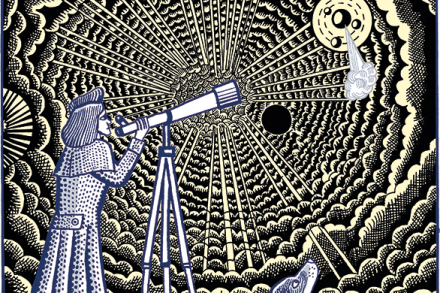
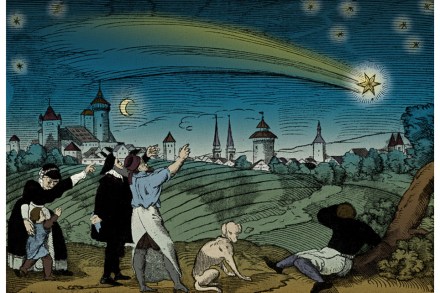
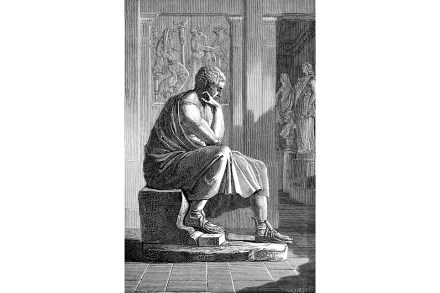
Science began in the skies. Just after sunset, to be exact, on the evening of November 11, 1572 when a young Danish nobleman, Tycho Brahe, raised his eyes to the night sky. There, above his head, a star was shining brighter than all the rest – a new star that should not have been. Brahe thought he was mistaken, that his eyes were playing tricks on him, but others confirmed what he saw. And yet, according to the reigning theory, derived from Aristotle, there could be no change in the eternal heavens. Surely then this object could not be a star. It must be an anomaly in the upper atmosphere, closer to the Earth, within terrestrial realms. But Brahe got to work. Using trigonometry and observations, he found that the impossible had indeed occurred.

3I

The young Tennyson reaches for the stars

From our UK edition

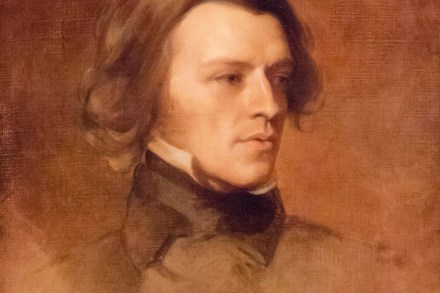
Edward FitzGerald had a good story about rowing across Lake Windermere at the end of May 1835 with his old friend Alfred Tennyson. As they rested on their oars and gazed into the clear, still water, Tennyson recited some lines from his work in progress, ‘Morte d’Arthur’, describing how the Lady of the Lake fashioned Excalibur out of sight: ‘Nine years she wrought it, sitting in the deeps/ Upon the hidden bases of the hills.’ Then he gave himself a little pat on the back: ‘Not bad that, Fitz, is it?’ The lines are better than not bad, as they imagine an invisible process of creation by incorporating several fragments of earlier writing.

Star pupils: aiming high with Marlborough’s astronomy students

From our UK edition

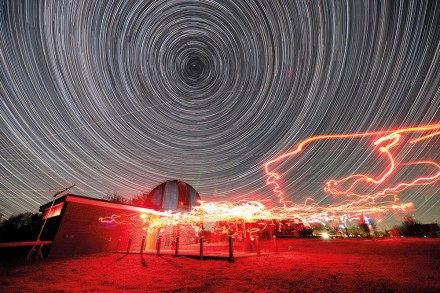
As I trudge up to Marlborough’s observatory, near the top of the playing fields, I’m transported back to my time as a pupil here. I studied astronomy for GCSE, which meant spending many evenings at the observatory, gazing at the night sky. The Blackett Observatory, which houses a superb Cooke 10in refractor telescope, celebrates its 90th anniversary this month. I’ve been invited back by my tutor Jonathan Genton, former head of science and teacher of the GCSE astronomy course, and Gavin James, director of the observatory, who oversees the astronomy programme. ‘Everybody should study astronomy,’ says James. ‘It’s the original science.

We should be excited about signs of alien life

From our UK edition

Last week, a team of astronomers led by the University of Cambridge professor Nikku Madhusudhan announced that they had found tentative evidence for a ‘biosignature’ embedded in the light from a distant planet. Scientists and non-scientists around the world tried to interpret the results. Was this it? Was this the moment when humanity could finally claim it had answered that ancient question: are we alone? As an astrophysicist involved in the search for life beyond Earth, I can tell you that the results were not that moment. But that doesn’t make them any less exciting.

Versailles’s role as a palace of science

From our UK edition

Versailles was a palace of science, as Anna Ferrari shows in this stimulating and innovative study, accompanying a dazzling exhibition of the same title at the Science Museum, London (until 21 April). Soldiers were subjected to electricity experiments in the Galerie des Glaces. The king watched the dissection of an elephant or a horse in the Menagerie. The latest globes and clocks, microscopes and barometers, miracles of precision and beauty, were, and in some cases still are, on display in the royal apartments. The gardens were exercises in trigonometry and hydraulics as well as planting. Louis XV had the largest and most varied plant collection in Europe.

How French absolutism powered a techno-progressive revolution

From our UK edition

The Enlightenment is back. Despite the best efforts of the past decade of handwringing about cultural imperialism and wailing over machismo, money and majesty, the future keeps crashing in. The Science Museum has now laid its cards on the table with Versailles: Science and Splendour. Think gilt, not guilt. Is there anything in our lives that could compare to witnessing the first successfully grown pineapple? It’s marvellous, and unusual these days, to visit an exhibition and feel the colossal force of history without anyone bashing you over the head with infantile morality tales. Expanding on a 2010 display at the Palace itself, lead curator Anna Ferrari ought to be saluted for this unabashed celebration of genius – perhaps with a three-hour firework display.

Those magnificent men and their stargazing machines

From our UK edition

Where is science bred? Is it where the physical circumstances are right – clear skies for astronomy, for example? Where raw materials are abundant – coal for organic chemistry? Where minds freely meet? Where the enlightened patron rules? Violet Moller’s first book, The Map of Knowledge, examined the spread through the centuries of the ideas of Galen, Euclid and Ptolemy by focusing on seven, mainly Mediterranean cities, from Alexandria to Venice, where scientific knowledge was gathered, augmented and promulgated anew, ensuring the survival of classical learning into the modern period. But why these men and these cities? Are people or places the drivers? Is geography a reliable guide, a storytelling device, or an artificial constraint? There are clearly losses in this approach.

Gazing at the eclipse in Walt Whitman’s perfect silence

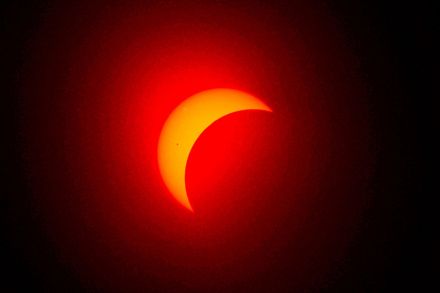
The day before the April 8 eclipse — our postage stamp of ground sat smack dab in the middle of totality — we abounded in sunshine and birdsong, with nary a cloud in the sky. The day after, too, was dominated by the yellow star moseying along the ecliptic, but on the big day — we won’t be similarly situated for another 120 years — ole Sol was obscured by thick gray clouds. (Which parted, as if on mischievous cue, two hours after the celestial spectacular.) This is why Western New Yorkers exhibit a cheerful “oh well” fatalism, and why we know that the Buffalo Bills kicker will always miss the game-ending field goal. The hungry and hotel-hunting eclipse trackers who were predicted to overrun our rural county, leaving a spoor of tourist dollars, never showed.

eclipse

A surprising number of scientists believe in little green men

From our UK edition

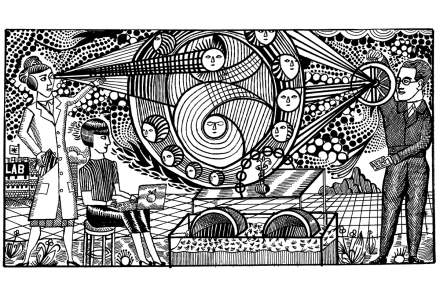
In 1928, a young physicist and engineer named Karl Jansky began working at Bell Telephone Laboratories, tasked with investigating any sources of static that could interfere with long-distance radio communication. Cobbling together a system of antennae on a merry-go-round, he successfully found that thunderstorms were annoying in just this way. But there was a small bit of noise left over, and he kept scanning the sky to locate the culprit. To his surprise, he eventually found it was coming from Sagittarius in the centre of the Milky Way. He christened it ‘star-noise’. We now know that he had correctly identified the emanations from a supermassive black hole; and, quite by accident, he had invented the new science of radio astronomy.

Now imagine a white hole – a black hole’s time-reversed twin…

From our UK edition

There are many ways to measure the course of human history and each will give an insight into one or more of the various qualities that have made us the most successful great ape. Every major advance, whether in war or art or literature, requires imagination, that most amazing of human capacities, and the ability to ask ‘What if?’ – to take the world from a different perspective. Nowhere is this more apparent than in the history of science. While there is an inherent provincialism in revolutions in art and literature, progress in science is universal, and moves, like Dante’s Hell, in concentric circles of ever deeper understanding.

Who laughed at Christopher Columbus when he said the world was round?

From our UK edition

In 2020, an American pilot and daredevil named ‘Mad Mike’ Hughes launched himself in a homemade steam-powered rocket, hoping to achieve enough altitude to prove to himself that the Earth was flat. Unfortunately, the rocket crashed and Mad Mike was no more. ‘I’m not going to take anyone else’s word for it, or Nasa, or especially Elon Musk with SpaceX,’ he had once explained in an interview. ‘I’m going to build my own rocket right here and I’m going to see it with my own eyes what shape this world we live on is.’ In this way he became a martyr to the modern conspiracy theorist’s mantra: ‘Do your own research!

Heavenly beauty: Doppelmayr’s Atlas Coelestis

From our UK edition

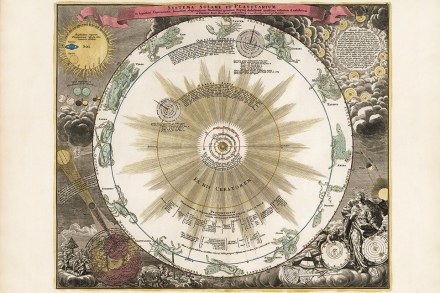
It seems something of a disservice to a work of this seriousness to say how beautiful it is, but that is what will first strike the reader. Open this book and if you can prise yourself away from its wonderful marbled end papers, with their swirls and drifts of deepest blue, brilliant flashes of rusty orange, rivulets of ochre, inky spheres and floating masses of fiery red, you will find yourself taken back to the Enlightenment world of Johann Gabriel Doppelmayr’s Celestial Atlas and an age in which Europe’s polymaths were as interested in the discoveries of science as they were in the literary and artistic culture of the day. The Atlas Coelestis, published in 1742, is an extraordinary work consisting of 30 plates illustrating everything that was known of the cosmos at the time.

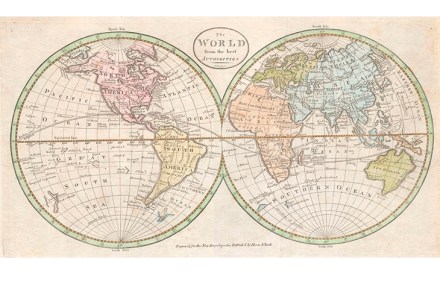
An orange or an egg? Determining the shape of the world

From our UK edition

Thirty-two years ago the young Nicholas Crane, who would go on to become one of England’s most esteemed television geographers, set out to woo a young woman by spiriting her off to the unfailingly romantic landscape of Chimborazo and Cotopaxi. The couple spent their high-altitude idyll walking the hills in hobnail boots, making river passage in dugout canoes and boarding a Quito-bound steam train through the Andes, run by the estimable Empresa de Ferrocarriles Ecuatorianos. Their journey had its moments: at one stage both parties were to be found at 13,000 feet, crusted with ice and huddled overnight from the gales inside a pair of plastic rubbish bags; they then got themselves lost for a while among a wilderness of huge and very active volcanoes.

Christiaan Huygens – hero of time and space

From our UK edition

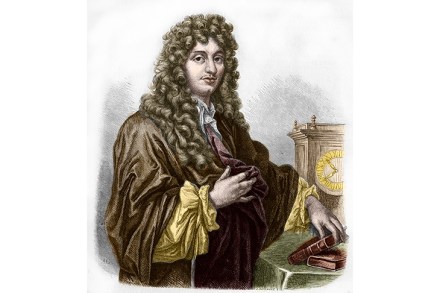
This book, soaked like the Dutch Republic itself ‘in ink and paint’, is enchanting to the point of escapism. The author calls it ‘an interior journey into a world of luxury and leisure’. It is more than that. What he writes of Christiaan Huygens’s milieu is true also of his book: ‘Like a Dutch interior painting, it turns out to contain everything.’ Hugh Aldersey-Williams says that Huygens was the first modern scientist. This is a delicate argument to make: the word ‘scientist’ didn’t enter the English language before 1834. And he’s right to be sparing with such rhetoric, since a little of it goes a very long way.

Gazing heavenwards: the medieval monks who mapped the planetary motions

From our UK edition

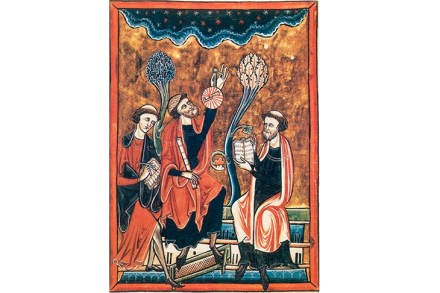
We can probably blame George and Ira Gershwin. It was that brilliant duo who, in 1937, penned the memorable lyric ‘They all laughed at Christopher Columbus when he said the world was round’. The song has been recorded by at least 15 artists over the years, from Fred Astaire to Lady Gaga, and is embedded in the consciousness of the West. But its headline message — medieval people are stupid — is total nonsense. No one, as Professor Seb Falk points out in this brilliant study of medieval astronomy and learning, ever disbelieved the world was round, and medieval people were far cleverer than they get credit for. Half the population, for one thing, he says, were literate.

Stargazing under lockdown

This article was originally published in Batavia, New York Paranoia will destroy ya, as the great Muswell Hillbilly Ray Davies sang, but so can blithe unconcern, and damned if I can find the equipoise. Case in point: a saintly friend of my mother’s distributed masks to those of us who had been engaging in acts of unprotected grocery shopping. Mine bore the emblem of the Buffalo Bills. (I’m surprised some underemployed NFL patent attorney isn’t hounding the mask-maker as I type.) I dropped by to see my parents en route to the grocer’s. ‘I dunno,’ I said to my father. ‘A mask. Whaddayou think?’ ‘You’d look like a candy ass,’ he replied.

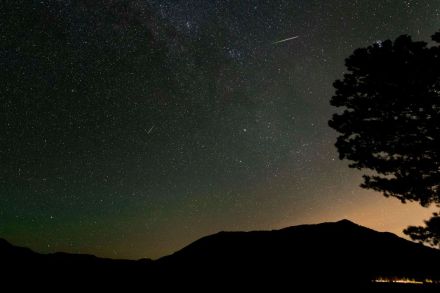
Two Perseid meteors peltier