
Even though my career has been almost entirely in front of the camera, rather than behind it, I’ve long been obsessed with film equipment. How, then, can I resist a party in LA for Cine Gear, a trade show for new film kit? It’s a good place for the “creatives” to meet the technical guys. The director Dan Trachtenberg is there, and we handle the latest Cooke glass. Cooke has been making lenses in Leicester since 1893, and they are still the best cine lenses in the world. I bought my set of Cooke Speed Panchros in the 1980s, when nobody wanted them because they were “slow,” but now they are back in fashion. They have a warmth and softness that modern lenses strive to emulate because their coatings involved radio-active elements that are not permitted in manufacturing now.
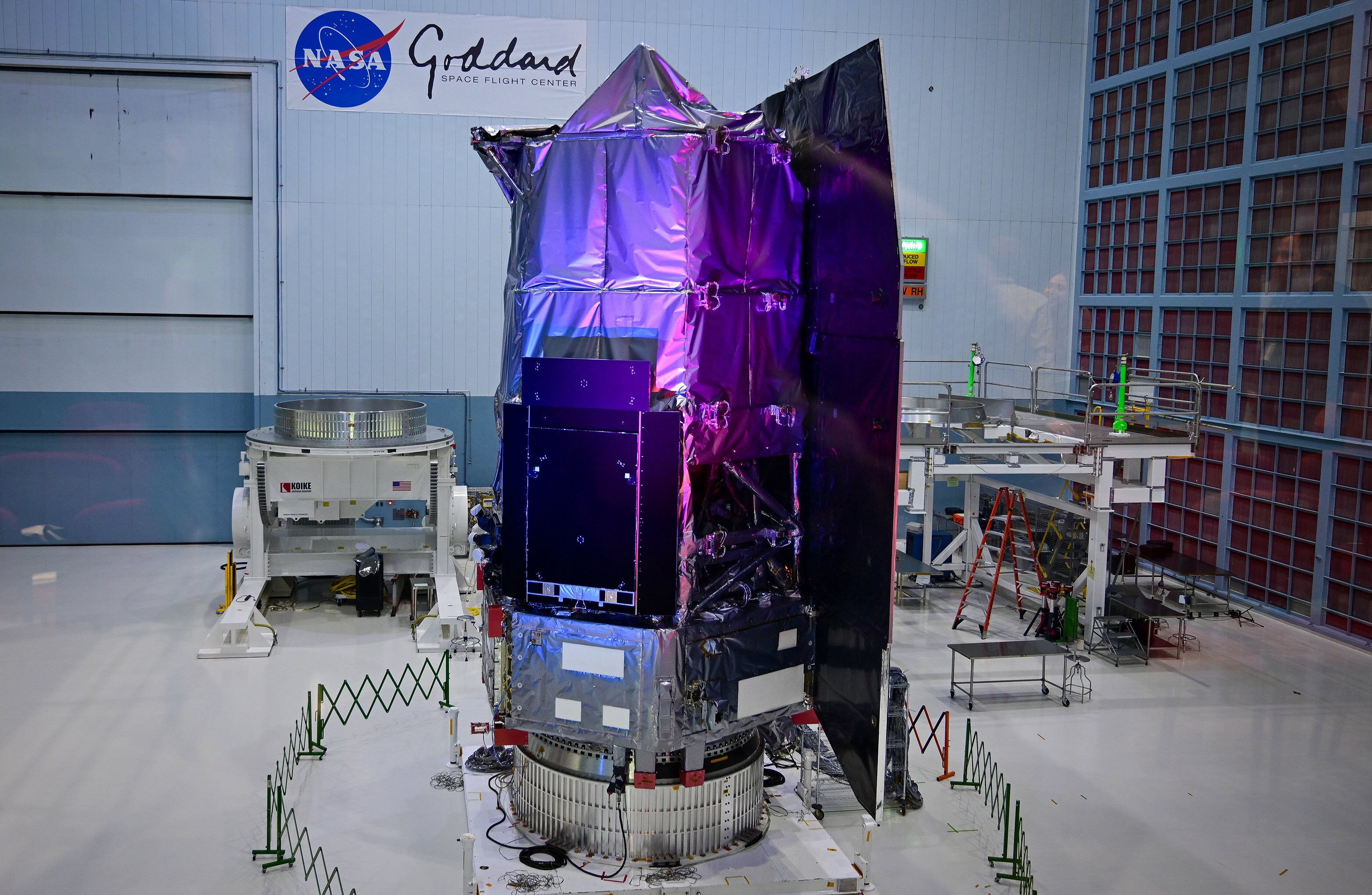
But Cooke glass and Cine Gear’s cameras can’t compete with NASA’s new Nancy Grace Roman Space Telescope. I’ve voiced several NASA documentaries, so last year it allowed me into the clean room at the Goddard Space Flight Center to watch Roman being assembled. This 300-megapixel wide field camera can capture images as sharp as the dying Hubble while covering 200 times more sky. Astronomers estimate that Roman will process in just one year what would take Hubble roughly 2,000. Its modest purpose: to investigate dark energy and dark matter, to find hundreds of thousands of planets and to construct a 3D map of the universe.
Astronomers find planets by noting a dip in the light as a planet “transits” across its star. But you have to be lucky to catch a planet at the right time. There’s a quicker way. Around every star there is a halo of light, a “corona,” but we can’t see much of it because the star is too bright. But if you put a disk exactly over the star, you can block out the direct light and reveal the halo along with the unseen planets orbiting the star. That’s what they’ve built at Caltech, in Pasadena, California: Roman’s Coronagraph. I’m recording there, but they can’t let me visit the control room because it is in full lockdown, a three-day “what if this happens” rehearsal with all the NASA teams involved in the launch (September) and operation of Roman. Incidentally, some of the Caltech team will be first-year astronomy students. Imagine that! A few months ago, you were at school, now you are doing real, cutting-edge science. Some of those youngsters will be team leaders when the next great telescope, the Habitable Worlds Observatory, is launched in the 2040s. There is already a buzz in NASA that Roman may help to confirm what they suspect are true signs of life on a small number of planets.
I’m proud of my utterly insignificant association with NASA, for science is what distinguishes us as a species, and NASA – with its associates – is one of the greatest glories of mankind. Last year when I welcomed 3,000 of the world’s brightest astrophysicists I didn’t care that I was the dumbest person in the room, because they/we, who share 50 percent of our DNA with a banana, are opening the doors to the universe.
Onward to Phoenix then for a small fan convention, and dinner with my old chum Terry Brooks. Terry wrote The Shannara Chronicles. He’s decided after writing 50 books in 50 years that he wants to take some time off. (Slacker.) So he’s now collaborating. He plots; Delilah Dawson does the dog work. Fans of the Lord of the Rings films may be disappointed to learn that I’m a sci-fi fan, not fantasy. But I like Terry and his books, and I’ll relish the next one.
Back to London, to take my 20-year-old daughter to the Iron Maiden documentary, courtesy of the legendary drummer Nicko McBrain; and then on to my home in the Isle of Man to finish The Script. I’ve always written, and now streaming has broken the studio system, the opportunity is there for independent filmmakers. No one in the studios knows what the audience wants, but actors – those who listen to their fans – do. Tom Hanks is one of them. I’m another. I want to make films that celebrate the human spirit; to make you laugh and weep and leave you cheering at the end. So it’s off to the States to shake the money tree. I’ll be back on the Island by Monday because I’m part of a group attempt to set a new world record for “the greatest number of people doing Pilates in the same place at the same time.” It’s on Knockaloe Farm, a World War One POW camp, where Joseph Pilates was interned for four years as a German national. I have recorded an interview with Lolita San Miguel, 92, one of only two teachers certified by Joseph Pilates himself. She confirms that Joe said being interned at Knockaloe gave him the time to invent and refine his method. We want to make the Isle of Man a place of pilgrimage for the 15 million people around the world who practice Pilates. If we get it right, we should create a year-round income stream from tourism that will begin to refill our near empty Treasury coffers.





Comments