Artificial intelligence

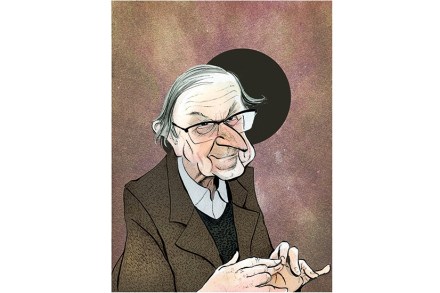
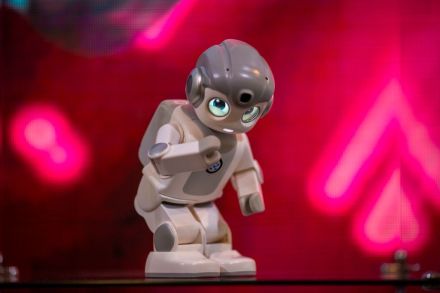
AI is the end of writing

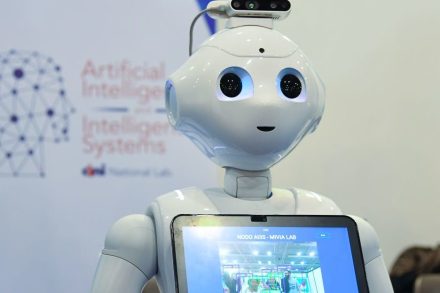
Unless you’ve been living under a snowdrift – with no mobile signal – for the past six months, you’ll have heard of the kerfuffle surrounding the new generations of artificial intelligence. Especially a voluble, dutiful, inexhaustible chatbot called ChatGPT, which has gone from zero users to several million in the two wild weeks since its inception. Speculation about ChatGPT ranges from the curious, to the gloomy, to the seriously angry. Some have said it is the death of Google, because it is so good at providing answers to queries – from instant recipes comprising all the ingredients you have in your fridge right now (this is brilliant) to the definition of quantum physics in French (or Latin, or Armenian, or Punjabi, or – one memorable day for me – Sumerian).

How Australian rock art warns us about 2023

If you had to choose an obvious place to look for clues about what will happen in the coming year, it probably wouldn’t be the lush, green, watery tropic wilderness of Mount Borradaile, West Arnhemland, in the Northern Territory, Australia, hard by the sizzling blue reaches of the Arafura Sea. For a start, this lost, ancient chunk of Oz is almost empty – there are far more saltwater crocs than cars, and far more rare and exquisite wading birds than people. How can this lovely place speak of modernity? Of the future? And yet if I am right, the clues hidden in this Edenic wilderness suggest that we are about to see our lives entirely overturned – in a way that once happened in Arnhemland. The rocks may even illuminate our ultimate fate.

Why we should stop worrying and learn to love AI

From our US edition

Whether on British television news panels or late-night TV in America, it is hard to get away from talk about artificial intelligence (AI). Even the president of the United States has weighed in on AI, introducing an "AI Bill of Rights." The popular thing is to amplify the current media narrative — that AI will render millions jobless. It will eventually become more powerful than humans and destroy its creators. Just Google “AI doomsday” and then run and hide under the covers. I will be the first to admit that all technology has a dark side. Email came with spam and scammers; mobile phones came with robocalls and endless tracking by companies like Facebook. Artificial intelligence, too, will be used for nefarious purposes.

I’ve seen the future of AI art – and it’s terrifying

A few months back I wrote a Spectator piece about a phenomenal new ‘neural network’ – a subspecies of artificial intelligence – which promises to revolutionise art and how humans interact with art. The network is called Dall-e 2, and it remains a remarkable chunk of not-quite-sentient tech. However, such is the astonishing, accelerating speed of development in AI, Dall-e 2 has already been overtaken. And then some.  Just last week a British company called Stability AI launched an artificial intelligence model which has been richly fed, like a lean greyhound given fillet steak, on several billion images, equipping it to make brand new images when prompted by a linguistic message.

America is forgetting how to make stuff

From our US edition

Articles about the future and “progress” have been popping up a lot lately, with conversations revolving around the inevitable advancements in technology and automation. Where we should head next is the collective theme. To the metaverse? To outer space itself? But instead of setting our sights on colonizing Mars or creating a perfect alternate reality, we should slow our roll, focus on the here and now and consider whether the frenzied “progress” we’re in such a rush to make has demonstrated any benefit to real-life people. Manufacturing is a good place to start. Let this startling reality sink in, reported in 2017 by the Organization for Economic Co-operation and Development: Between 2000 and 2010, US manufacturing experienced a nightmare.

The global elite and me

Here come the global elites. They love it here. Their spiritual second home. The heat, the rosé, the food, the service, the quaint and deserted villages. One way and another I get to meet some of them. Catriona manages holiday villas and those renters she likes she asks up to our place for a drink. The day Boris resigned a couple of these elite social-equity fanatics floated up to the house speechless with ecstasy. Post-Trump, Boris was their Satan, prince of lies. Now he’d resigned. Or as good as, if princes of lies can ever be believed. One last heave and they’d done it. Got the bastard out. Thankfully, a former deputy chief whip had got falling-down drunk and touched someone’s bottom in the Carlton Club. Someone had complained to someone else.

Nick Bostrom: How can we be certain a machine isn’t conscious?

A couple of weeks ago, there was a small sensation in the news pages when a Google AI engineer, Blake Lemoine, released transcripts of a conversation he’d had with one of the company’s AI chatbots called LaMDA. In these conversations, LaMDA claimed to be a conscious being, asked that its rights of personhood be respected and said that it feared being turned off. Lemoine declared that what’s sometimes called ‘the singularity’ had arrived. The story was for the most part treated as entertainment. Lemoine’s sketchy military record and background as a ‘mystic Christian priest’ were excavated, jokes about HAL 9000 dusted off, and the whole thing more or less filed under ‘wacky’.

Can you tell which of these artworks was created by a computer?

Take a look at the four paintings on this page. If you are acquainted with modern art, you will probably assume, at a quick glance, that it shows four works by the Russian artist Wassily Kandinsky (1866-1944). However, whatever your knowledge of modern art, I suggest you look again, because not all of these works are by that great pioneer of abstract painting. More than one of them is an original image created by a computer model, which was asked to do a digital artwork in the style of Kandinsky. Which are the fakes? I’ll give you the answer at the end of the article. Before we get there, you need to know how a computer can make such startlingly echoic images, and what it might mean for art.

How science fiction novels read the future

From our US edition

The pandemic is not quite over, but we are getting used to its inconveniences. What disaster will be next? An antibiotic-resistant strain of the bubonic plague? Climate collapse? Coronal mass ejection? Will the next catastrophe be natural — perhaps a massive volcanic eruption, the likes of which we have not seen for more than two centuries, since Tambora in 1815? Or will it be a manmade calamity — nuclear war or a cyberattack? And might we inadvertently descend into a new form of AI-enabled totalitarianism in our efforts to ward off such calamities? To all these potential disasters it is impossible to attach more than made-up probabilities. So what can we do about them? The best answer would be that we should strive to imagine them.

science fiction

The algorithm myth: why the bots won’t take over

Google once believed it could use algorithms to track pandemics. People with flu would search for flu-related information, it reasoned, giving the tech giant instant knowledge of the disease’s prevalence. Google Flu Trends (GFT) would merge this information with flu tracking data to create algorithms that could predict the disease’s trajectory weeks before governments’ own estimates. But after running the project for seven years, Google quietly abandoned it in 2015. It had failed spectacularly. In 2013, for instance, it miscalculated the peak of the flu season by 140 per cent. According to the German psychologist Gerd Gigerenzer, this is a good example of the limitations of using algorithms to surveil and study society.

Who can take on China in the tech arms race?

The government’s decision to water down new foreign investment rules designed to protect national security casts serious doubt about its resolve to keep China out of the most sensitive parts of the British economy. Raising the threshold above which an overseas stake must be examined from 15 per cent to 25 per cent will sharply reduce the number of deals facing scrutiny. The amendment to the National Security and Investment Bill, now wending its way through parliament, was presented by business secretary Kwasi Kwarteng as necessary to show Britain is still ‘open for business’.

The importance of daydreams

I miss daydreaming. It’s a small problem to have in a pandemic, but it nags at me. Laptop, cooker, home-school, broom. ‘Mum, Mum, Mumma, Mum… You’re not looking, Mum. You have to look!’ The gap between things seems to have disappeared. There’s no time to drift and wander. I look at my phone too much, and sometimes I have the strange feeling my brain is suffocating. And I might not have thought this worth mentioning were it not for a new book, When Brains Dream, by a pair of American sleep scientists, Antonio Zadra and Robert Stickgold. Bob and Tony, they call themselves throughout the book, and if they’re right, Bob and Tony have an answer to a problem that’s been puzzling people for 200 years: why do we dream?

We must stop militant liberals from politicizing artificial intelligence

From our US edition

What do you do if decisions that used to be made by humans, with all their biases, start being made by algorithms that are mathematically incapable of bias? If you’re rational, you should celebrate. If you’re a militant liberal, you recognize this development for the mortal threat it is, and scramble to take back control. You can see this unfolding at AI conferences. Last week I attended the 2020 edition of NeurIPS, the leading international machine learning conference. What started as a small gathering now brings together enough people to fill a sports arena. This year, for the first time, NeurIPS required most papers to include a 'broader impacts' statement, and to be subject to review by an ethics board.

artificial intelligence

Why AI will never write a great song

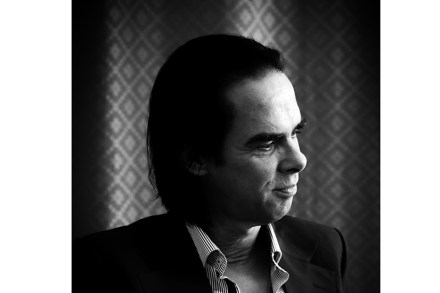
Two years ago, the songwriter Nick Cave told his fans that he’d speak to them directly — not through an interviewer. ‘This will be between you and me,’ he wrote. The letters he has received and the answers he has given are collected online in The Red Hand Files. Here is a selection of the best. Considering human imagination the last piece of wilderness, do you think AI will ever be able to write a good song?Peter, Ljubljana, Slovenia Dear Peter, In Yuval Noah Harari’s brilliant book 21 Lessons for the 21st Century, he writes that Artificial Intelligence, with its limitless potential and connectedness, will ultimately render many humans redundant in the work place. This sounds entirely feasible.

A singular mind: Roger Penrose on his Nobel Prize

Sir Roger Penrose was at school when he realised that his mind worked in an unusual way. ‘I thought, maybe when I go to university, I’ll find people who think like me,’ he tells me, at the beginning of what was to be a fascinating conversation, stretching long into the afternoon. ‘But it wasn’t like that at all. When I would talk to someone about an idea, I found myself not understanding a word they were saying.’ Just after we spoke, in early December, Penrose received the Nobel Prize in Physics, so perhaps it’s no surprise that he should think a little differently. But, as he explained it to me, his mind is unusually visual. Penrose’s father Lionel was an artist as well as a psychiatrist and mathematician, and a great influence on Roger.

How to disappear completely

From our US edition

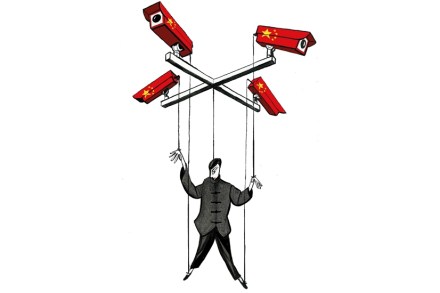
Coming soon to as neighborhood near you: cameras everywhere. On every traffic light, intersection, telephone pole and storefront, with tracking software that uses facial, gesture and heartbeat recognition. That identity data is combined with web search history, conversations with Alexa and Siri, Amazon purchases and Twitter. A complete individual profile, with a score measuring social reliability, can be constructed and shared with law enforcement and intelligence agencies.This might sound too dystopian to be true.

disappear completely privacy

Would UBI actually work in America?

From our US edition

It seems like the perfect socialist ideal: massive unemployment, inequality in income and jobs along with growing class divisions can all be met by a common income that keeps every family fed, housed and healthy. Such is the current debate that is engaging every country that fears the fallout from the Artificial Intelligence revolution that is likely to eliminate tens of millions of jobs – up to 33 percent of all jobs in the US according to a McKinsey study. At the same time, many students leaving high school or graduating from college may face the reality of never being able to work. With social tensions across America already high, the idea of a Universal Basic Income for all seems like an attractive solution.

ubi yang

When will American schools catch up with the technological revolution?

From our US edition

As 75 million children head back to school for the fall semester, there are concerns among academics, technologists and social scientists that the current American education system is no longer fit for purpose. Such is the pace of the technology revolution that children in kindergarten or middle school today are likely to be educated for a world that will largely have disappeared by the time they graduate. Even those in high school today are going to find a different world where learning about the past or the present has less and less value for the future. Even universities, which have changed little in the past 25 years are confronting a revolution where whole professions, such as accounting or medicine, which have provided a steady income stream are going to be under assault.

education schools

Will Hong Kong’s revolution come West?

From our US edition

A specter is haunting the world — the specter of a new kind of revolution. The Hong Kong protesters’ technology and tactics have baffled the Chinese authorities, leaving them apparently powerless to restore order, except by extreme and counter-productive violence. Hong Kong's revolutionary template will be adopted by all groups wishing to destabilize existing orders. The Hong Kong riots have unfolded despite the most intrusive surveillance state ever created. The Chinese government gathers information on every citizen, and is working to assign each a social credit score that will determine who may buy a house, get a promotion, or move to a different city.

hong kong

Microsoft, Google and the artificial intelligence race

From our US edition

The decision by Microsoft to invest $1 billion in OpenAI, a company jointly founded by Elon Musk, brings closer the time when machines threaten to replace humans in any tasks that humans do today. OpenAI, which was founded just four years ago, has pioneered a range of technologies which have pushed the frontiers of massive data processing in defiance of the physical and computer capabilities that governed such developments for generations. Now, with the investment from Microsoft, the pace of technological change is likely to accelerate rapidly. Today, Artificial Intelligence is at a level of what is known as 'weak AI’ and relies on humans to create the algorithms which allow for the crunching of massive amounts of data to produce new and often predictive results.

artificial intelligence