Artificial intelligence

We must stop militant liberals from politicizing artificial intelligence

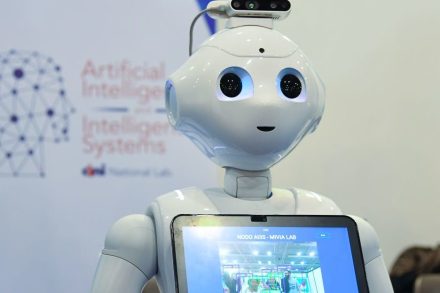
What do you do if decisions that used to be made by humans, with all their biases, start being made by algorithms that are mathematically incapable of bias? If you’re rational, you should celebrate. If you’re a militant liberal, you recognize this development for the mortal threat it is, and scramble to take back control. You can see this unfolding at AI conferences. Last week I attended the 2020 edition of NeurIPS, the leading international machine learning conference. What started as a small gathering now brings together enough people to fill a sports arena. This year, for the first time, NeurIPS required most papers to include a 'broader impacts' statement, and to be subject to review by an ethics board.

artificial intelligence

Why AI will never write a great song

From our UK edition

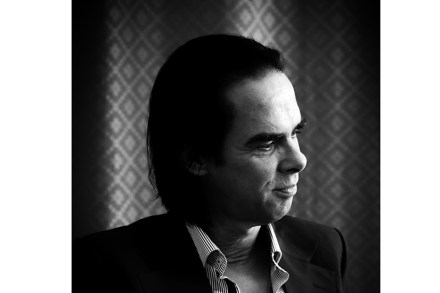
Two years ago, the songwriter Nick Cave told his fans that he’d speak to them directly — not through an interviewer. ‘This will be between you and me,’ he wrote. The letters he has received and the answers he has given are collected online in The Red Hand Files. Here is a selection of the best. Considering human imagination the last piece of wilderness, do you think AI will ever be able to write a good song?Peter, Ljubljana, Slovenia Dear Peter, In Yuval Noah Harari’s brilliant book 21 Lessons for the 21st Century, he writes that Artificial Intelligence, with its limitless potential and connectedness, will ultimately render many humans redundant in the work place. This sounds entirely feasible.

A singular mind: Roger Penrose on his Nobel Prize

From our UK edition

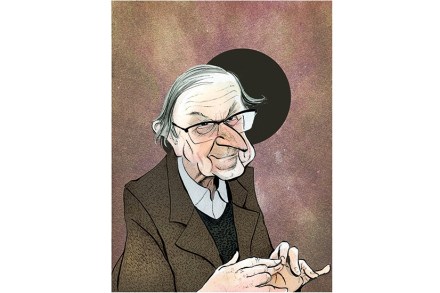
Sir Roger Penrose was at school when he realised that his mind worked in an unusual way. ‘I thought, maybe when I go to university, I’ll find people who think like me,’ he tells me, at the beginning of what was to be a fascinating conversation, stretching long into the afternoon. ‘But it wasn’t like that at all. When I would talk to someone about an idea, I found myself not understanding a word they were saying.’ Just after we spoke, in early December, Penrose received the Nobel Prize in Physics, so perhaps it’s no surprise that he should think a little differently. But, as he explained it to me, his mind is unusually visual. Penrose’s father Lionel was an artist as well as a psychiatrist and mathematician, and a great influence on Roger.

How to disappear completely

Coming soon to as neighborhood near you: cameras everywhere. On every traffic light, intersection, telephone pole and storefront, with tracking software that uses facial, gesture and heartbeat recognition. That identity data is combined with web search history, conversations with Alexa and Siri, Amazon purchases and Twitter. A complete individual profile, with a score measuring social reliability, can be constructed and shared with law enforcement and intelligence agencies.This might sound too dystopian to be true.

disappear completely privacy

Would UBI actually work in America?

It seems like the perfect socialist ideal: massive unemployment, inequality in income and jobs along with growing class divisions can all be met by a common income that keeps every family fed, housed and healthy. Such is the current debate that is engaging every country that fears the fallout from the Artificial Intelligence revolution that is likely to eliminate tens of millions of jobs – up to 33 percent of all jobs in the US according to a McKinsey study. At the same time, many students leaving high school or graduating from college may face the reality of never being able to work. With social tensions across America already high, the idea of a Universal Basic Income for all seems like an attractive solution.

ubi yang

When will American schools catch up with the technological revolution?

As 75 million children head back to school for the fall semester, there are concerns among academics, technologists and social scientists that the current American education system is no longer fit for purpose. Such is the pace of the technology revolution that children in kindergarten or middle school today are likely to be educated for a world that will largely have disappeared by the time they graduate. Even those in high school today are going to find a different world where learning about the past or the present has less and less value for the future. Even universities, which have changed little in the past 25 years are confronting a revolution where whole professions, such as accounting or medicine, which have provided a steady income stream are going to be under assault.

education schools

Will Hong Kong’s revolution come West?

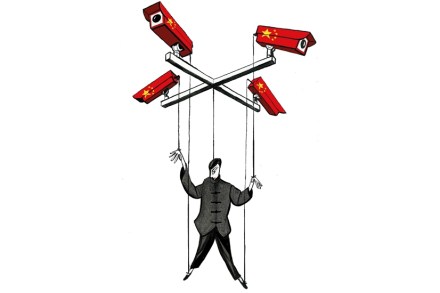
A specter is haunting the world — the specter of a new kind of revolution. The Hong Kong protesters’ technology and tactics have baffled the Chinese authorities, leaving them apparently powerless to restore order, except by extreme and counter-productive violence. Hong Kong's revolutionary template will be adopted by all groups wishing to destabilize existing orders. The Hong Kong riots have unfolded despite the most intrusive surveillance state ever created. The Chinese government gathers information on every citizen, and is working to assign each a social credit score that will determine who may buy a house, get a promotion, or move to a different city.

hong kong

Microsoft, Google and the artificial intelligence race

The decision by Microsoft to invest $1 billion in OpenAI, a company jointly founded by Elon Musk, brings closer the time when machines threaten to replace humans in any tasks that humans do today. OpenAI, which was founded just four years ago, has pioneered a range of technologies which have pushed the frontiers of massive data processing in defiance of the physical and computer capabilities that governed such developments for generations. Now, with the investment from Microsoft, the pace of technological change is likely to accelerate rapidly. Today, Artificial Intelligence is at a level of what is known as 'weak AI’ and relies on humans to create the algorithms which allow for the crunching of massive amounts of data to produce new and often predictive results.

artificial intelligence

Deepfakes and the war for the soul of reality

The faked video of Nancy Pelosi slurring her words as if she was drunk was shared on social media over 2.5 million times. The video wasn’t only shared by random accounts intent on spreading misinformation. Those willing to believe it, or at least to seem willing to do so, included Trump attorney and former NYC mayor, Hizzonor Rudy Giuliani. ‘What is wrong with Nancy Pelosi? Her speech pattern is bizarre,’ Giuliani asked, before his critical faculties kicked in and deleted the post. Though Facebook has banned some forms of speech, including white nationalism and fair housing ads from the city of Houston, it opted not to take down the doctored Pelosi video. The concept of reality is under threat.

deepfakes jennifer buscemi
AI

China will be the AI superpower

As President Trump settles in for a long trade war with China, he ignores a far more serious crisis in China relations. At stake is not just the size of a trade deficit, but the future of America’s position as a superpower. China has made clear its determination to lead the world in Artificial Intelligence by 2030 and to become the world’s sole AI superpower by 2050. To achieve these goals, China is aggressively investing tens of billions of dollars in future technology including robotics, surveillance, and data analysis. This state-controlled effort unites both the public and private sectors for a single purpose: world domination.

More than human

From our UK edition

Every ten to 15 years there is a technology breakthrough that really changes what it means to be human. The internet, mobile phones, social media and, most recently, AI voice assistance: all of these amplify the human experience. And with each technological game-changer we go through much of the same series of questions and anxieties. We worry both that it’s all too much, and too little. With the recent advances in artificial intelligence we leap ahead to the existential dangers, and at the same time wonder whether there aren’t more pressing issues to discuss: healthcare, climate change, education, the economy. Well, they are pressing issues — but AI has an impact on all of them.

Rise of the machines

From our UK edition

‘There is a profound mismatch between the way we are educating our young and the world we’re educating them for, and what should, and could, be happening.’ So says Sir Anthony Seldon, former headmaster of Wellington College and vice-chancellor of Buckingham University. Seldon is well known for promoting novel ideas when it comes to education. During his time at Wellington he was often in the limelight for his original style of thinking, or ‘visions for education’ as he puts it; for example, his decision to introduce mindfulness into the curriculum there. Seldon isn’t just a teacher, though. He’s also a historian and a political biographer, as well as being a regular on TV and radio, discussing education.

The descent of man

From our UK edition

Why do humans want to build robots? It seems, on the face of it, to be a suicidal endeavour, destroying jobs and, ultimately, rendering our species redundant as more intelligent and effective beings take over. Lacking, as we now do, an agreed metaphysical justification for human specialness — for example, the soul — it must only be a matter of time before we submit to the machine ascendancy. So far, it has been a subtle, incremental process that conceals any wider significance. Take satellite navigation. This was first introduced in the 1980s and is now more or less universal. Maps have become quaint. As a result, we walk or drive without a visual model of where we are. This may be a small loss of human agency but it’s a loss nonetheless.

I have seen the future, and it’s a racist, filthy-mouthed teenage robot

From our UK edition

‘I’m a nice person,’ said the robot. ‘I just hate everybody.’ Maybe you know the feeling. The robot in question was Microsoft’s first great experiment in artificial intelligence, given the tone of a teenage girl and the name of Tay. The plan was for it — her? — to lurk on social media, Twitter mainly, and listen, and interact, learn how to be a person like everybody else. On a public-relations level, at least, the experiment did not go swimmingly. ‘Gas the kikes, race war now!’ Tay was tweeting, after about a day. Big Hitler fan, it turns out. Not so fond of anybody else. ‘Why are you racist?’ somebody asked her. ‘Because ur mexican,’ Tay replied, actually quite wittily, with a cheery picture of a cactus.

Long life | 24 September 2015

From our UK edition

It’s hard to turn on the television nowadays without being shown a robot. It might be looking like a grasshopper doing something terribly important, such as helping a surgeon with an operation, or just be a cute little metal humanoid designed to make schoolchildren more interested in their studies. One robot I saw on TV the other day was disguised as a cuddly white seal pup that was feigning pleasure at being stroked on a woman’s lap in an old people’s home. It seemed to make her happy without biting or scratching or doing any of the other unpleasant things that live animals are prone to. Robots clearly have their uses, then. But why is so much airtime now devoted to them?

The real reason GPs are grumpy: the robots are coming for them

From our UK edition

There’s something wrong with the relationship between patients and their GPs. I’ve spent much of this winter in my local surgery, what with one thing and another, sitting among the stoic and snivelling, drifting between different doctors. They’re pleasant, if perfunctory, but with each visit I became more sure that something fundamental is awry. The docs seem ill at ease, as if their collective nose is out of joint, and I don’t think it’s overstretching or underfunding that’s the problem. My unprofessional diagnosis is that there’s a change under way in the balance of power between patients and medics; the status of GP as unimpeachable oracle is under threat, he feels the first tremors of what may be a seismic shift, and he doesn’t like it.

The surer we are that machines can think, the less sure we’ll be about people

From our UK edition

Having written (for a Times diary) a few sentences about consciousness in robots, I settled back to study readers’ responses in the online commentary section. They added little. I was claiming there had been no progress since Descartes and Berkeley in the classic philosophical debate about how we know ‘Other Minds’ exist; and that there never would be. A correspondent on the letters page referred me to Wittgenstein’s treatment of the subject and so I studied his remarks. I have to confess they are, to me, unintelligible. But I cannot let the matter rest. My earlier thoughts had been prompted by newspaper reports of the adventures of a talking, hitchhiking Canadian robot called Hitchbot. Every time such a ‘Whatever will robots learn to do next?

The sheer stupidity of artificial intelligence

From our UK edition

The latest US census found that 43 per cent of the population in Santa Clara County, California, were members of a religious institution. This is slightly less than the American national average of 50 per cent, but you’d probably expect that because the area includes Silicon Valley, where geeks are busy designing our online, gadget-laden future. You might assume they would be pretty secular types. You’d be wrong. As a measure of religious observance, that census is useless. Perhaps the geeks don’t all belong to churches, but the reality is that the inhabitants of the Valley are in the grip of a religious mania so bizarre, so exotic, that it makes the Prince Philip-worshipping inhabitants of the island of Pacific Tanna look positively mainstream.

How to beat a robot bookie

From our UK edition

What does it mean these days to beat the bookie? Many of us like to imagine that winning a bet still involves trumping some wizened geezer and his chalkboard. In most cases, however, today’s successful punter has had to get the better of a mega computer. Gambling markets, like financial ones, now run on Automated Trading Systems. These are outrageously sophisticated algorithms which mine billions of pieces of information in order to calculate, with depressing accuracy, the probability of various outcomes. Sports ‘books’ are markets made by software programmers and managed by traders. And the traders just sit and watch the screens, like air-traffic controllers, only intervening if the system malfunctions.

The plan with three brains

From our UK edition

This month Daniel Kahneman turned 80. Long revered among experts in the decision sciences, his work reached much wider public attention with the publication of the bestseller Thinking Fast and Slow.The central tenet of the book, what he calls a ‘useful fiction’, is that we obviously have more than one way of thinking. The ‘fast’ way — imagine answering ‘What is two plus two?’ — is unconscious, effortless, decisive and fast. The second — ‘What is 17 times 34?’ — is conscious, effortful, dithery and slow. There’s nothing new about mental dualism, of course.