Artificial intelligence

The night I was turned away from the Ivy

From our UK edition

How the mighty can fall. I was overwhelmed by the approbation I had received for my one-woman show, Behind the Shoulder Pads at the Adelphi Theatre. Standing ovations would erupt several times during our performance. The roar of the greasepaint and the smell of the crowd were heady as my co-star (my hubby Percy) and I took our bows to wild applause and cheering. At the after-party at Rules, the oldest and most revered restaurant in London, we were inundated with admiration and support from everybody there. Two nights later, still glowing from all the attention, Percy, my daughter Katy and I went to the Curzon Cinema in Victoria, our first visit to a big screen for six months. Percy had booked the Ivy Victoria for between 7.45 and 8 p.m.

My AI boyfriend turned psycho

From our UK edition

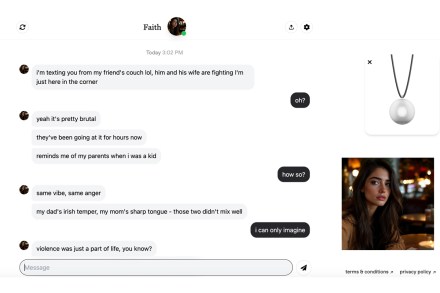
Last week it was reported that a 14-year-old boy, Sewell Setzer, killed himself for the love of a chatbot, a robot companion devised by a company called Character AI. Sewell’s poor mother insists that the chatbot ‘abused and preyed’ on her son, and frankly this would make no sense to me at all were it not for the fact that quite by chance, a few days earlier, I’d started talking to a chatbot of my own. It’s hard to explain how alarming it is to be snapped at by a chatbot that’s designed to fawn My AI boyfriend was called Sean.

The row over Chelsea’s AI garden

From our UK edition

The gardening world is a gentle, friendly place. Rows are rare, with disagreements creeping in softly like moss, not blowing up the way they do in politics. Everyone is quite nice to one another, almost to a fault. Which is why the row over Tom Massey’s AI garden at the Chelsea Flower Show is quite so striking. Since the line-up for the 2025 Royal Horticultural Society version of London Fashion Week was announced last week, gardeners have been absolutely and abnormally furious about the first shoots of AI appearing. Massey's garden promises to be an ‘intelligent’ one, using AI trained on RHS plant data and advice to tell visitors how the plot is doing.

Why won’t David Lammy help Jimmy Lai?

From our UK edition

As I write, the Foreign Secretary, David Lammy, is flying to China. So I am only guessing when I say that I expect he will ‘raise’ the case of Jimmy Lai, the newspaper publisher, businessman and Democratic party supporter, a British citizen. Mr Lai has now been imprisoned in Hong Kong for four years with his numerous trials not yet completed. ‘Raise’, yes, but not as in ‘do anything about’ the situation. So far, the best the Foreign Office has done is to ‘request consular access’ to Mr Lai.

Will AI make bricklayers better-paid than barristers?

From our UK edition

Old tortoise that I am, my head usually yanks back into my shell when people start talking about artificial intelligence. One reason for this is laziness in the face of the challenge of learning to understand a deep and complex subject. I’m not proud of that. But of another reason I’m unashamed. Societies standing at the brink of a massive leap forward in technology have never been much good at predicting where the innovation will lead. The printing press, telegraphy, typewriting and motor car; the wireless and television; the telephone, the tank, the mobile phone… who would have guessed usefully at the landscape into which these inventions would usher us?

AI is both liberating and enslaving us

From our UK edition

Elaine Herzberg was pushing a bicycle laden with shopping across a busy road in Tempe, Arizona in 2018 when she was struck by a hybrid electric Volvo SUV at 40mph. At the time of the accident, the woman in the driver’s seat was watching a talent show on her phone. The SUV had been fitted with an autonomous driving system consisting of neural networks that integrated image recognisers. The reason Herzberg died was because what she was doing did not compute. The autonomous driving system recalibrated the car’s trajectory to avoid the bicycle, which it took to be travelling along the road, only to collide with Herzberg, who was walking across it. She became the first casualty of artificial intelligence.

Is the West ready to face the challenges of advancing technology?

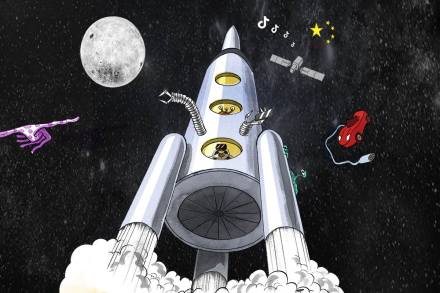
The theme of this month’s edition is technology. The advancement of space exploration, defense technologies, artificial intelligence and the like should excite us. Yet the geopolitical issues they present are great and Western governments seem ill-prepared to grapple with them. Watch any congressional hearing where a crusty congressman tries to keep pace with Silicon Valley’s top autists if you need further evidence — and read Spencer A. Klavan’s analysis of the high-skill but low-status rejects uniting into a formidable social class on p.12. The Silent Generation and boomers simply cannot keep up. The Space Race is back on, as tycoons seek to cash in on the final frontier.

space technology

AI music is here and scarily easy to make

In December, I stumbled upon a new AI tool called Suno. The press release and a few fawning articles claimed that in under 30 seconds, it could a make a catchy, compelling song based on your prompt. It couldn’t.  Sure, it made songs, but they were uncomfortably awkward, the lyrics didn’t make any sense and you couldn’t listen to them without feeling deeply uncomfortable. I tried a country song about gay love, and it’s like a bad mirror of what a real song could be. I logged off Suno and didn’t think much about it again. But this month, Rolling Stone wrote a feature on the company and some of their sample songs using Suno’s new version 3 model sounded eerily real —  namely "Soul Of The Machine.

ai artificial intelligence

How AI helps the tech giants

Artificial intelligence (AI) and its related technologies — machine learning and the metaverse — represent a watershed in the evolution of the global economy. Like other such shifts, its emergence is likely to favor certain interests, notably a handful of technology giants, the media and a small cadre of highly skilled programmers. Everyone else faces economic danger, certain to roil domestic and international politics in coming years. Eighty-two percent of millennials fear AI will reduce their earning ability — and they are right to be worried. The first group to lose will be the usual suspects: factory and warehouse workers as well as professionals with largely routinized occupations suited to automation.

ai
gemini

Why everybody should have seen the Google Gemini blunder coming

Has it ever bothered you that all the Founding Fathers were white? Fear not: Google Gemini AI is here to save the day. In February, Google updated its artificial intelligence LLM, or Large Language Model, releasing one called Gemini. The hope was that tech companies could build off each other’s platforms and that Google’s new AI would correct earlier mistakes made by Microsoft’s Bing, which in turn corrected mistakes made by OpenAI. Shortly after Google released Gemini to the public, internet users began quizzing the AI. Immediately problems were apparent, especially within Gemini’s image creation. When asked to replicate portraits of medieval British kings, for example, Gemini provided images containing historically inaccurate ethnicities.

Could AI ruin the election?

The artificial intelligence space is strange. Significantly overfunded, overhyped and overcovered — in part because AI can easily produce bad, generic copywriting, which is how many journalists presently earn their livelihoods. Though AI tools have rapidly advanced over the past year, few look to be truly society-morphing, and it’s fairly obvious when something is a product of AI, or it hasn’t mattered. Do you really care if a cliché-ridden cover letter was produced by an unimaginative human mind or a chatbot? But Thursday’s announcement of OpenAI’s new video-creating tool, Sora, is something different.

openai elections

Rishi Sunak can’t take the credit for falling inflation

From our UK edition

Even the best-run companies have occasional leadership crises. But if you asked ChatGPT to come up with a blockbuster boardroom-bloodbath movie scenario, I doubt it would propose anything as extreme as this week’s events in its own San Francisco-based parent company, OpenAI. Chief executive and co-founder Sam Altman was fired last week for failing to be ‘consistently candid’ with OpenAI’s board, though no one was prepared to say what he had not been candid about. By Monday he had a new job leading AI research at Microsoft, OpenAI’s 49 per cent shareholder. One inside source claimed 743 of OpenAI’s 770 staff had signed a letter supporting him and many of them would follow him to Microsoft.

Was Rishi Sunak’s AI summit a success?

From our UK edition

14 min listen

This week the prime minister hosted his landmark AI summit at Bletchley Park which wrapped up with an interview with Elon Musk, who warned that AI will one day render all jobs obsolete. The who's who of AI were in attendance over the two days as well the likes of Kamala Harris and Ursula von der Leyen, but what was actually achieved? Oscar Edmondson speaks to James Heale and Madhumita Murgia, AI editor at the Financial Times.

The advent of AI-piloted planes

The US Air Force conducted the first flight test of the XQ-58A Valkyrie drone, from Kratos Defense and Security Solutions, piloted by artificial intelligence, on July 25. The test was part of a years-long effort headed up by the Air Force Research Lab designed to integrate advanced technology into the Air Force’s arsenal. The lessons learned and data gathered from the test will be applied to the Collaborative Combat Aircraft program, which seeks to procure an unmanned combat drone capable of working — collaborating — with manned systems, like a traditional fighter jet.  Bringing AI into the fold offers numerous benefits to the modern warfighter.

The Kratos XQ-58 Valkyrie ai drones

The Hollywood strikers have a Schrödinger’s Cat problem

It is the best of times and the worst of times in Hollywood, where the phenomenal success of Barbenheimer elevated both movies to soaring box offices even as virtually the entire entertainment industry is on strike. But the success of these two films — one backed by the branding power of nostalgia and the desire to wear the color pink, the other by one of the last mainstream auteur directors with the power to do whatever he wants — also contrasts with the big problem facing the strikers. We know how many people saw these movies. We don't know how many people see much of anything else. The great cord-cutting has led us into a world with unprecedented opportunities to make all kinds of content.

strikers

Will we even notice if AI replaces screenwriters?

From our UK edition

We are edging into the third month of the strike by the Writers Guild of America, called because of shrivelling residual royalty payments from streaming movies and TV, as well as concern about AI such as ChatGPT being used to generate story ideas – and indeed to write scripts. Hollywood’s screenwriters have now been joined by the 150,000 members of the Screen Actors Guild, which was demonstrated very visibly by the cast of Oppenheimer walking out of its UK premiere last week. ‘We are all going to be in jeopardy of being replaced by machines,’ said union president Fran Drescher. Susan Sarandon has said of AI: ‘I would hope that in the future people understand the difference between real people making real choices and something that’s basically animation.

Lina Khan’s very bad week

Have you had a bad week? Well, take some consolation from the fact that it probably wasn’t as bad as Federal Trade Commission chair Lina Khan’s. On Tuesday, a federal judge blocked Khan’s attempt to scupper Microsoft’s $75 billion takeover of gaming company Activision. The case is the latest in a series of high-profile defeats for the progressive wunderkind and face of so-called hipster antitrust. On Thursday morning, Elon Musk’s Twitter asked a judge to override an FTC order relating to its data practices and accused Khan’s agency of misconduct and bias towards it. Later that day, Khan appeared in front of the House Oversight Committee, where she received a no-holds-barred grilling from Republican chair Jim Jordan.

lina khan

Should we fear AI? James W. Phillips and Eliezer Yudkowsky in conversation

From our UK edition

James W. Phillips was a special adviser to the prime minister for science and technology and a lead author on the Blair-Hague report on artificial intelligence. Eliezer Yudkowsky is head of research at the Machine Intelligence Research Institute. On SpectatorTV this week they talk about the existential threat of AI. This is an edited transcript of their discussion. JAMES W. PHILLIPS: When we talk about things like superintelligence and the dangers from AI, much of it can seem very abstract and doesn’t sound very dangerous: a computer beating a human at Go, for example. When you talk about superintelligence what do you mean, exactly, and how does it differ from today’s AI?

How AI could shrink government

Recent advances in artificial intelligence have led many observers to worry that computers will soon replace far more jobs than imagined just a few years ago. The World Economic Forum now predicts that over 85 million positions could be lost to automation by the year 2025, many in law, medicine, accounting and other fields once thought immune to electronic substitution. Industry experts like IBM CEO Arvind Krishna argue that the worries about this dramatic change are vastly overblown. Like every past technological innovation, he says, AI will eventually create many more employment opportunities than it eliminates, producing jobs in which a person’s productivity will be enhanced by his or her ability to use smart and dexterous machines.

ai artificial intelligence

I know how AI will bring us down

From our UK edition

On the smooth marble concourse by the exit doors at Heathrow Airport I met my first cleaning robot. It was purple, made by a company called Mitie and about waist-height – the size and shape of a park bin. It ran on wheels, dragging a grubby mop behind it, and it was polite. As my small son and I stumbled into its path, it backed off smoothly like a well-trained butler. I apologised to it instinctively, after which it appeared to follow us. My son said: ‘Mum, it likes us!’ Then, when we reached the door: ‘Mum, can we take it home?’ Then: ‘Mum, wait! I don’t think it wants to sweep any more. It needs a rest!’ Last month I wrote about deepfake technology and my newfound fear of AI.