Art

Internet users are the new surrealists, and they keep changing the world

From our UK edition

As 2021 continues to progress at a dizzying rate, one of the recurring social phenomenon we’re seeing is the surreal eruption of online activism in the real world. From the recent explosion of GameStop share prices – hiked up by amateur investors co-ordinating online – to the large-scale protests and riots in Washington following the 2020 Presidential election, the communities in cyberspace continue to spill out into the real world. The question is: why are these kinds of actions becoming an increasingly unsettling occurrence in the usual running of society? In the lexicon of web-design, the term UX, user experience, is often used to describe how an individual may interact with a product, specifically a webpage.

Scenes from an open marriage: Luster, by Raven Leilani, reviewed

From our UK edition

One of Barack Obama’s favourite books of 2020, Raven Leilani’s debut comes acclaimed by a literary Who’s Who that includes Zadie Smith, the author’s teacher at New York University. Five months after Luster became an instant New York Times bestseller, it hits British shores on a tsunami of hype that might grate if the novel weren’t so blindingly good. A feat of narrative voice and supple, rhythmic prose, Luster plunges us into the acerbic psyche of Edie, a millennial New Yorker wading through the early-twenties quagmire: student debt, primitive flatshare, artistic ambitions on hold. At the publishing house that pays her meagre wage, grateful diligence is expected of a ‘token’ black hire, yet Edie’s has worn thin.

Culture and anarchy

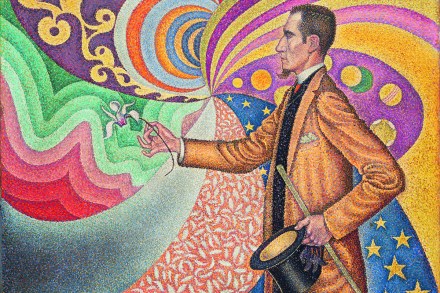
Paul Signac’s portrait of Félix Fénéon is a striking and historically important painting. But is it a good one? Its subject didn’t think so. Signac profiles Fénéon against a swirl of complementary colors and kaleidoscopic shapes, as if anticipating an acid-trip scene from a Roger Corman movie. This radioactively abstract background was bold stuff for Paris in 1890, when the picture was made, but contemporary critics disapproved, one finding the work ‘cold and dry’, another calling it ‘neither decorative nor comprehensible in terms of feeling’. Fénéon himself was similarly vexed by the final result, though he held onto the portrait throughout his life out of loyalty to his painter friend.

Féneon anarchy

As Lucian Freud’s fame increases his indiscretions multiply

From our UK edition

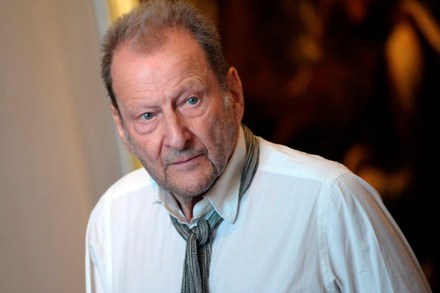
Staying with Peregrine Eliot (later 10th Earl of St Germans) at Port Eliot in Cornwall, Lucian Freud remembered that the Eliots ‘ate off solid silver plate, even shepherd’s pie’. In 1968, Freud was having an affair with Perry’s wife Jacquetta. According to her, it was an addiction: ‘Completely hooked, a dreadful drug...’ After two turbulent years, she decided to have a baby by Lucian, ideally to be born on his birthday. Her husband agreed to bring up the child as his own, provided the matter was not mentioned again. The laissez-aller attitude is partly accounted for (though not by William Feaver) by the 1960s, and the way the young aristocracy embraced the hippy-trippy counter-culture. Jacquetta mentions smoking an opium spliff in Paris with Freud.

In praise of statue-toppling

From our UK edition

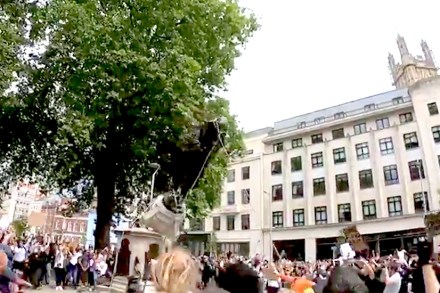
I couldn’t disagree more with Sir Keir Starmer (it was ‘completely wrong,’ ‘it shouldn’t have been done in that way’) or with Boris Johnson (‘if people wanted the removal of the statue there are democratic routes which can be followed’). No, there was something magnificent about the sight of the Bristol mob throwing into the harbour the statue of a man whose trade was notorious for throwing sick slaves with no monetary value into the sea. 1890s Britain raised that statue.

At last, a novel about the art world that rings true: Annalena Mcfee’s Nightshade reviewed

From our UK edition

On a winter’s night an artist of moderately exalted reputation and in lateish middle age journeys across London, away from the stuccoed comforts of what was until recently home towards a studio in the East End, where a much younger lover lies waiting. Observations, generally of a caustic nature, about the comédie humaine encountered along the way and the state of the wider world jostle in the artist’s febrile mind with an apologia for the previous nine months’ events.The artist is a woman, Eve Laing, but the tropes past which Nightshade flits like an Underground train are strikingly, almost mundanely, male — the ageing, status-anxious creative, the mid-life crisis, the much younger lover, even the caustic observations.

Stalin at Yale

Are we in our own revolutionary moment? Many of our leading institutions clearly believe so. Yale University has been working overtime to prove it is on the right side of history. ‘Problematic' colleges have been renamed. ‘Offensive’ stained-glass windows have been knocked out. Only the leadership of an Ivy League school could spread such a poisonous rash. Heading the charge against the Dead White Male has been a progressive Yale bureaucracy that is, for the most part, pale and stale. Now the task of dismantling Yale’s famous art history survey course has fallen to a scholar I respect, Tim Barringer. British-born, Barringer is the Paul Mellon Professor of the History of Art at Yale University and has been a leading curator at the Metropolitan Museum.

yale art history woolf

All modern art is quite useless

This article is in The Spectator’s January 2020 US edition. Subscribe here.Laramie, Wyoming ‘It’s pretty, but is it art?’ Rudyard Kipling asked in 1890. In those days the modernist movement across the Beaux Arts was gaining a grip on the western world that it maintains in the 21st century and is likely to hold into the 22nd, if there is one. One hundred and thirty years later, Kipling’s question calls for a plain response: ‘If it’s ugly, it has to be art.’ Aquinas defined art as ‘right reason in action’; reason in making. Right reason depends upon a man’s knowing what he ought to believe, desire and do. The modern artist is ignorant of all of these things.

art

It’s yellow, not green, that’s the colour of jealousy

From our UK edition

Making attributions to Leonardo da Vinci,  the great art historian Adolfo Venturi once remarked, is like ‘picking up a red-hot iron’. Those who wish to avoid injury, he advised, should exercise great caution. Whether or not the scholars who attributed the ‘Salvator Mundi’ to the great man are now suffering from badly burnt fingers — not to mention the buyer who paid $450.3 million for it — is a question of informed opinion. On the whole, Carmen C. Bambach, the author of the monumental Leonardo da Vinci Rediscovered (Yale, 4 Volumes, £400) votes against. In Leonardo da Vinci: The Complete Paintings in Detail (Prestel £65), Alessandro Vezzosi, also a noted authority on the artist, is more guarded.

Capturing the mood of the English landscape: the genius of John Nash

From our UK edition

‘If I wanted to make a foreigner understand the mood of a typical English landscape,’ the art critic Eric Newton wrote in April 1939, ‘I would first show him a good Constable and then one or two of John Nash’s best watercolours.’ This is about as good an endorsement any painter could ask for, but Nash is more usually bracketed with, and overshadowed by, his older brother. There have been major exhibitions of Paul Nash’s work at the Dulwich Picture Gallery in 2010 and at Tate Britain three years ago, whereas the last truly substantial retrospective of John’s work was at the Royal Academy in 1967.

A triumph: ENO’s Mask of Orpheus reviewed

From our UK edition

ENO’s Mask of Orpheus is a triumph. It’s also unintelligible. Even David Pountney, who produced the original ENO staging in 1986, admitted to me in the interval that he didn’t have a clue what Harrison Birtwistle’s opera was about. But who cares when, visually and musically, you’re being socked between the eyes? Mask makes sense in the same way an earthquake makes sense. Fittingly we begin with total nonsense: Orpheus, in the bath, attempting to reform language. This is Orpheus the Man, in red velour and gelled-up hair, looking like Rod Stewart. An unlikely charmer of fishes and trees, it has to be said. But soon enough another Orpheus pops up: Orpheus the Myth, looking even worse, like Rod Stewart’s drunk dad.

The enduring allure of ‘er indoors

From our UK edition

‘She’s only a bird in a gilded cage, a beautiful sight to see. You may think she’s happy and free from care; she’s not though she seems to be.’ When the British lyricist Arthur J. Lamb first offered the lyrics of ‘A Bird in a Gilded Cage’ to the Tin Pan Alley tunesmith Harry Von Tilzer, he was told to go back home and clean them up. Lamb had made the subject of his song a rich man’s mistress; for mass-market appeal she needed to be married. In its revised version ‘A Bird in a Gilded Cage’ shot to the top of the 1900 sheet-music charts. For some strange reason the idea of the kept woman, married or unmarried, continues to exert a fascination on both sexes.

In praise of cultural elitism

From our UK edition

At present we have a series of ‘culture wars’ over a wide range of issues — race, gender, sexuality, power and privilege. But the one culture war we don’t have any more is over culture. Yes, we fight about the ideological messages of literary texts, but not about matters of personal taste. We scrutinise and interrogate works of art for their latent — or blatant — sexism and racism. Often what matters is what the work in question says about marginalised groups — not what it says about us as cultured individuals. It hasn’t always been so. There was a time when we judged people, labelled them, loved them or hated them because of their taste in literature, art and even pop music.

The many faces of William ‘Slasher’ Blake

From our UK edition

‘Imagination is my world.’ So wrote William Blake. His was a world of ‘historical inventions’. Nelson and Lucifer, Pitt and the Great Red Dragon, chimney sweeps and cherubim, the Surrey Hills and Jerusalem in ruins, the alms houses of Mile End and the vast abyss of Satan’s bosom.  He saw the fires of the Gordon Riots and the serpent in the Garden of Eden. His subjects were Milton and Merlin, Dante and Job, ‘Elegy Written in a Country Churchyard’ and the Book of Revelation. He held infinity in the palm of his hand, yet worked through the night to write and grave all that was on his mind. ‘I have very little of Mr Blake’s company,’ said Catherine Blake with the indulgent sigh of all wives of Great Men.

Why did Mrs Lowry hate her son’s paintings?

From our UK edition

‘I often wonder what artists are for nowadays, what with photography and a thousand and one processes by which you can get representation,’ L.S. Lowry muses in Robert Tyrrell’s 1971 documentary. ‘They’re totally unuseful. Can’t see any use in one. Can you?’ I can: as fodder for biopics. Cinemato-graphers have always been inspired by painting, but the appeal of the artist’s biopic lies less in the representation than the lifestyle: mainly the sex.

The insufferable wokeness of public art

In the middle of the 20th century, the Central Intelligence Agency executed a commendable troll against the American left. Long rumored to be a joke, documents released in the 1990s revealed that during the Cold War the CIA secretly funded and promoted some of America’s biggest contemporary artists without the knowledge of the artists themselves. It was art as weapon. The US aimed to showcase the intellectual freedom and creative superiority of Western, capitalist societies against the drab, inhibited propagandist art of the Soviet Union by broadcasting this wildly inventive style in vogue at the time. The CIA propped up artists like Jackson Pollock, Robert Motherwell, Willem de Kooning and Mark Rothko.

public art

Modern sublime

From our UK edition

Superficially, the Olafur Eliasson exhibition at Tate Modern can seem like a theme park. To enter many of the exhibits, you have to queue. The average age of the crowds in the galleries is much lower than it might be at, say, the RA. And most visitors keep their phones permanently ready to snap a selfie — which isn’t really what the artist has in mind. He wants you to concentrate on a reaction that is internal and unphotographable. Eliasson — as the title of the show, In real life, might suggest — offers sensory experiences.

High life | 18 July 2019

From our UK edition

Athens Standing right below the Acropolis, where pure democracy began because public officials were elected by lot, I try to imagine if random political selection would be a good thing today. The answer is a resounding yes. Both Socrates and Aristotle questioned fundamental norms and values, and if they were alive today they would certainly question our acceptance of career politicians who have never had any other profession. (Corbyn, Biden… I could go on.) Socrates was sceptical about many things, especially the arts, because he believed they led us away from the truth. Yet nowadays so-called ‘artists’ influence public opinion as never before. The fact that even numbskull rappers have a say and can affect public opinion means that election by lot should be a must.

Science may say this is a Caravaggio but my eyes think otherwise

From our UK edition

Last month a painting that had been found in an attic in 2014, supposedly by Caravaggio, was put up for sale in an auction in Toulouse. The vendors must have known there was little interest, as they accepted a pre-emptive offer for an undisclosed amount. Surely it wasn’t what they were hoping for; but they will have done well enough so there's no need to feel sorry for them. It’s just business. But what about the painting? Why does it look so different – to put it politely – from everything that is known to have come from Caravaggio’s hand? Do our eyes deceive us, or have so many esteemed scholars misled us? Partly, I suspect, they misled themselves, by taking documentary and scientific clues for evidence, or even proof.

Chilling out | 11 July 2019

From our UK edition

Think of the children in opera. Not knowing sopranos and mezzos, pigtailed and pinafored or tightly trousered-up to look child-like, but actual children. There are Mozart’s Three Boys, Menotti’s Amahl, possibly Debussy’s Yniold and Handel’s Oberto and, if you stretch a point, Marie’s little son in Wozzeck. But that’s about it. Until, that is, you come to Benjamin Britten. It’s a rare Britten opera that doesn’t include a child. Whether it’s Grimes’s doomed apprentice, the chattering powder monkeys of HMS Indomitable, teenage vision Tadzio in Death in Venice, Tytania’s fairies or the watchful Miles and Flora, they are ever-present, but why?