Art history

A is for Artist, D is for Dealers

From our UK edition

‘S is for Spoof.’ There it is on page 86, a full-page reproduction of a Nat Tate drawing, sold at Sotheby’s in 2011 for £6,500. A sum which, it is added, with all due respect to [William] Boyd’s ability as an artist, probably proves the point about promotion being more important than talent. It’s always something of a shock to encounter in a serious book the artist I invented and it’s a measure of the huge frame of reference encompassed in Breakfast at Sotheby’s that even Nat Tate and his drawing can make a salutary appearance. Philip Hook has realised and brilliantly exploited the peculiar advantages of the A-Z format. Using the alphabet as a template forces you to think laterally.

How to avoid bankers in your nativity scene

From our UK edition

In the vast Benedictine monastery of Monte Oliveto Maggiore between Siena and Rome, the cycle of frescoes depicting the life of St Benedict by Giovanni Anionio Bazzi includes a charming self-portrait of the artist standing with a couple of pets at his feet, for all the world a 16th-century Italian Dorothy with a brace of Totos. (A detail of the painting is reproduced overleaf.) Bazzi did not earn his popular soubriquet of ‘Sodoma’ for nothing — though Vasari is not always reliable — but if his life was the scandalously licentious and dishonourable thing that Vasari would have us believe, then this only places him in the mainstream of the world described in Alexander Lee’s fascinating new book.

Breakfast with Lucian, by Geordie Greig – review

From our UK edition

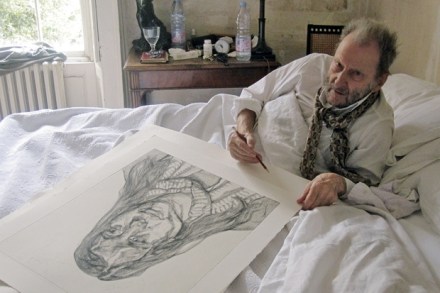
According to the medical historian Professor Sonu Shamdasani, Sigmund Freud was not the best, nor actually the most interesting, psychoanalyst in early 20th-century Vienna.  Rather, Freud’s genius lay in creating a loyalty cult around himself, collecting a group of acolytes who would ensure his reputation.  This is worth bearing in mind when considering the life of his grandson, the painter Lucian Freud, who died in 2011. Lucian was famous for his secrecy. ‘Devious and secretive. I have been described as that,’ he tells Geordie Greig, not without a certain pride. He demanded a strict omertà of his intimates.

The Sunflowers Are Mine, by Martin Bailey – review

From our UK edition

‘How could a man who has loved light and flowers so much and has rendered them so well, how could he have managed to be so unhappy?’ This was Claude Monet’s comment on seeing Van Gogh’s ‘Three Sunflowers’ (1888). There he put his finger on one of the enigmas of the Dutch painter’s tragic life. The journalist and scholar Martin Bailey has written an admirable new book which tells the story of Van Gogh’s life and posthumous rise to fame through the pictures of sunflowers, Helianthus annuus, which the painter produced at intervals through his brief career.

Edwardian Opulence, edited by Angus Trumble – review

From our UK edition

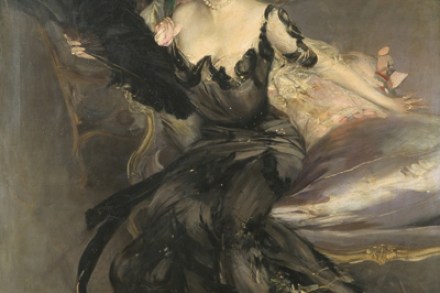
She sits there on the cover exuding sex and wealth and a certain knowingness. Mrs Lionel Phillips, who came from a modest background in South Africa, had the good sense to marry one of the ‘Rand Lords’ who made their piles in the new gold and diamond fields. She and her husband bought their way into society in Britain, accumulating houses and furniture and having themselves painted, as in this wonderful portrait, by the fashionable Giovanni Boldini. That of Mr Phillips is more subdued, even sombre.   The face, said the Athenaeum, ‘is amazing in its unscrupulous vulgarity’. Well, one might think, the anonymous critic could have taken a look around him.

Paul Nash, by Andrew Causey – review

From our UK edition

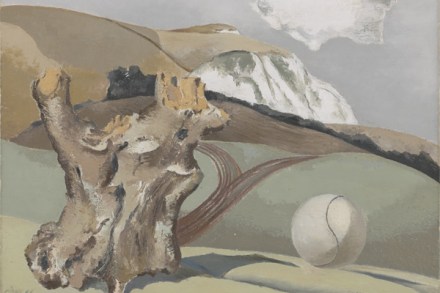
Andrew Causey opens his book on a slightly defensive note: Paul Nash, he says is often identified as Britain’s outstanding 20th-century landscape painter, as if painting the natural scene was the only thing he did, or landscape art as a genre is entirely separable from others, such as portraiture or history painting. It is unexpected to find that at least among art historians the idea of landscape painting as a lesser genre still lingers.

The picture of health

From our UK edition

It must have been hard to settle on a title for this book; but then this is not the book that Richard Cork originally had in mind.  In his introduction to The Healing Presence of Art he describes how he was approached to write on the contemporary role of art in hospitals, but in beginning the research for this he became aware, as he puts it, ‘of the rich, complex and largely overlooked tradition’ to which modern art and medicine are the heirs.   It is this vast hinterland that forms the theme of Cork’s book. It is neither ‘art in hospitals’, nor ‘art and medicine’ nor ‘art as therapy’ but all these things and more.

Currents of imagery

From our UK edition

In the first book of his scientific-cum-philosophical poem ‘De rerum Natura’ — or ‘On the Nature of Things’ — Lucretius draws the reader’s attention to the power of invisible forces. The wild wind, he wrote, whips the waves of the sea, capsizes huge ships, and sends the clouds scudding; sometimes it swoops and sweeps across the plains in tearing tornado, strewing them with great trees, and hammers the heights of the mountains with forest-spitting blasts. It was a description I was well placed to appreciate as I read this whimsical, scholarly and original book while staying in a Georgian folly on a country estate in Kent.

Art Books: A sumptuous tour

From our UK edition

In 1930 Evelyn Waugh, already at 27 a famous novelist, spent two days in Barcelona. He came upon one of the art nouveau houses designed by Antonio Gaudí, who had died four years earlier. Waugh was captivated by the swooshing ‘whiplash’ lines of the building. He hired a taxi and asked the driver to take him to any other buildings in the same style. So he saw a number of Gaudí’s fantastical creations, including his church (often mistakenly called a cathedral), La Sagrada Familia. It took an extra-ordinary leap of taste for Waugh to admire this flamboyant architecture at the height of the Modern Movement, with its insistence on ‘clean lines’ and ‘form follows function’.

Another form of segregation

From our UK edition

N.B. This review was published without its final two paragraphs in the 18th December 2010 issue of The Spectator. These paragraphs have been reinstated for the online version below. These volumes — four for now, and a further six to come — are saddled with a title redolent of lantern lectures delivered in Godalming, say, round about the time that Rorke’s Drift became legendary overnight. The Image of the Black suggests people, or things, of a certain stamp. Penny blacks, so to speak: picked out with tweezers, profiles raised, their blackness being their distinction, their black face value assessed within the swelling majesty of Western Art.

Forget the matchstick men

From our UK edition

Here at last is a book that takes L. S. Lowry’s art seriously and treats it with the scholarly attention it deserves. Here at last is a book that takes L. S. Lowry’s art seriously and treats it with the scholarly attention it deserves. Tom Rosenthal has been a life-long admirer of Lowry’s work, spending his formative years in Greater Manchester and even interviewing the old curmudgeon for Radio 3 in the 1960s. One of his aims in this book is to dispel the various myths that have grown up around Lowry and his critically underestimated art. It has become fashionable in the art world to look down on Lowry as a naive painter who could only paint industrial landscapes full of ridiculous scampering matchstick people.

On the charm offensive

From our UK edition

Derek Hill (1916–2000), writes Bruce Arnold, was an English representational landscape and portrait painter of ‘haunting and evocative creative spirituality that is perhaps indefinable’. Derek Hill (1916–2000), writes Bruce Arnold, was an English representational landscape and portrait painter of ‘haunting and evocative creative spirituality that is perhaps indefinable’. But the biographer was undeterred. As an English author of books on the arts and the chief arts critic of the Irish Independent, he was a friend of Hill’s for the last 37 years of his life.

The odd couple

From our UK edition

Some years ago now I bought from the artist Robert Buhler a pastel portrait of the composer Lennox Berkeley (reproduced above). Since I knew neither of the two men well (although in the case of each I admired the work without having an irresistible enthusiasm for it), even today people often ask me why I made the purchase. The answer is that in that one work Buhler shows so much more than his usual blithe accomplishment; he is perfect not merely in his portrayal of his sitter’s outward features but also in conveying an inner character of brooding spirituality. Tony Scotland’s book performs the same feat.