Art criticism

The life of David Sylvester

It’s 1960, and the clock has struck seven in the morning on Manhattan Island. A car weaves through the clamorous city as the morning sun settles. In the front seat are the Canadian-American painter Philip Guston and the British art critic David Sylvester; the pair have just enjoyed a sobering Chinese meal after a long night of drinking with Willem de Kooning and Franz Kline, which called for the digestif of a drive. It has been an epochal night for Sylvester; he just doesn’t know it yet. In 1996, Sylvester, who would have turned 100 this year, wrote his essay “Curriculum Vitae” later reproduced in his acclaimed About Modern Art: Critical Essays 1948-2000.

Sylvester

The notorious feud between John Ruskin and James Whistler

It was too dark to see, and the painting was upside down. In 1877 John Ruskin, the leading art critic of Victorian England, attended an exhibition that included paintings by the American-born artist James Abbott McNeill Whistler. He hated them — and said so. In print. “I have seen, and heard, much of Cockney impudence before now; but never expected to hear a coxcomb ask two hundred guineas for flinging a pot of paint in the public’s face.” Whistler sued. The following year the argument came to court, on a dark day in a gloomy and gaslit courtroom. The canvases that Ruskin had so disliked were propped up against a wall and barely visible; one was the wrong way up, and another was dropped unceremoniously onto an elderly gentleman’s balding head.

ruskin

The eyes have it

Art historians do not generally become household names, as Kenneth Clark did later in life after embracing television, most famously with Civilisation (1969). They can, however, acquire legendary or semilegendary status within the profession and among amateurs. One such was Leo Steinberg (1920-2011), who taught for many years at the City University of New York and the University of Pennsylvania. Academic art historians are expected to ‘publish or perish’: college texts, monographic studies on individual artists, or down-the-rabbit-hole treatises on arcana that seem to require more pages of footnotes than text. Steinberg mainly wrote for professional journals. He also lectured widely, testing ideas that later might make their way into print.

steinberg

All modern art is quite useless

This article is in The Spectator’s January 2020 US edition. Subscribe here.Laramie, Wyoming ‘It’s pretty, but is it art?’ Rudyard Kipling asked in 1890. In those days the modernist movement across the Beaux Arts was gaining a grip on the western world that it maintains in the 21st century and is likely to hold into the 22nd, if there is one. One hundred and thirty years later, Kipling’s question calls for a plain response: ‘If it’s ugly, it has to be art.’ Aquinas defined art as ‘right reason in action’; reason in making. Right reason depends upon a man’s knowing what he ought to believe, desire and do. The modern artist is ignorant of all of these things.

art

Art and aspiration

From our UK edition

When Adam Gopnik arrived in Manhattan in late 1980 he was an art history postgrad so poor that he and his wife-to-be were reduced to sharing a 9’ x 11’ basement with a bunch of cockroaches. But everything was going to be all right because Gopnik had his guitar with him and he ‘knew someone who’d once had dinner with the sister of a close friend of Art Garfunkel’s psychotherapist’. Having sent a tape of his songs over, he settled down to ‘write jokes for comedians. It seemed like a plan for life’. In a way it was. Though Gopnik has yet to hear back from Garfunkel, his oratorio about Alan Turing played recently at the Barbican.

How pleasant to know Mr Lear

From our UK edition

Edward Lear liked to tell the story of how he was once sitting in a railway carriage with two women who were reading aloud to children from his Book of Nonsense. When a male passenger confidently asserted that ‘There is no such person as Edward Lear’, the writer was obliged to prove his own existence as ‘the painter & author’ (in that order) by showing the passengers his name on his hat, handkerchief and visiting card. In an extraordinary drawing of this event, Lear depicted himself and the two women realistically, but the doubting man is a cartoonish figure straight out of one of his limericks. Lear’s two worlds of ‘art and nonsense’ wonderfully collide in this anecdote and its illustration.

Kenneth Clark was much better at opening people’s eyes to great art than Marxist John Berger

From our UK edition

It is one of those interesting quirks of postwar cultural history that John Berger, who has died at the age of 90, could have presented Civilisation. Millions of viewers who saw that unsurpassed – unsurpassable – series when its 13 programmes were screened in 1969, or who have seen it in the years since, associate Civilisation with Kenneth Clark – Lord Clark of Civilisation, as he came to be known. But Berger might easily have got the nod. It was Clark himself who suggested to Michael Gill, Civilisation's producer, that he might find a more congenial ally in Berger, who, of course, three years later presented Ways of Seeing as a counter-argument to Clark's magisterial televisual essays. Who knows?

The grit in the oyster

From our UK edition

Richard Dorment doesn’t do whimsy. Or Stanley Spencer. He’s a fan of Cy Twombly and Brice Marden, Gilbert and George and Mark Wallinger, Rachel Whiteread and Susan Hiller. He loves writing about contemporary art. And he worked as art critic of the Daily Telegraph for 25 years. Like the grit in the oyster he irritated the establishment, producing pearl after pearl that occasionally had even his own paper distancing itself from his opinions. ‘I looked edgy and transgressive,’ he says, ‘when in reality my taste in art was fairly cautious.’ Born in America, Dorment studied art history at Princeton and was assistant curator in European painting at the Philadelphia Museum of Art before moving to London and working as an exhibition organiser and writer on art.

Fifty shades of blue

From our UK edition

Like a lot of people, Olivia Laing came to New York to join a lover. Like a lot of people, she soon became unjoined. She stopped eating and drifted, moved from sublet to sublet, wandered the streets in a desperate daze. She craved intimacy and shied away from it, was painfully self-conscious but also anxious that she was in danger of vanishing. What does loneliness feel like? It feels, she says, ‘like being hungry when everyone around you is readying for a feast. It feels shameful and alarming, and over time these feelings radiate outwards, making the lonely person increasingly isolated, increasingly estranged.’ The Lonely City is memoir, art criticism and a portrait of the Big Apple seen through the eyes of an accidental flâneuse.

The Ghost in the machine

From our UK edition

One of the great joys of the late Brian Sewell’s style of writing was his almost child-like bluntness. He had a three-year-old’s lack of tact when it came to saying what he thought of things, be it art or food or life in general. The fact that he combined such unflinching honesty with intelligence, insight and erudite delivery was what made him one of the great critics. Always entertaining, occasionally right, cheerfully abusive, he showed us the world through his pince-nez, and it was both terrifying and magnificent. Despite a weakness for baroque vocabulary, he was a master of economy.

God in a stained glass window

From our UK edition

Writing about Graham Sutherland in 1950, the critic Robert Melville observed: ‘When one looks at a picture one finds oneself over the frontier or one doesn’t. Criticism has no power of making converts to an experience which occurs without the intervention of reason ... Criticism considers the sensitive flesh of the image and discovers its spiritual stature: indeed, unless we pursue the meaning of the image as language, painting may well fall silent and rest content in the pride of its flesh.

How honest was Bernard Berenson?

From our UK edition

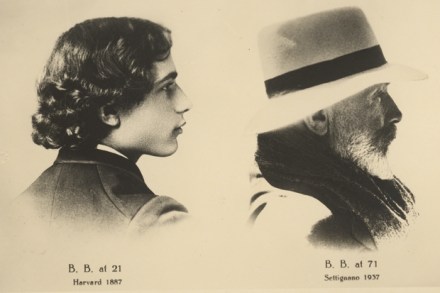
When the great Jewish-American art expert Bernard Berenson died in 1959, he had acquired the status of a sort of sage. He was the relic of a prewar culture that had vanished. He was an embodiment of the idea of connoisseurship that had at once given birth to a great boom in art collecting and yet that was, by the end of his life, being superseded. When Berenson embarked on the career that would see him widely accepted as the world’s foremost authority on Old Masters, the painters of the Italian Renaissance were barely regarded in the US. He died — at 94 — in the age of Andy Warhol. The very span of his life gives his story resonance.