Aristocracy

America’s future looks vulgar

From our US edition

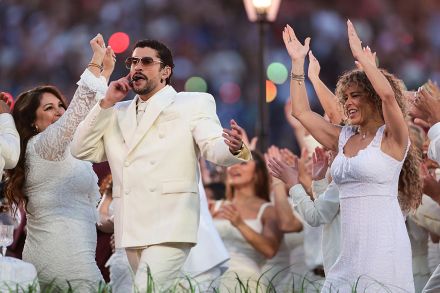
The latest Super Bowl offers the most recent opportunity to reflect on the terminal state of our national culture, held together chiefly by a distractive and unhealthy mania for commercial sports and perfectly exemplified by the infantile yet aggressively transgressive nihilism of a brainless showoff calling himself Bad Bunny and dressed all in white, suggestive perhaps of an anti-Easter Bunny. Why, one wonders, has no political theorist from Hobbes forward posited the ideal human community as one which would combine political democracy with cultural and intellectual aristocracy – as, indeed, America at the time of her founding and for several generations thereafter did? Such an arrangement might satisfy critics of democratic society on the anti-egalitarian right, such as T.S.
Have Americans lost their sense of humor?

From our US edition

Humor has become serious business. A nation of anxious primates trapped in a silicon casino of likes, retweets and dopamine-soaked drudgery, America is suffering from what the comedian Norm Macdonald called a “crisis of clapter.” Terrified of saying the wrong thing, needing punchlines to be spoon-fed – what was once the funniest place on Earth has become a tight-lipped, tongue-twisted society where jokes are rewarded with polite applause instead of genuine laughter. It’s the old stink of a well-mannered aristocracy, and very un-American indeed. From his beginning, the ugly American – wild-eyed and rabble-rousing – rankled the Old World.

humor

There’s nothing new about ‘nepo babies’

One of the neologisms of 2022 was the phrase ‘nepo baby’. Short for ‘nepotism baby’, it was coined by younger people, the so-called Gen Z, to describe the syndrome of the increased attention and opportunity afforded to the children of celebrities – in practice giving them a leg-up into a career in modelling, acting or singing.  A curious aspect of the trend is that these newly cynical youths are only belatedly realising that many of the young stars in their firmament have famous parents: Lily Collins of Emily in Paris, for example, is the daughter of the rather-better-known-to-their-parents Phil.   But it’s only the term itself that is new.

The Independent’s peer review disaster

Oh dear. Ever since Prince Harry and Meghan Markle's bombshell Oprah interview aired, a debate has been underway in the press over allegations of racism in the monarchy. So Mr S read a comment piece on the progressive newspaper-turned-website the Independent with intrigue. With the eye catching title: 'I'm a black British member of the aristocracy – I know what Meghan said was true', Alexander J. Maier-Dlamini the 11th Marquess of Annaville, said that he had no doubt the Duke and Duchess were telling the truth given his own experiences in aristocratic circles. The only problem? His title does not appear to actually exist.

Old-school Sunday-night family viewing: ITV’s Belgravia reviewed

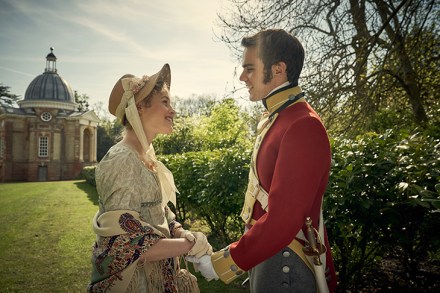
The world may be going to hell in a handcart but some things remain reassuringly unchanged: Julian Fellowes period dramas about feisty dowager duchesses, social climbing and snobbery, say. I like and admire Fellowes so I don’t want him to take this the wrong way. But when I say that his new series Belgravia (ITV) borrows from the same template he employed so successfully with Downton Abbey, and before that Gosford Park, and also in that series set on the Titanic that didn’t do quite so well, I’m not trying to suggest he’s a one-trick pony. More that he’s a canny chap who understands his market, has found the perfect formula and is damned if he’s not going to milk it for all it’s worth.